

































Geum 'ORANGE PUMPKIN' avens

 Symbivit Tric (arbuscular)
 Symbivit (arbuscular)
Geum
The genus Geum, avens, comprises roughly fifty to sixty species of perennial herbs in the rose family, distributed across the temperate zones of Europe, Asia, North and South America, and New Zealand. A typical feature is a basal rosette of leaves from which slender stems arise, bearing cup‑shaped flowers in colours ranging from white and yellow to red‑orange. The genus was described by Carl Linnaeus (1707–1778), and its taxonomy has since undergone numerous adjustments and synonymisations, which explains the differing names found in historical literature. Geum is cytologically and genetically diverse – varying chromosome numbers, frequent polyploid groups and a strong capacity for interspecific hybridisation give breeders wide scope to combine flower colour, form and resilience. Avens has long attracted the attention of notable European growers and collectors, specifically Georg Arends (1863–1952) and Alan Bloom (1906–2005) who not only cultivated them in their gardens but also actively promoted them, and their work influenced which forms became established in gardens and which later formed the basis of modern hybrids.
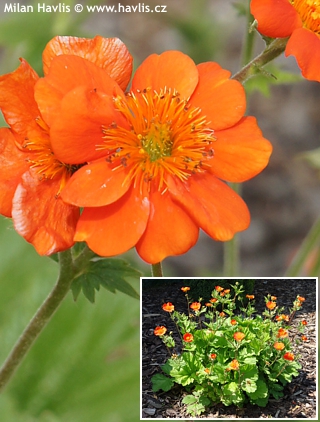
The avens family consists mostly of very hardy and reliable perennials, so it is no surprise that they have become popular material for modern breeding. Today, breeders work with wild populations and collections according to the traits desired in the resulting hybrid: mountain and alpine populations (G. coccineum, G. montanum, G. reptans) contribute compact growth, a firm leaf rosette and resistance to drought and cold; populations from wetter habitats (G. rivale) bring tolerance of waterlogging, heavier soils and often a longer flowering period; South American species (G. chiloense) are sources of rich orange and red tones and large flowers; and some Asian populations (e.g. G. japonicum) add early flowering, softer shades and the ability to grow in partial shade.
Among today’s figures who enrich, collect and popularise the genus is the extensive collection of Armand Kremer of the German nursery Green‑Globe, comprising around 140–160 taxa and varieties. Kremer’s work is valuable not only for its breadth but also because it maintains a living gene pool from which new selections may arise. He also collaborates with Sue Martin, holder of the British National Collection of Geum at Brickwall Cottages (Frittenden, Kent), who carefully documents more than one hundred cultivars and monitors their condition, phenology and behaviour in different parts of the garden each year. Her collection is registered with Plant Heritage and is among the best‑documented Geum collections in Europe. Alongside these two major names stand smaller collectors, breeders and enthusiastic perennial growers such as Tim Crowther (Walberton Nursery), author of cultivars such as ‘Totally Tangerine’, Roger Proud (East of Eden Nursery), who introduced selections like ‘Tales of Hex’, or the Dutch grower Coen Jansen, whose cultivar ‘Mai Tai’ has travelled the world and become one of the most successful modern hybrids.
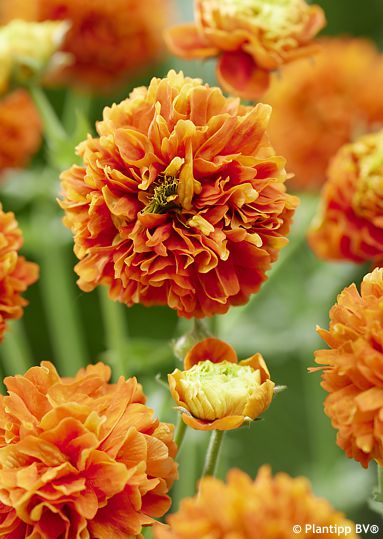
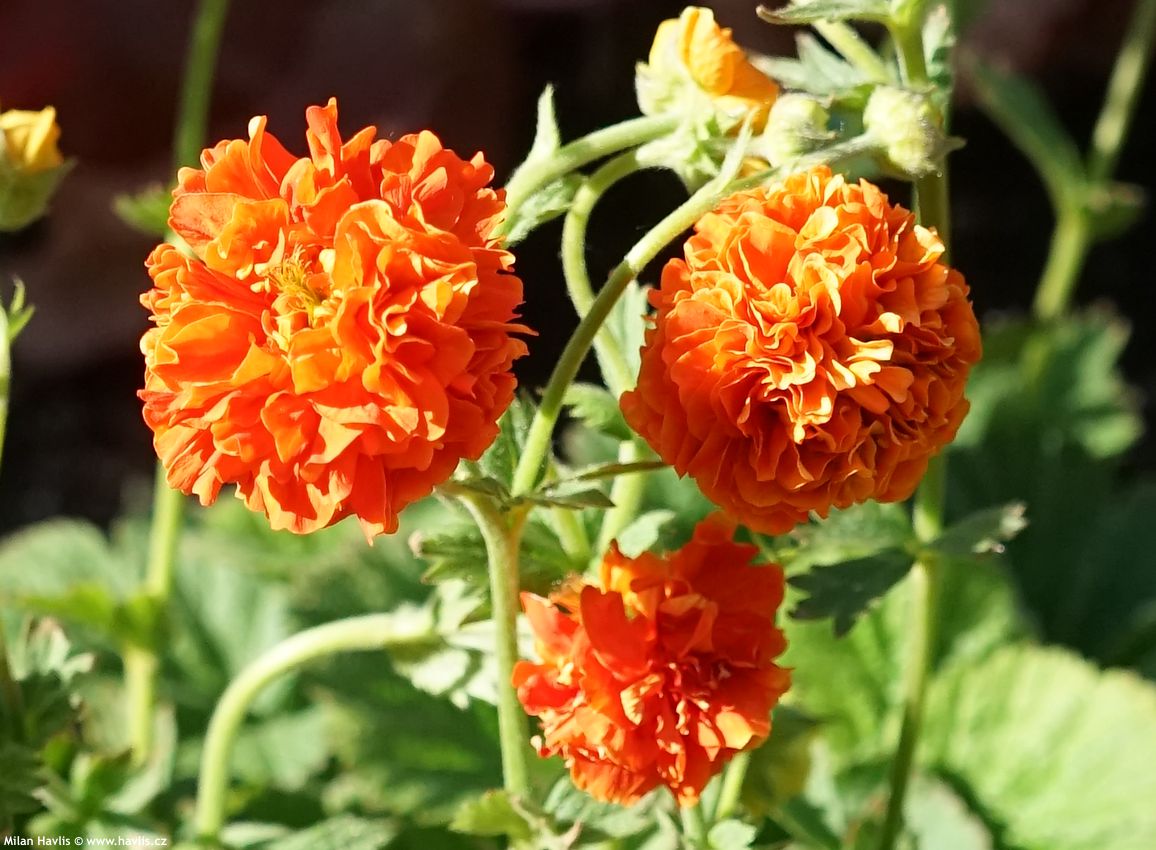
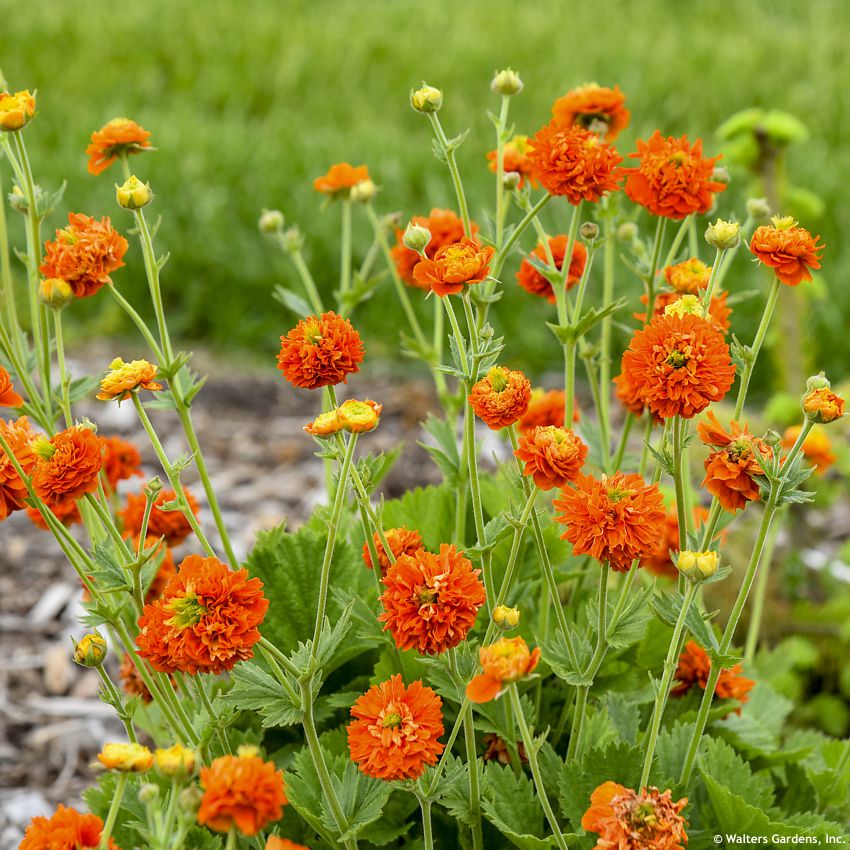
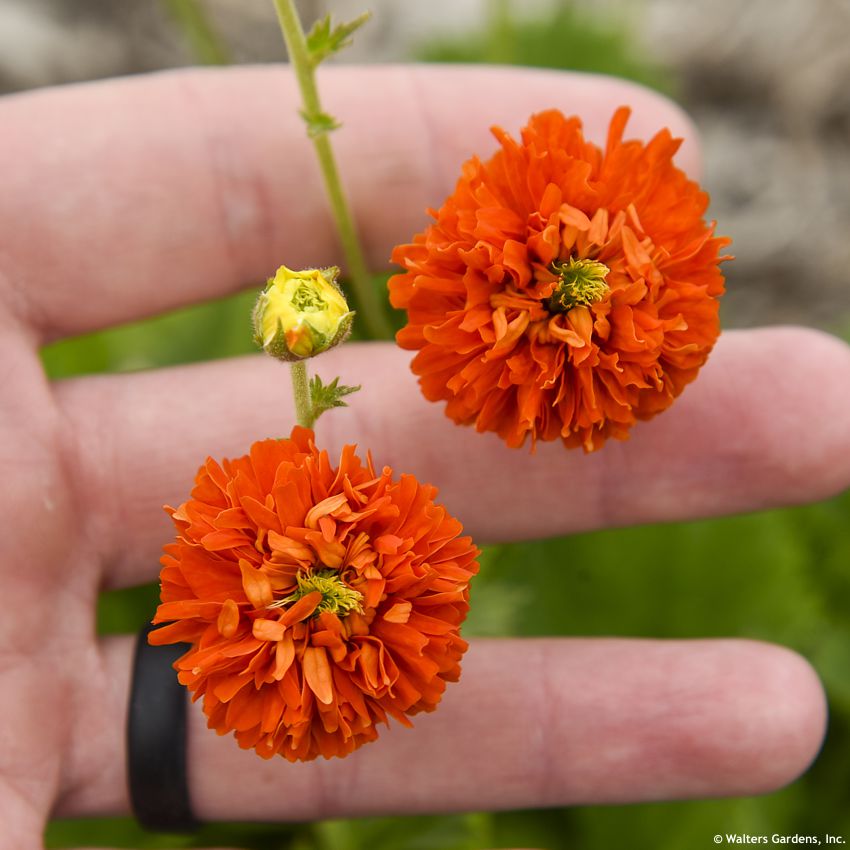
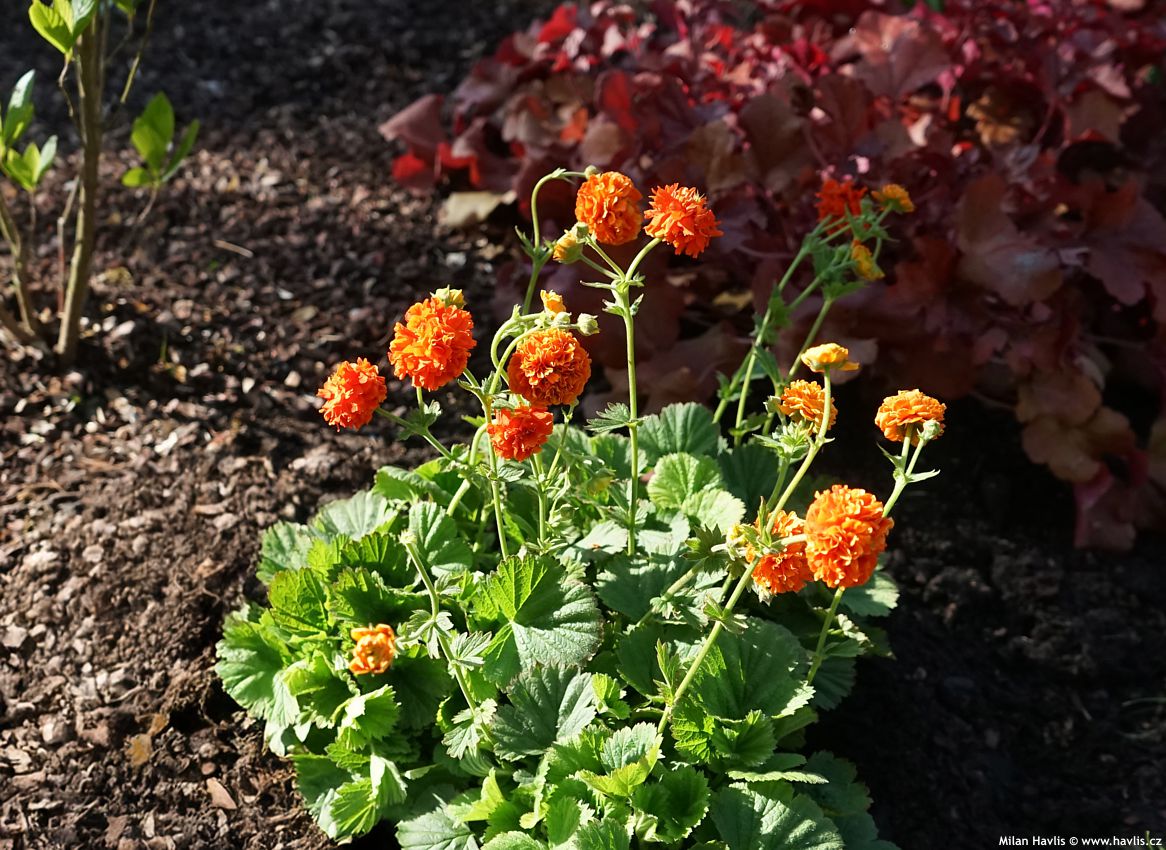
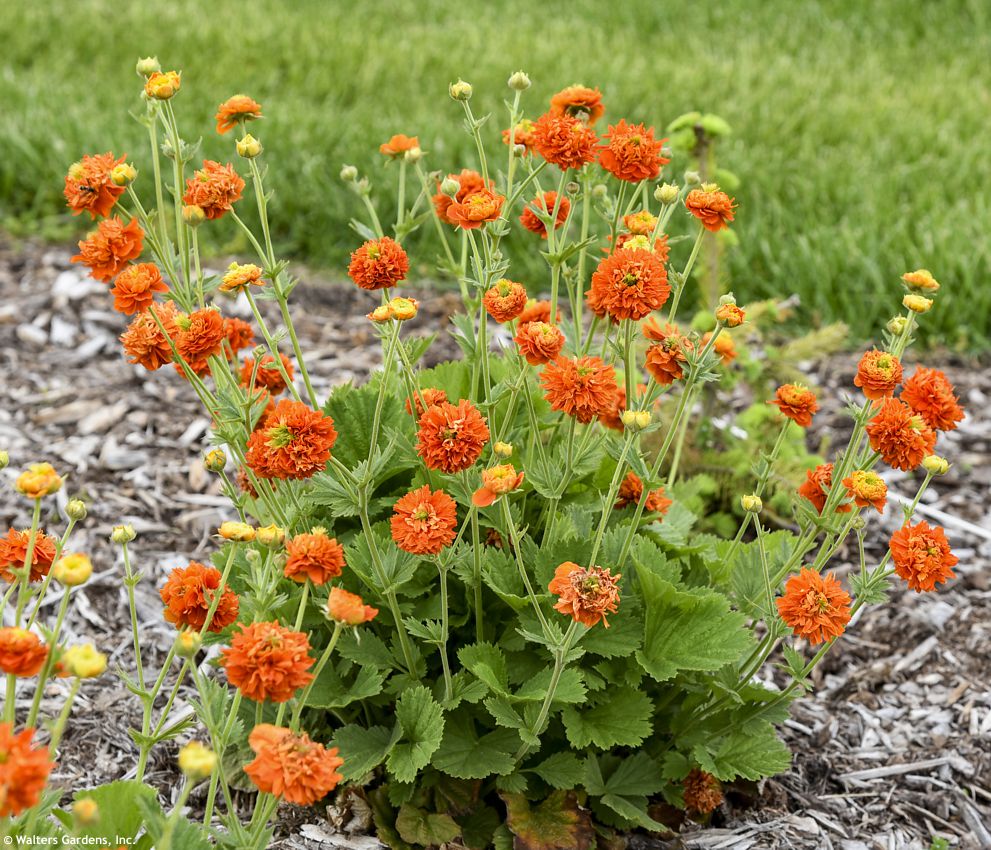
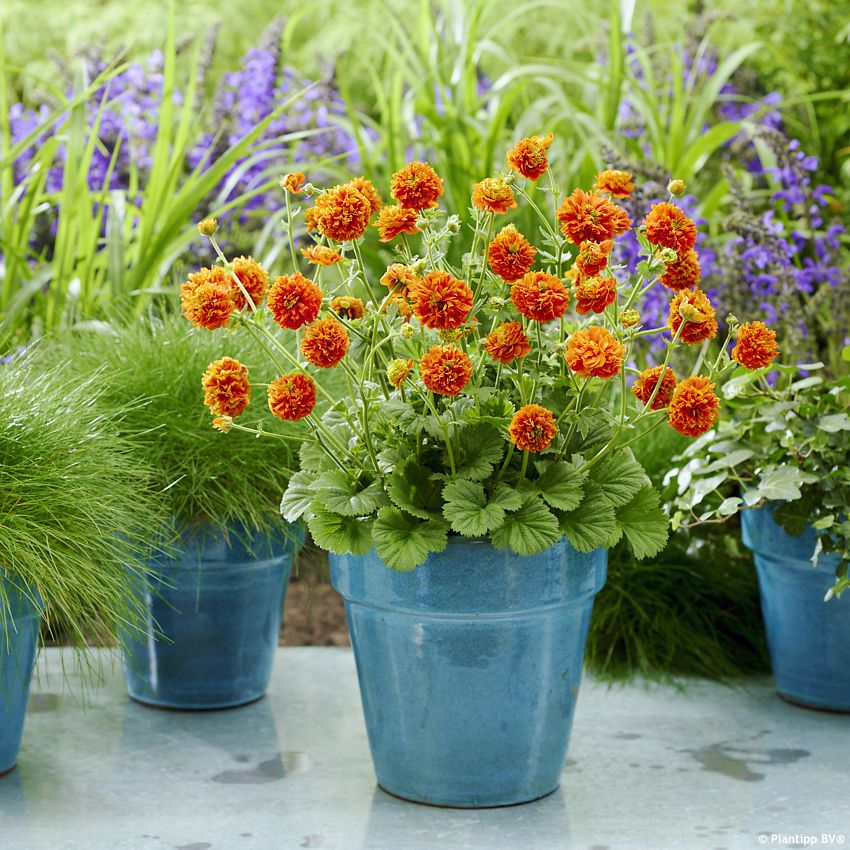
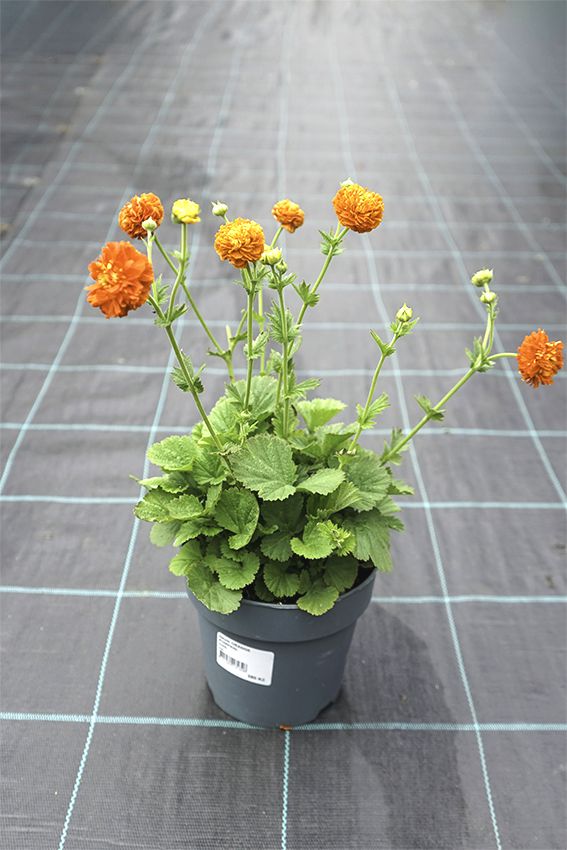
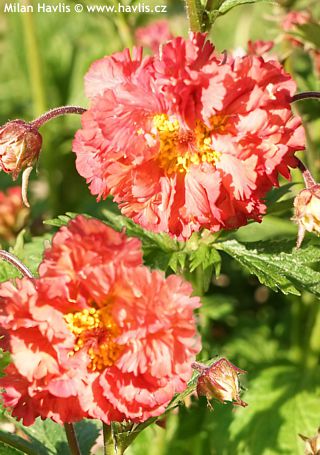
Orange Pumpkin avens belongs among modern cultivars and is characterised by uniquely fully double flowers in the vivid colour of Hokkaido pumpkin. Its greatest strength is its stable, long and repeat flowering from late spring into summer, often with a second flush in the cooler end of the season. The flowers have a warm orange tone with a soft apricot tint, and thanks to the dense number of petals they are full and appear lush. They are carried atop firm, slender, dark green stems about 40–50 cm tall, which hold well even in windy weather. The leaves are palmately lobed, forming a compact, lush, fresh‑green basal rosette. The whole clump looks clean and tidy throughout the season because the foliage regenerates well and does not suffer from premature ageing. Growth is moderately fast, and the clump typically reaches 30–40 cm in width.
‘Orange Pumpkin’ reached the shortlist of finalists at the prestigious Chelsea Flower Show in 2023, and in the Glazen Tulp Award 2024–2025 it won the People’s Choice Award as well as 3rd place in the main evaluation. The cultivar was bred by Armand Kremer of the German nursery Staudengärtnerei Green‑Globe, and European PBR no. 69562 was granted in 2025.
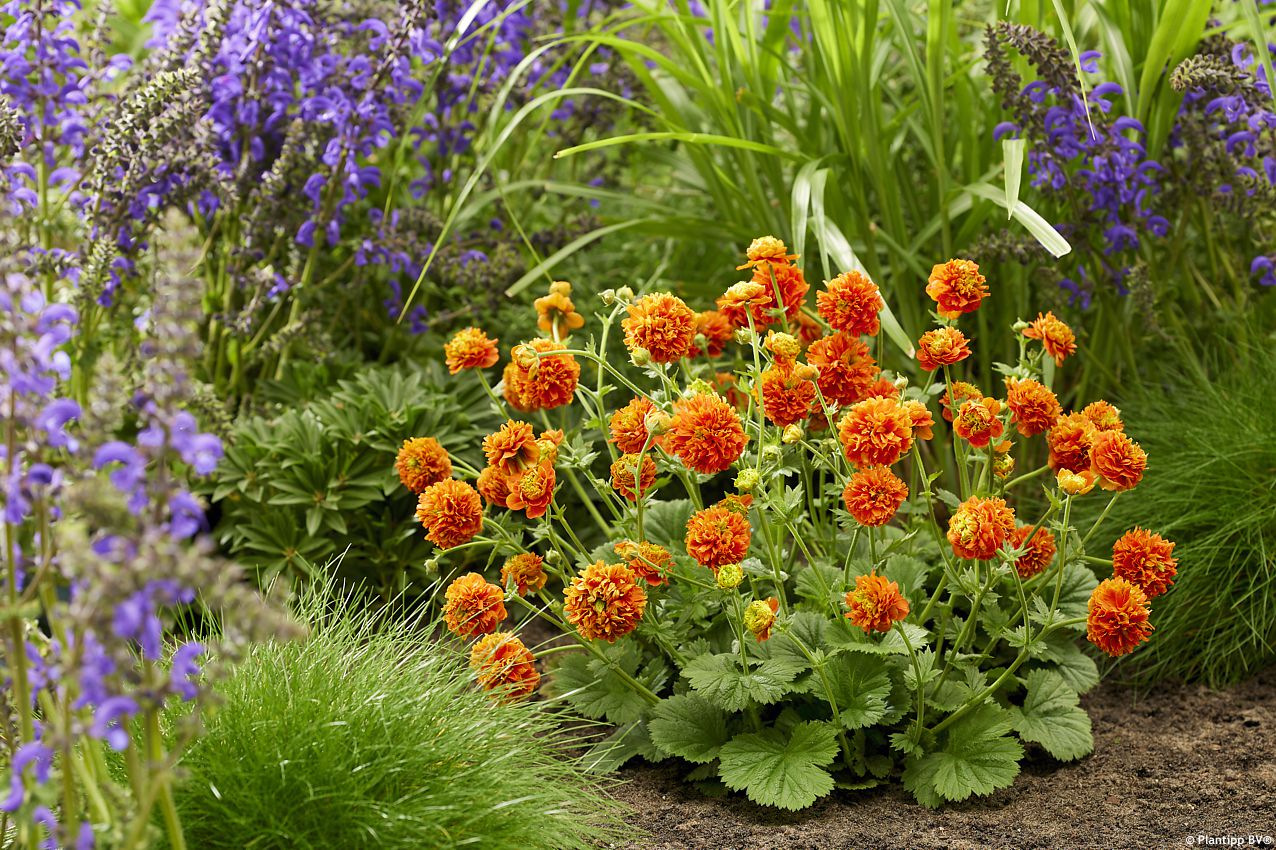
In the garden, it is worth making use of the three main strengths of Geum ‘Orange Pumpkin’. Its bright green leaves stand out beautifully beside dark‑leaved perennials such as ligularias or heucheras, and it performs well at the boundary between sunny and partially shaded borders, where it does not disappear into shade. Thanks to its compact growth it reliably fills the space between larger perennials without outgrowing them or weighing them down. The juicy orange colour of the flowers is cheerful and can brighten perennial compositions at a time when other clumps are only at the start of the season and not yet in bloom – daylilies are producing new leaves, gaura is still low to the ground and loosestrife is only just forming leafy stems. Because the cultivar is distinctly compact and slow‑spreading, it is best planted in groups of at least three to create a generous display.
Last update 21-05-2026
Hybrid avens are not demanding regarding soil; they cope with any ordinary, reasonably well‑drained ground regardless of pH or quality. They appreciate higher moisture, but hybrids with G. chiloense must not stand in permanently waterlogged soil, as they decline quickly. Conversely, hybrids with a share of G. rivale tolerate occasional or even prolonged waterlogging, making them suitable for wetter parts of the garden. With sufficient nutrients, avens respond with richer foliage and deeper leaf colour, while still flowering reliably even in poorer soils provided they receive enough sun. It is consistently confirmed that regular organic feeding every 2–4 weeks in the form of liquid fertiliser significantly prolongs the flowering period and increases its intensity compared with unfertilised plants. Avens are hardy to at least –29 °C and perform well even in outdoor containers, provided they have stable moisture and are not left in heavy, waterlogged soil over winter.
.jpg)
Goods are shipped all over Europe. For Russia and U.K. and for further details please read about SHIPPING OPTIONS HERE.
Are you interested in a serious discount for orders NOV-FEB? Check your options here.
THE PRICES INCLUDE VAT of 15%. For quick conversion you can use 1 CZK = approx. 0.04 EUR
- STANDARD QUALITY - Plants of this group are 1st class quality with number of branches and overall density adequate to their size and age, considering they were container grown.
- DE LUXE QUALITY - This label guarantees a luxurious quality of manually selected plants that, compared to their height and age, are exceptionally dense and beautiful.
- EXTRA - These plants are usually mature and bigger specimens with exceptional overall appearance.
- STANDARD (as described in the plant form) means a tree with a trunk of 190-210 cm and a crown at the top, unless specified differently. The commercial size for trees is their girth measured in the height of 1m from ground.
- HOBBY - These plants are of the same quality as our standard-quality plants but younger and therefore cheaper.
- SHRUB - a woody plant with branches growing bushy from the ground level.
- HALF-STANDARD or MINI-STANDARD - a small tree with shorter trunk, its size is usually specified.
- FEATHERED - These are trees with branches growing already from the base of the trunk and up along the stem.
- GRASSES and PERENNIALS - Sizes given usually read the diameter of the pot or the clump, as specified.
