











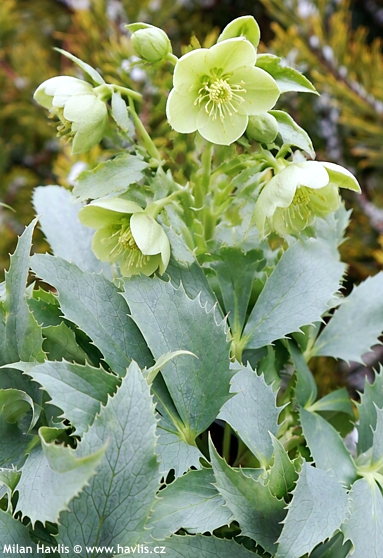
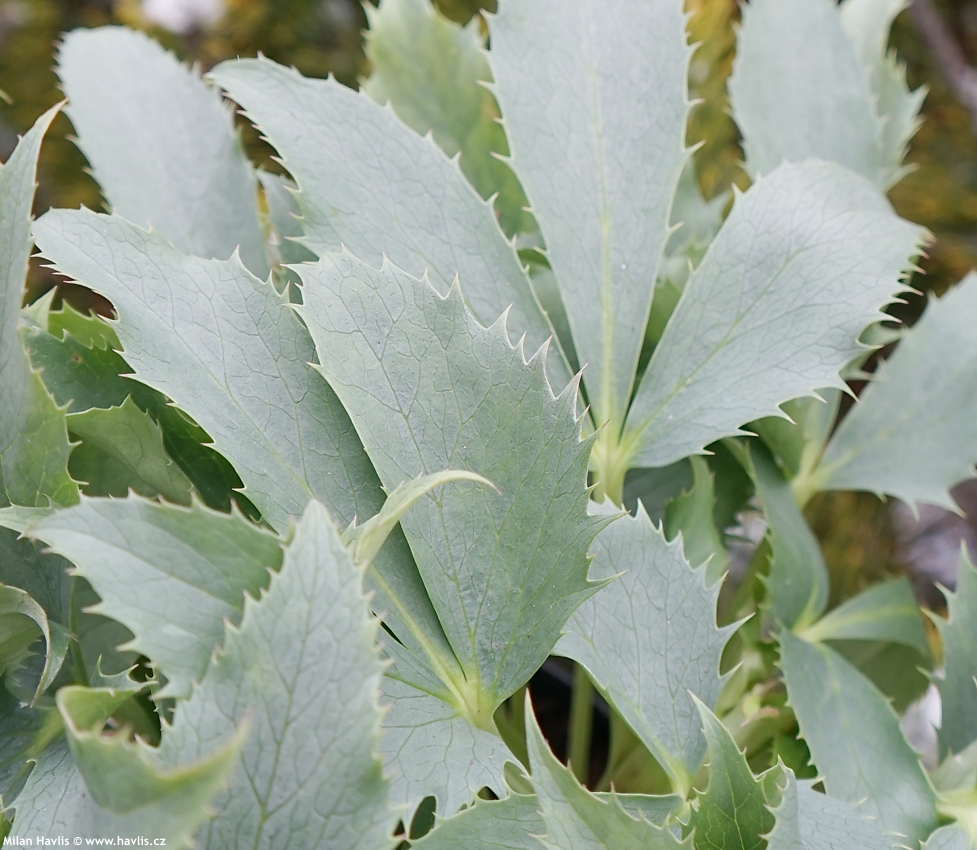
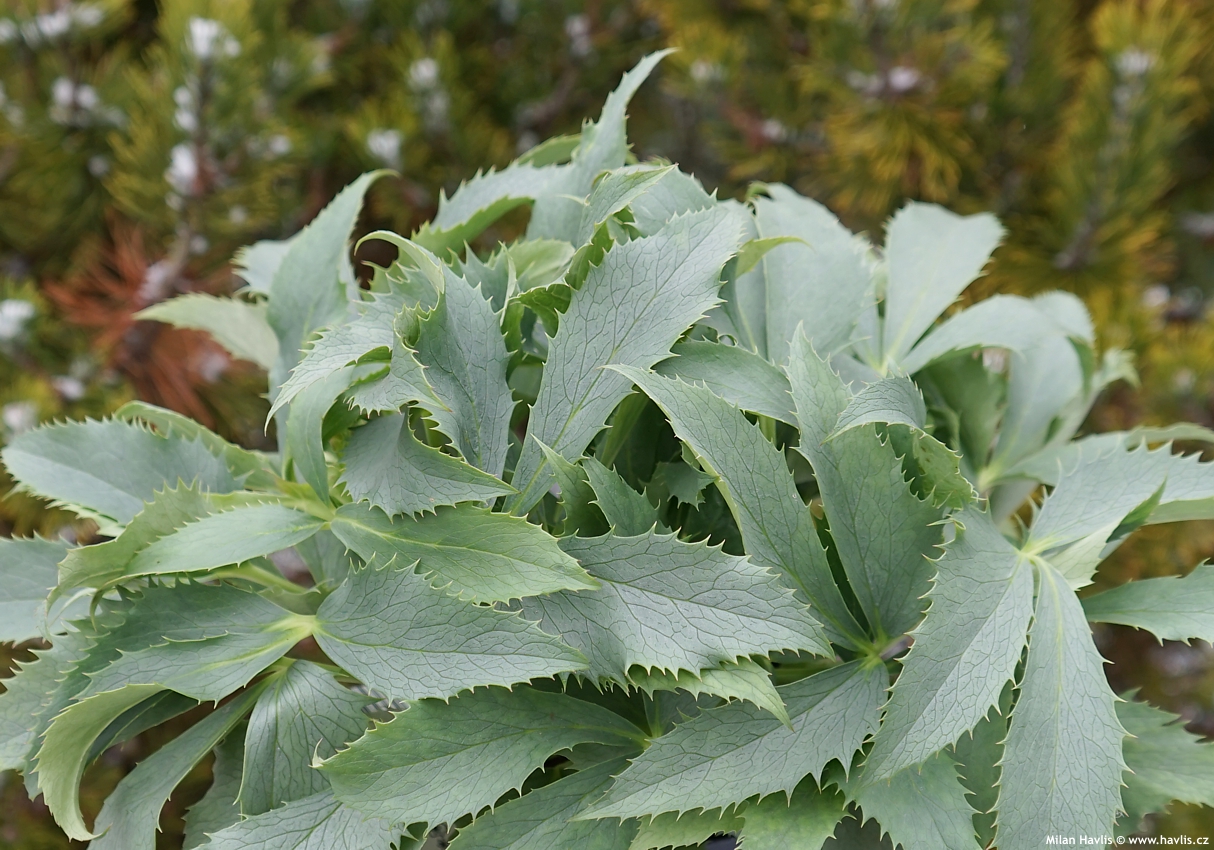
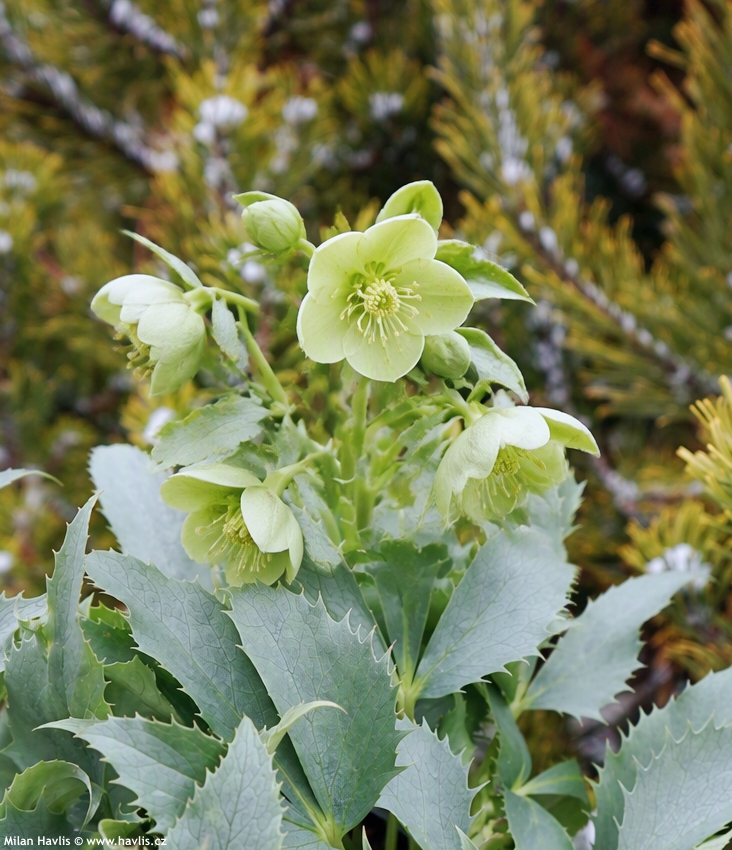
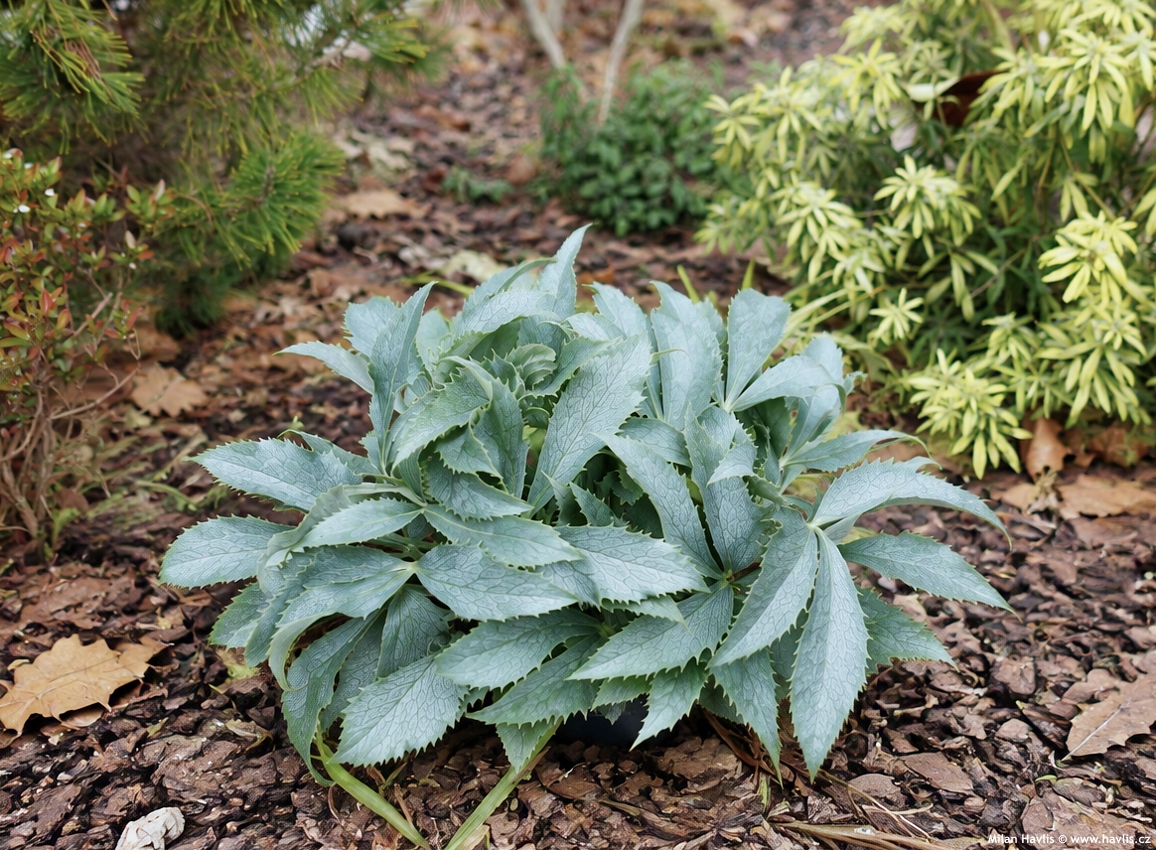
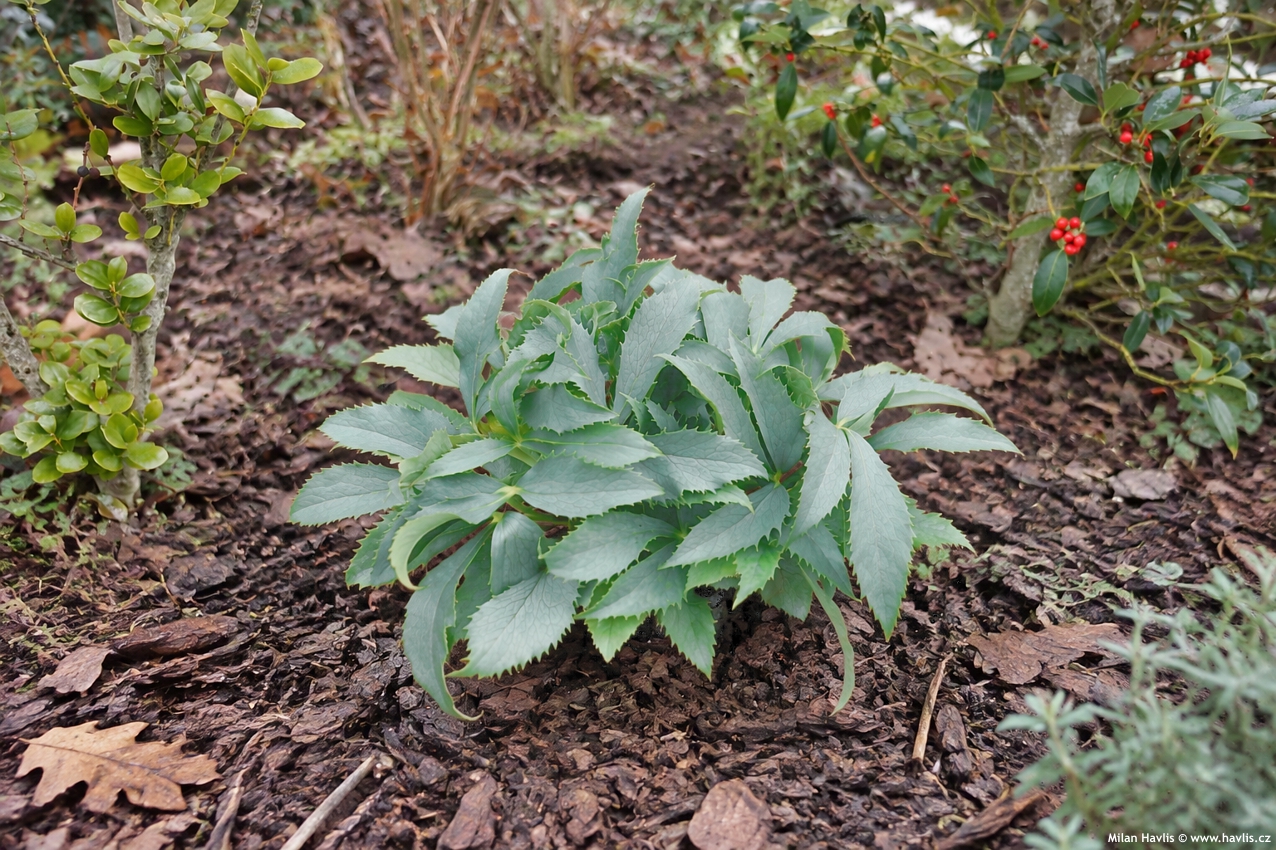
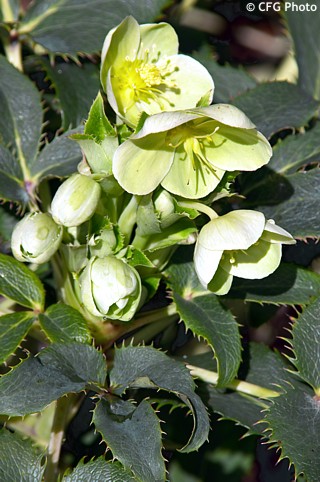
Helleborus argutifolius 'SILVER LACE' Corsican hellebore


 Symbivit Tric (arbuscular)
 Symbivit (arbuscular)
Helleborus
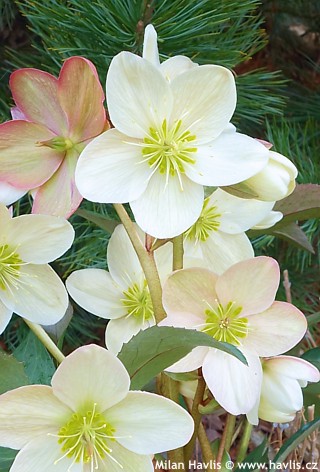
The genus Helleborus comprises roughly twenty species of perennial plants distributed mainly across Europe and western Asia, especially in the mountainous and sub‑montane regions of the Balkans, the Alps and the Apennines. Direct fossil evidence is lacking, but genetic relationships and present‑day distribution point to a very ancient origin, probably reaching deep into the Tertiary. Hellebores were already known to classical physicians, as shown by the writings of Hippocrates and Pliny the Elder, who used them as drastic medicinal remedies. This is reflected in the Greek etymology of the name, most often interpreted as a combination of helein (to kill) and bora (a deadly food). It refers to the plant’s highly poisonous properties, valued in antiquity as powerful purgatives but easily fatal when used without expertise. The genus received its modern name and place in botany in the mid‑18th century thanks to Carl Linnaeus (1707–1778), who described it in 1753 in Species Plantarum. Hellebores are no novelty in Czech and Slovak gardens either; our grandmothers already enjoyed their flowers in winter and early spring. The only thing that has changed since then are the cultivars and colours, which are ever more numerous and increasingly beautiful. They are evergreen perennials with a remarkably structured flower. The “petals” we see at first glance, white or coloured, are in fact enlarged sepals surrounding a ring of true petals – the corolla segments, usually periwinkle green and occasionally red, which have become tubular and bear the nectaries.
Corsican hellebore is native to the mountainous regions of Corsica and Sardinia, where it inhabits rocky slopes, open woodlands and scrubland exposed to a typical Mediterranean climate. The species was described by the Italian botanist Domenico Viviani (1772–1840), who published it in 1824 in his work Flora Corsicae Prodromus. Its distinguishing feature is its foliage, which is divided into three segments rather than the more typical five. It is among the largest-growing hellebore species and, unlike most of its relatives, is not a plant of damp mountain forests but one adapted to sun, drought and the rocky soils of the western Mediterranean. Thanks to this resilience, it has become an important parent of numerous garden hybrids and, together with the Balearic hellebore, gave rise to the well-known hybrid Helleborus × sternii. Its exceptional vigour, robust constitution and adaptability have made it one of the most valuable species used in modern hellebore breeding.
The leaves of Corsican hellebore are more sensitive to winter sunshine than those of most other species, so it performs best in a position sheltered from the harsh sun of late winter and early spring. Mulching is not essential for moisture retention, as this species is more drought tolerant than most hellebores, but it does help protect the roots from repeated cycles of freezing and thawing. Hellebores generally thrive in partial shade or filtered light, in humus-rich soils with a neutral to alkaline reaction and appreciate occasional feeding to encourage heavier flowering and healthier foliage, though it is not essential. Corsican hellebore is also unusual in being relatively short-lived, with individual plants often dying after four or five years. They usually leave behind self-sown seedlings, however, allowing the colony to renew itself naturally. If possible, plant it near an entrance or beneath a window where it can be enjoyed during the gloomiest weeks of the year. Once the first flower buds begin to appear, they are a reliable sign that spring is already waiting just around the corner. Hardy to approximately -23°C.

Goods are shipped all over Europe. For Russia and U.K. and for further details please read about SHIPPING OPTIONS HERE.
Are you interested in a serious discount for orders NOV-FEB? Check your options here.
THE PRICES INCLUDE VAT of 15%. For quick conversion you can use 1 CZK = approx. 0.04 EUR
- STANDARD QUALITY - Plants of this group are 1st class quality with number of branches and overall density adequate to their size and age, considering they were container grown.
- DE LUXE QUALITY - This label guarantees a luxurious quality of manually selected plants that, compared to their height and age, are exceptionally dense and beautiful.
- EXTRA - These plants are usually mature and bigger specimens with exceptional overall appearance.
- STANDARD (as described in the plant form) means a tree with a trunk of 190-210 cm and a crown at the top, unless specified differently. The commercial size for trees is their girth measured in the height of 1m from ground.
- HOBBY - These plants are of the same quality as our standard-quality plants but younger and therefore cheaper.
- SHRUB - a woody plant with branches growing bushy from the ground level.
- HALF-STANDARD or MINI-STANDARD - a small tree with shorter trunk, its size is usually specified.
- FEATHERED - These are trees with branches growing already from the base of the trunk and up along the stem.
- GRASSES and PERENNIALS - Sizes given usually read the diameter of the pot or the clump, as specified.
