












Helleborus 'Coseh 4000' HGC® ICE N' ROSES® EARLY ROSE hellebore, Lenten rose

 Symbivit Tric (arbuscular)
 Symbivit (arbuscular)
Helleborus
The genus Helleborus comprises roughly twenty species of perennial plants distributed mainly across Europe and western Asia, especially in the mountainous and sub‑montane regions of the Balkans, the Alps and the Apennines. Direct fossil evidence is lacking, but genetic relationships and present‑day distribution point to a very ancient origin, probably reaching deep into the Tertiary. Hellebores were already known to classical physicians, as shown by the writings of Hippocrates and Pliny the Elder, who used them as drastic medicinal remedies. This is reflected in the Greek etymology of the name, most often interpreted as a combination of helein (to kill) and bora (a deadly food). It refers to the plant’s highly poisonous properties, valued in antiquity as powerful purgatives but easily fatal when used without expertise. The genus received its modern name and place in botany in the mid‑18th century thanks to Carl Linnaeus (1707–1778), who described it in 1753 in Species Plantarum. Hellebores are no novelty in Czech and Slovak gardens either; our grandmothers already enjoyed their flowers in winter and early spring. The only thing that has changed since then are the cultivars and colours, which are ever more numerous and increasingly beautiful. They are evergreen perennials with a remarkably structured flower. The “petals” we see at first glance, white or coloured, are in fact enlarged sepals surrounding a ring of true petals – the corolla segments, usually periwinkle green and occasionally red, which have become tubular and bear the nectaries.
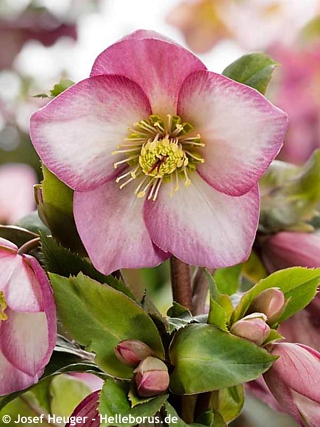
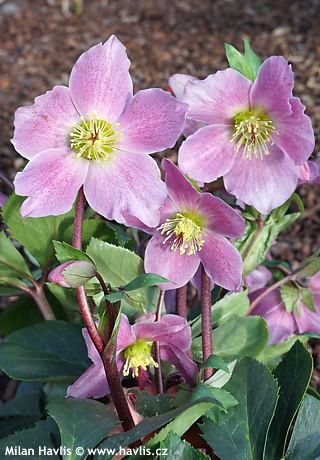
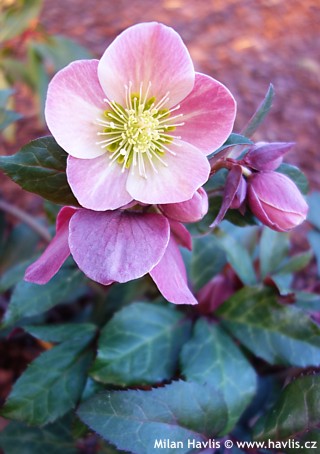
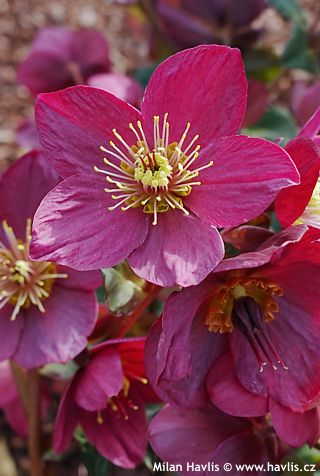
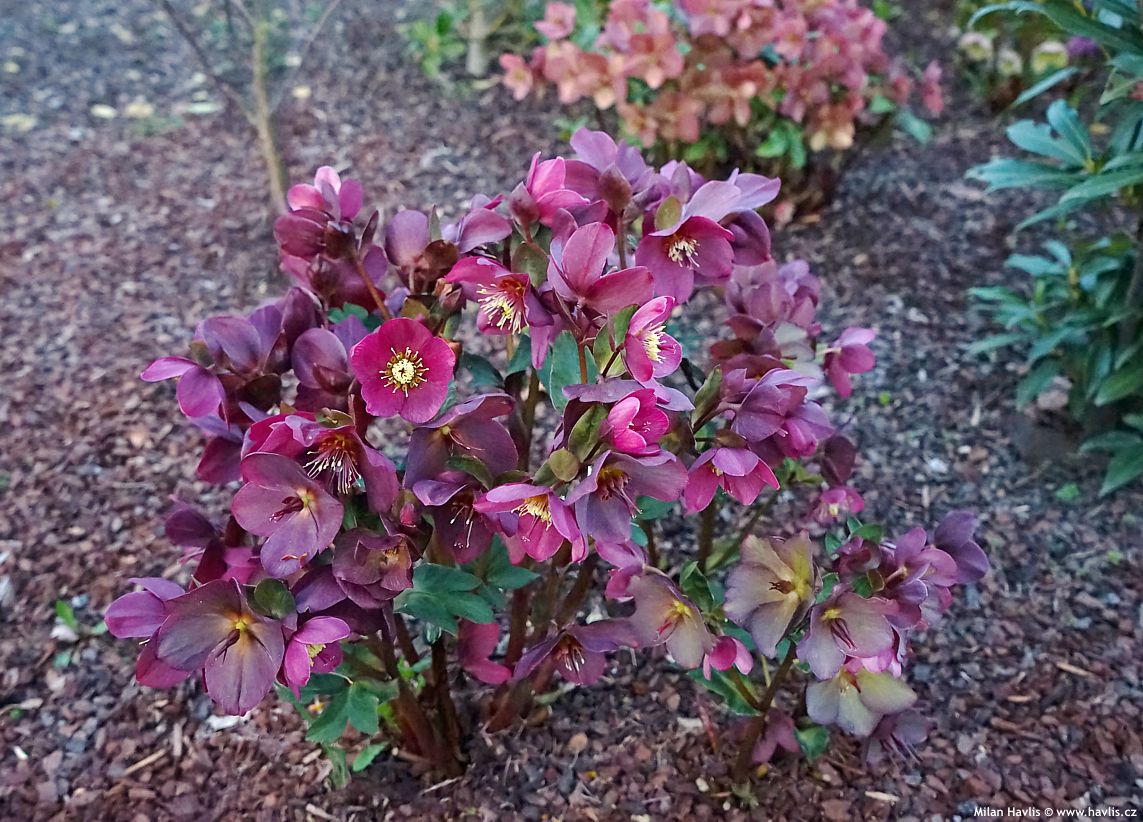
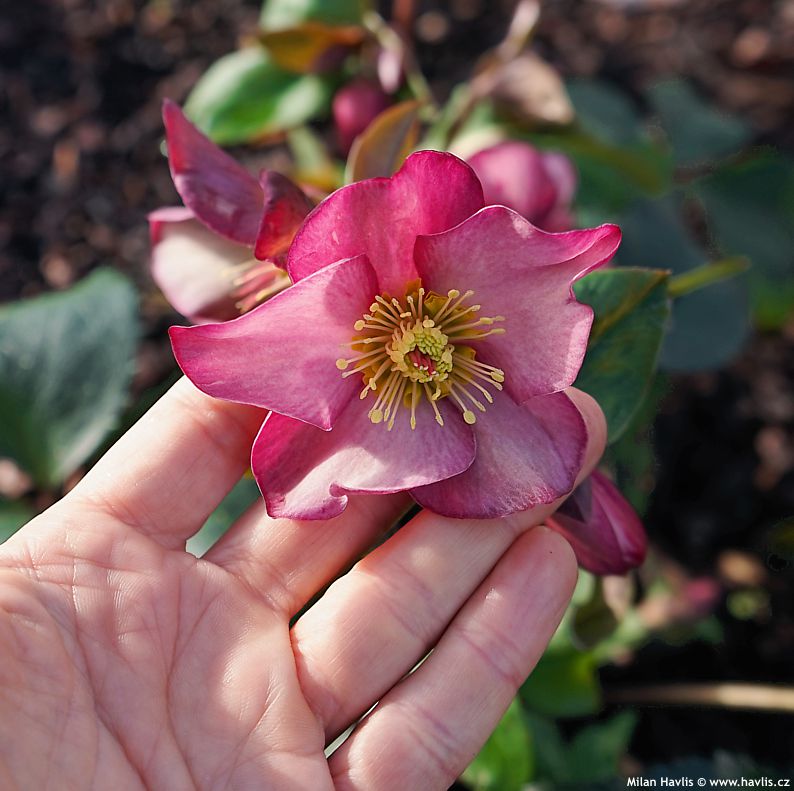
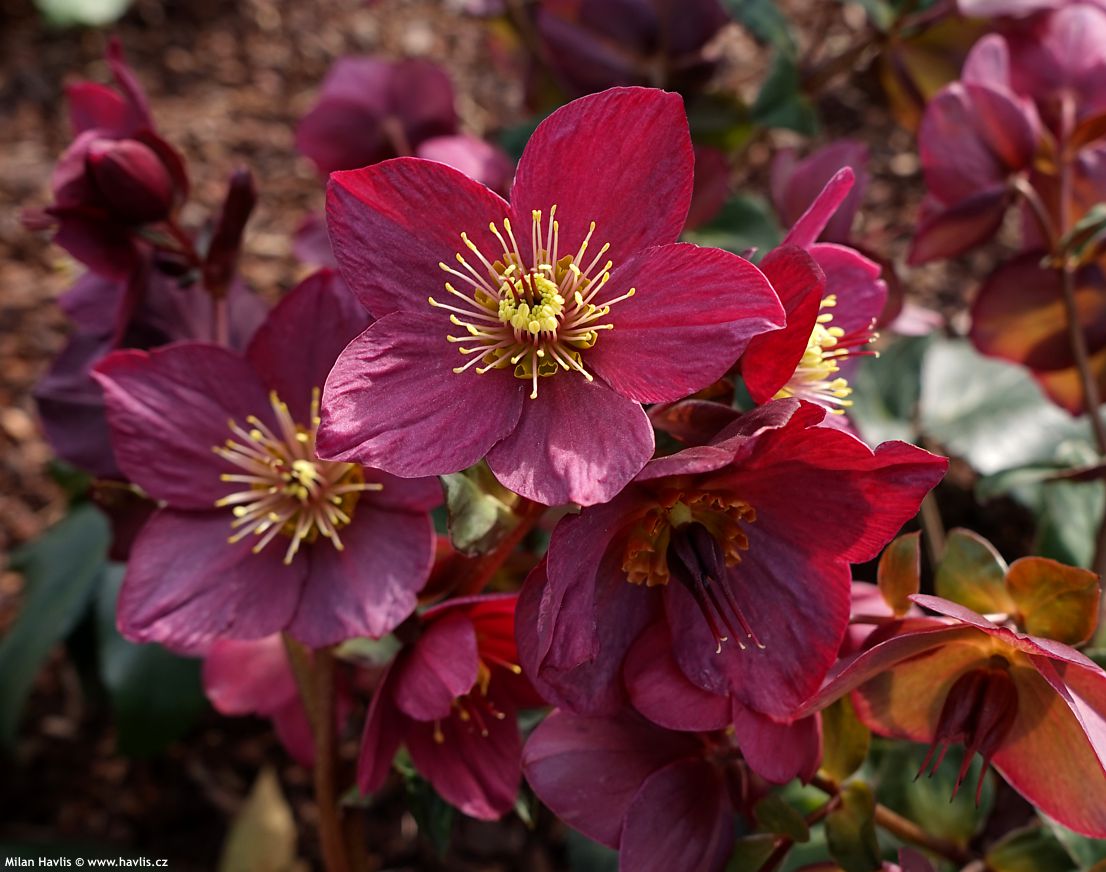
ICE N‘ ROSES® EARLY ROSE is a hellebore variety with 4-6 cm wide flowers which open from dark magenta buds into burnt pale pink colour with darker margins. Chartreuse sepals in the centre are paired with creamy white stamens. Evergreen leaves are leathery, palmate, deep green, and serrated at margins and form a compact clump. Stems are 30-40 cm tall. This is an early variety opening flowers already from late November. Granted patents: 47857 (Europe – 2017) and PP28294 (USA – 2017).
These hellebores from the Helleborus Gold Collection® (HGC) series have been bred by the German company Heuger since the mid‑20th century. Their modern series includes the most successful cultivars bred to date, in a wide range of colors and flower types. ICE N‘ ROSES® is an attractive series of early hellebores bred by Josef Heuger from Germany. It is a cross of h. x eriscmithii and h. x hybrida, and Josef Heuger named it in honour of his hometown Glandorf: helleborus x glandorfensis. It produces dense tufts with profusion of very large flowers which in warm winters come out in profusion from early December until February. In cold (normal) winters of zones 5-6 blooming starts from late February and lasts almost 3 months but individual varieties may vary.
Last update 06-12-2022
Hellebore likes heavy, evenly moist, neutral to alkaline, rich in humus soil in dappled shade or filtered sun. This hybrid will prefer at least half a day with direct sunlight. Fertilizing will increase flowering and help the leaves remain strong and nice throughout the winter. Grow it somewhere near your house entrance or close to the window you look out of frequently so that you can enjoy the plant when it starts flowering since at that time the weather outside is not yet ideal for walking around the garden. The flowers can cheer up a number of grey and dull days of late winter therefore thumbs up for hellebore! Harmful if eaten. Hardy to about -29 °C (USDA zone 5).