











Helleborus 'Sifra' VERBOOM SIFRA Christmas rose, hellebore

 Symbivit Tric (arbuscular)
 Symbivit (arbuscular)
Helleborus
The genus Helleborus comprises roughly twenty species of perennial plants distributed mainly across Europe and western Asia, especially in the mountainous and sub‑montane regions of the Balkans, the Alps and the Apennines. Direct fossil evidence is lacking, but genetic relationships and present‑day distribution point to a very ancient origin, probably reaching deep into the Tertiary. Hellebores were already known to classical physicians, as shown by the writings of Hippocrates and Pliny the Elder, who used them as drastic medicinal remedies. This is reflected in the Greek etymology of the name, most often interpreted as a combination of helein (to kill) and bora (a deadly food). It refers to the plant’s highly poisonous properties, valued in antiquity as powerful purgatives but easily fatal when used without expertise.
The genus received its modern name and place in botany in the mid‑18th century thanks to Carl Linnaeus (1707–1778), who described it in 1753 in Species Plantarum. Hellebores are no novelty in Czech and Slovak gardens either; our grandmothers already enjoyed their flowers in winter and early spring. The only thing that has changed since then are the cultivars and colours, which are ever more numerous and increasingly beautiful. They are evergreen perennials with a remarkably structured flower. The “petals” we see at first glance, white or coloured, are in fact enlarged sepals surrounding a ring of true petals – the corolla segments, usually periwinkle green and occasionally red, which have become tubular and bear the nectaries.
Hybrid hellebores now form a large and important group of these evergreen perennials, as they combine characteristics that no single species could provide on its own. One advantage is that hellebores are naturally highly variable, which is why the gradual crossing of several species has proved so successful. The foundation of most modern cultivars is Helleborus orientalis from Turkey and the Caucasus, valued for its remarkable diversity of flower colours and forms. Early winter flowering came from Christmas rose (H. niger) of the Alps and northern Balkans, while fragrant hellebore (H. odorus) from the Balkans contributed vigour, resilience and yellowish tones. Purple hellebore (H. purpurascens) from Romania and neighbouring regions enriched the range with purple shades and early flowering. Several lesser-known species also played their part. The Dalmatian hellebore (H. multifidus) from Croatia and Bosnia contributed finely divided foliage, Corsican hellebore (H. argutifolius) from Corsica added robust growth and bold evergreen leaves, while Mallorcan hellebore (H. lividus) brought marbled foliage and pink-flushed stems.
Important contributions to the breeding of modern hellebores were made by Helen Ballard (1908–1995), Eric Smith (1926–2018), David Hovland and Georgina Hovland of the Harvington strain, later joined by the German Heuger nursery and a number of contemporary European breeders responsible for many of today's double-flowered, anemone-flowered and unusually coloured cultivars.
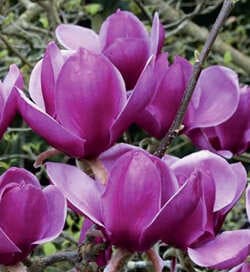
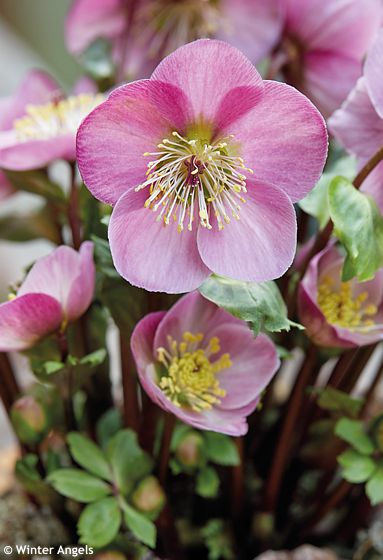
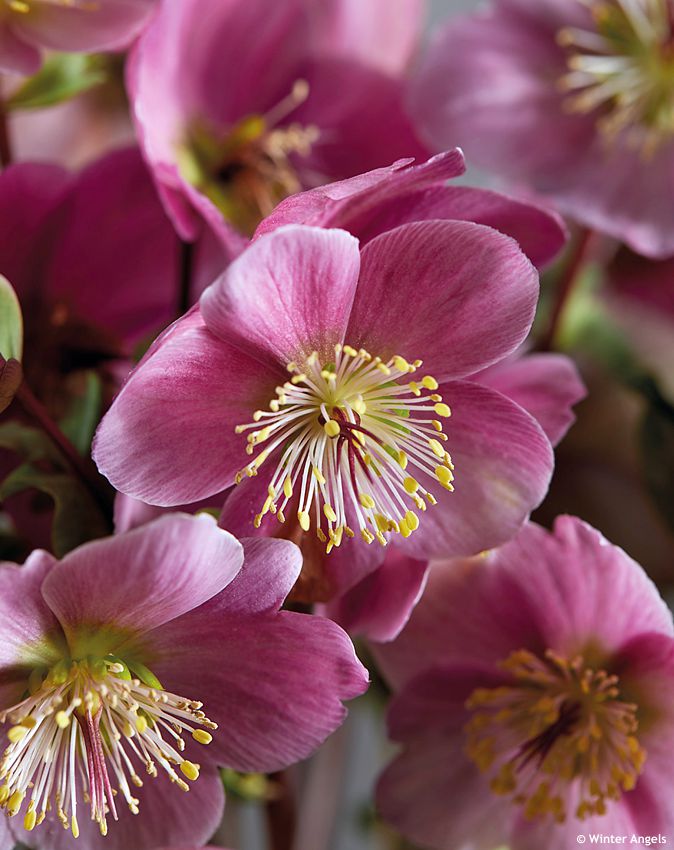
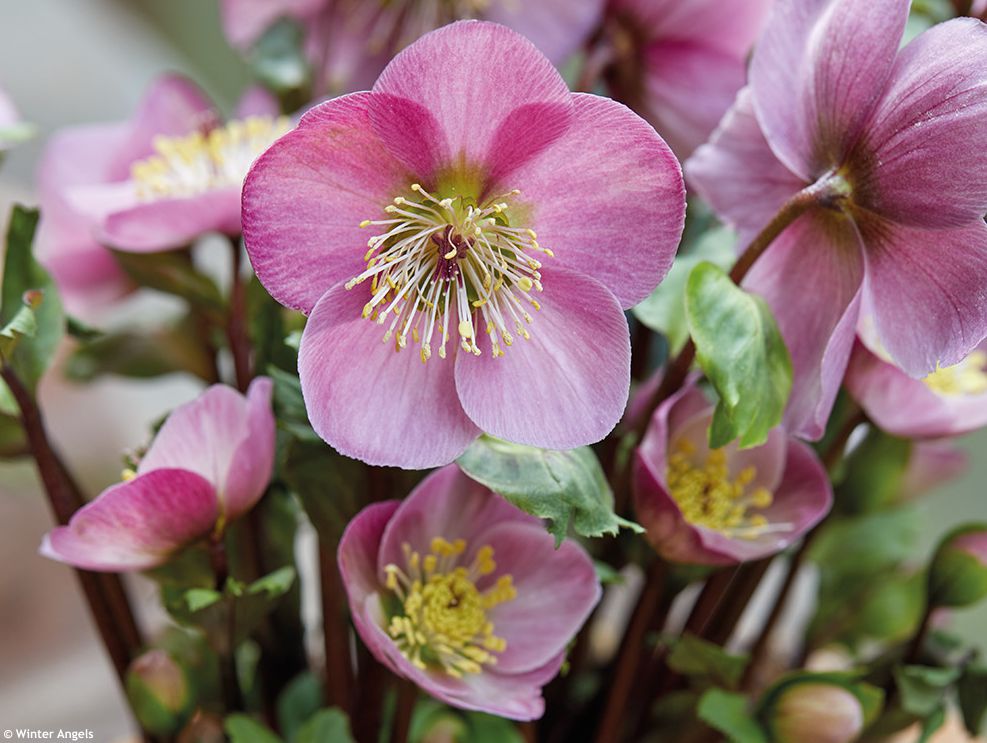
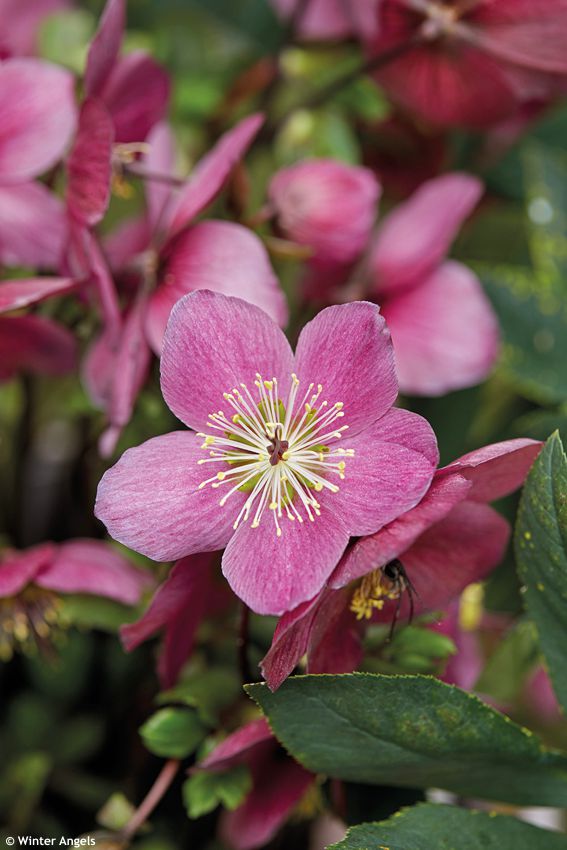
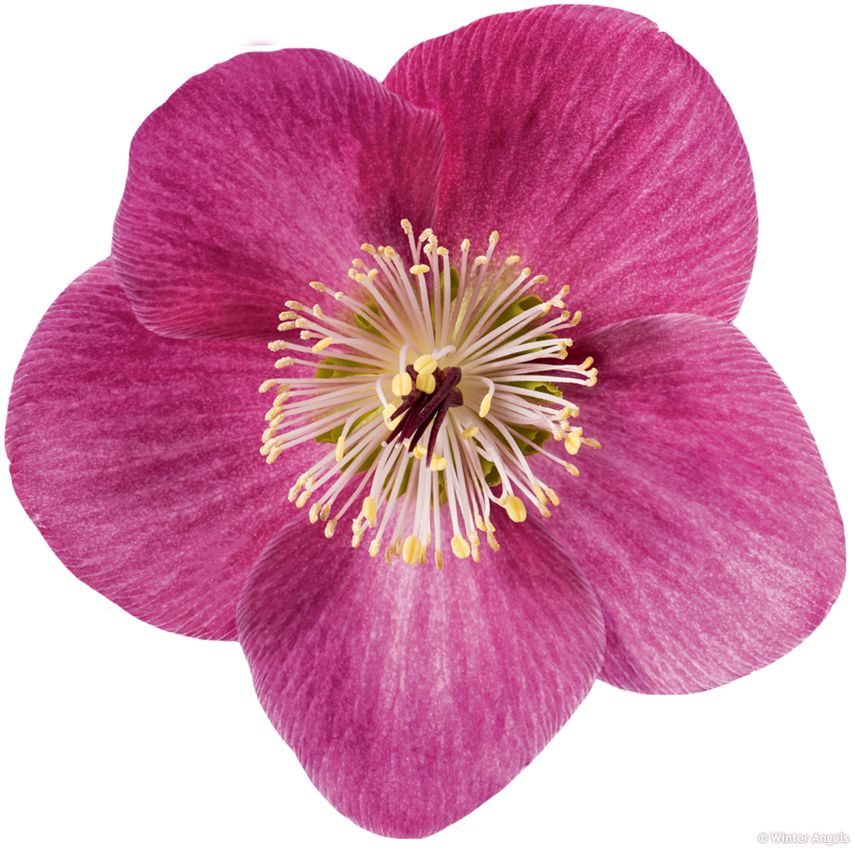
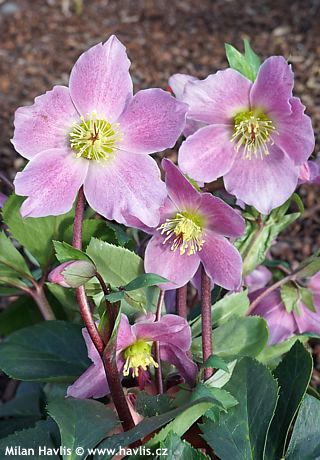
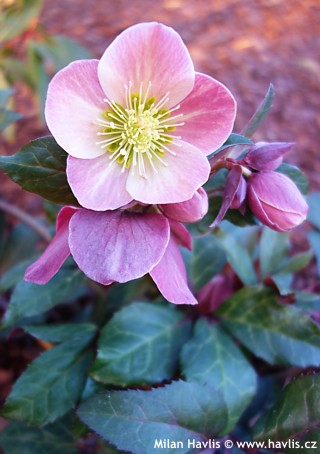
VERBOOM SIFRA is a small miracle among early-flowering hellebores, or perhaps a rather large one considering the size of its flowers. It combines two traits that long seemed almost incompatible: the exceptionally early flowering inherited from Christmas rose (H. niger) and the attractive pink colouring more commonly associated with Lenten rose (H. orientalis). The first flowers begin to open around Christmas, provided the onset of winter is not excessively severe. They are large, often reaching around 6 cm across, delicately pink yet far from flat or uniform in colour. Instead, they appear as though lightly dusted with raspberry tones that dissolve into softly blurred transitions between shades. The colouring is not entirely stable, however. In cool outdoor conditions, the flowers gradually deepen to richer pink and reddish hues, while plants grown indoors may fade to an almost pure white. The flower stems are sturdy, upright and typically reach 15–20 cm in height.
The evergreen leaves are leathery, glossy and deeply divided into usually five finger-like segments. As they may sometimes look rather tired after the growing season, it does no harm to remove them all just before flowering, allowing the fresh blooms and stems to take centre stage. The timing is important, though. Until then, the leaves help the plant gather the energy needed for healthy growth and abundant flowering. Fresh foliage emerges in spring. The cultivar is protected by European Plant Breeders’ Rights (PBR No. 53903), granted in 2020. It was bred by Johannes Teunis Verboom of the Dutch family-run nursery Verboom, founded in 1961. The nursery is well known among growers of hellebores and skimmias, having specialised in these genera for many years. Today, its hellebores are marketed under the brand name Winter Angels. Poetic, and rather fitting.
Last update 06-04-2025
Most hybrid hellebores share similar growing requirements. Any exceptions, such as differences in hardiness or site preferences, are always mentioned in the description of the individual cultivar. Hybrid hellebores perform best in partial shade or dappled light beneath deciduous trees and shrubs. The soil should be humus-rich, fertile, well-drained, yet not prone to drying out. They prefer neutral to alkaline conditions and dislike the acidic soils typically used for heathers and rhododendrons, including pure peat. They generally perform far better in heavier soils containing some clay. Once established, they tolerate short periods of drought reasonably well, but they look their best in soil that retains moderate moisture throughout most of the year. Prolonged waterlogging and sites exposed to intense year-round sun are best avoided.
Hellebores are long-lived plants and dislike frequent transplanting, so it pays to choose their position carefully from the outset. In spring, they appreciate an application of compost or a slow-release organic fertiliser. Older leaves can be removed in late winter or just before flowering, particularly if they are damaged, flattened or affected by disease. Fresh foliage usually emerges shortly after flowering. Most hybrid hellebores are fully hardy in our conditions to approximately –27 to –29 °C (USDA zone 5) and require no winter protection. Many cultivars also self-seed readily over time, producing interesting and often surprisingly different offspring in the garden. All parts of the plant are poisonous, though fortunately hellebores produce nothing particularly tempting to eat.

Goods are shipped all over Europe. For Russia and U.K. and for further details please read about SHIPPING OPTIONS HERE.
Are you interested in a serious discount for orders NOV-FEB? Check your options here.
THE PRICES INCLUDE VAT of 15%. For quick conversion you can use 1 CZK = approx. 0.04 EUR
- STANDARD QUALITY - Plants of this group are 1st class quality with number of branches and overall density adequate to their size and age, considering they were container grown.
- DE LUXE QUALITY - This label guarantees a luxurious quality of manually selected plants that, compared to their height and age, are exceptionally dense and beautiful.
- EXTRA - These plants are usually mature and bigger specimens with exceptional overall appearance.
- STANDARD (as described in the plant form) means a tree with a trunk of 190-210 cm and a crown at the top, unless specified differently. The commercial size for trees is their girth measured in the height of 1m from ground.
- HOBBY - These plants are of the same quality as our standard-quality plants but younger and therefore cheaper.
- SHRUB - a woody plant with branches growing bushy from the ground level.
- HALF-STANDARD or MINI-STANDARD - a small tree with shorter trunk, its size is usually specified.
- FEATHERED - These are trees with branches growing already from the base of the trunk and up along the stem.
- GRASSES and PERENNIALS - Sizes given usually read the diameter of the pot or the clump, as specified.
