












.jpg)
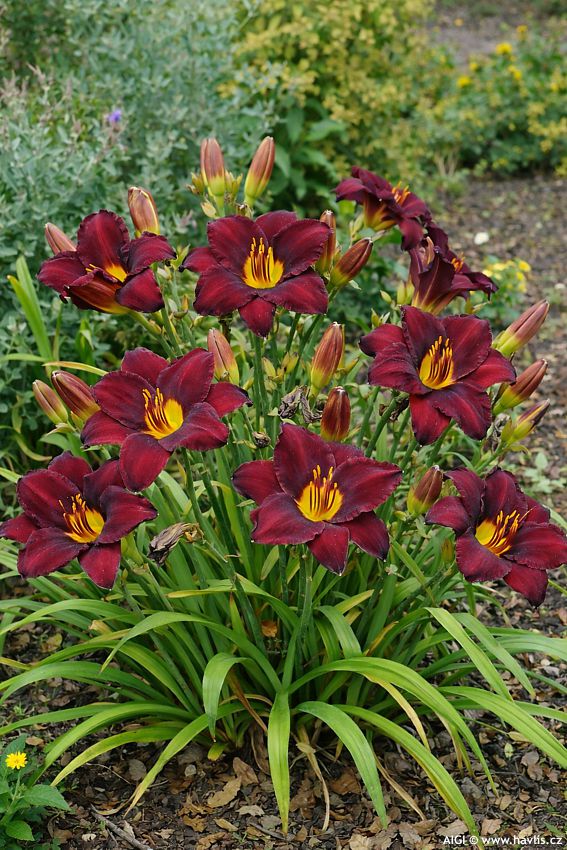
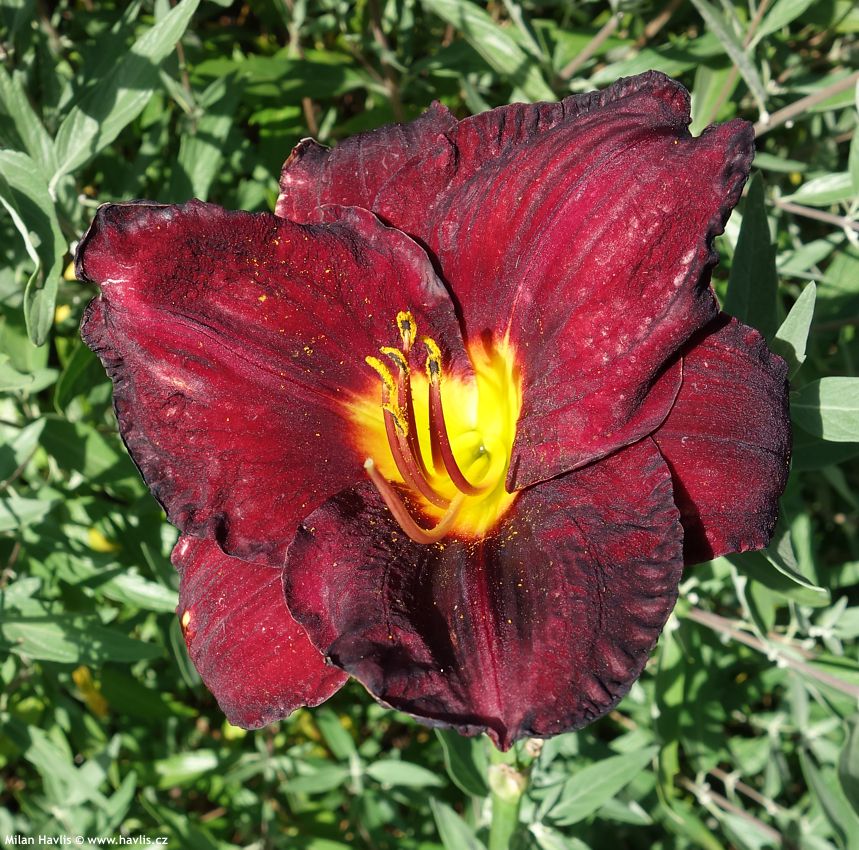
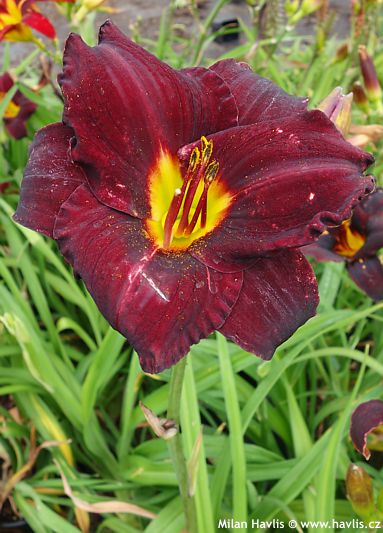
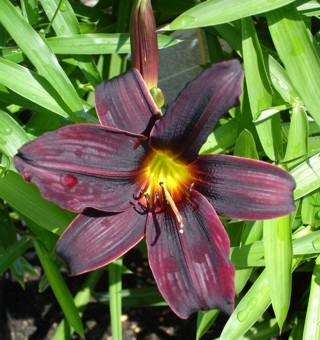
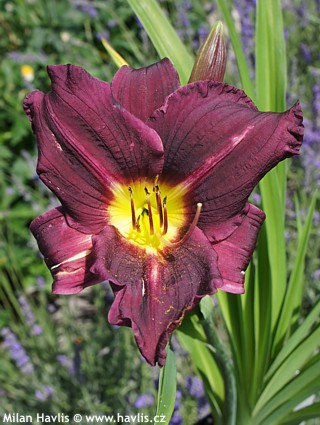
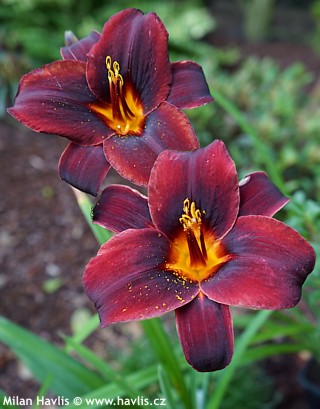
Hemerocallis 'CHOCOLATE CANDY' daylily (tetraploid)

 Symbivit Tric (arbuscular)
 Symbivit (arbuscular)
Hemerocallis
The genus Hemerocallis comprises roughly fifteen species of perennial herbs in the family Asphodelaceae, native to eastern Asia, where they grow along woodland margins, in grassy valleys and on moist slopes. They are characterised by grass‑like, two‑ranked leaves arising from short rhizomes and by flowering scapes bearing tubular to funnel‑shaped blooms that open for only a single day. This rhythm gave the genus its name: the Greek hemera means day and kallos beauty. The first formal description was published by Carl Linnaeus (1707–1778), yet several species had been cultivated in China for millennia as medicinal plants and vegetables. Daylilies reached Europe in the sixteenth century, but true breeding progress began only in the twentieth century in the United States, where thousands of cultivars were created with an astonishing range of colours, shapes, sizes and flower types. Modern collections include miniature forms, giant blooms, spider types, doubles and extremely free‑flowering lines that have placed daylilies among the most widely grown perennials in the world.
Daylilies have accompanied people for centuries, acquiring surprisingly different meanings across cultures. In China they were valued as medicinal plants, and their flower buds – the ‘golden needles’ – are still used in cooking as a delicate vegetable; at the same time they are regarded as a flower of forgetting one’s worries, as they were traditionally given as a gesture of comfort and care, a symbolism reflected in old literary and poetic records. In Korea they symbolised motherhood and feminine devotion, while in Japan they appear in poetry as an image of transience, opening in the morning and fading by evening. In European gardens they became popular for their reliability, longevity and ability to flower throughout summer with minimal care. And although each bloom lasts only a single day, the plant produces so many that a border appears as a continuously renewed wave of colour. Modern breeding has brought a spectacular array of colours and flower forms, from cream, lemon yellow, apricot, pink, red and wine shades to almost black tones, together with bold edges, bands, veining and ruffled margins that have made daylilies one of the most variable perennials of today. With a touch of humour, yet entirely deservedly, they are also counted among the plants described as “foolproof”, because they survive almost anything even the most inexperienced gardener might do to them.
Chocolate Candy is a tetraploid daylily cultivar with large flowers, approx. 14–15 cm across, coloured deep red to mahogany‑chocolate with a wine‑toned undertone and a yellow throat. The colour is stable, although it may lighten slightly in extreme heat. The blooms are tubular to broadly funnel‑shaped, with smooth margins and good substance, which allows them to hold their form well even in hot weather. The cultivar flowers from mid‑early to mid‑late season, usually in July, and is reliably remontant, producing a second flush of flowers after a short pause. Fragrance is not listed in the official register, yet in practice the flowers are pleasantly and noticeably scented. The blooms open during the day (diurnal). Scapes reach approximately 65–70 cm in height, carry a medium number of buds and flower evenly. The foliage is deciduous, which ensures excellent winter hardiness even in colder regions. Overall, it is a reliable, richly coloured cultivar with a long flowering season.
‘Chocolate Candy’ was bred by Patrick Stamile, one of the most influential American daylily hybridisers of the late 20th and early 21st centuries. Together with his wife Grace, he worked first in Florida and later in South Carolina, where he created hundreds of cultivars that significantly shaped the modern assortment. Stamile specialised in tetraploid lines, large‑flowered types, bold edges, strong contrasts and cultivars noted for their resilience and abundant flowering. Many of his introductions received prestigious awards such as the Stout Silver Medal or the Award of Merit. His work is valued for its combination of striking aesthetics and garden reliability, making him one of the most frequently cited hybridisers in the databases of the American Daylily Society and among collectors.
Last update 08-05-2026
Daylilies thrive in full sun or light partial shade and grow best in deeper, fertile, well‑drained yet consistently slightly moist soils. Thanks to their fleshy roots (rhizomes) they tolerate even prolonged dry periods without damage. They flower most abundantly in sunny positions and when clumps are divided every four to six years, which maintains vigour and prevents congestion in the centre. After flowering, the foliage of some cultivars may look tired, so it is advisable to remove the entire spent scapes and, when needed, the oldest or damaged leaves to maintain a clean appearance and encourage further blooming. Young shoots can be attractive to small shelled slugs, which slightly damage them visually, particularly in moist spring weather. The roots are very hardy in the ground and overwinter reliably even in severe winters; most cultivars tolerate temperatures down to around –40 °C (USDA zone 3). In containers they perform well only in sufficiently large pots with quality substrate, regular watering, feeding and protection from summer overheating, otherwise they dry out quickly and reduce flowering. They are long‑lived, reliable, undemanding and generally free from serious pests and diseases.

Goods are shipped all over Europe. For Russia and U.K. and for further details please read about SHIPPING OPTIONS HERE.
Are you interested in a serious discount for orders NOV-FEB? Check your options here.
THE PRICES INCLUDE VAT of 15%. For quick conversion you can use 1 CZK = approx. 0.04 EUR
- STANDARD QUALITY - Plants of this group are 1st class quality with number of branches and overall density adequate to their size and age, considering they were container grown.
- DE LUXE QUALITY - This label guarantees a luxurious quality of manually selected plants that, compared to their height and age, are exceptionally dense and beautiful.
- EXTRA - These plants are usually mature and bigger specimens with exceptional overall appearance.
- STANDARD (as described in the plant form) means a tree with a trunk of 190-210 cm and a crown at the top, unless specified differently. The commercial size for trees is their girth measured in the height of 1m from ground.
- HOBBY - These plants are of the same quality as our standard-quality plants but younger and therefore cheaper.
- SHRUB - a woody plant with branches growing bushy from the ground level.
- HALF-STANDARD or MINI-STANDARD - a small tree with shorter trunk, its size is usually specified.
- FEATHERED - These are trees with branches growing already from the base of the trunk and up along the stem.
- GRASSES and PERENNIALS - Sizes given usually read the diameter of the pot or the clump, as specified.
