










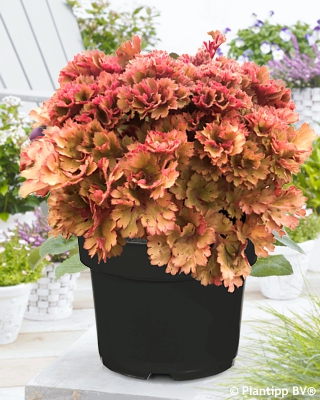
Heuchera 'Alchefril' FRILLY coral bells

 Symbivit Tric (arbuscular)
 Symbivit (arbuscular)
Heuchera
Heucheras – coral bells are undemanding yet striking perennials that have gained popularity thanks to their beautiful foliage and delicate flowers, sometimes appearing in rich inflorescences. They form dense clumps of leaves with a breathtaking range of colours. The genus was named after Johann Heinrich von Heucher (1677–1746), a German physician and professor. It includes around forty species of perennial plants, mostly native to North America, except for H. sichotensis from the Russian Far East. To Europe, heucheras were introduced in the 18th century. their classification can be quite challenging as in the wild, these plants often crossbreed, and their flowers change shape significantly as they mature. That’s why so many breeders are drawn to them – their variable gene pool invites experimentation, and the thrill of discovering something new at the end of a breeding attempt is simply irresistible 😊.
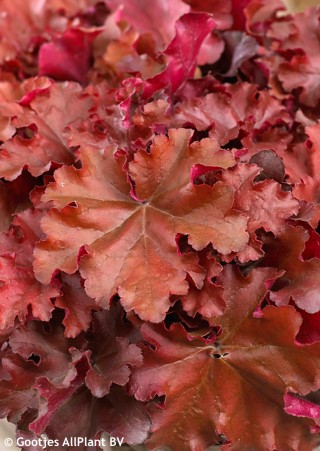
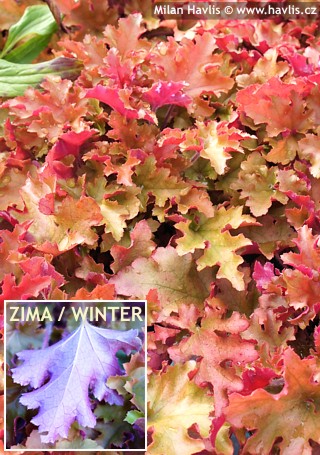
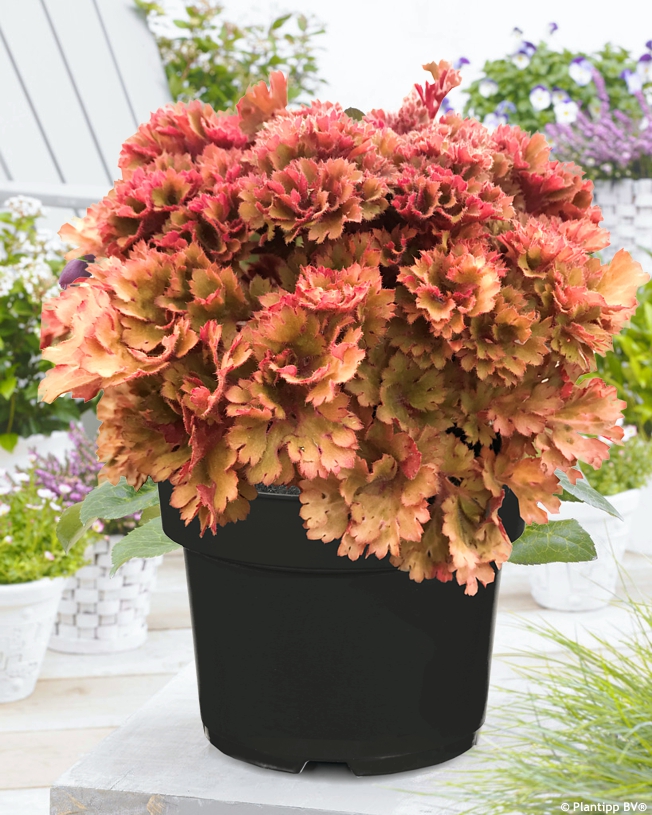
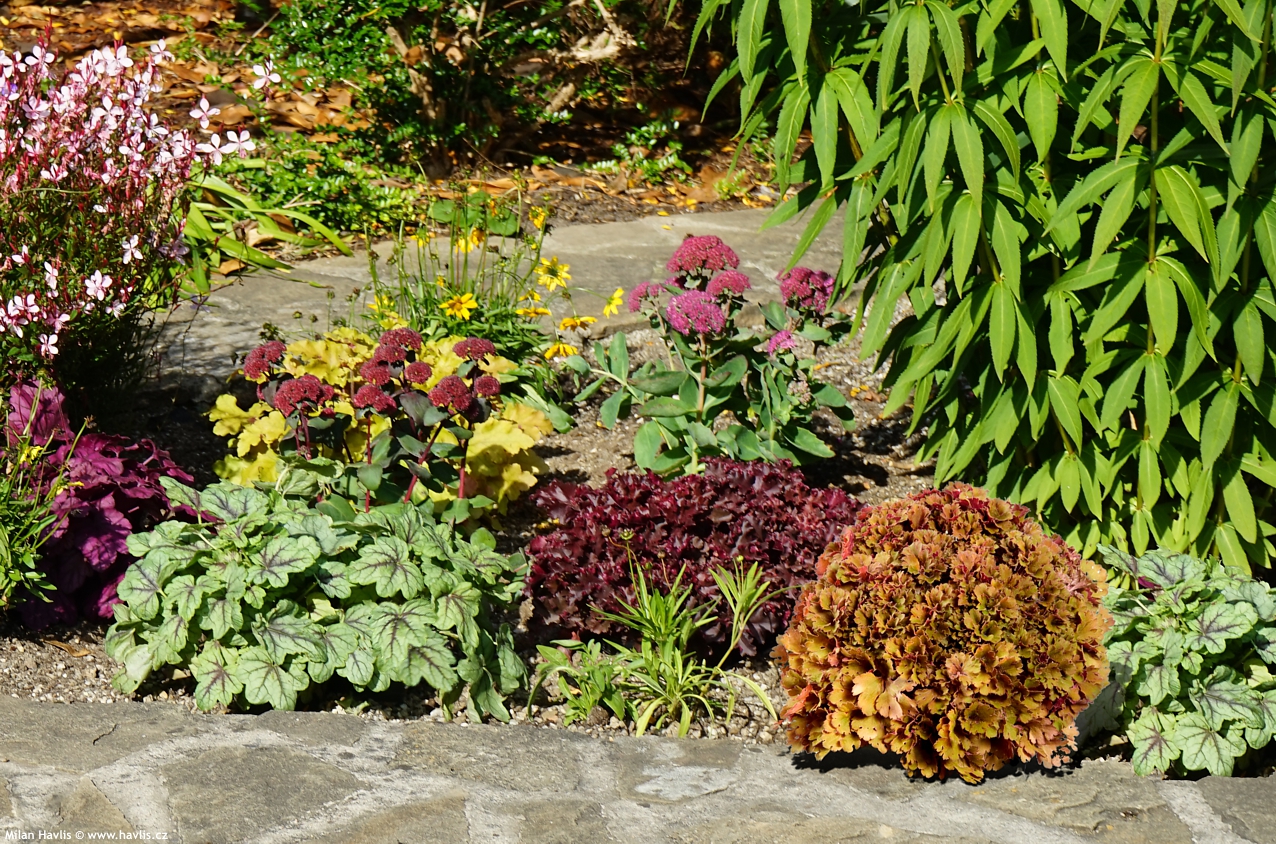
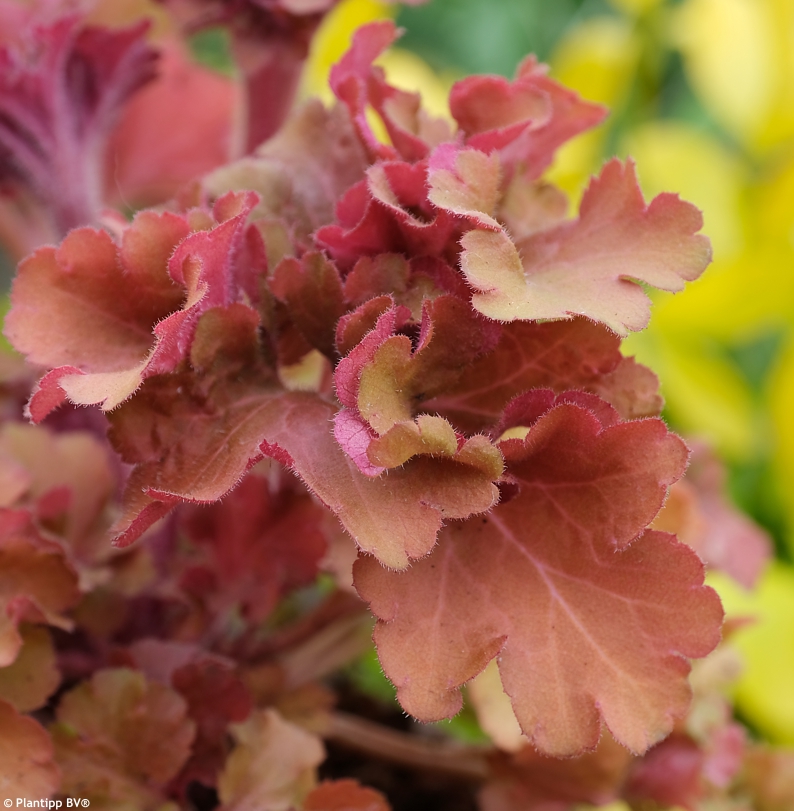
FRILLY is a coral bells variety bred by Neil Alcock in his nursery N.A. Horticulture in Caernarfon in Wales, UK. It was first introduced at KVBC Spring Challenge 2021 where it was awarded Bronze Medal. FRILLY heuchera is unique for its congested growth and attractive colour. Its heavily ruffled leaves are arranged closely one next to another, forming more of a cabbage head rather than a loose tuft we are used to in most other varieties. The colours is caramel orange with some green hues and pale magenta, hairy undersides. It grows slowly about 40 cm tall and wide and remains evergreen in mild winters. No flowers have been observed so far.
Coral bells can take almost any soil with ample moisture and good drainage. They do best in partial shade or filtered sun, however, if you make sure they will not dry out you can place them in full sun, too. They can also live in dark shade where their colours will not be too rich, such location is usually best for light coloured varieties. Cut off all leaves in early spring to encourage growth of new foliage. Fully hardy to abt. -34 °C (USDA zone 4), and suitable for outdoor pots.
Last update 17-02-2022