.jpg)
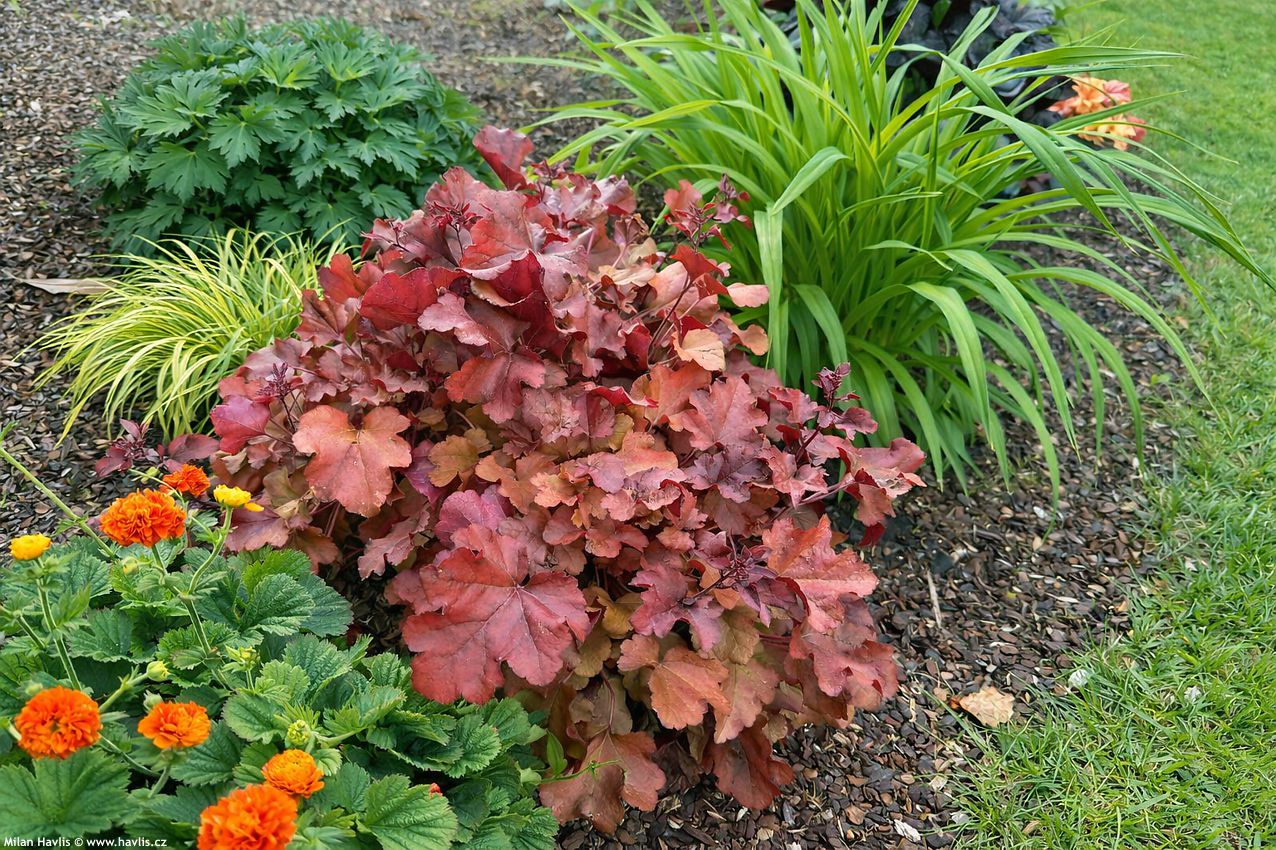
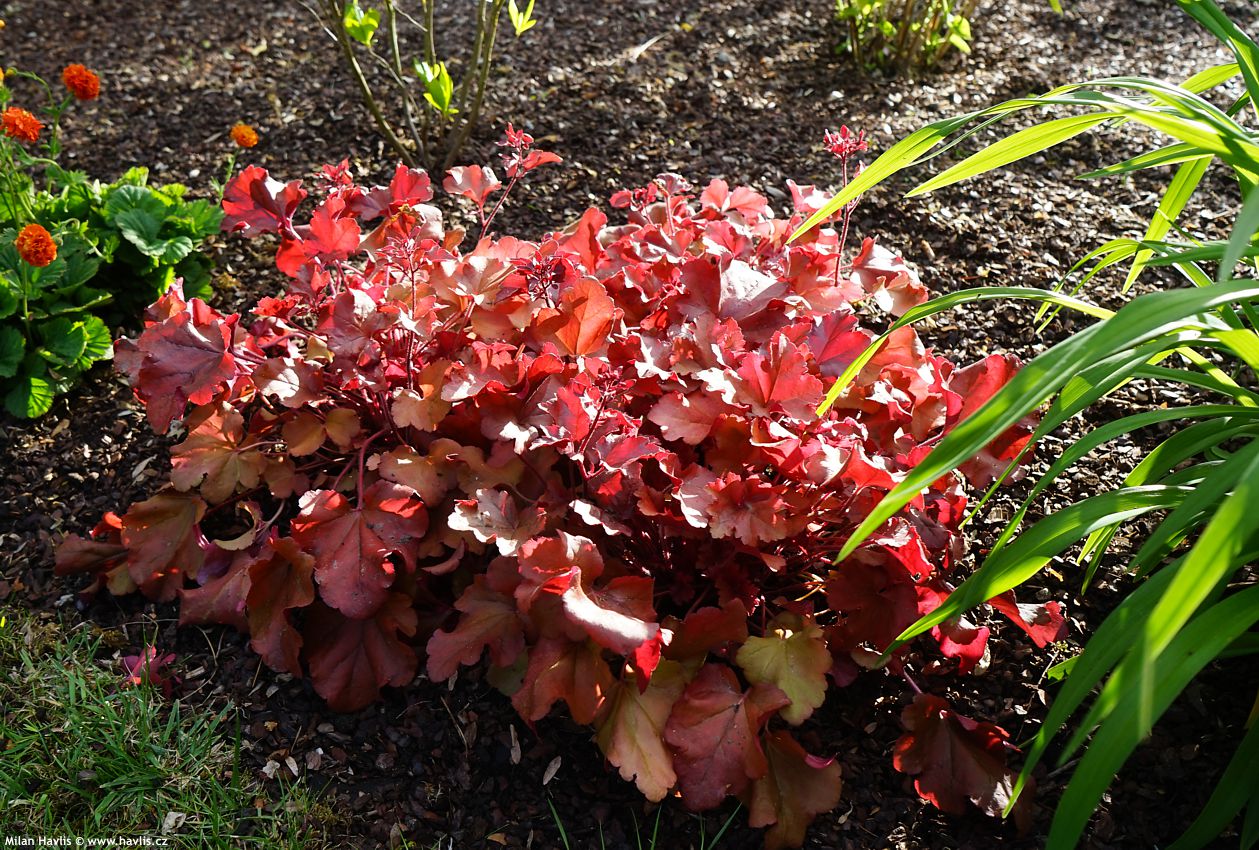
Heuchera (Berry series) 'Ifhepr' CRANBERRY coral bells

 Symbivit Tric (arbuscular)
 Symbivit (arbuscular)
Heuchera
Heucheras – coral bells – are low-maintenance yet striking perennials that have gained popularity for their beautiful foliage and delicate flowers, sometimes appearing in abundant inflorescences. They form dense clumps of leaves, boasting an astonishing range of colors. The botanical genus Heuchera was named after Johann Heinrich von Heucher (1677–1746), a German physician and professor. There are approximately 37 species but classifying them is quite tricky – plants hybridize freely, and their flowers significantly change shape as they mature. No wonder so many breeders are fascinated by them - it’s simply thrilling to experiment with their dynamic gene pool and eagerly await to see what new marvel appears at the end of each attempt. 😊
Jelle van den Haak from the Netherlands is one of those enthusiastic breeders who has fallen in love not only with heucheras but also with many other perennials. He is the almighty guru who has developed the utterly awesome Sunseekers series of echinaceas, which feature absolutely stunning colors. He follows a similar approach with his Indian Summer series of heucheras, naming newly acquired varieties after different edible berries or anything fruit-related that their leaf colours resemble. So far, the lineup includes MULBERRY ORANGEBERRY, HUCKLEBERRY, GOJIBERRY, BOYSENBERRY, CORALBERRY, CHERRYBERRY, SPLASHBERRY, CRANBERRY a GREENBERRY. So now what, wanna try one?
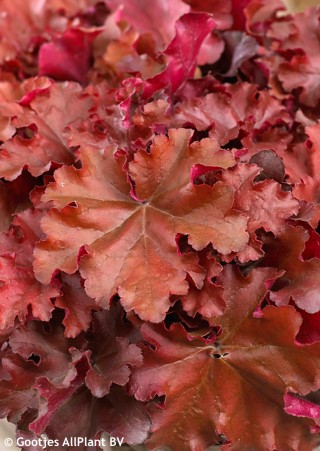
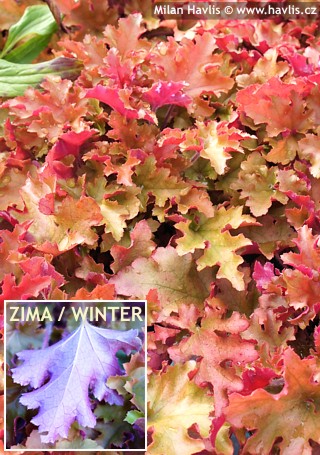
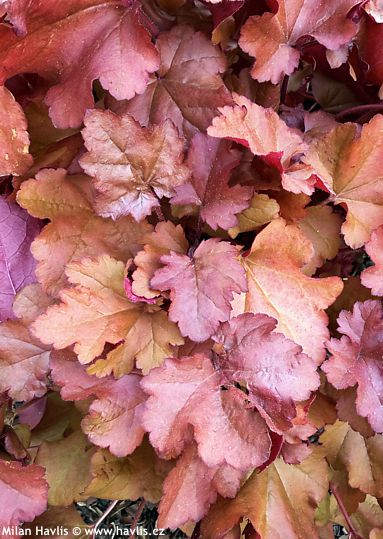
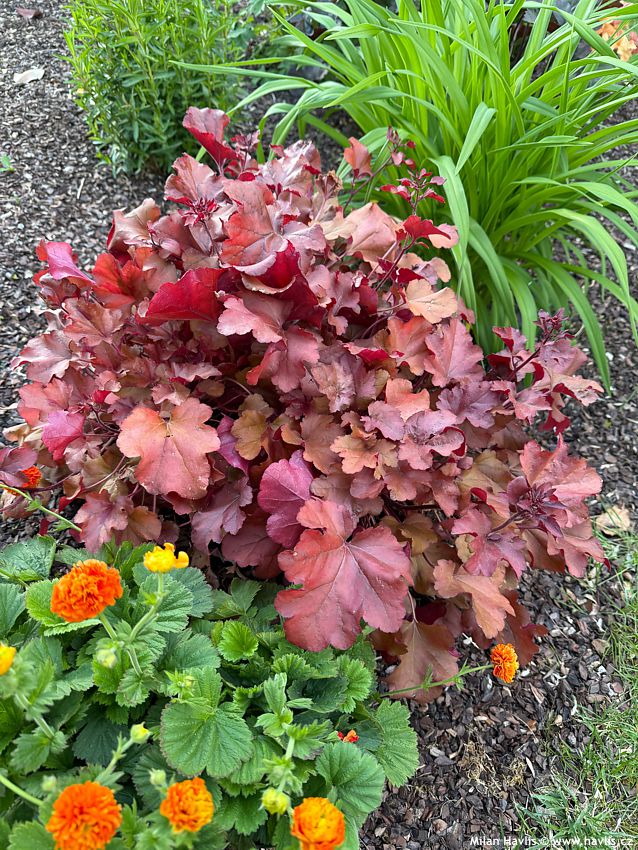
CRANBERRY is a coral bells with foliage in a bronze‑red pigment that looks like a soft dusting of colour and instantly draws the eye in any border. It belongs to the Dutch “berry series”, and its name suggests a cranberry tone — which is true, but only in one phase, because the leaves shift through the season from cranberry red to caramel copper and finally to muted wine shades, always keeping their deep purplish underside. The leaves are broad, shallowly palmately lobed with a cordate base, and have rounded, strongly undulated lobes that give them a sculptural, almost three‑dimensional look; the surface is softly pubescent with a gentle sheen. The plant forms a low, evenly rounded, very dense mound from which long, slender stems rise to about 70 cm, carrying numerous small, light‑purple, sterile flowers. Flowering typically occurs from June to July. The cultivar is protected by patents 58126 (EU – 2021) and PP32106 (USA – 2020).
Its colour and density make CRANBERRY an excellent choice for the front of perennial borders, especially where you have a lot of green foliage that needs a lift. For the strongest contrast, place it among plants with narrow, lance‑shaped or grass‑like leaves – salvias, daylilies or sedges all work beautifully as supporting partners. But do not hesitate to add texture and pair it with delphiniums or trollius either; it creates a rich, coloured underlayer for their golden‑orange spring flowers. For a full, cohesive clump, plant at least three plants together.
Last update 18-05-2026
Coral bells can take almost any soil with ample moisture and good drainage. They do best in partial shade or filtered sun, however, if you make sure they will not dry out you can place them in full sun, too. They can also live in dark shade where their colours will not be too rich, such location is usually best for pale-coloured varieties. Cut off all leaves in early spring to encourage growth of new foliage. Fully hardy to abt. -34 °C (USDA zone 4), and suitable for outdoor pots