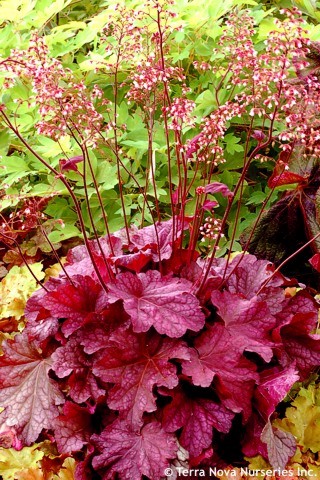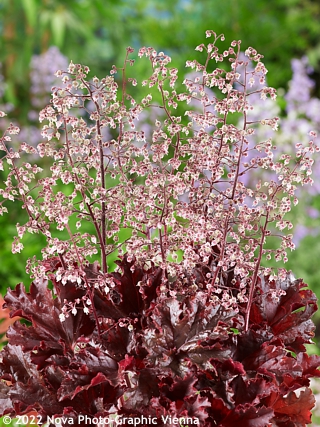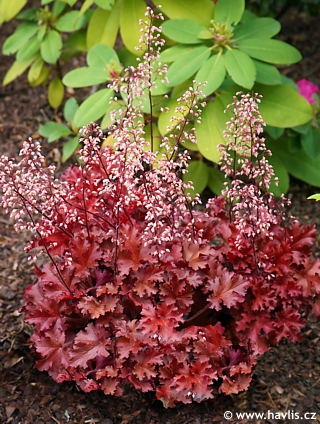
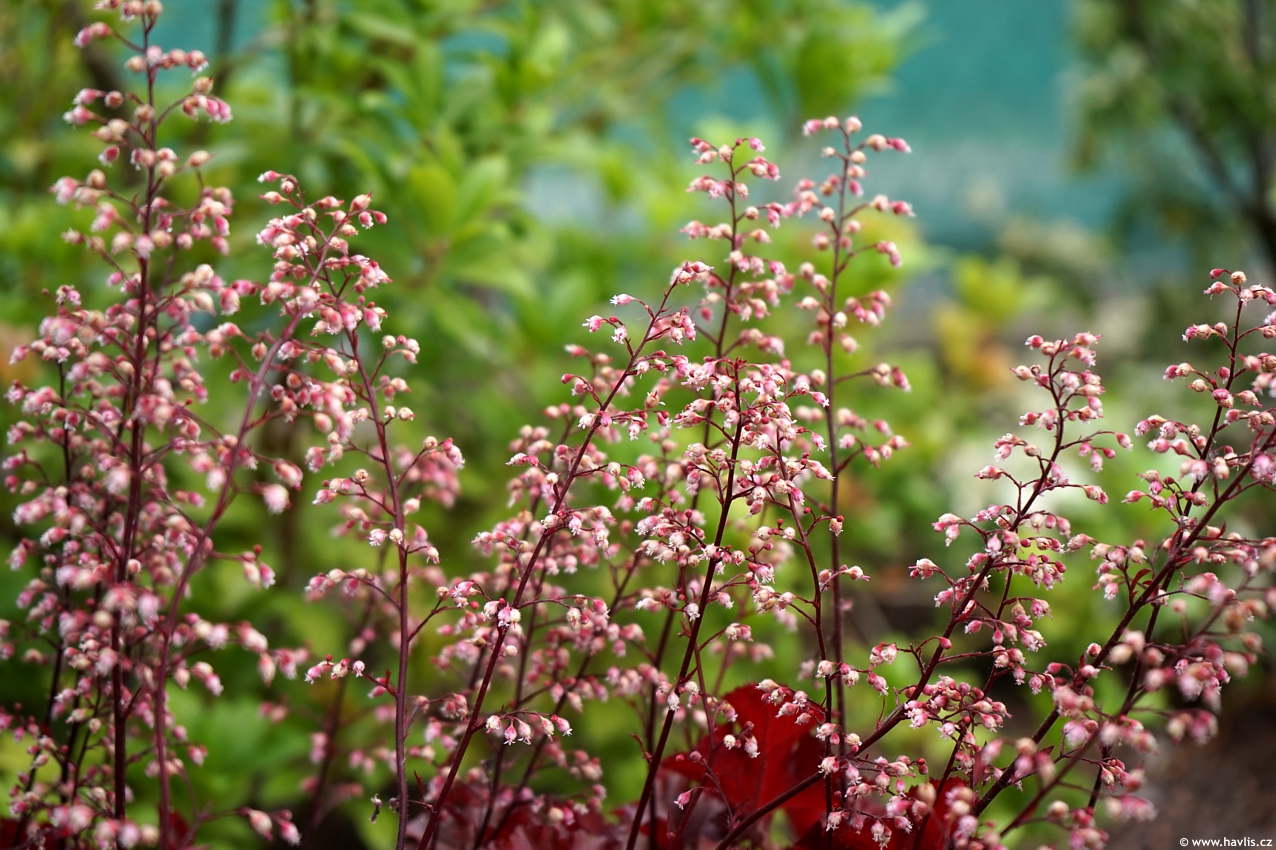
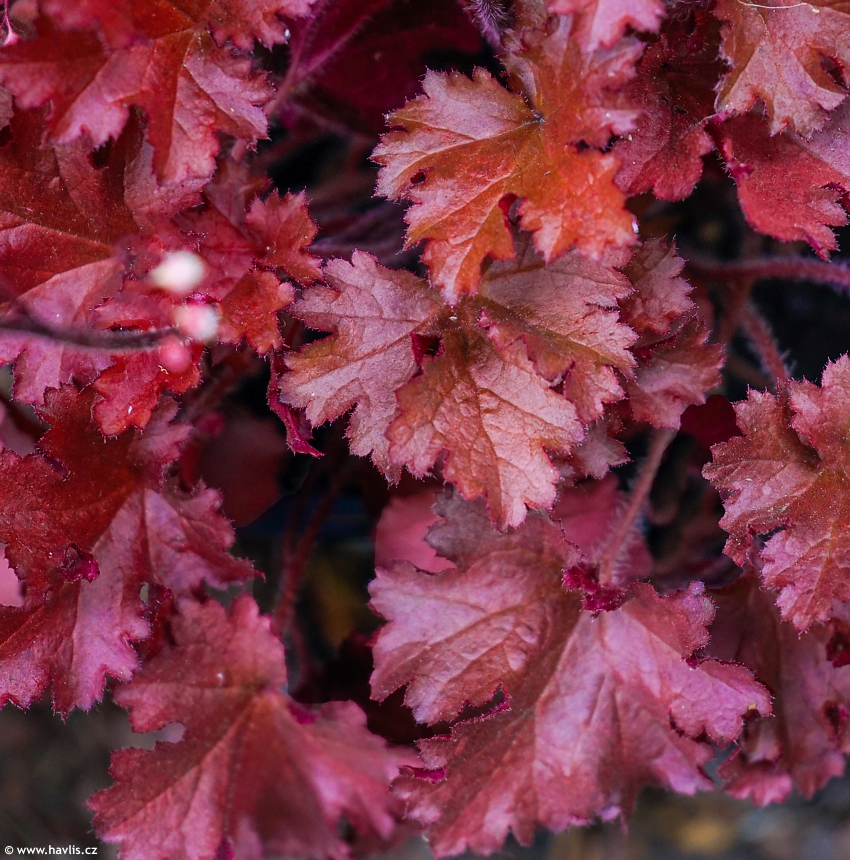
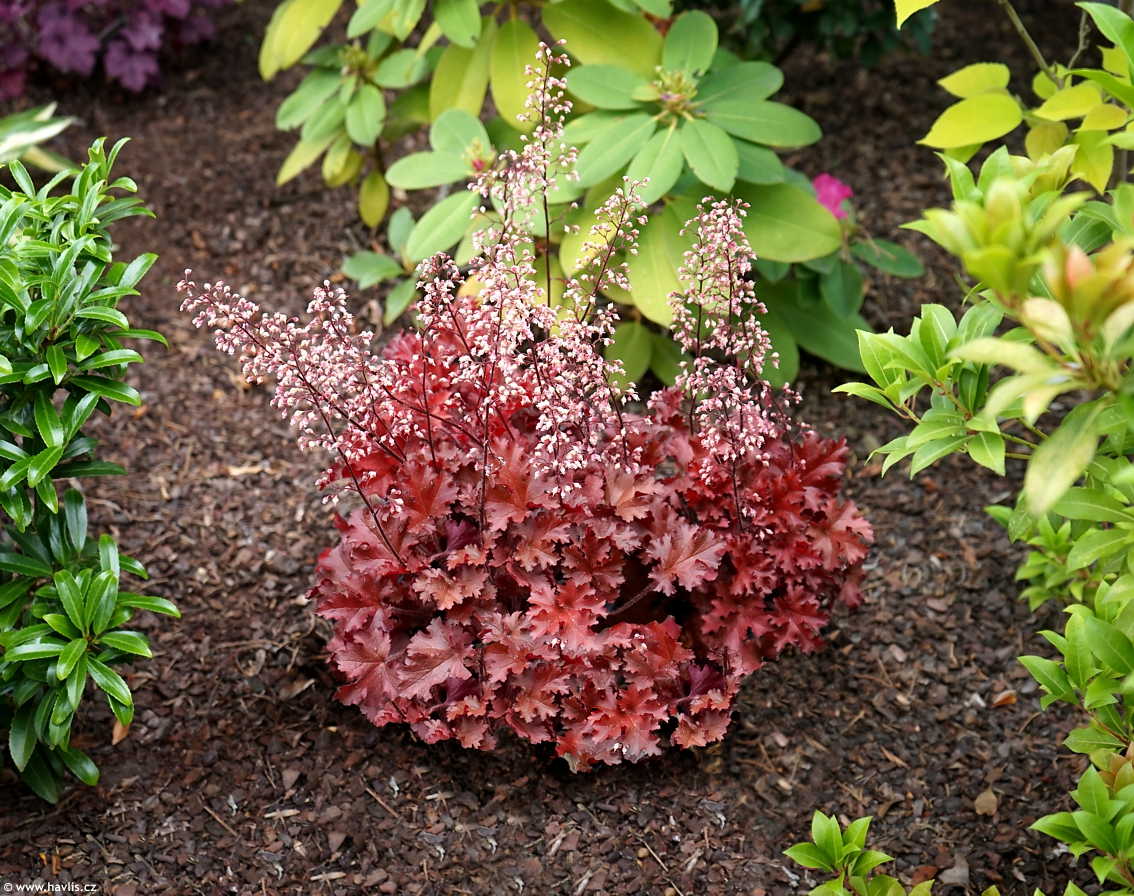
Heuchera 'CHERRY TRUFFLES'; DOLCE® coral bells

 Symbivit Tric (arbuscular)
 Symbivit (arbuscular)
Heuchera
Heucheras – coral bells are undemanding yet striking perennials that have gained popularity thanks to their beautiful foliage and delicate flowers, sometimes appearing in rich inflorescences. They form dense clumps of leaves with a breathtaking range of colours. The genus was named after Johann Heinrich von Heucher (1677–1746), a German physician and professor. It includes around forty species of perennial plants, mostly native to North America, except for H. sichotensis from the Russian Far East. To Europe, heucheras were introduced in the 18th century. their classification can be quite challenging as in the wild, these plants often crossbreed, and their flowers change shape significantly as they mature. That’s why so many breeders are drawn to them – their variable gene pool invites experimentation, and the thrill of discovering something new at the end of a breeding attempt is simply irresistible 😊.
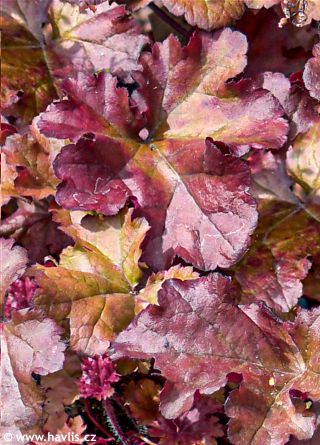
Cherry Truffles is a yummy (yet inedible) coral bells variety with large leaves with rounded lobes and heavily curled margins. They are rich mahogany red. From June appear short, thin stems holding compact, upright panicles composed of numerous pale pink flowers with pink calyxes. They can be cut off if only beautiful foliage is what you desire. Leaves show good resistance to mild frost and are quite nice even in winter. Cherry Truffles performs well even in full sun.
Cherry Truffles was bred by Hans Hansen from Walters Gardens in Michigan and plant patent No. PP31396 was granted in 2020. It belongs to the DOLCE® series that consists of richly coloured varieties, all named by various sweets
Last update 15-06-2023
Coral bells are hardy and mostly evergreen perennials, mainly used as ground covers, however, they are excellent companions to plants with other textures, especially when mass planted. They prefer lightly shaded locations and evenly moist, nutrient-rich soil—soil pH does not matter. With occasional watering, they can tolerate full sun, except for light-colored varieties, unless specifically bred for sun exposure. They can even grow in shade, though their colors will be less vivid. In early spring, simply trim all leaves, allowing fresh new foliage to emerge. Fertilization is not required but significantly enhances their appearance and vigour. They are hardy to approximately -34 °C (USDA zone 4) and can be grown in outdoor containers as well