










.jpg)
×Heucherella PINK REVOLUTION ('Heupire030') foamy bells

Heucherella
Heucherella, foamy bells, is a unique intergeneric hybrid between the genera Heuchera and Tiarella, first successfully created by the French breeder Émile Lemoine (1862–1942) in 1912 in Nancy, where his family ran one of the most influential European nurseries of the time. Both parent genera had been scientifically described at the end of the 18th century – Heuchera by Carl Peter Thunberg and Tiarella by André Michaux. They share a North American origin but differ in habitat and morphology. Lemoine’s hybrids were initially more of a botanical curiosity, yet they laid the foundation for modern breeding, which fully developed in the 20th century. Today, × Heucherella is a recognised hybrid genus valued for its stability, reliability, longevity and year‑round foliage interest, combining traits of both parents.
Émile Lemoine (1862–1942) was one of the most prominent European breeders of the early 20th century, continuing the work of his father Victor and grandfather Jean Marie, who together built a nursery in Nancy renowned for hundreds of new cultivars. Émile himself introduced many plants still grown today: double and bicolour lilacs (Syringa vulgaris ‘Souvenir d’Alice Harding’, ‘Avalanche’, ‘Mont Blanc’), classic European peonies (Paeonia lactiflora ‘Madame Émile Lemoine’, ‘Émile Lemoine’), new lines of hydrangeas (Hydrangea paniculata ‘Grandiflora’, ‘Floribunda’), hybrid deutzias (Deutzia × lemoinei) and mock oranges (Philadelphus × lemoinei). His work also influenced viburnums and other ornamental shrubs. In 1912 he created the first intergeneric hybrid Heuchera × Tiarella, establishing the basis of the genus × Heucherella and demonstrating that even seemingly distant genera can produce stable, vigorous perennials. Lemoine thus shaped not only a single plant, but the entire aesthetic of European gardens, which still rely on his cultivars.
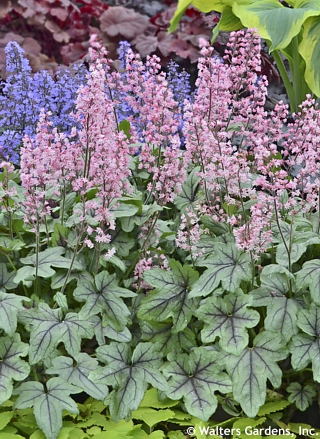
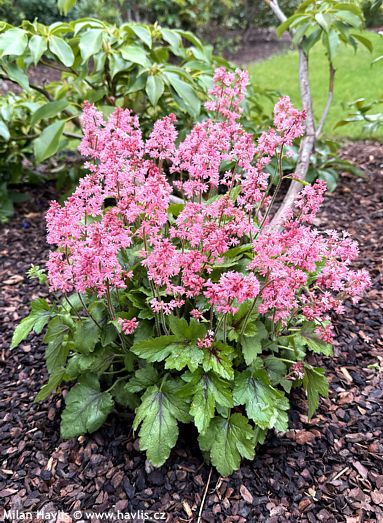
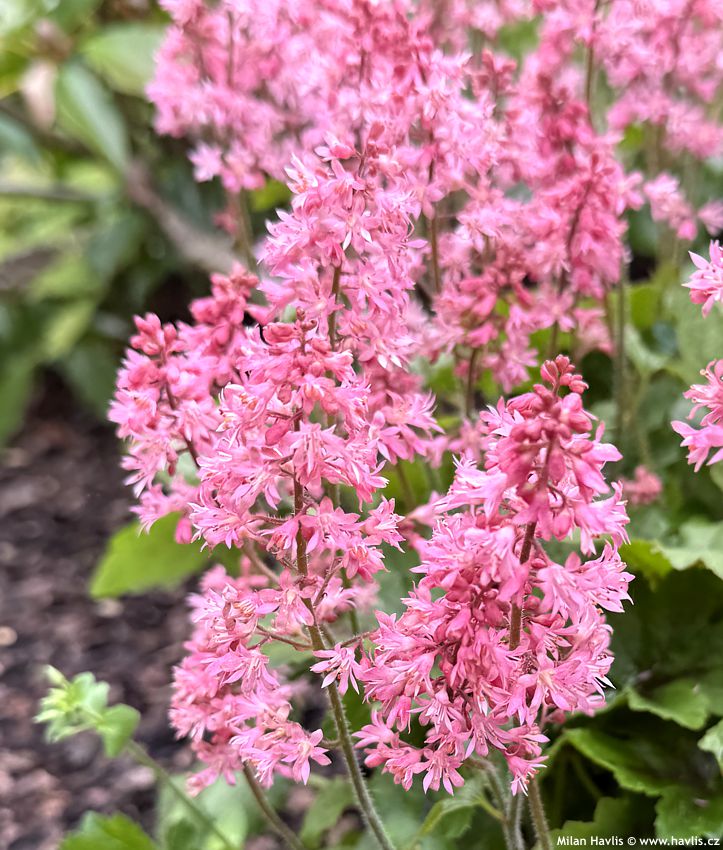
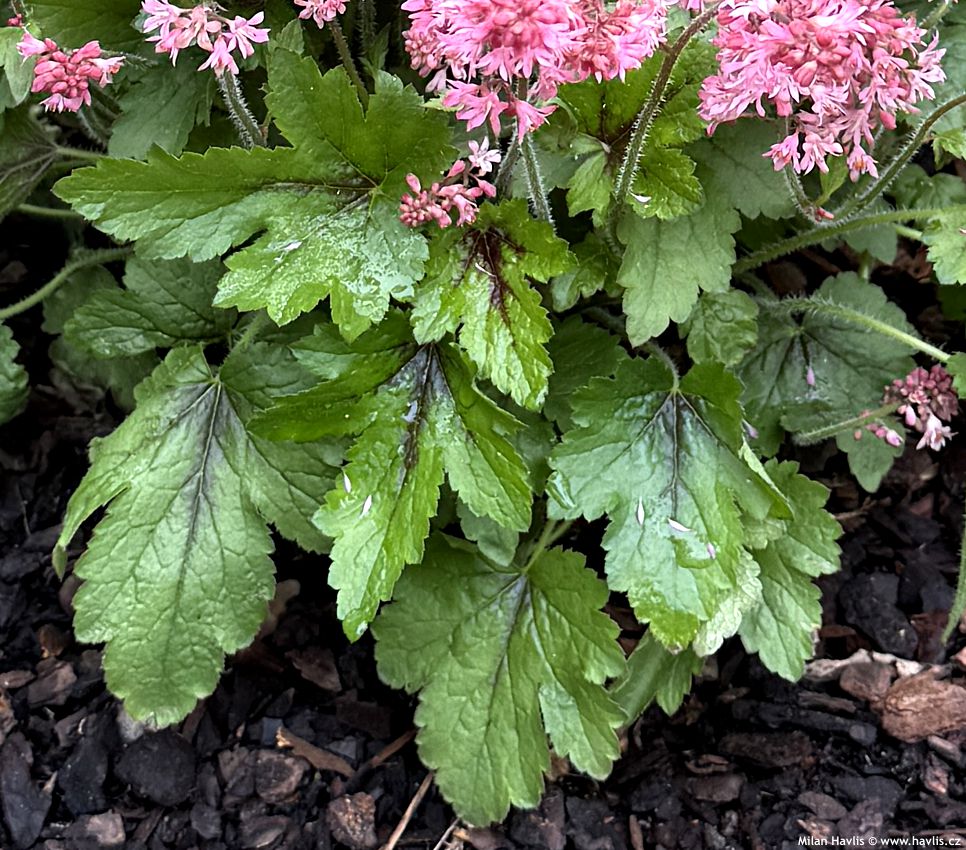
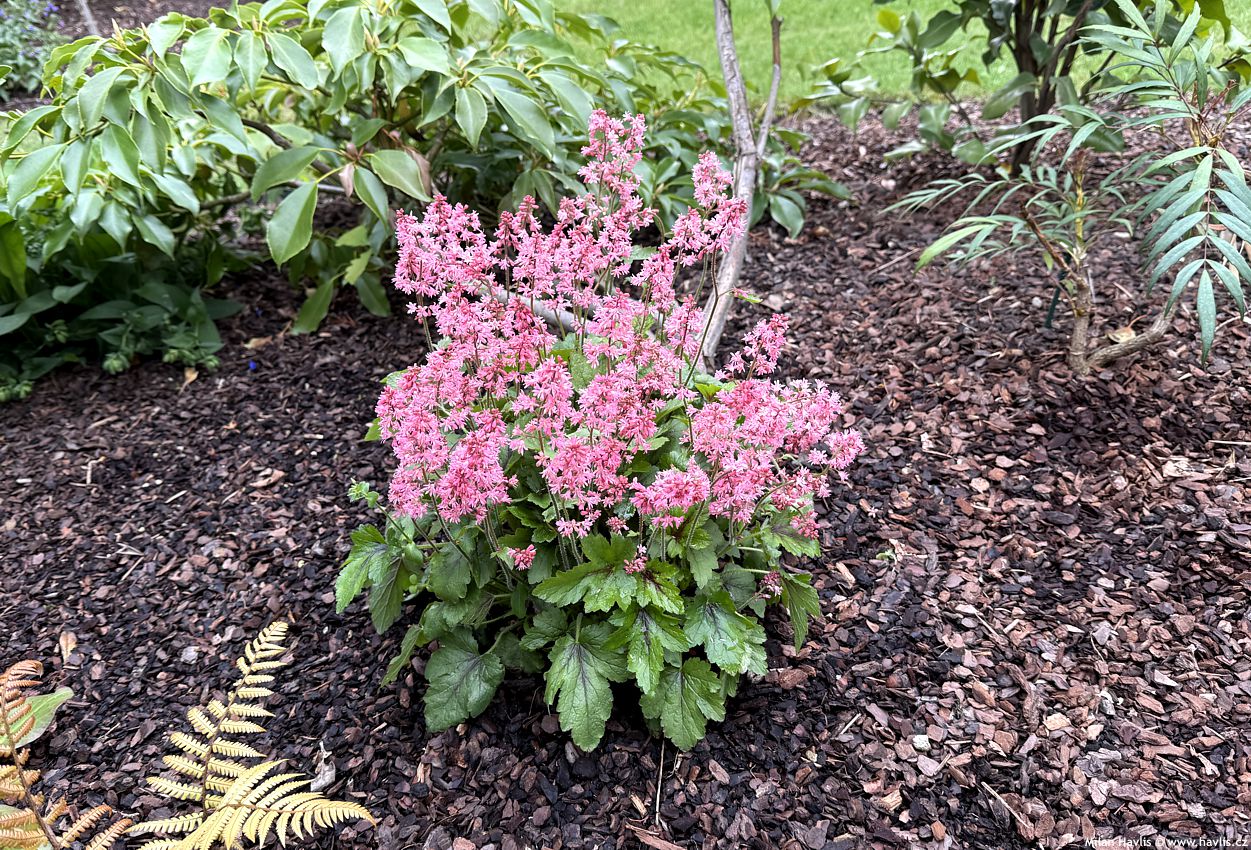
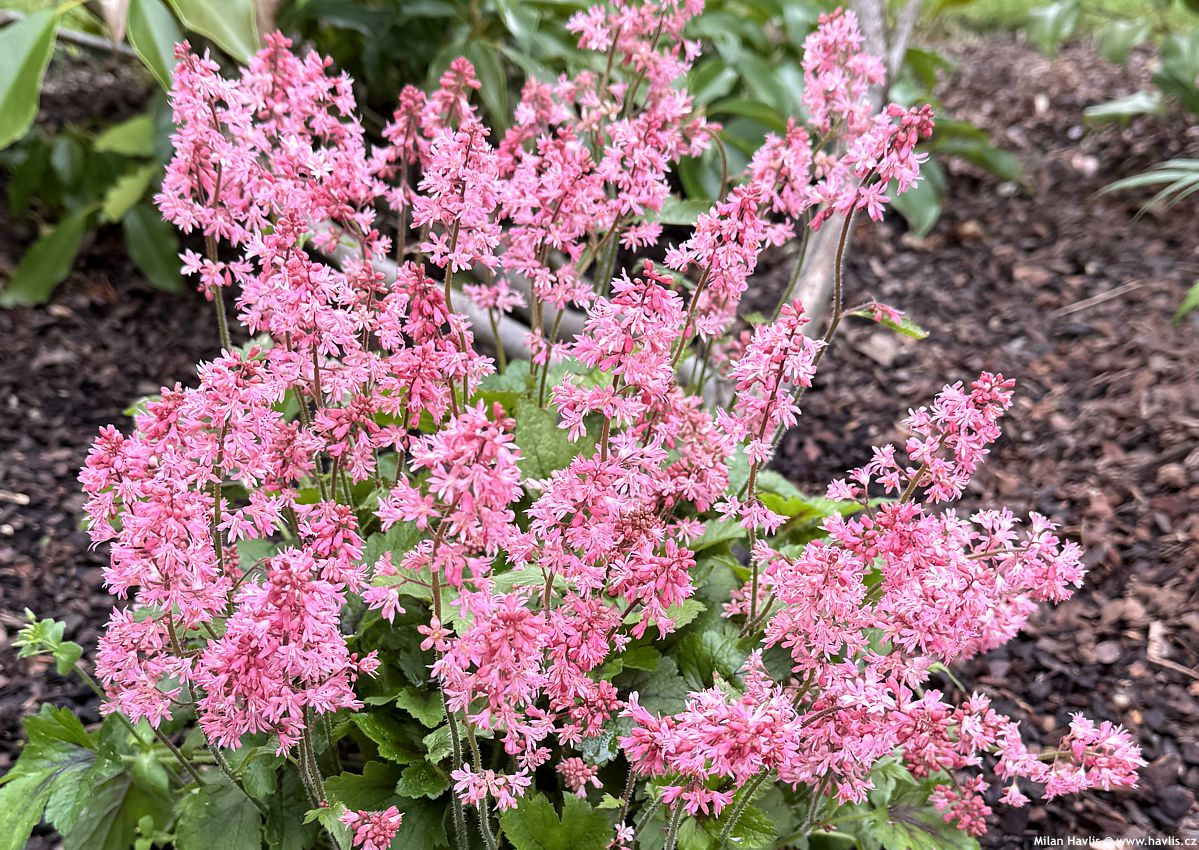
PINK REVOLUTION is a foamy bells cultivar whose name is no exaggeration. It represents a genuine turning point in breeding, probably the first cultivar to combine attractive foliage with truly abundant flowering that leaves no doubt this is a revolution. The individual flowers are a deep, saturated pink rather than a pale blush, and their density gives the inflorescences an almost foamy appearance – exceptional among heucherellas. They are larger, denser and more numerous than in comparable cultivars, carried on firm stems that form a continuous layer of pink above the foliage. Under good conditions it flowers continuously from spring to autumn, not in a single flush, which is unusual for heucherellas and in practice means the pink canopy persists for months. The leaves show the deeply lobed shape of tiarellas, but the firmness, texture and year‑round durability of modern heucheras. You can easily see the strong contrast between the darker centre and lighter margin and appreciate the colour stability throughout the season. The habit is compact and evenly filled, with good heat tolerance and the ability to maintain shape without becoming leggy.
PINK REVOLUTION was bred by Joke Dragt in Zuidwolde, the Netherlands, as part of a programme focused on long‑flowering, cold‑hardy heucherellas. It originated from a controlled cross between a Heuchera sanguinea seedling line and the Tiarella cultivar ‘Pink Skyrocket’. Dragt selected the plant in 2015, and the cultivar was released after the granting of the US patent USPP30656 and the European PBR CPVO 52369 in 2019. Joke Dragt specialises in breeding Heucherella and Heuchera hybrids with an emphasis on long flowering, strong flowering stems, powdery mildew resistance and reliable garden performance, and PINK REVOLUTION is among his most notable achievements to date.
In the garden, PINK REVOLUTION foamy bells acts as a colour beacon. For many weeks it reliably lights up its surroundings with its striking pink, and afterwards offers foliage texture and colour that pair beautifully with ferns, bergenias, pulmonarias, sedges and other perennials for partial shade. It performs excellently in woodland and naturalistic plantings, where keeping a greener foliage tone helps the composition look as natural as possible. In a cottage‑style garden you can afford more colour play and combine it with dark‑leaved geraniums or unusual corydalis. In modern plantings it looks best as a monoculture, planted in larger single‑species drifts, whether in beds or ornamental containers.
Last update 08-05-2026
Foamy bells thrive in moist, humus‑rich soil, which keeps the roots cool and prevents summer dormancy. Their condition remains stable with a fine bark mulch which protects the shallow root system and maintains even moisture. Flowering is extended not only by occasional feeding but also by regular removal of spent flower stems, while the foliage remains compact without intervention. Every two to three years, replanting into fresh soil or lightly dividing the clump restores vigour. Heucherellas tolerate moist periods well but dislike prolonged waterlogging; in heat they appreciate shaded roots and consistent watering. Thanks to the tiarella contribution they are generally more resistant to powdery mildew and rarely require chemical protection. They are reliably hardy, and in snow‑free winters a thin layer of leaves helps protect the crown from freeze–thaw cycles. A practical tip: in spring they respond best to a small dose of compost, which supports growth and flowering without the risk of over‑feeding. They are hardy to at least –34 °C (USDA zone 4) and can be grown year‑round even in outdoor containers