

































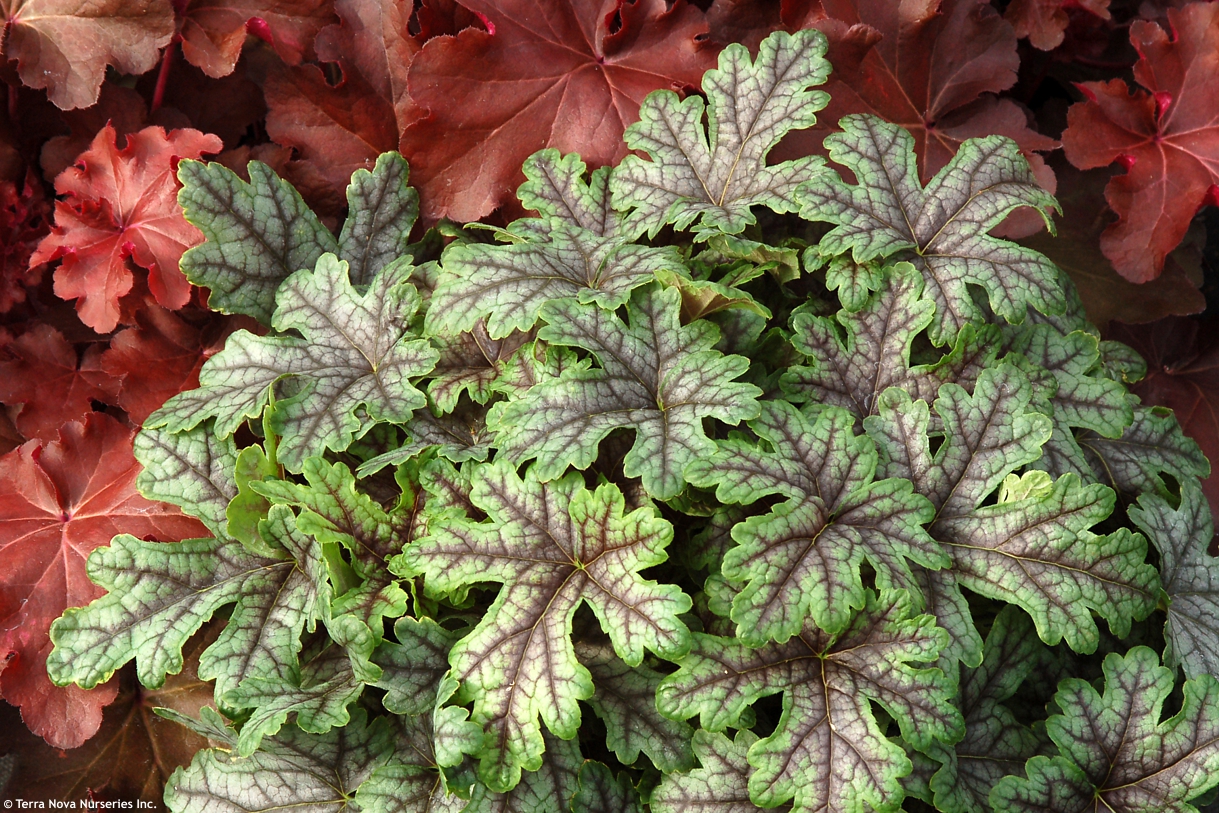
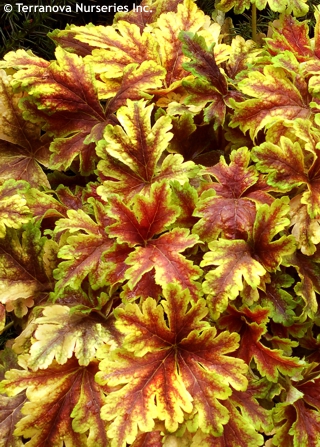
×Heucherella 'TAPESTRY'® foamy bells

Heucherella
Heucherella, foamy bells, is a unique intergeneric hybrid between the genera Heuchera and Tiarella, first successfully created by the French breeder Émile Lemoine (1862–1942) in 1912 in Nancy, where his family ran one of the most influential European nurseries of the time. Both parent genera had been scientifically described at the end of the 18th century – Heuchera by Carl Peter Thunberg and Tiarella by André Michaux. They share a North American origin but differ in habitat and morphology. Lemoine’s hybrids were initially more of a botanical curiosity, yet they laid the foundation for modern breeding, which fully developed in the 20th century. Today, × Heucherella is a recognised hybrid genus valued for its stability, reliability, longevity and year‑round foliage interest, combining traits of both parents.
Émile Lemoine (1862–1942) was one of the most prominent European breeders of the early 20th century, continuing the work of his father Victor and grandfather Jean Marie, who together built a nursery in Nancy renowned for hundreds of new cultivars. Émile himself introduced many plants still grown today: double and bicolour lilacs (Syringa vulgaris ‘Souvenir d’Alice Harding’, ‘Avalanche’, ‘Mont Blanc’), classic European peonies (Paeonia lactiflora ‘Madame Émile Lemoine’, ‘Émile Lemoine’), new lines of hydrangeas (Hydrangea paniculata ‘Grandiflora’, ‘Floribunda’), hybrid deutzias (Deutzia × lemoinei) and mock oranges (Philadelphus × lemoinei). His work also influenced viburnums and other ornamental shrubs. In 1912 he created the first intergeneric hybrid Heuchera × Tiarella, establishing the basis of the genus × Heucherella and demonstrating that even seemingly distant genera can produce stable, vigorous perennials. Lemoine thus shaped not only a single plant, but the entire aesthetic of European gardens, which still rely on his cultivars.
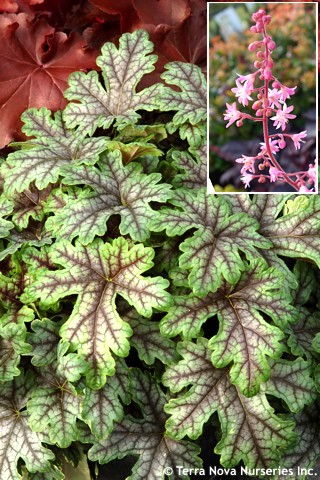
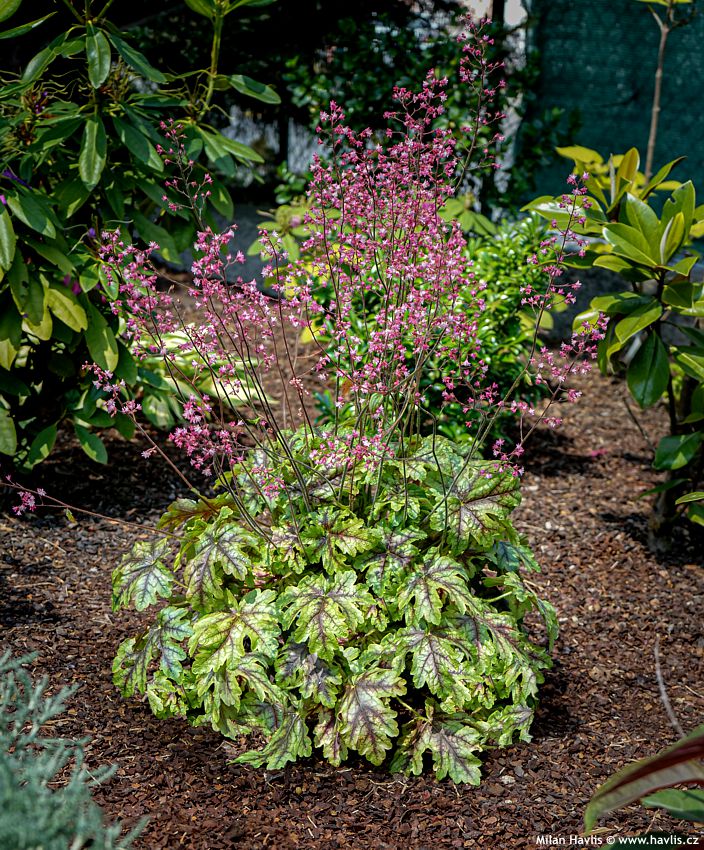
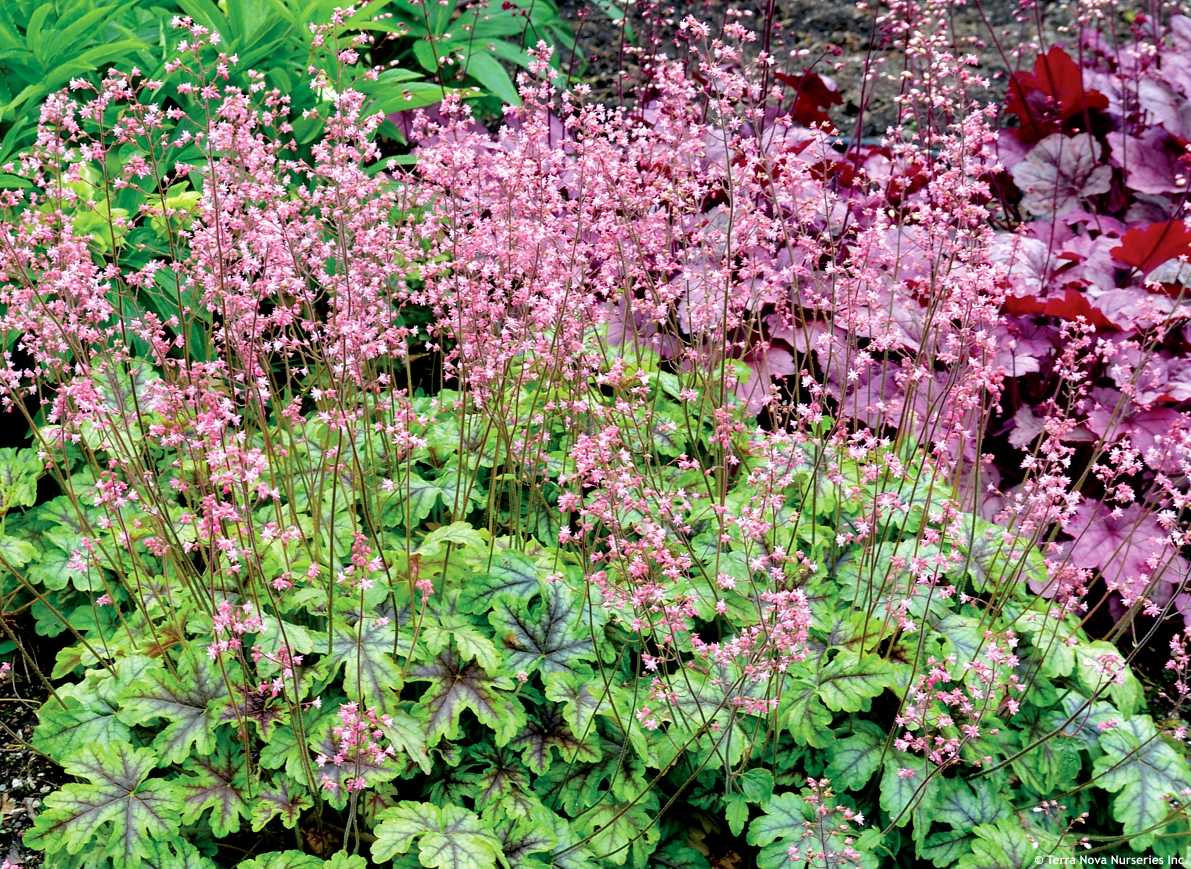
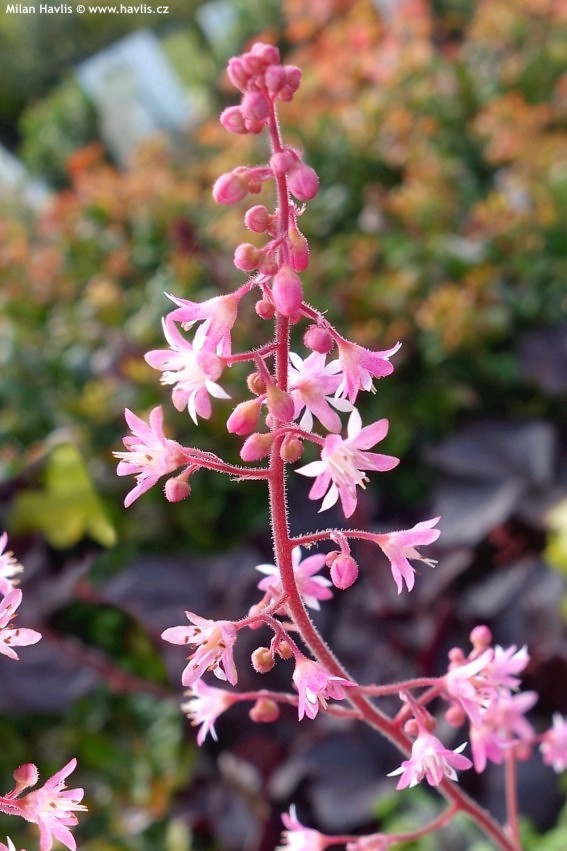
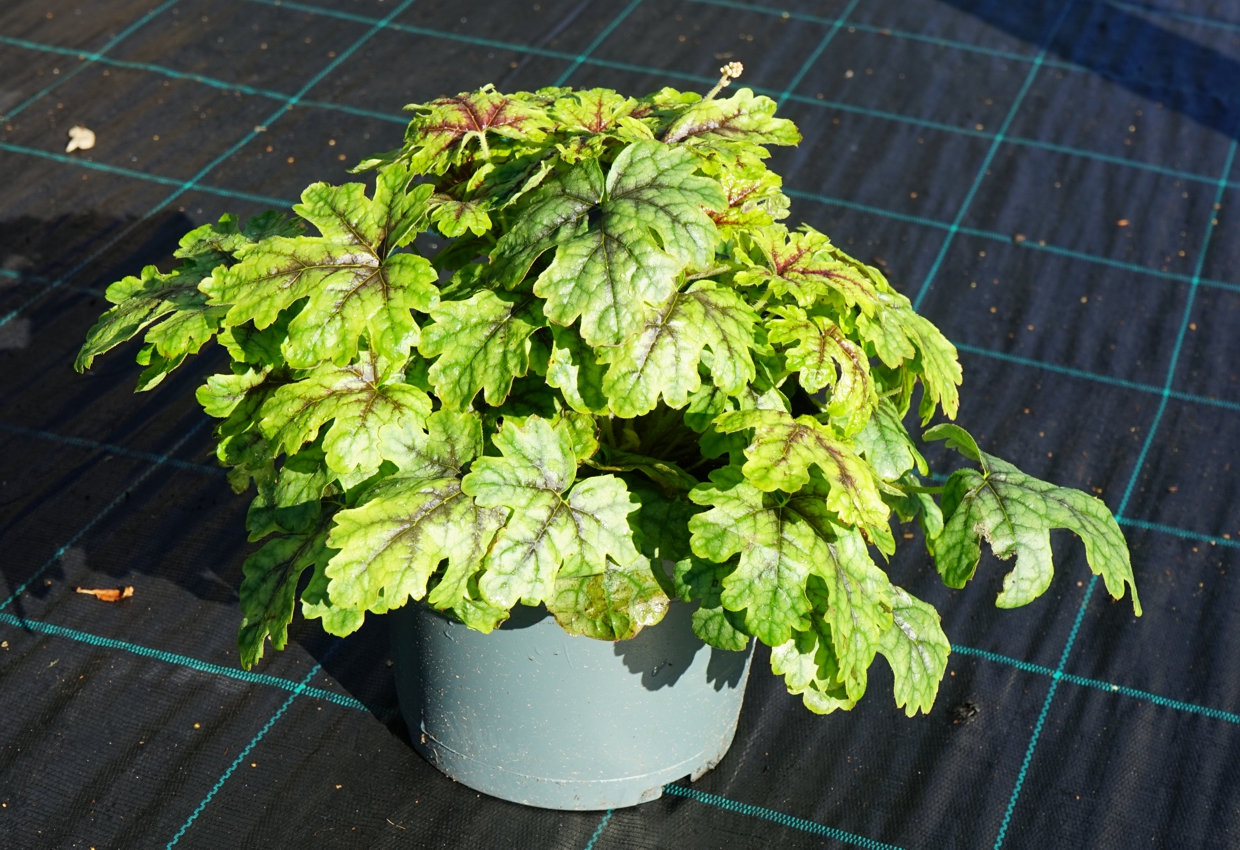
Tapestry® is a beautiful foamy bells bred by Janet Egger from Terra Nova Nurseries, USA, and patented as PP21150 in 2010. It makes large, semi-evergreen, deeply lobed leaves. They are dark burgundy red to almost chocolate brown in the centre, and green at margins. From May until September it produces numerous stems with small cut conspicuous, bell-shaped, rosy pink flowers in several flushes. It grows vigorously forming a dense mound of colourful foliage and attractive flowers for a long period.
Last update 19-12-2016
Foamy bells thrive in moist, humus‑rich soil, which keeps the roots cool and prevents summer dormancy. Their condition remains stable with a fine bark mulch which protects the shallow root system and maintains even moisture. Flowering is extended not only by occasional feeding but also by regular removal of spent flower stems, while the foliage remains compact without intervention. Every two to three years, replanting into fresh soil or lightly dividing the clump restores vigour. Heucherellas tolerate moist periods well but dislike prolonged waterlogging; in heat they appreciate shaded roots and consistent watering. Thanks to the tiarella contribution they are generally more resistant to powdery mildew and rarely require chemical protection. They are reliably hardy, and in snow‑free winters a thin layer of leaves helps protect the crown from freeze–thaw cycles. A practical tip: in spring they respond best to a small dose of compost, which supports growth and flowering without the risk of over‑feeding. They are hardy to at least –34 °C (USDA zone 4) and can be grown year‑round even in outdoor containers
Goods are shipped all over Europe. For Russia and U.K. and for further details please read about SHIPPING OPTIONS HERE.
Are you interested in a serious discount for orders NOV-FEB? Check your options here.
THE PRICES INCLUDE VAT of 15%. For quick conversion you can use 1 CZK = approx. 0.04 EUR
- STANDARD QUALITY - Plants of this group are 1st class quality with number of branches and overall density adequate to their size and age, considering they were container grown.
- DE LUXE QUALITY - This label guarantees a luxurious quality of manually selected plants that, compared to their height and age, are exceptionally dense and beautiful.
- EXTRA - These plants are usually mature and bigger specimens with exceptional overall appearance.
- STANDARD (as described in the plant form) means a tree with a trunk of 190-210 cm and a crown at the top, unless specified differently. The commercial size for trees is their girth measured in the height of 1m from ground.
- HOBBY - These plants are of the same quality as our standard-quality plants but younger and therefore cheaper.
- SHRUB - a woody plant with branches growing bushy from the ground level.
- HALF-STANDARD or MINI-STANDARD - a small tree with shorter trunk, its size is usually specified.
- FEATHERED - These are trees with branches growing already from the base of the trunk and up along the stem.
- GRASSES and PERENNIALS - Sizes given usually read the diameter of the pot or the clump, as specified.
