










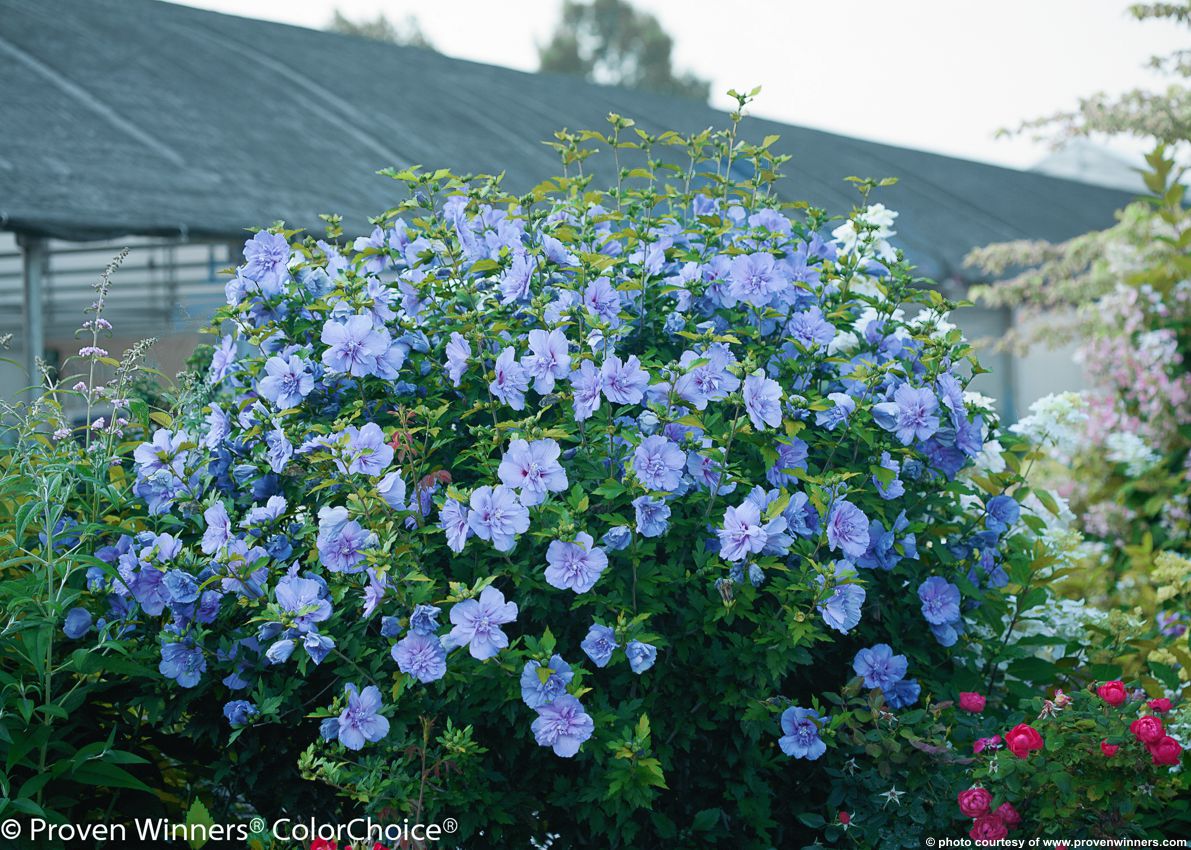
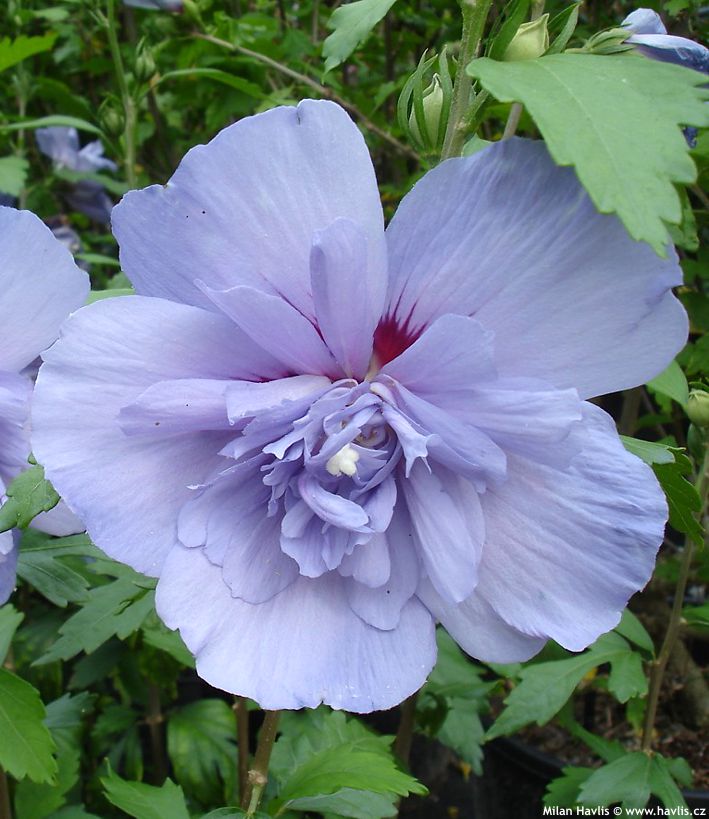
Hibiscus syriacus 'Notwood3' BLUE CHIFFON® Rose-of-Sharon

 Symbivit Tric (arbuscular)
 Symbivit (arbuscular)
Hibiscus
Hibiscus syriacus is a deciduous shrub from the mallow family (Malvaceae), native to East Asia – especially China and Korea – and one of roughly 300 species in the genus Hibiscus. It reached Europe as early as the late 16th century, with the first recorded cultivation dating back to 1596. The species was scientifically described by Carl Linnaeus in 1753 in his work Species Plantarum. The specific epithet syriacus refers to the fact that the first specimens he studied came from gardens in Syria, although the species does not grow wild there. Interestingly, in South Korea it has become the national flower and a symbol of perseverance, even appearing in the national anthem. I still reckon that it deserves much more attention than what is actually gets because with its long summer flowering in a range of colours that can brighten any garden, I consider it an essential part of a blooming summer garden.
Its common English name says Rose of Sharon, a poetic name borrowed from the biblical Song of Songs (2:1), where the speaker declares: “I am the rose of Sharon, and the lily of the valleys.” The original Hebrew term referred to a flower growing in the fertile Sharon plain in what is now Israel, but it was almost certainly neither a rose nor a hibiscus. To this day, botanists and historians have not agreed whether it was a lily, narcissus, tulip, or crocus. Yet translations into European languages preserved the name “Rose of Sharon”, and over the centuries it came to be applied to different plants in various parts of the world – for example, in North America to Hibiscus syriacus, and in Britain sometimes even to Hypericum calycinum. This variety of usage is a simple cultural “translation shift”: people attached a familiar, poetically resonant name to plants in their region that resembled the original biblical flower – in appearance, flowering season, or symbolism.
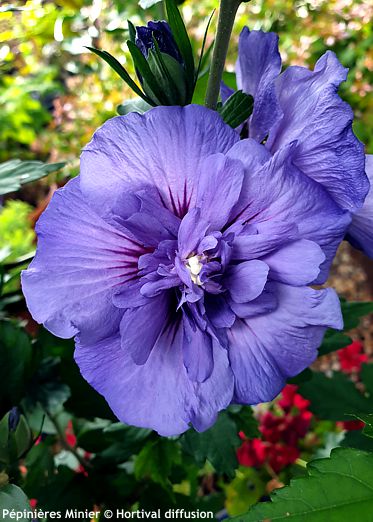
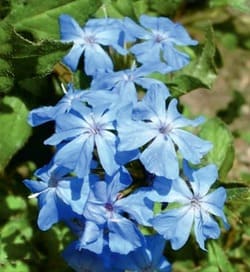
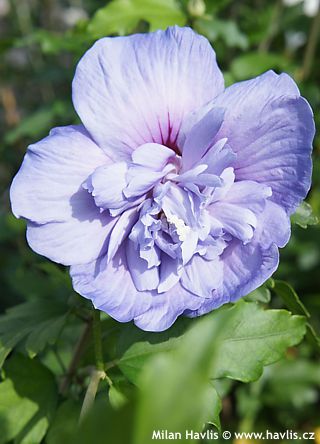
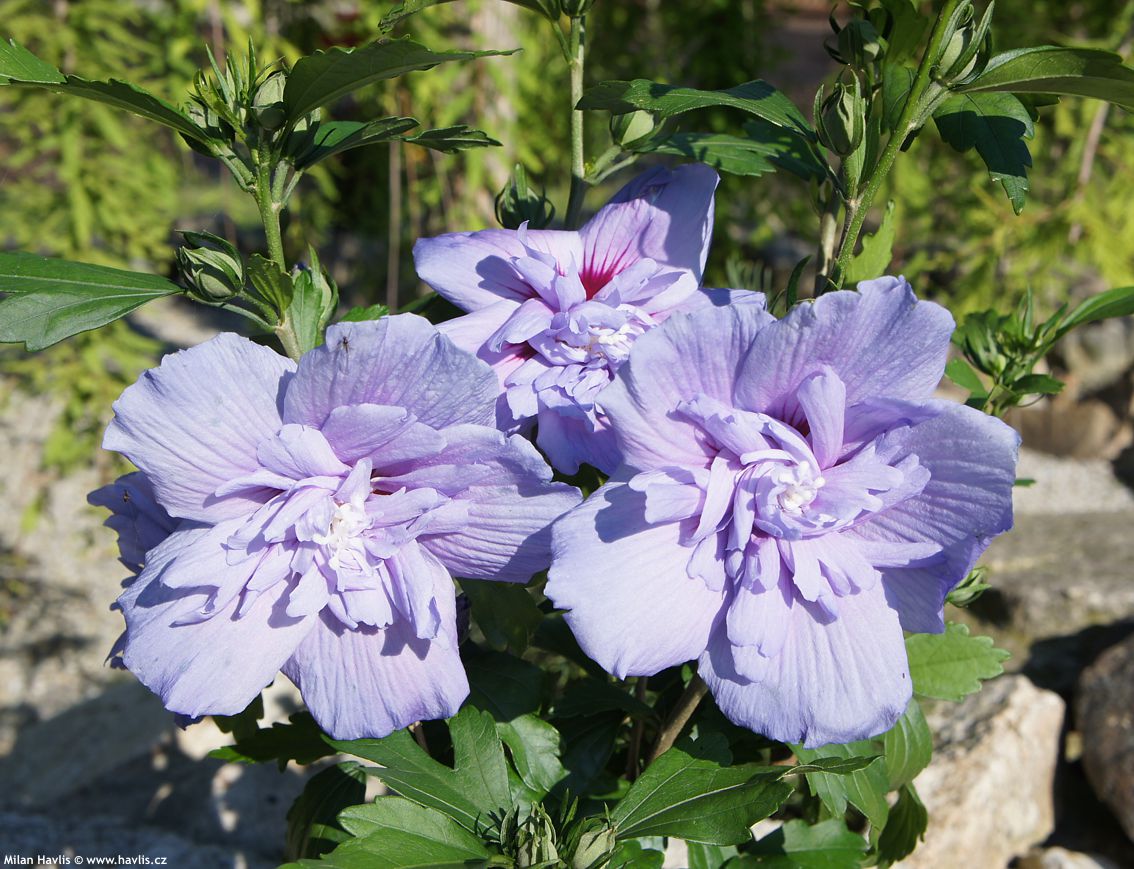
Blue colour of Rose-of-Sharon flowers are the most sought-after. No wonder that breeder Roderick Woods came up with a new addition to his double-flowering hibiscus collection, the Blue Chiffon®. The same blue as in Blue Bird (Oiseau Bleu) but with fully double blooms. The flower size is much larger than its parent.
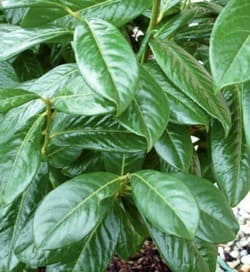
The deciduous leaves are 5-7 cm long, three-pointed, not very lobed, medium to dark green and very attractive with their unique shape. As with most summer-flowering trees, they sprout quite late, so don't worry unnecessarily that it may have frozen if you still don't see anything on the bush in April. If they start to turn yellow and fall off, the plant is currently overwatered or is improperly planted in heavy, poorly drained soil.
Last update 04-08-2009
Regular pruning of Rose-of-Sharon is not ideal, because the plants naturally form attractive shrubs when grown in sufficiently moist soil. Nevertheless, many growers recommend annual pruning to obtain larger flowers. The drawback is that radically shortened shrubs bloom later, and some cultivars produce rather soft new shoots that may bend. The only pruning I recommend is reducing an already large, mature shrub, always in early spring before budbreak, and you can cut it back by up to 80%.
As for soil type, hibiscus is fairly undemanding. Only older plants dislike peat when being repotted. The soil must in any case be reasonably well‑drained, moderately fertile but not over‑fertilised. They love water, so as long as you make sure that newly planted specimens do not drown, you can place them even where they will have a good chance to drink well during the growing season. To improve flower set and flower size, you may use selective phosphorus‑based fertilisers (for flower formation), but it is not necessary. Place it in full sun — it requires strong, direct exposure. Like most summer‑flowering shrubs it leafs out rather late, so there is no need for concern if the plant shows no signs of life even in April. Fully hardy to at least –27 °C, and likely tolerates even stronger frost. Not suitable for containers.