










Hydrangea paniculata 'Hpopr018' EARLY HARRY panicle hydrangea

 Symbivit Tric (arbuscular)
 Symbivit (arbuscular)
Hydrangea
The panicle hydrangea (Hydrangea paniculata) is a deciduous shrub or small tree native to East Asia, naturally occurring in the mountain forests and valleys of China, Korea, Japan, and Russia’s Sakhalin Island. It is distinguished by its strikingly conical panicles composed of small fertile and showy sterile florets, which shift in color over the season from white through pink to wine-red, and by its high tolerance for full sun. The species was botanically described in 1829 by the German physician and botanist Philipp Franz von Siebold (1796–1866), who encountered it during his work in Japan. It reached Europe through botanical collections and expeditions of the 19th century, with the first cultivars such as ‘Grandiflora’ and ‘Floribunda’ spreading in gardens only toward the end of that century.
A milestone in the breeding of Hydrangea paniculata came with the expedition of American dendrologist Charles Sprague Sargent to Japan in 1892. He brought back seeds from which, in the following years, the cultivar ‘Praecox’ was raised—the first documented variety with early flowering. Its beauty was already praised in 1897 in the journal Garden and Forest, and when the plant became established in cultivation, Sargent himself called it in 1922 one of the most beautiful shrubs in the Arnold Arboretum. The original specimen still grows there today as a living botanical monument more than a century old.
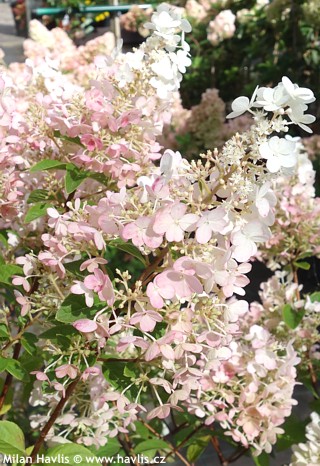
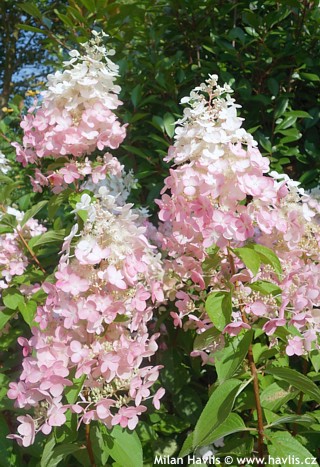
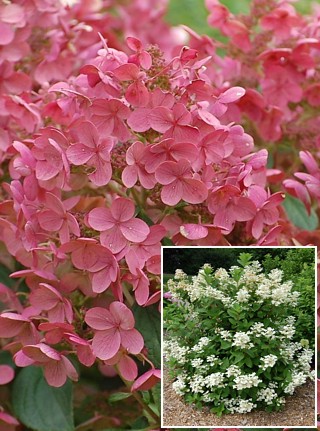
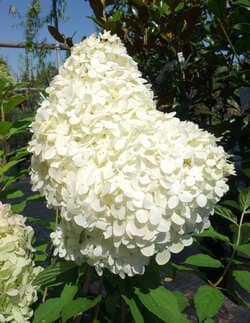
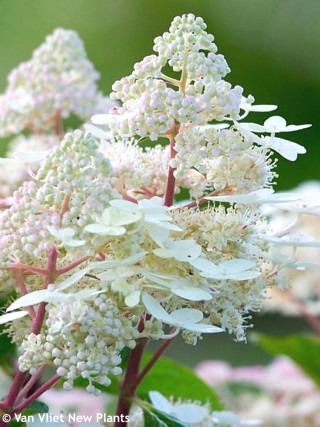
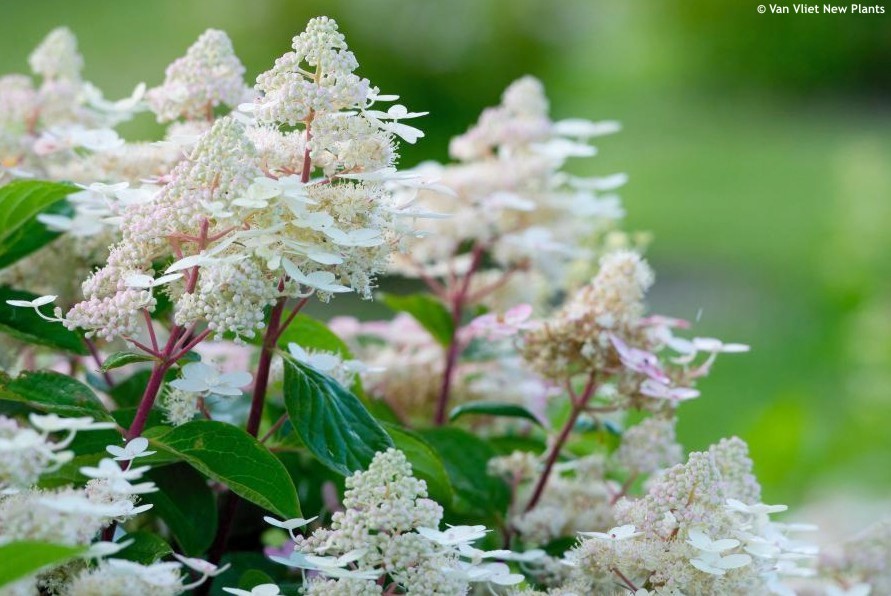
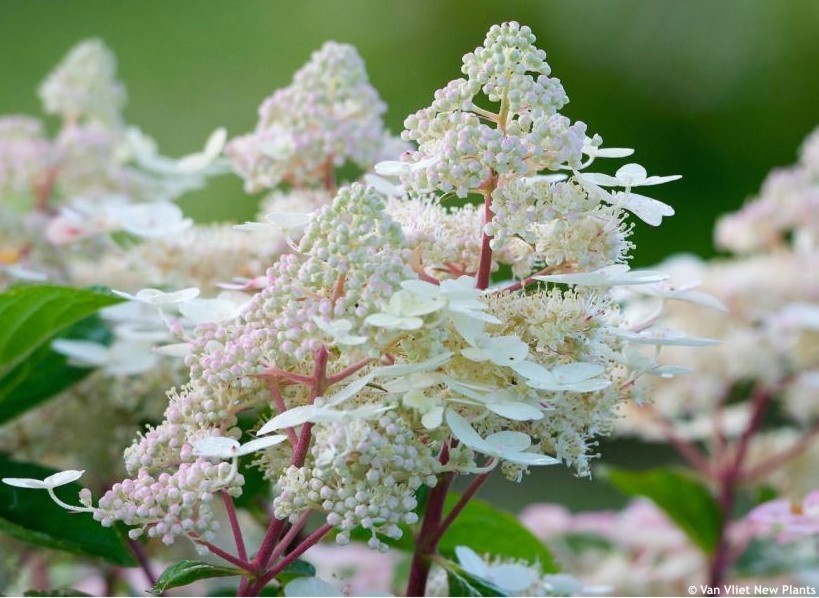
EARLY HARRY is a panicle hydrangea with pagoda-like inflorescence composed mostly of tiny, fertile flowers, and a few exceptionally large sterile flowers which look like crown jewels. Flower buds are pale pink and appear as early as in late May which makes EARLY HARRY possibly the earliest flowering panicle hydrangea today, perhaps competing with EARLY SENSATION hydrangea. Flowers are creamy white and turn various depths of pink as the summer advances towards autumn. Stems are red flushed, and deciduous, ovate leaves are deep green. EARLY HARRY hydrangea makes an upright shrub about 70 cm tall.
These easy-to-grow flowering shrubs have been available in so many selections and cultivars that some might say 'well, how can you surprise us next?'. There we are - Harry van Trier from Belgian nursery Oprins Plants N.V. introduces his very unique new hydrangea variety in 2017, and new plants are available to trade from early 2018.
Last update 28-09-2019
Panicle hydrangeas thrive best in full sun but cope well with light partial shade provided they have sufficient moisture. Soil type is not critical, yet in fertile, deeper and well‑drained ground they produce the largest flower heads and the strongest framework. After planting they need regular watering, as their shallow root system dries out quickly during the first two years; once established they tolerate short summer droughts, although they remain healthier and less prone to wilting in evenly moist soil. They respond very well to feeding, but fertilisers with a lower nitrogen content are preferable to encourage flowering rather than overly lush growth that weakens the stems. They tolerate any aspect and a wide pH range. Each spring before budbreak they require a hard prune, leaving roughly 10 to 20 cm of the previous year’s wood, as they flower exclusively on new shoots. They grow well in containers but need more frequent watering and a sheltered position away from strong winds, which can snap young stems carrying heavy flower heads. Standard forms require a firm staking system, which must be renewed after four to five years to support the increasing weight of the crown. Their cold tolerance reaches approximately –34 °C (USDA zone 4).