Hydrangea quercifolia 'SIKES DWARF' oakleaf hydrangea

 Symbivit Tric (arbuscular)
 Symbivit (arbuscular)
Hydrangea
Oakleaf hydrangea is a sought-after flowering plant because it offers many beautiful features at once: unusually shaped leaves, abundant flowering, and attractive autumn leaf colouration. It is native to the southeastern part of the USA and was first described by the American botanist William Bartram (1739-1823) during his botanical exploration, which he conducted between 1773 and 1777 in the area of present-day Georgia. Despite being a very warm location, this hydrangea has demonstrated the ability to survive frosts far further north, down to -30 °C, and some varieties can cope with even harder frost. Its undying popularity is reflected in the new varieties that are still being bred today.
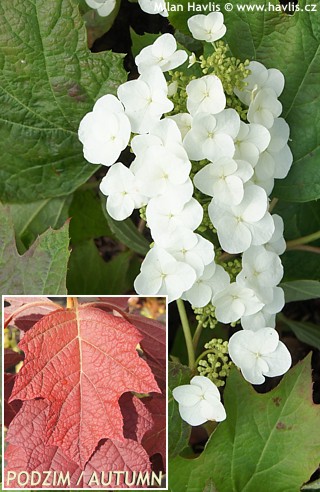
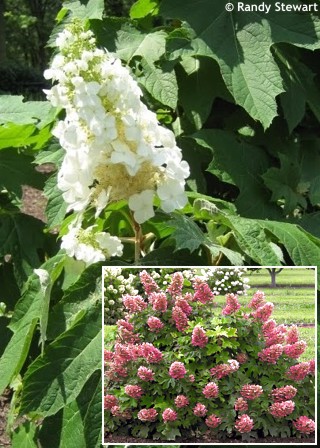
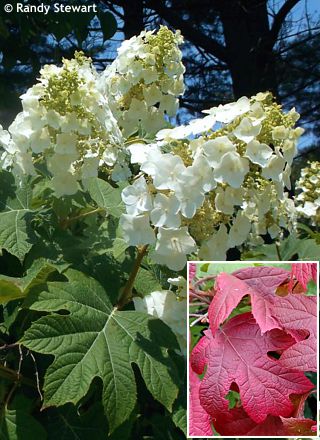
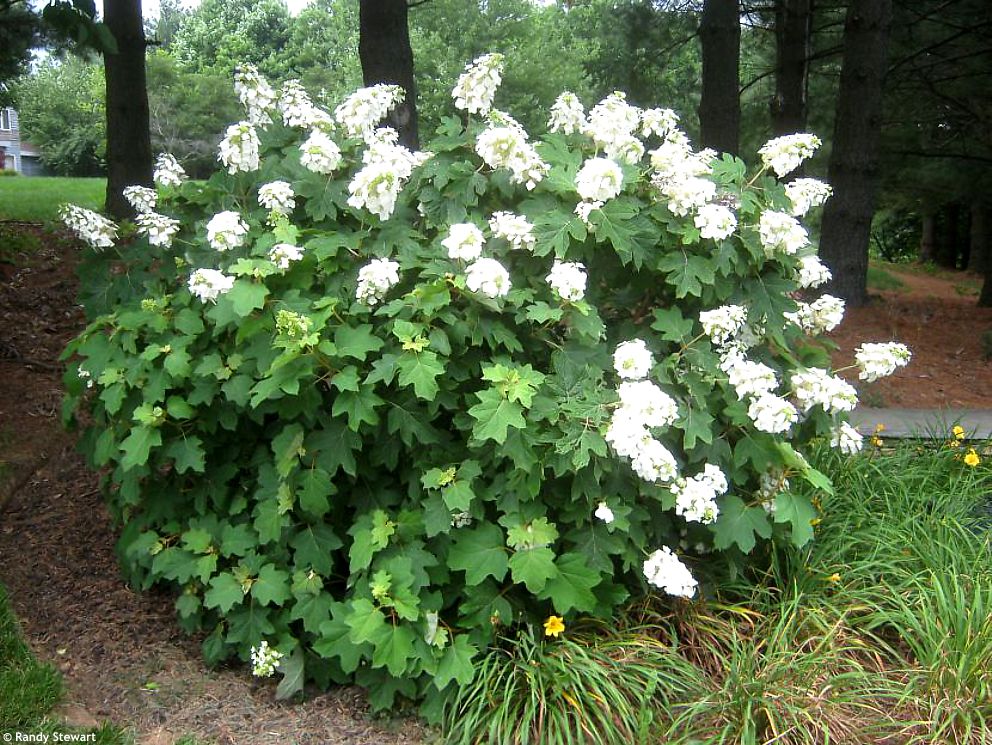
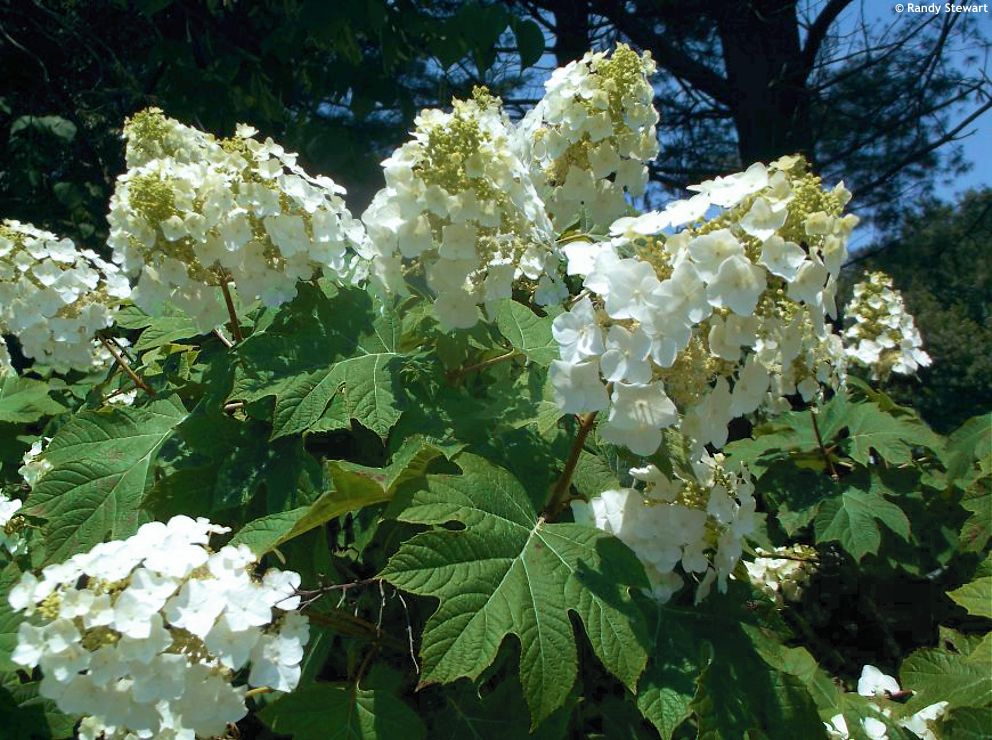
Sikes Dwarf is a smaller variety of oakleaf hydrangea from the USA, discovered by Sarah Sikes of Alabama, a breeder known primarily for her work on daylily hybridization. The variety was introduced by Louisiana Nursery around 1980. It has all the qualities of the species with one major difference – its height is about half that of the botanical species. It blooms profusely. From the end of June, approximately 25 cm long, cone-shaped panicles composed of fertile (small) and sterile (large) flowers of pure white colour appear, which turn to pastel pink tones by the end of summer.
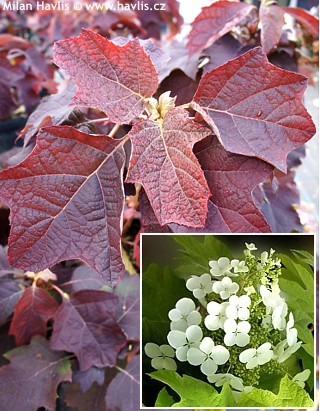
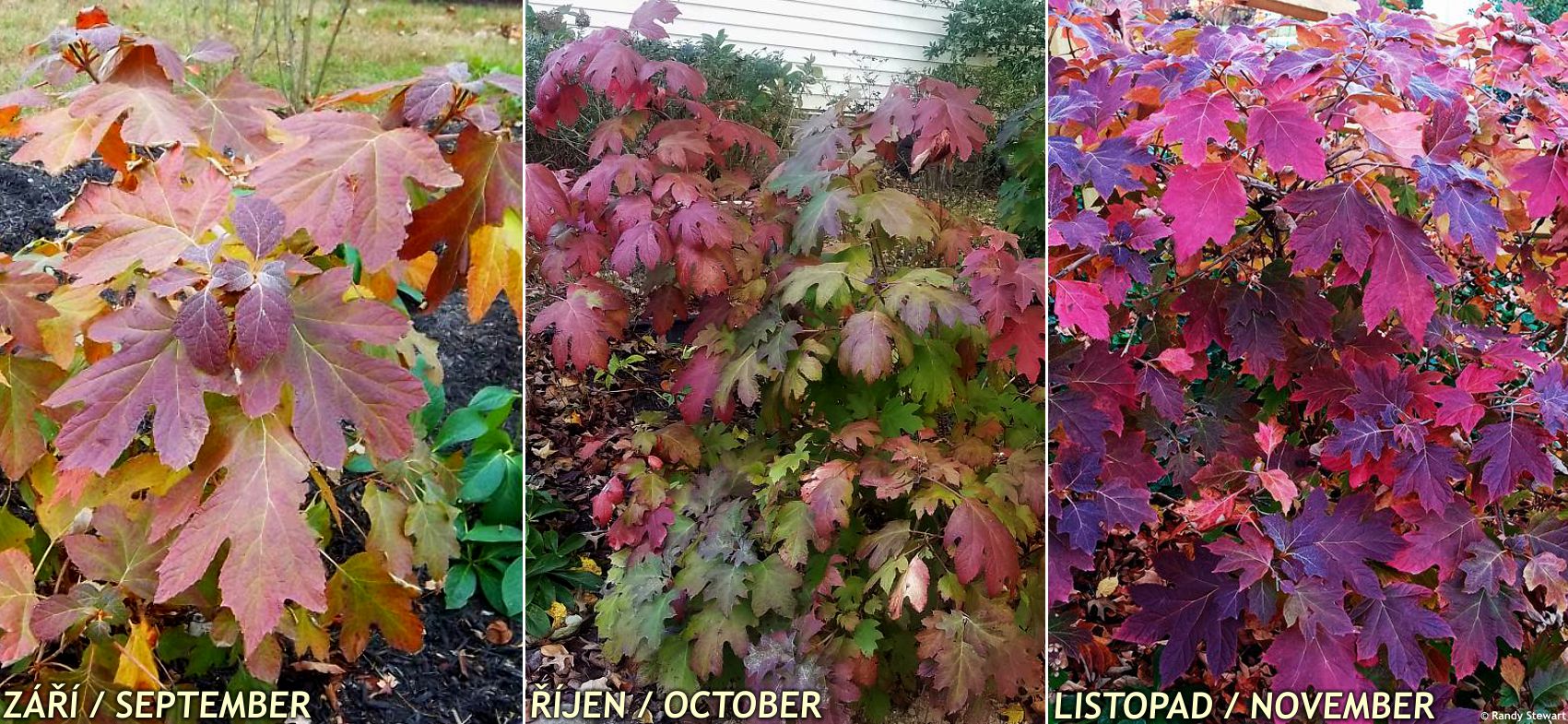
Sikes Dwarf hydrangea has deciduous, deeply and attractively lobed leaves with conspicuously pointed tips like those of the red oak, and some might argue that they no longer resemble oak leaves but rather the leaves of large-leaved maples. They are up to 30 cm long and wide, somewhat stiff and rough to the touch. From spring to late summer, they are bright green and in lates summer they change to orange, red and burgundy and remain such for over 2 months before falling off in late autumn. The stems have attractive, cinnamon-orange bark that peels off in thin strips, which is particularly admired in winter.
The plant grows slowly and densely into a mounding, spreading shrub. Its outline is fairly symmetrical even without pruning which it resents, in fact. Still, should you need to shape or rejuvenate the plant in any way, do so immediately after flowering, so that it can form sufficiently mature branches that will bloom the following year. To achieve a smaller plant, root pruning is preferred – simply cut into the side roots with a spade at a distance of about 25-30 cm from the centre of the shrub and it will not grow as much the following year.
Last update: 27-01-2025
Native habitat of oakleaf hydrangea ranges from moist meadows to partly waterlogged streambanks where the soil has enough nutrients. Provide similar conditions for it in your garden as well. It tolerates heavy soils well; it just may take a while to establish there. It will be happiest in partial shade, but in permanently moist soil, it will thrive even in full sun. Appropriate fertilization will enhance its beauty, but excessive feeding will result in rapid growth and weak branches. Under good conditions, the plant may produce suckers, but it is very easy to keep in place by their removal which can yield new seedlings for planting elsewhere or serve as a gift to your green-fingered friend. Fully hardy to at least -29 °C (USDA zone 5).