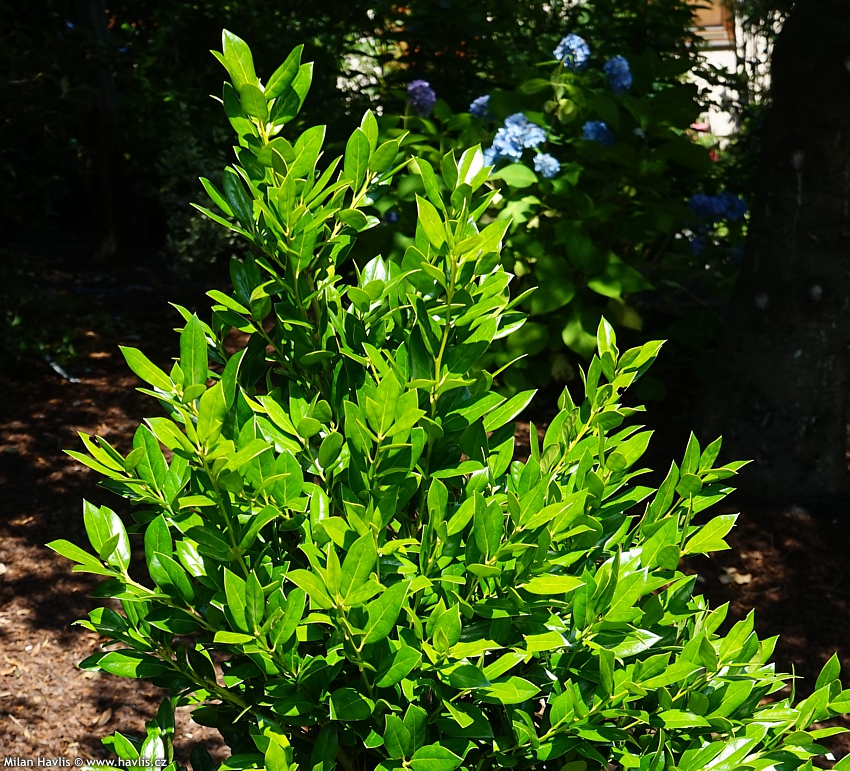
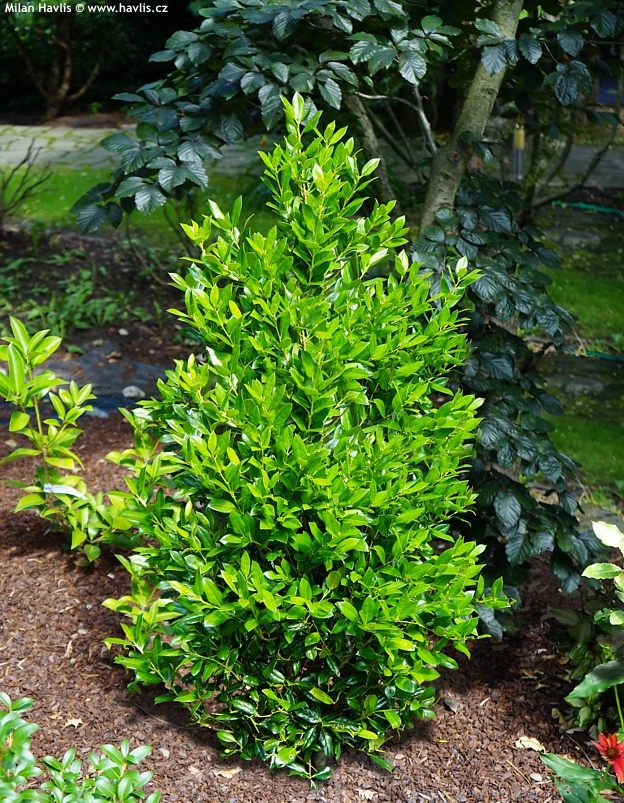
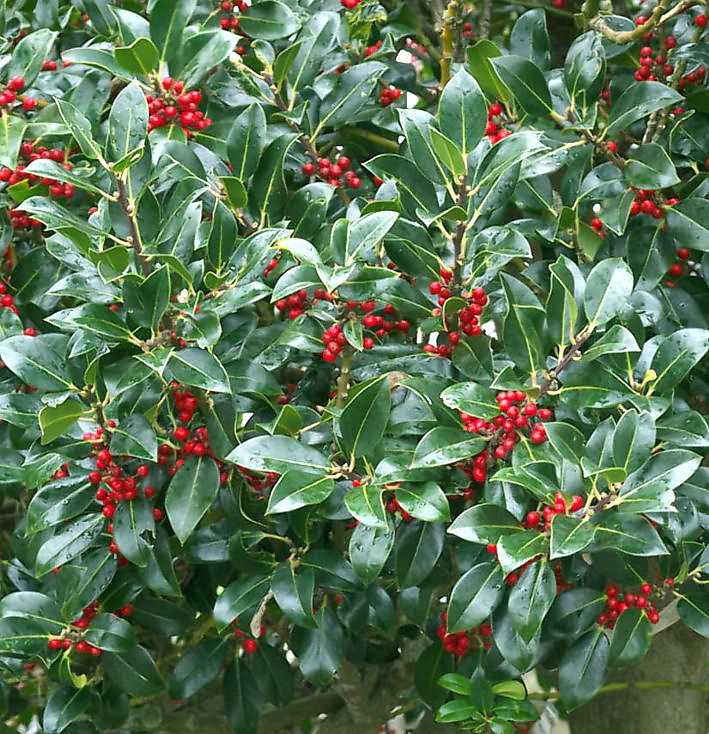
Ilex cornuta (syn. 'Needlepoint') 'ANICET DELCAMBRE' Chinese holly - female, self-fertile


 Symbivit Tric (arbuscular)
 Symbivit (arbuscular)
Ilex
Hollies are among the most common evergreen and native plants of milder parts of Europe with high humidity – British Isles, north France, Benelux countries, and milder parts of north Germany. Various species form trees, shrubs or thickets. They are absent from natural Central European landscape but can be cultivated without problems. Chinese holly is renowned for its horned foliage with three sharp tips but several cultivars of different leaf shapes were raised or selected. It is very tolerant of heat and drought which makes it a sought-after species in the Mediterranean.
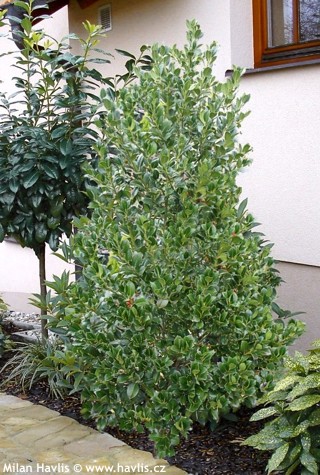
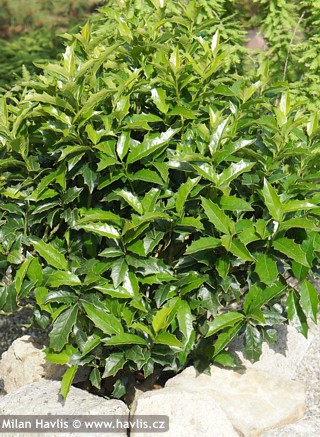
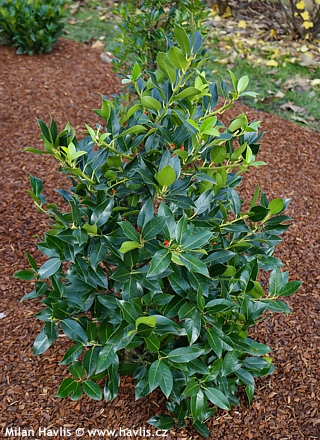
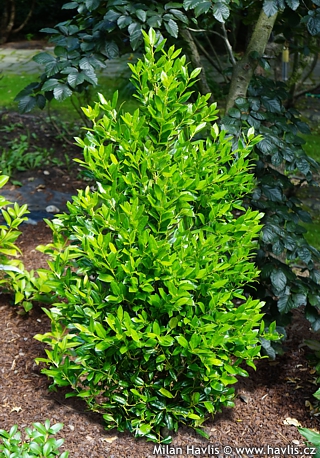
Anicet Delcambre is a Chinese holly often sold under its alternative English name Needlepoint. Its leaves almost completely lack sharp spines, they are entire with only one tip. They emerge soft green and remain such for a long time until they mature in late summer to dark green. They are very glossy and cover the plant entirely. Anicet Delcambre is a female but self-fertile variety producing numerous red berries in autumn (not edible, not poisonous but contain saponins which cause severe discomfort if eaten).
The origin of this variety is unfortunately intractable but is believed to be a natural hybrid rather than a pure Chinese holly variety owing to its foliage shape as well as better hardiness. It forms dense, slow growing, rounded to oval shrubs. Being compact it does not require pruning but can be kept smaller by midsummer shearing. Spring pruning enhances branching.
Chinese holly is somewhat more soil adaptable compared to English holly, it can take almost any well-drained soil but will do best in acid soil with plenty of organic matter. Being drought tolerant it does not need summer mulching but needs it for winter to cope with C.E. winters. It can reliably withstand -21°C (USDA zone 6b) and is expected to do a little better.
Last update 22-08-2020