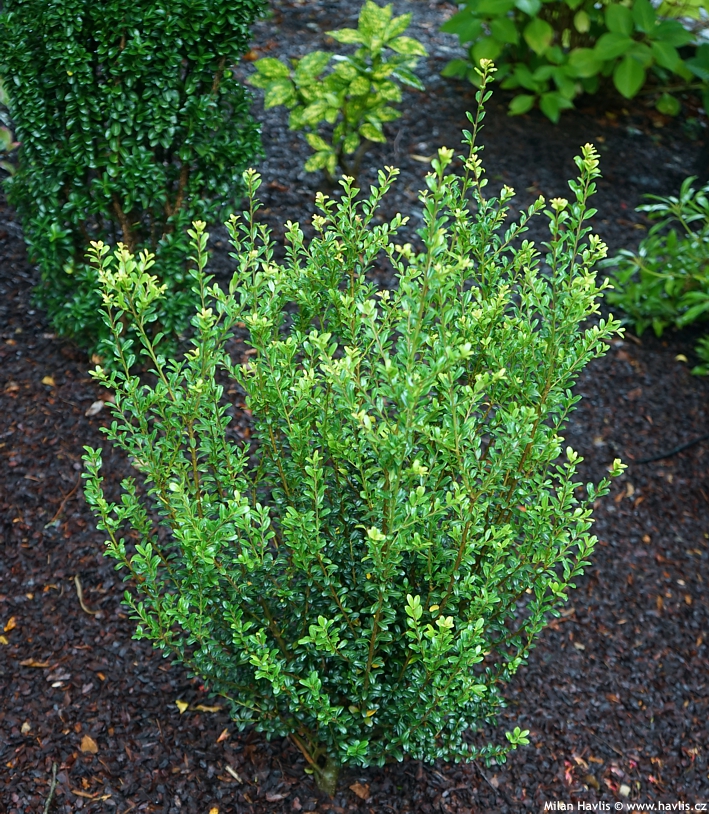
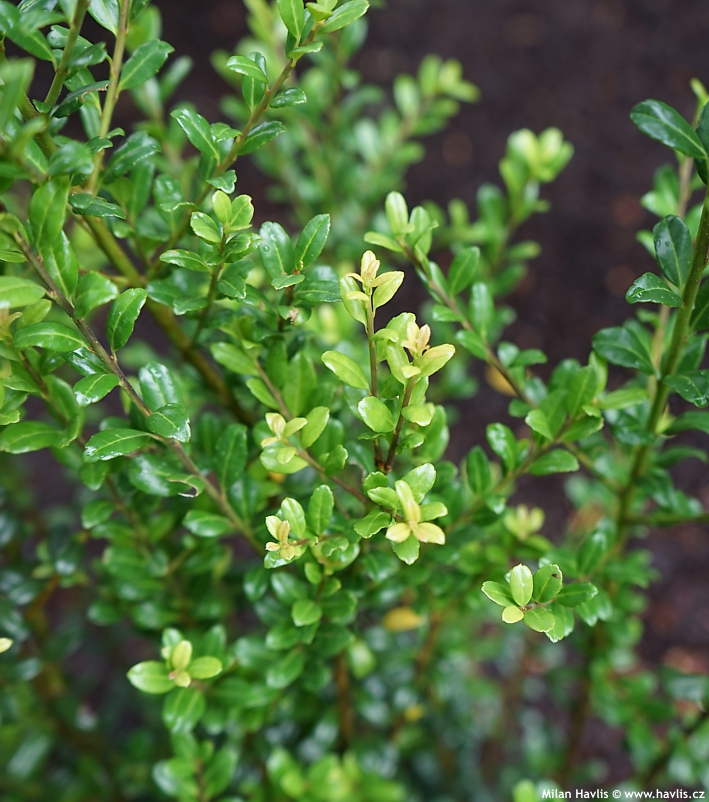
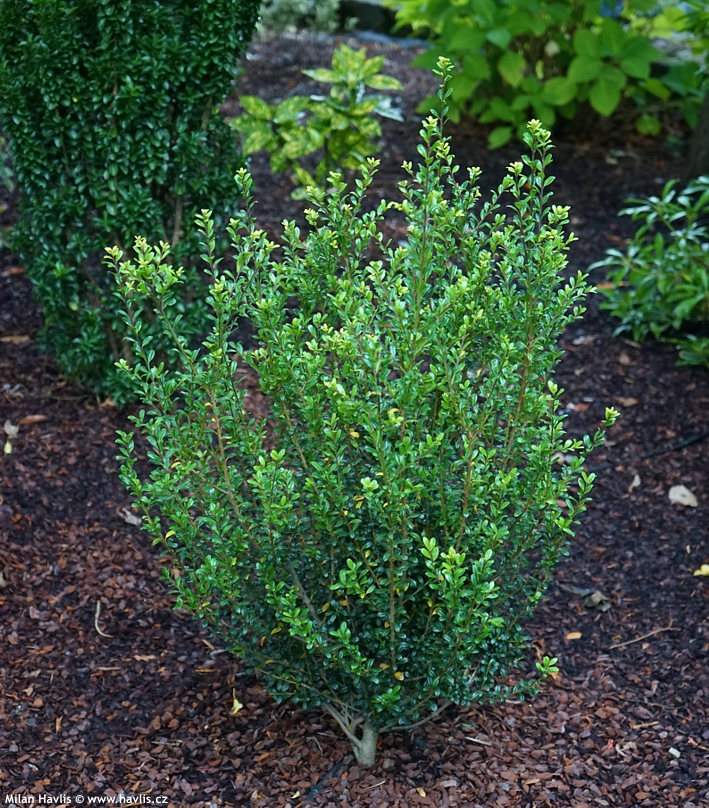
Ilex crenata 'FarrowSK6' PATTI O® Japanese holly

 Symbivit Tric (arbuscular)
 Symbivit (arbuscular)
Ilex
The genus Ilex, commonly known as holly, is very extensive and includes more than 400 species of evergreen and deciduous shrubs and trees, distributed from the tropics of South America through the subtropics of Asia to the temperate zones of Europe. In addition to the possibility of variegated foliage, their greatest advantage is evergreen character, at least in most species, which makes them an excellent complement to deciduous trees and shrubs during the dormant season. Moreover, many hollies naturally lack spines, which will please those who dislike prickly shrubs. The most horticulturally significant are the East Asian species, among which the Japanese holly (Ilex crenata) stands out. This species was described in 1784 by the Swedish botanist Carl Peter Thunberg (1743–1828) during his stay in Japan.
Japanese hollies are very useful and elegant evergreen shrubs that many people at first glance mistake for boxwoods or honeysuckles because of their small, glossy leaves. This very resemblance has predestined them to become the ideal replacement for true boxwoods, which in Europe are gradually disappearing under the pressure of the massive invasion of the box tree moth and due to the fungal disease known as box blight, which has been devastating plantings especially in the British Isles. Japanese hollies, however, are thornless, offer a wide range of shapes and sizes, and require only minimal care. Since they are naturally quite variable, new mutations and cultivars often appear, each slightly different from the last – and every novelty is, of course, a welcome delight.
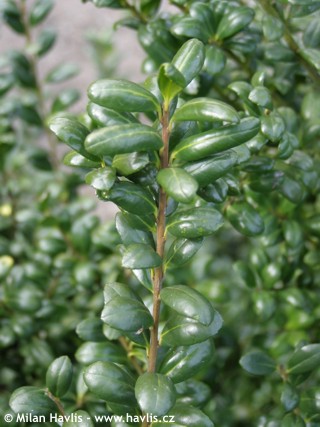
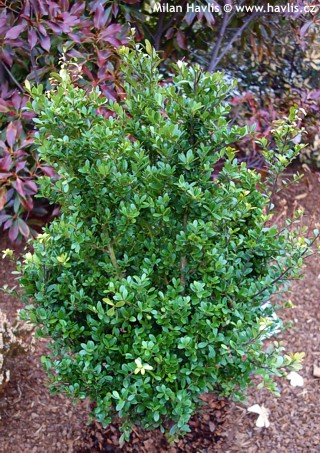
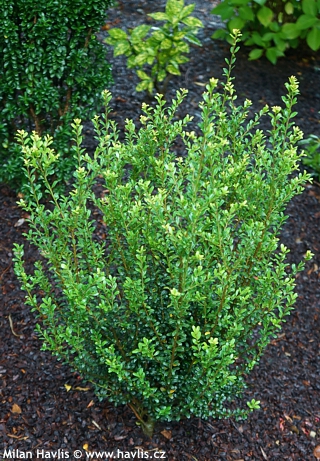
PATTI O® is a Japanese holly variety bred by Michael Farrow from Spring Meadow Nursery in 1999. It is a cross between two Japanese hollies – Sky Pencil and an unnamed variety. When the leaves mature, they are the darkest green shade ever seen on a Japanese holly but they emerge bright chartreuse which brings freshness to the overall appearance. The name suggests its most important utility: in pots on patios, balconies, and simply any other place where you have no room for a border. No blooms observed. Patent No. PP25852 was granted in 2015 and the plant is promoted by Proven Winners®.
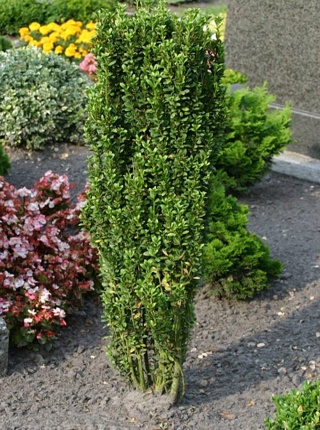
It naturally forms a dense, narrowly pyramidal, chubby shrub about 1.5m tall and half as wide. Place it as a perfect companion plants among other large-leaved, evergreen or differently coloured plants, or as a small specimen in a perennial border with plants of short or ground-covering habit.
Last update: 29-10-2020
Japanese holly is tolerant of most soil types except heavy clay, but it thrives best in well‑drained, evenly moist, acidic soil, occasionally enriched with slow‑release fertilizer. It has a strong root system that copes better with poorer conditions than English hollies and adapts easily to the limited root space of containers without showing signs of stress or drought. It is hardy to about −27 °C (USDA zone 5) and is also suitable for outdoor planters with good drainage and where it requires more frequent but careful watering, including during frost‑free winter days.