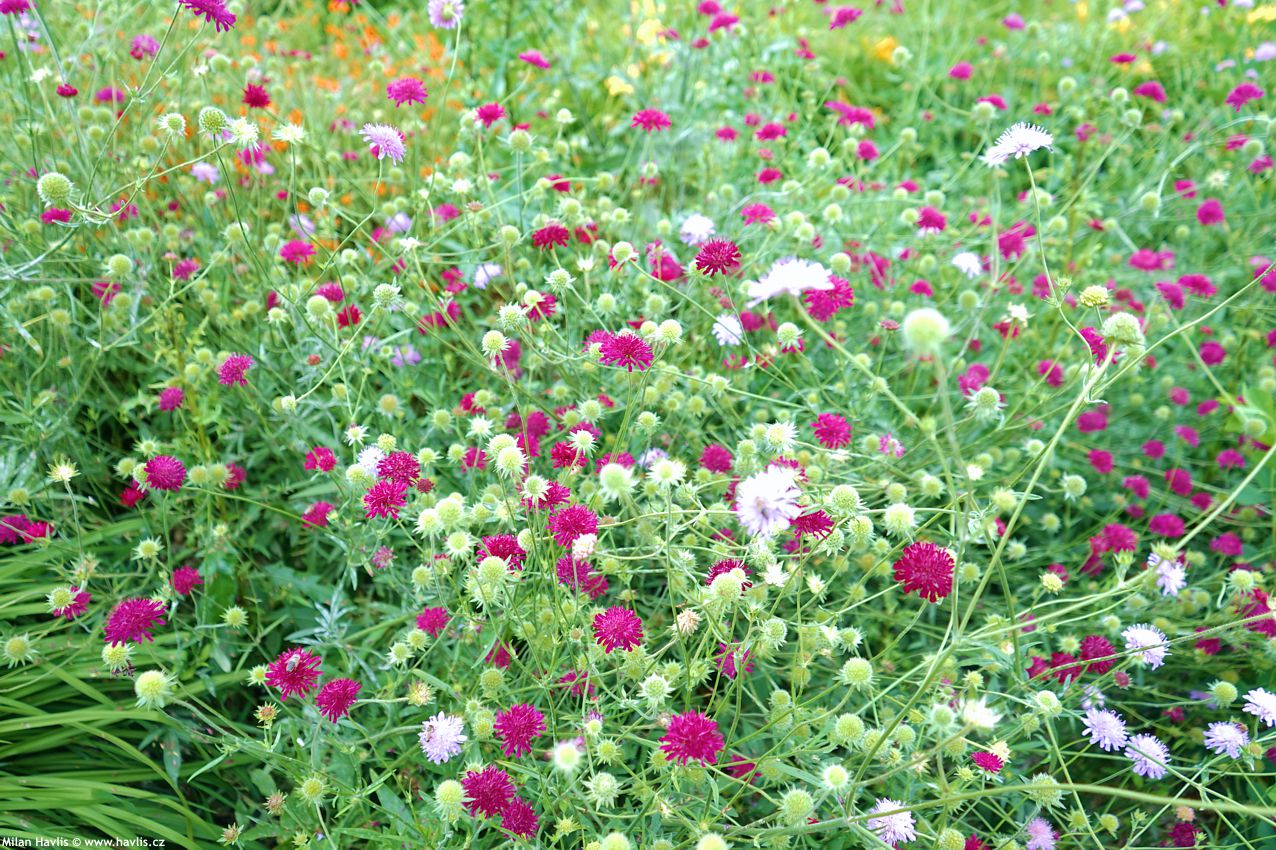
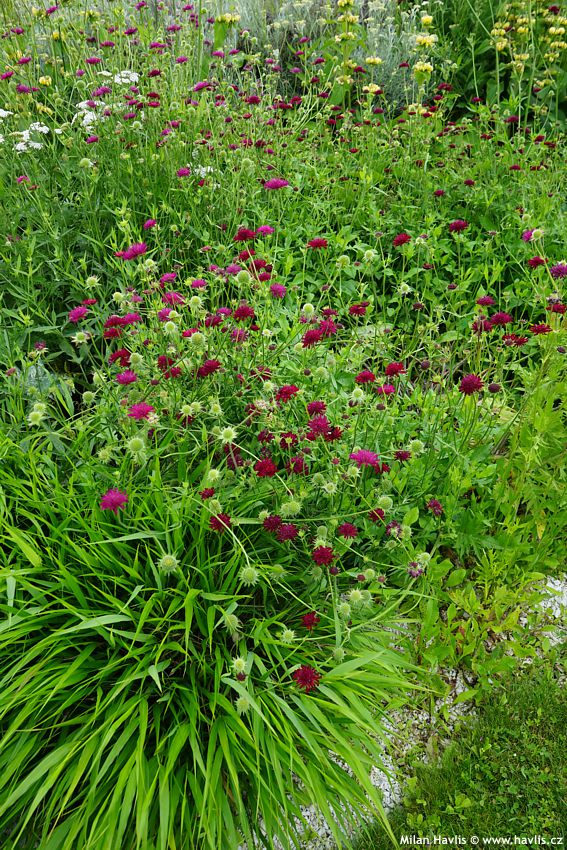
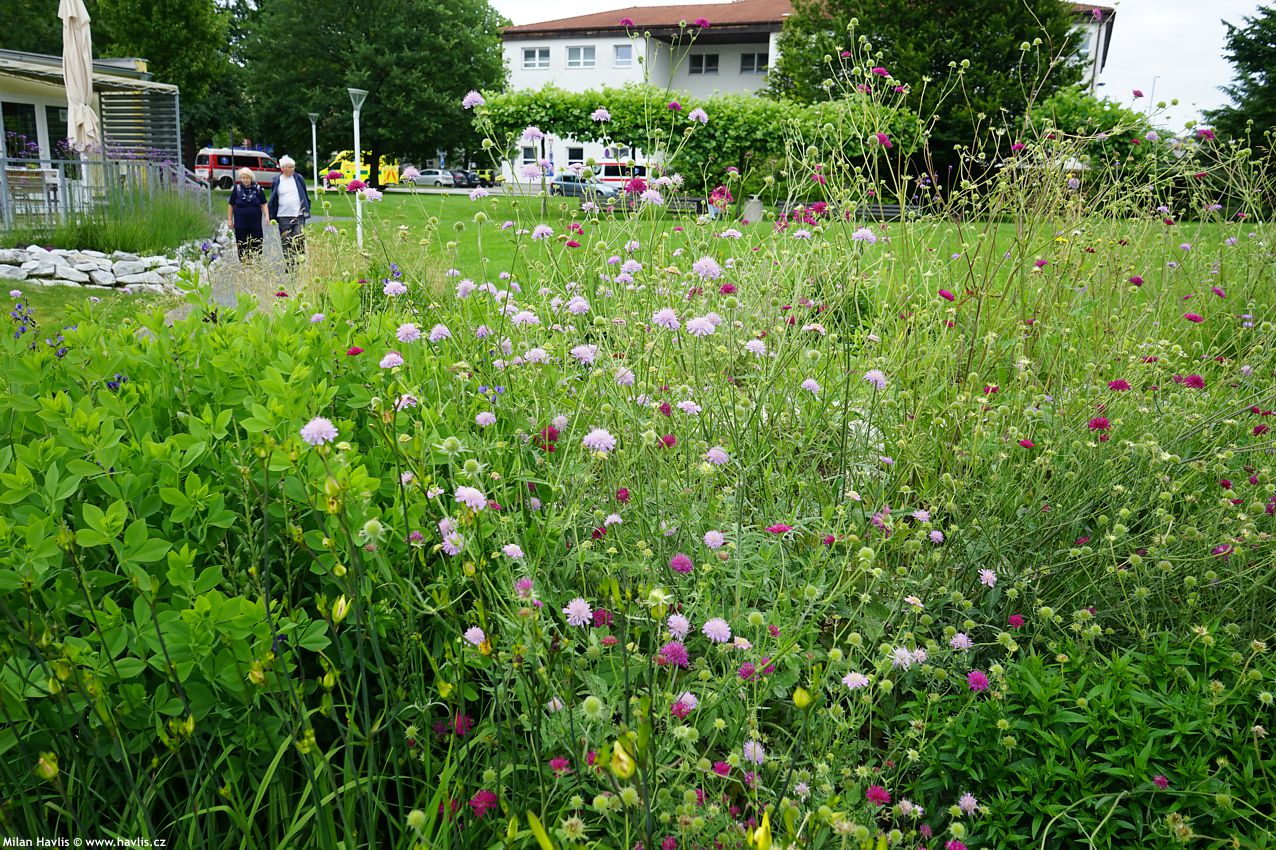
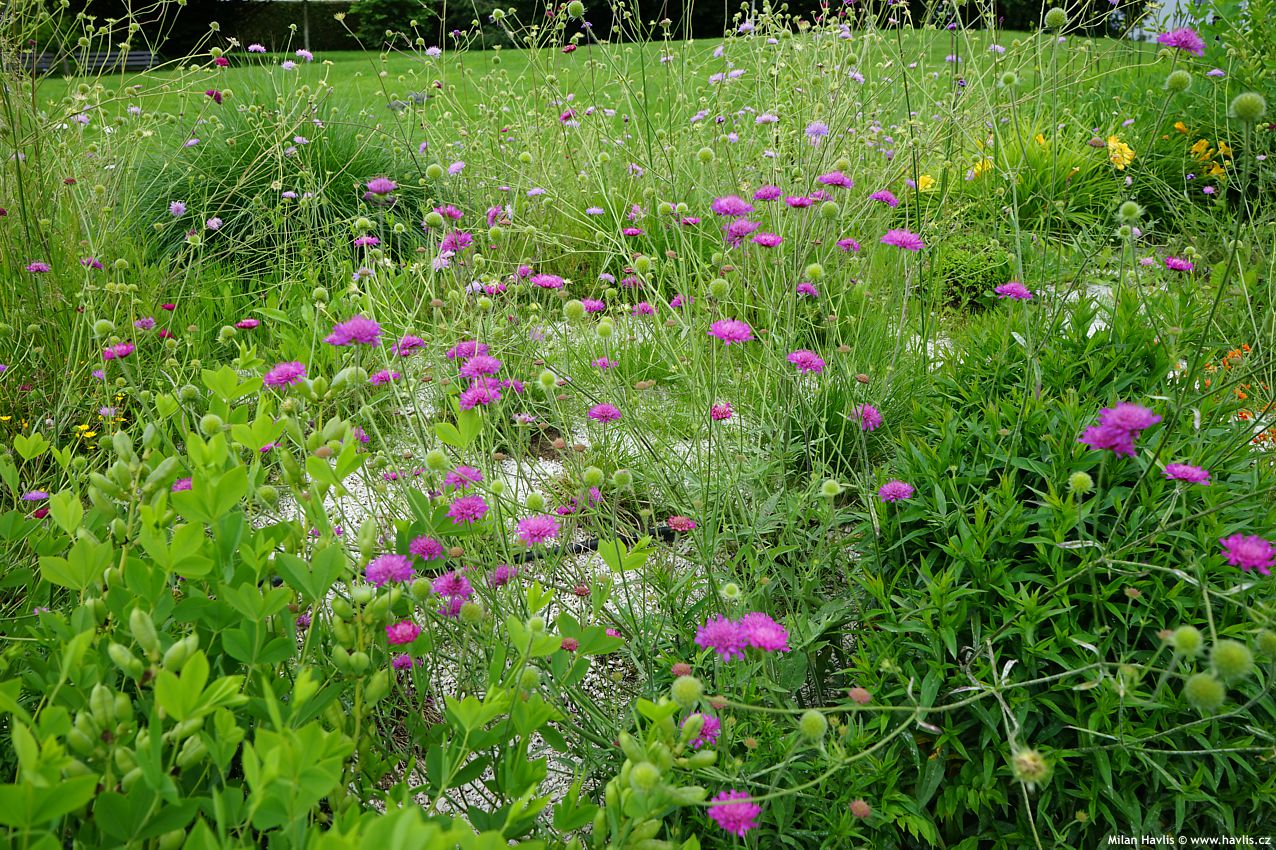
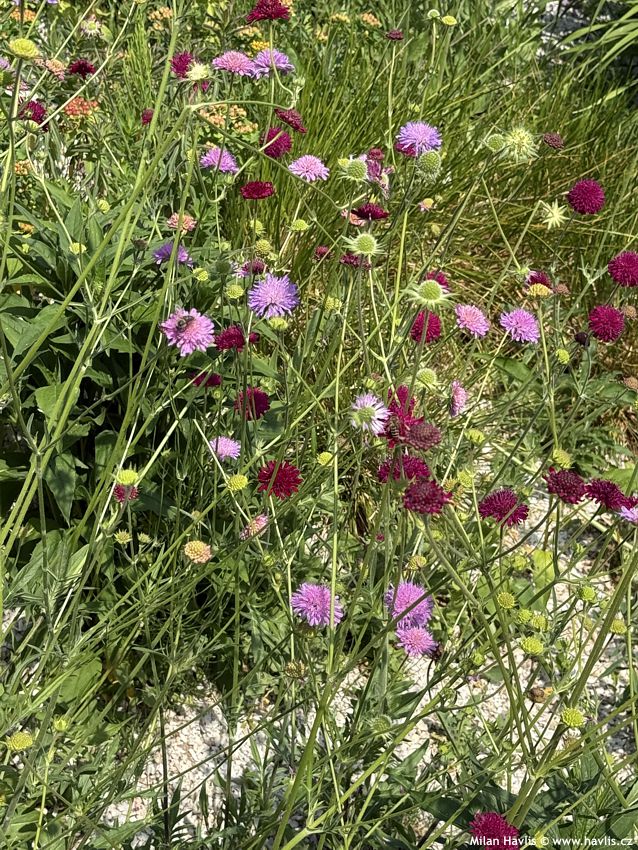
Knautia macedonica 'MELTON PASTELS' Macedonian scabious

 Symbivit Tric (arbuscular)
 Symbivit (arbuscular)
Knautia
The genus Knautia belongs to the honeysuckle family and includes several species of perennial and annual herbs native mainly to Europe and western Asia. They are most often found in dry meadows, rocky slopes, pastures and open woodland edges, where they act as unobtrusive yet persistent companions to grasses and other steppe plants. Their flowerheads resemble those of scabious – small florets packed into bristly little buttons that sway lightly in the wind and attract butterflies, bees and bumblebees. The genus was named in honour of the German physicians and botanists Christian Knaut (1656–1716) and Christoph Knaut (1638–1694), who studied the flora of central Europe. In the past, some species of Knautia and Scabiosa were confused and moved back and forth between the two genera because their flowerheads look deceptively similar at first glance. Modern botany, however, defines Knautia quite clearly as a group of light, airy plants that form an essential part of dry meadows and pastures and remain among the most reliable nectar sources even in the second half of summer.
Macedonian scabious, Knautia macedonica, originates from the Balkans and neighbouring regions, where it grows on sunny, stony slopes, dry meadows and in sparse scrub. It entered gardens as a typical “traveller’s plant” – first as a botanical curiosity from mountain regions, later as a beloved perennial in naturalistic plantings. The species was described in the 19th century by the German botanist August Heinrich Rudolf Grisebach (1814–1879) on the basis of Balkan collections, who noticed its unusual combination: a delicate, almost meadow‑like appearance paired with remarkably long flowering. It blooms throughout summer and often well into autumn, becoming a natural bridge between early‑ and late‑season perennials both in gardens and in the wild. In traditional rural landscapes it was valued mainly as a nectar plant and a reliable food source for butterflies; today it also plays an important role in modern naturalistic plantings, helping to bring insects and the lightness of meadow vegetation back into gardens and even urban spaces. For many gardeners it is a plant that unites beauty with ecological purpose – it looks good and at the same time clearly benefits the landscape and its pollinators.
A small linguistic aside: the species epithet macedonica truly refers to Macedonia. But if you ever travel to Italy, you will certainly notice one of the most common dessert alternatives on many restaurant and lunch menus: la macedonia. It is a fruit salad, indeed, not a chopped‑up Macedonia. The Italian word macedonia comes from the French macédoine, which originally meant a colourful mixture, usually of vegetables, and was also a nod to the extraordinary ethnic diversity of 18th‑century Macedonia, where Greeks, Slavs, Albanians, Vlachs, Turks and Jews lived side by side. Today we might simply call it a (cultural and linguistic) cocktail. But Knautia macedonica is definitely not meant for eating 😊
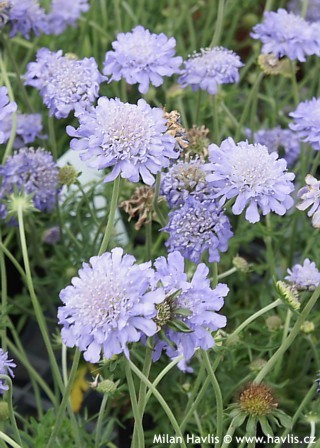
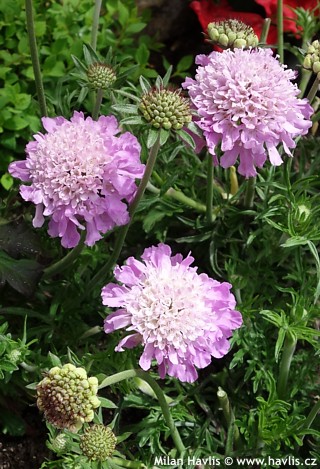
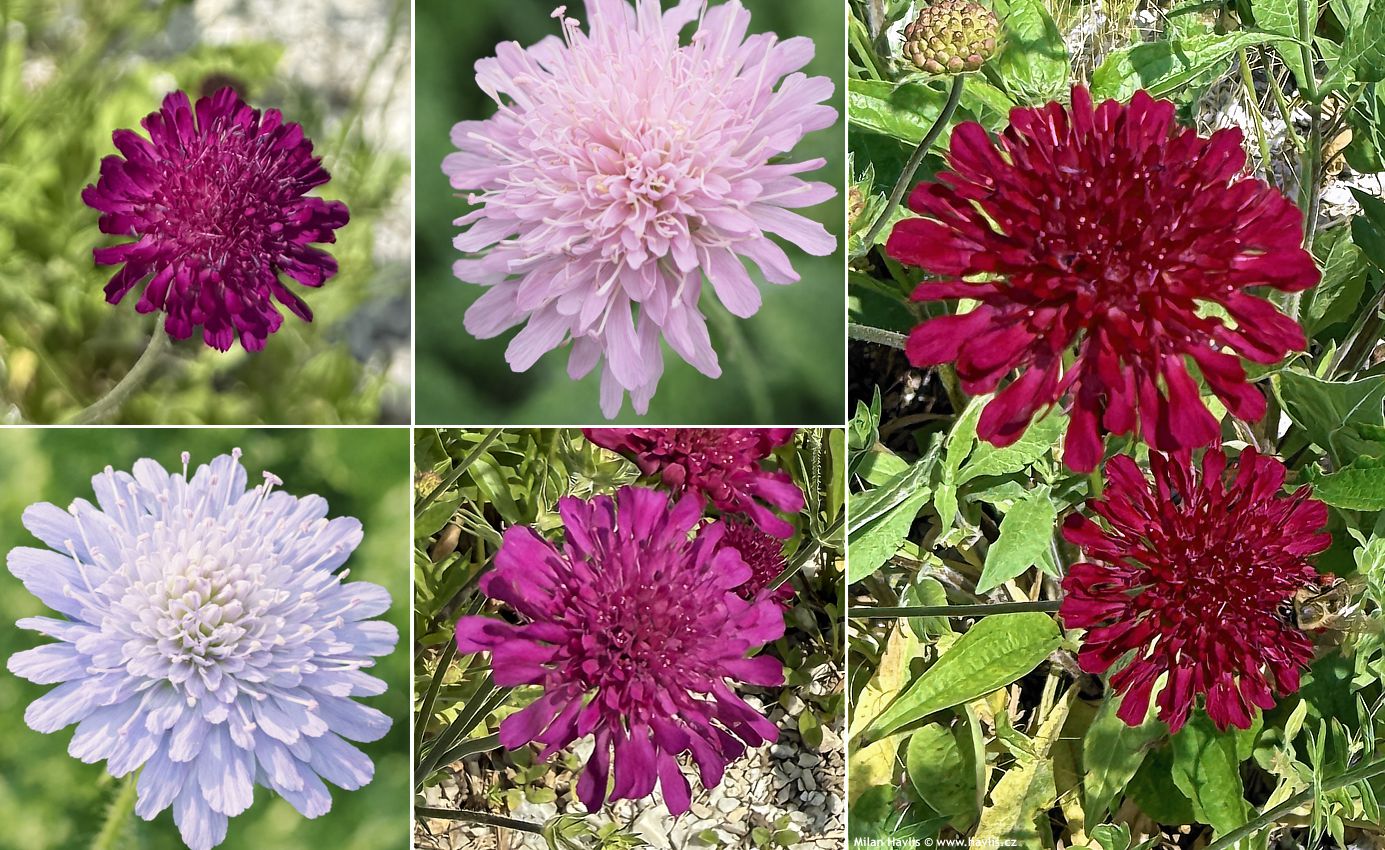
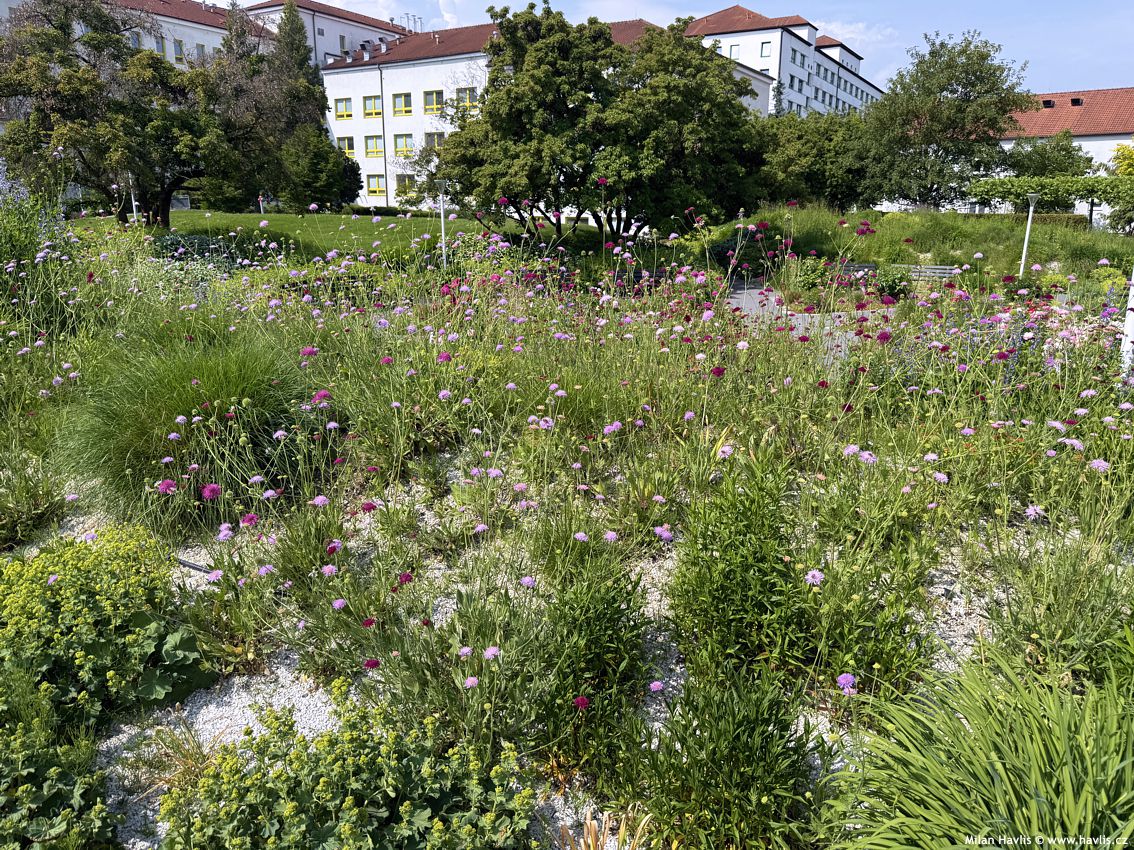
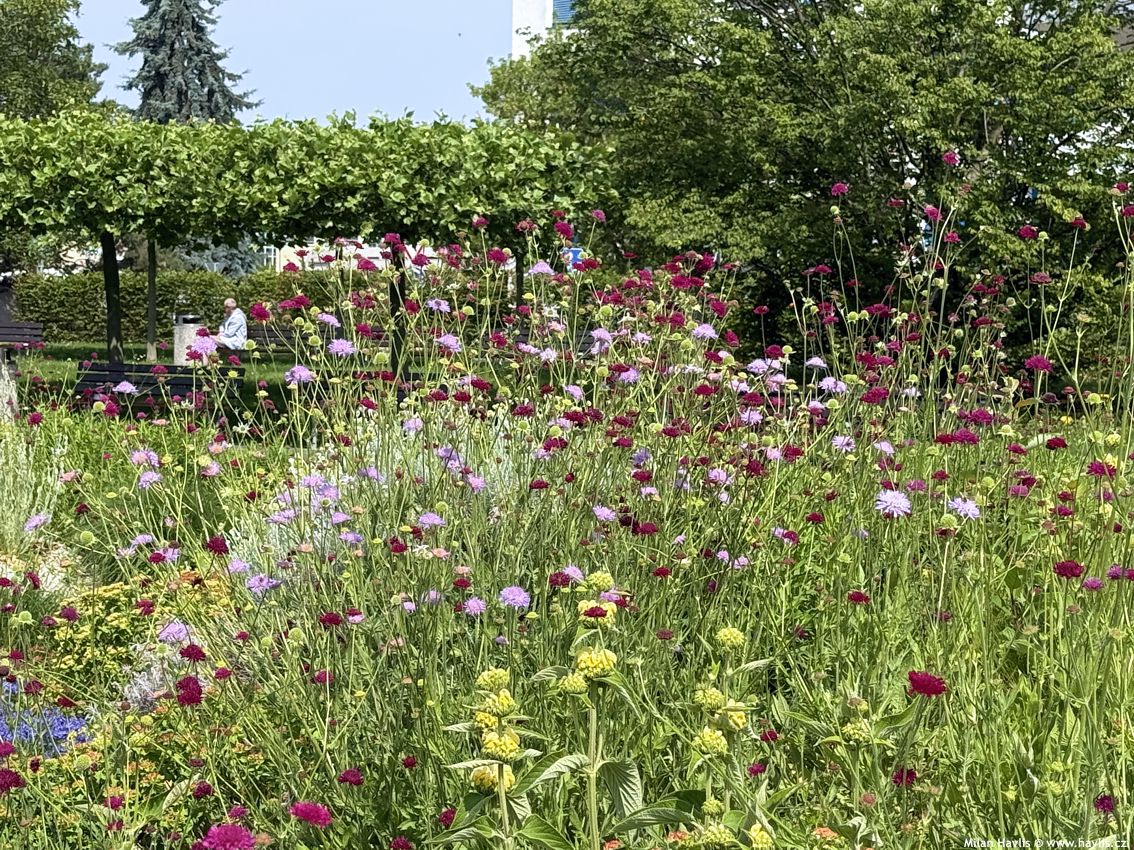
Let’s be perfectly honest from the start: Melton Pastels is not a superhero Macedonian scabious cultivar of breathtaking size or colour – it is a mixture. Yes, you heard correctly: an English colour mix that someone found so charming they gave it a simple name. And after all the years we’ve been selling it, I completely understand why it is so successful and why almost everyone creating a meadow‑style border reaches for it. Picture this: a young perennial with unopened buds walks through a painter’s studio filled with watercolour shades from pink to purple, and returns like a model on a catwalk, now clad in several colours at the same time while the audience applauds.
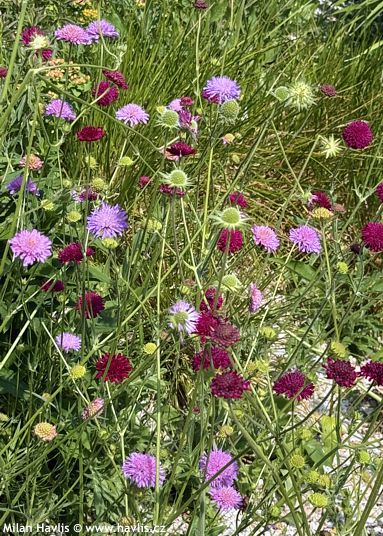
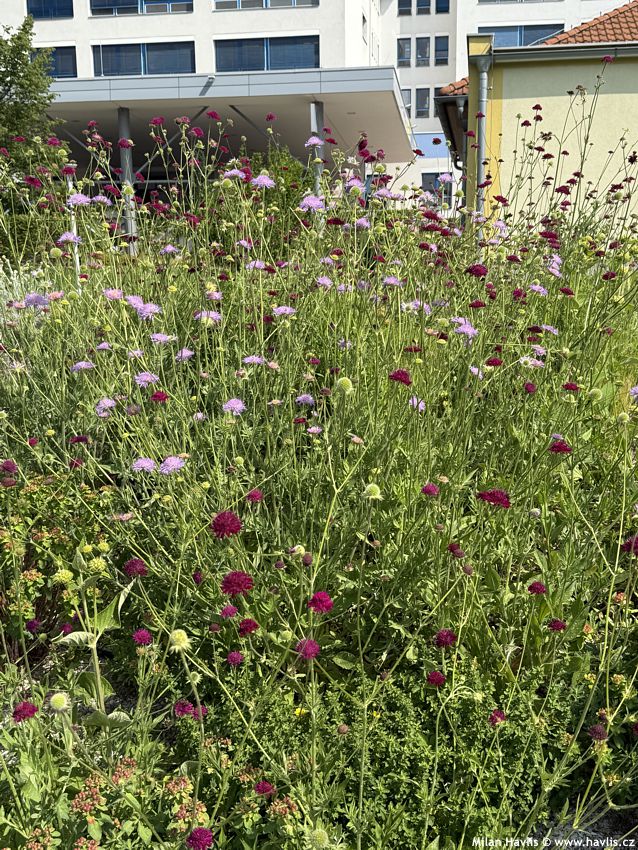
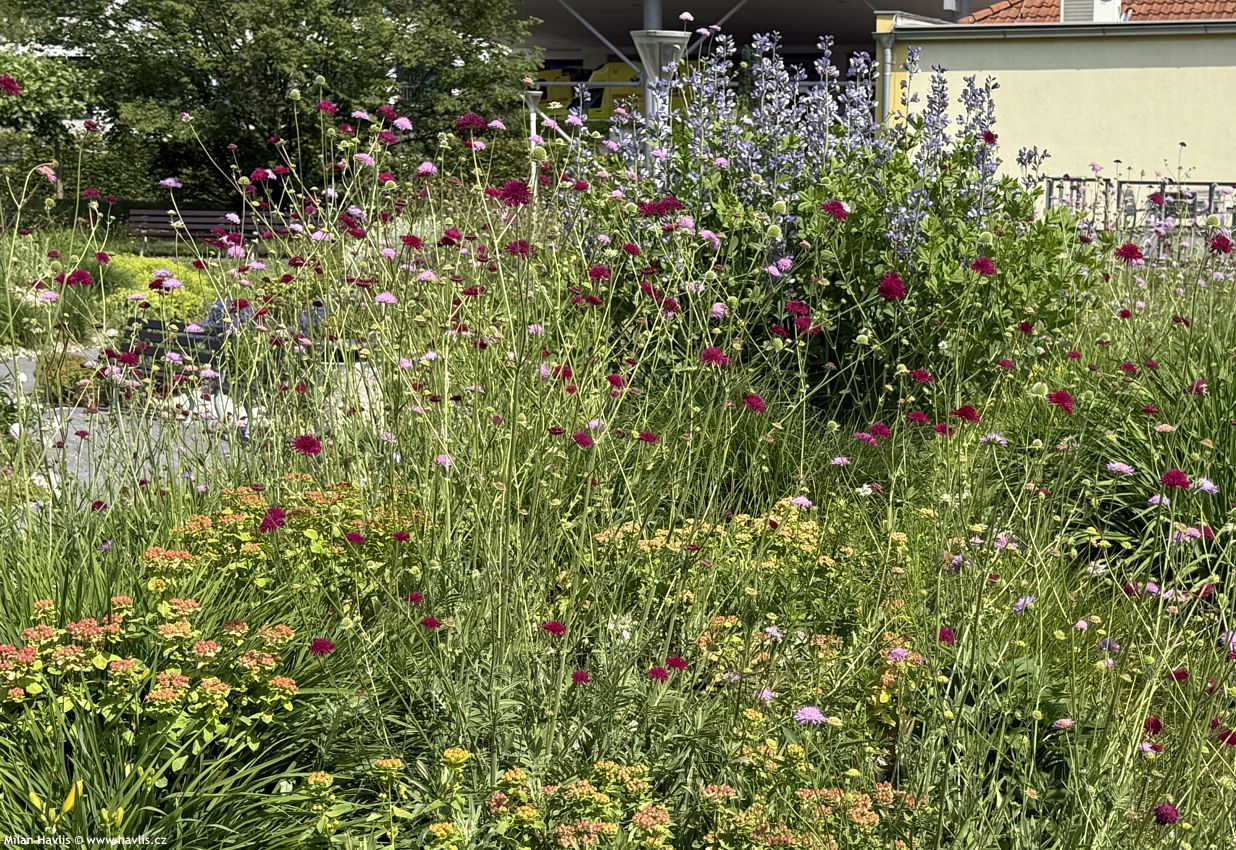
Dozens of light, button‑shaped flowerheads in shades of raspberry, pink, soft carmine, pale and deep purple sway in the slightest breeze on thin stems 60 to 80 cm tall, and the colours blend so naturally it feels as if they had been part of the world since its very beginning. The first flowers appear in June and continue into September or even October if early autumn is warm and sunny. The leaves are most attractive at the start of the season before the flowering stems rise – narrow, grey‑green, slightly rough and distinctly lobed along the edges. Plants under stress may show powdery mildew in early summer, so avoid both overwatering and prolonged drought. Melton Pastels is not a clone or a registered cultivar but a horticultural mixture developed in England and named after the Melton area, where it was first selected and introduced at the turn of the 20th and 21st centuries.
Macedonian scabious can instantly lighten and animate a perennial border. Its thin stems and pastel flowers create a delicate constellation of coloured dots above the foliage, trembling in the wind like a piece of meadow lace. It performs best in meadow‑style plantings, where it can weave freely among other perennials without strict boundaries. Like tiny, pastel-coloured satellites, it floats above salvias, pennisetums, poppies, columbines and yarrows, and intertwines beautifully with taller gauras, verbenas and perovskias, with which it maintains a lively rhythm of colour until the end of summer. Thanks to its long flowering period, it is also excellent for cutting, adding lightness and movement to arrangements without overpowering the other flowers.
Last update 31-05-2026
Macedonian scabious is one of the most rewarding perennials for sunny, well‑drained and rather lean soils. It thrives where it receives plenty of light and where water drains quickly after rain – heavy, compacted soil does not suit it and, combined with waterlogging, may lead to powdery mildew or early‑season decline. It needs watering only after planting and during prolonged drought; it tolerates short dry spells far better than overwatering. Fertilising is not recommended, as overly rich soil encourages lush but weaker growth. Deadheading encourages continuous blooming until autumn. At the end of the season, you may leave some seedheads to ripen – the mixture then renews itself reliably by self‑seeding but never spreads invasively. The stems do not require staking; they are flexible and withstand wind well. It is difficult to grow in containers because it needs a deeper, cooler root run and stable moisture without waterlogging. Its winter hardiness is excellent (down to about −29 °C – USDA zone 5), and it overwinters reliably even in harsh winters as long as it does not stand in water.