.jpg)
Lavandula × intermedia 'EDELWEISS' lavandin

 Symbivit Tric (arbuscular)
 Symbivit (arbuscular)
Lavandula
The genus Lavandula originates from a broad belt stretching across the western and southern Mediterranean, the Canary Islands, Madeira, North Africa and the Middle East. In these regions it grows on dry, stony slopes, limestone outcrops, and in garigue and maquis vegetation, where the soil is poor, free‑draining and exposed to intense sunlight. This environment shaped its characteristic adaptations – narrow, silvery leaves with dense pubescence that reduces water loss, and a high concentration of aromatic oils that protect the plant from herbivores and extreme drought. The genus comprises three main evolutionary lineages: subgenus Lavandula with the classic “true” lavenders (L. angustifolia, L. latifolia and their hybrid L. × intermedia), subgenus Fabricia including species such as L. stoechas and L. dentata, and subgenus Sabaudia with the Canary and Macaronesian species. The chemical composition of their essential oils varies markedly between these groups – from the gentle, linalool‑rich profile of true lavender to the camphoraceous and cineole tones typical of species from warmer regions. Natural overlap between L. angustifolia and L. latifolia in France and Spain led to the emergence of the hybrid L. × intermedia, which later became central to modern lavender oil production. Lavender has been cultivated since antiquity, but its true expansion came in the 19th and 20th centuries, when Provence became the heart of European perfumery and lavender a symbol of the Mediterranean landscape.
Lavender has accompanied people since ancient times and became part of everyday life as well as the cultural symbolism of Europe. The Greeks used it in medicine and to perfume baths; the Romans added it to their baths, oils and linens, believing it purified both body and mind – hence its name, derived from the Latin lavare, “to wash”. In the Middle Ages it was a staple of monastic gardens, valued for its calming effects, its ability to repel insects and its supposed protection against “bad air”. In Renaissance Italy it was used to perfume gloves and fabrics, and in 17th‑century England it became a familiar element of domestic hygiene and garden culture. During plague epidemics it formed part of the so‑called Four Thieves’ Vinegar and was long believed to offer protection against infection. In modern times lavender became a symbol of Provence, even though most of the iconic purple fields are in fact lavandin rather than true lavender. Nevertheless, it remains a plant that bridges traditional crafts, perfumery, herbal medicine and everyday practice – from lavender sachets in linen cupboards to modern aromatherapy. Across many cultures it is associated with cleanliness, calm, femininity and the protection of the home. Its fragrance has become one of the most recognisable scents in the world, allowing lavender to transcend the boundaries of its Mediterranean origins.
Lavandula × intermedia, known as lavandin or hybrid lavender, is a natural cross between L. angustifolia and L. latifolia from regions of France and Spain where the ranges of both parent species overlap. It forms more robust, broadly spreading shrubs with faster growth and longer, sturdier flowering stems that may reach twice the length of those of true lavender. The leaves are broader, less silvery and slightly coarser, reflecting the influence of the heat‑loving L. latifolia. The inflorescences are long and abundant, carrying a greater number of flowers whose scent is stronger and sharper due to higher levels of camphor and cineole. The plant is sterile, producing no viable seed, and is propagated exclusively vegetatively, ensuring uniformity of cultivars in commercial production. Lavandin is slightly less hardy than L. angustifolia, yet still reliable in our climate, and it tolerates heat, wind and dry conditions better, making it a dependable choice for warmer regions and lowland sites. In favourable conditions it forms large, regular clumps with strong seasonal impact and a high yield of essential oil used mainly in cosmetics, detergents and aromatherapy. It is easily distinguished from true lavender by its larger size, longer flowering stems, sharper fragrance and more robust habit; from L. latifolia it differs by its more compact form and higher proportion of sweeter aromatic components.
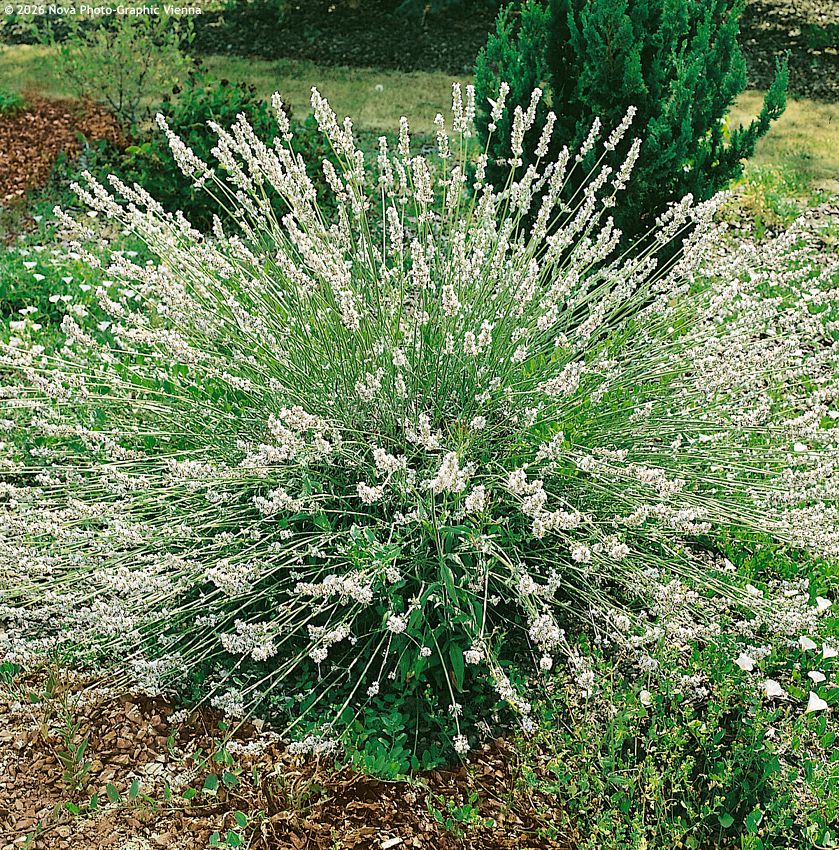
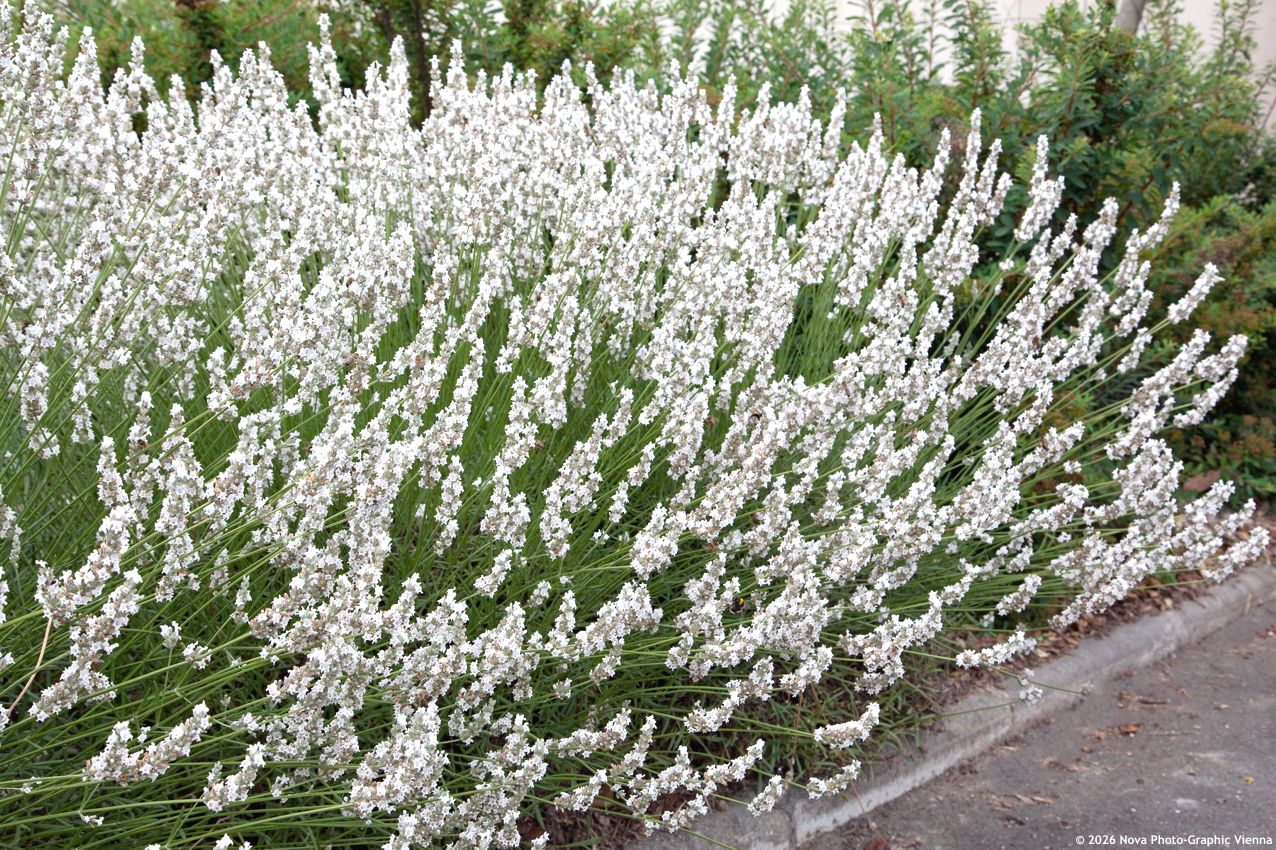
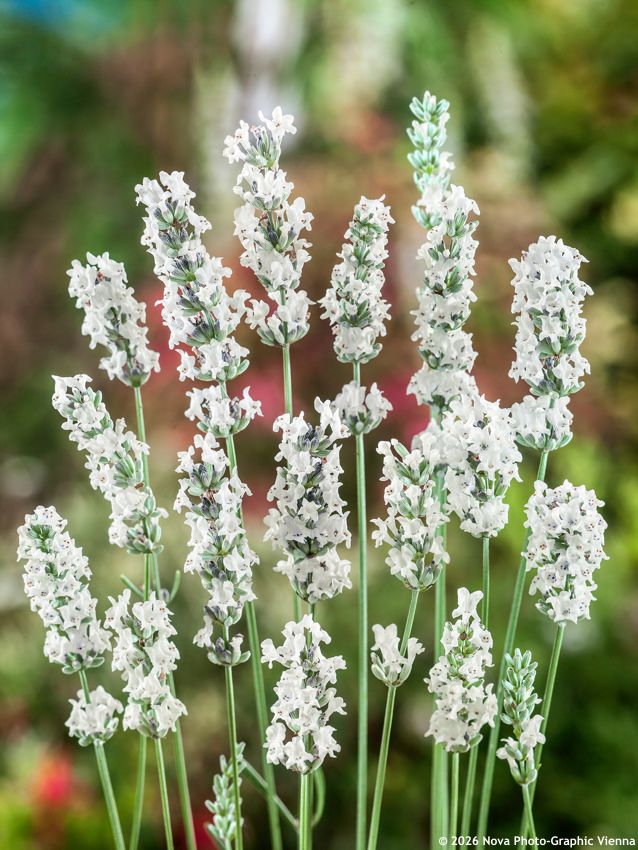
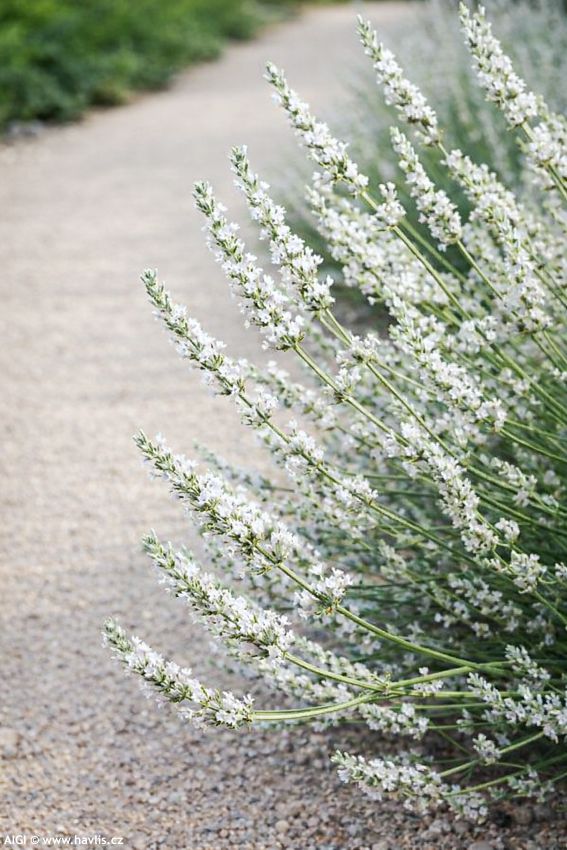
White is perhaps an unusual colour for lavender, yet when placed among good companions it can beautifully highlight the surrounding shades just as easily as it can draw attention to itself with its purity. Edelweiss is an old lavandin cultivar that brings a gentle, clean presence to the border: its flowers are snow‑white, arranged in firm, slender spikes about 6–10 cm long, held above the compact mound on sturdy, silvery stems. The leaves are typically lavandin‑like – narrow, elongated, grey‑green to silvery, with a fine felted surface that gives the plant its drought‑tolerant, almost Mediterranean character. It grows to around 60–90 cm in height and 70–100 cm in width, making it more robust than true English lavender while still maintaining a regular, dense shape. Flowering begins in July and continues through August, often extending into September, and although it is not genetically remontant, it can produce a lighter late flush after pruning. This is a historic European selection, documented as early as around 1880 and without a known breeder – a cultivar that has endured thanks to its reliability, pure colour and strong fragrance.
Last update 22-05-2026
Lavandula × intermedia requires full sun and a light, very well‑drained soil; in heavy or waterlogged ground it is prone to root problems. After planting it needs regular watering until established, then becomes drought‑tolerant and is watered only during prolonged heat. Feeding is unnecessary and often counterproductive, as it encourages soft, overly vigorous growth. Annual pruning after flowering helps maintain a regular shape: remove the spent flower spikes and reduce the plant by about one third, always cutting only into green growth. In colder regions the main trim can be postponed until spring. Spent stems may be removed at any time to keep the plant tidy, and the long summer flower stems are often harvested for drying. Lavandin is slightly less hardy than L. angustifolia, but still reliable in most regions if the soil drains well. Winter wetness is the main risk, so raised beds or gravelly soils are beneficial. Good air circulation in denser plantings helps reduce fungal issues. Lavandin is fully hardy to min. -27 °C (USDA 5) and lavender growers caim it sometimes withstands a few more degrees lower.