













.jpg)
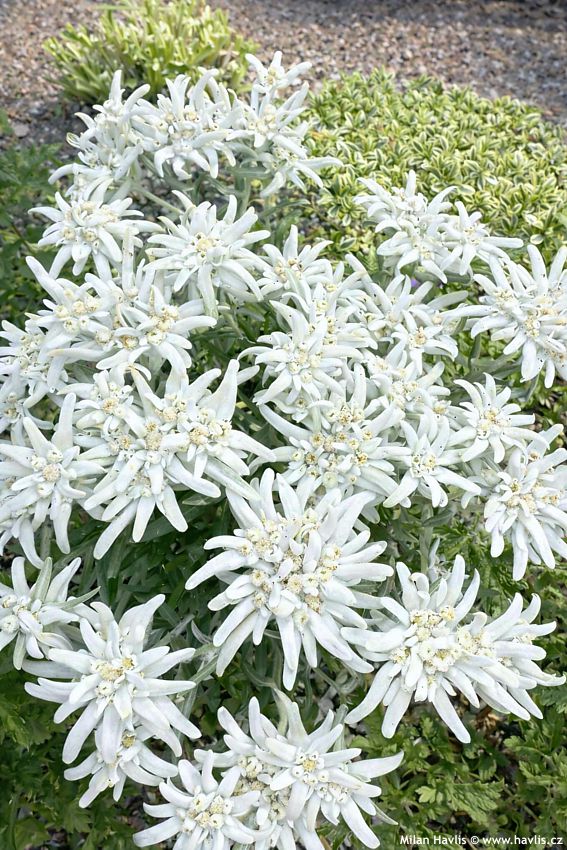
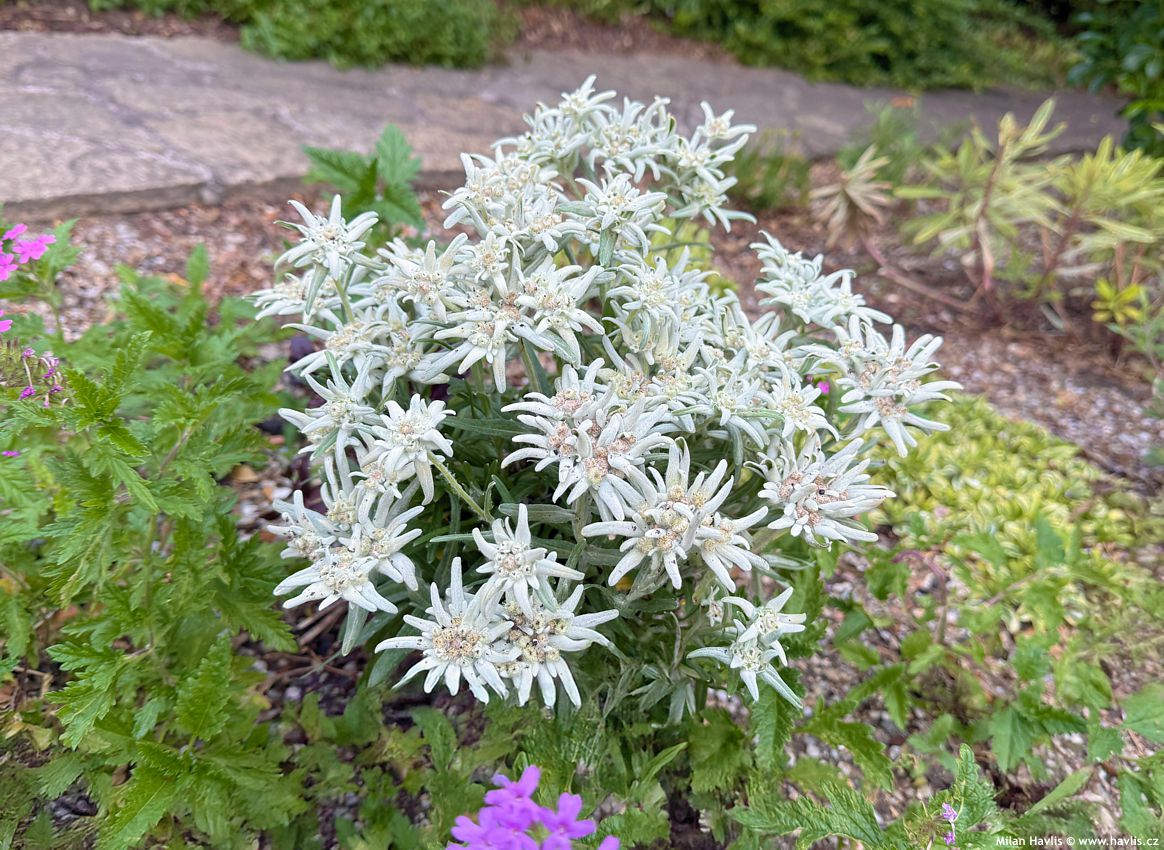
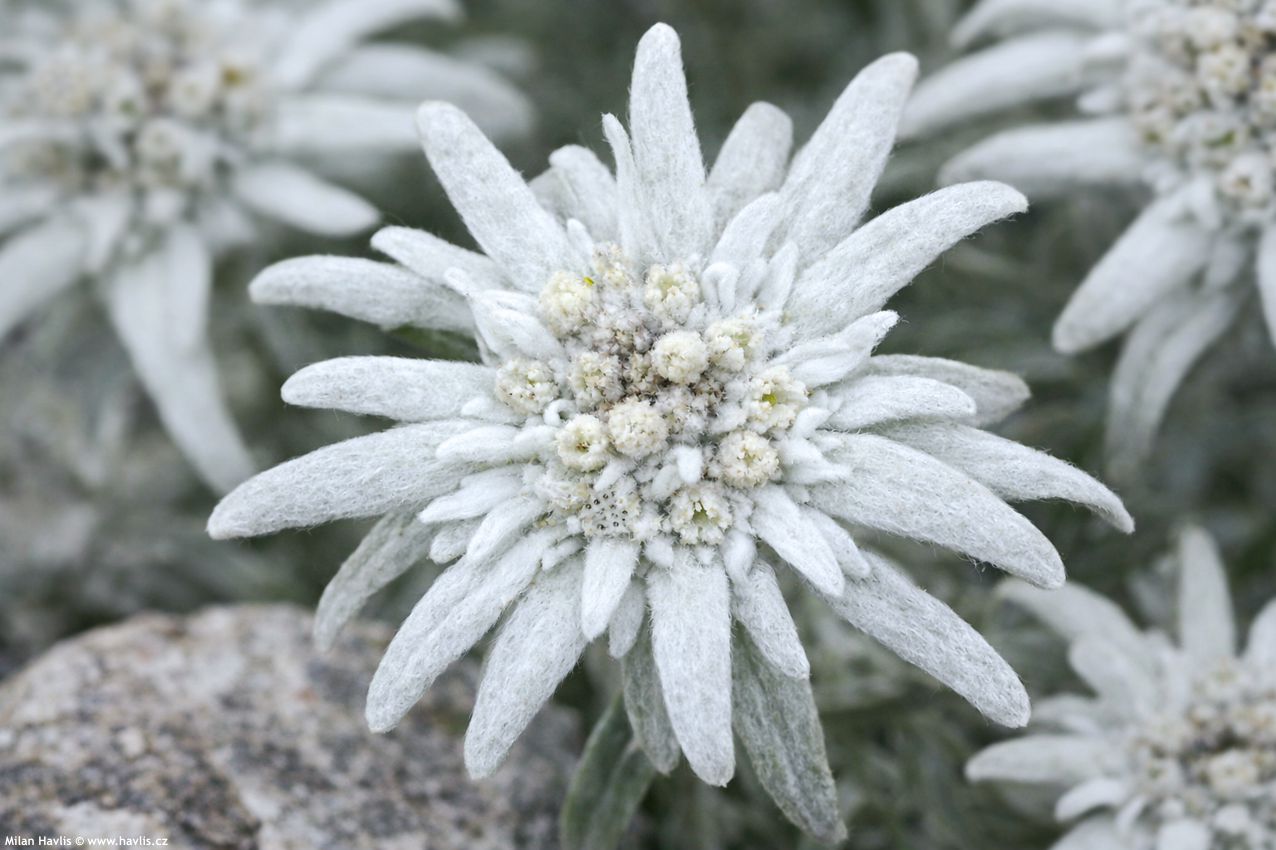
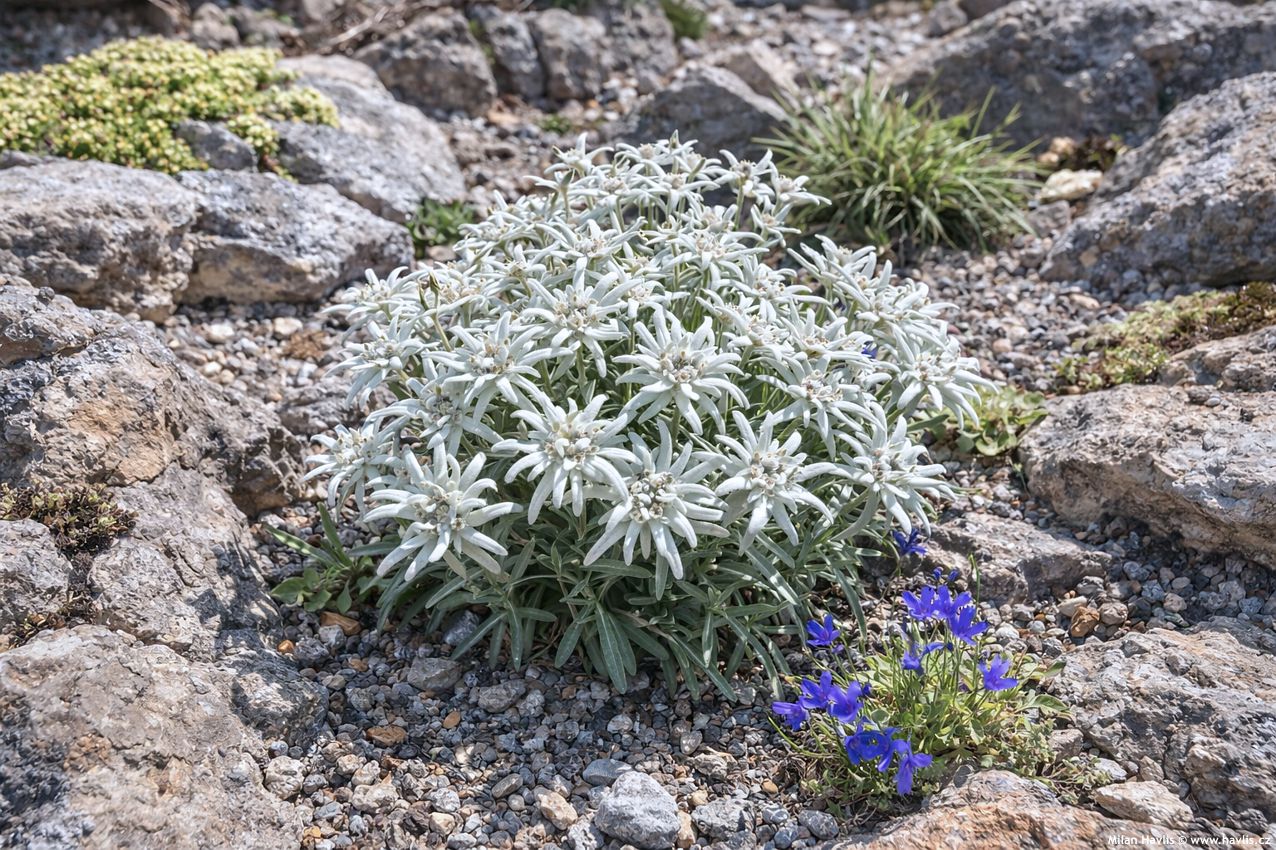
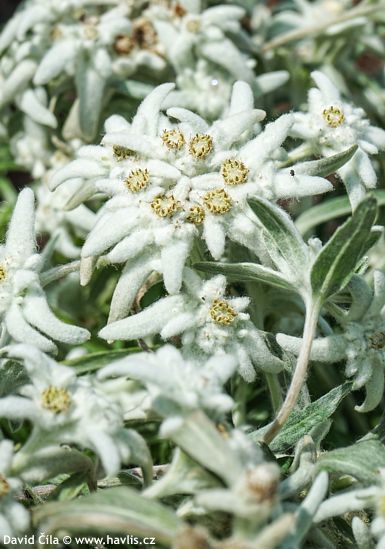
Leontopodium alpinum 'EDELWEISS' Alpine star, Edelweiss

 Symbivit Tric (arbuscular)
 Symbivit (arbuscular)
Leontopodium
The genus Leontopodium, commonly known as edelweiss, comprises several species growing in the mountainous regions of Europe and Asia. The most famous among them is Leontopodium alpinum, which has become a symbol of the Alps, from Switzerland through Austria, northern Italy, and Slovenia all the way to Mongolia. Historically, it represents purity, courage, and resilience, which is demonstrated by its ability to thrive in the harshest alpine conditions. Its German name, Edelweiß, translates to "nobly white," referring to its unique appearance.
A proof of Alpine bravery or a pop music inspiration?
In the past, young men collected edelweiss as a test of bravery, risking their lives climbing steep cliffs to bring this rare flower to their beloved. Edelweiss doesn’t grow just anywhere—its dense, felt-like hairs serve not only as an aesthetic feature but as a natural shield against cold and intense sunlight, allowing it to thrive at elevations of 1,800–3,000 meters. With the rise of alpinism, tourists began recklessly picking edelweiss, which led to a drastic decline in its population. Eventually, it was declared an endangered species and is now legally protected in many countries.
The flower appears in folk songs, military insignia, and even pop culture. Are you familiar with the 1959 Broadway musical The Sound of Music or its 1965 film adaptation? It features Edelweiss, a poignant song that expresses an Alpine native’s longing for home as he is forced to flee with his family from Nazi occupation. In 1988, the Austrian eurodance group Edelweiss further popularized the flower with their dance hit Bring Me Edelweiss. The song, which includes yodeling, also features a sample from ABBA’s S.O.S.—reportedly obtained thanks to a drunken phone call with one of the band's publishers, perhaps charmed by the traditional Austrian attire in the music video attempt.
Watzmann is another attractive selection of the alpine star (edelweiss), valued for its remarkably faithful resemblance to the true wild species. Its flowers are slightly smaller than those of the well‑known cultivars ‘Matterhorn’ and ‘Mont Blanc’, giving it a more natural, less “garden‑bred” appearance. It forms low, firm cushions about 15 to 20 cm tall, which in summer become covered with white, densely felted bracts and small flower heads measuring roughly 3 to 5 cm across. The leaves are narrow, silvery white to grey‑green, strongly hairy and provide a gentle contrast to the brighter star‑shaped blooms. According to long‑term observations by growers, it flowers for a shorter period than ‘Matterhorn’ and ‘Mont Blanc’, yet definitely longer and more generously than the botanical species. It is also more stable in garden soil and copes better with summer moisture. The name refers to the Watzmann massif in the Berchtesgaden Alps, whose sharp triple summit has become a symbol of the rugged but beautiful alpine landscape.
Thanks to its compact habit it is ideal for rock gardens, alpine plantings or as a symbolic feature in high‑mountain themed borders. Its silvery surface gives it a subtle, almost magical quality that stands out especially in full sun. When the light catches it, the fine hairs create a soft, velvety sheen that feels like a piece of natural sculpture. It combines beautifully with Gentiana acaulis, Dryas octopetala or Saxifraga paniculata, which share similar requirements and add contrasting colour. The name of the cultivar gains an extra layer of meaning here – just as the Watzmann massif represents a pure, rugged alpine aesthetic, this edelweiss brings exactly that gentle yet striking mountain atmosphere into temperate gardens, the kind one remembers from high‑altitude hikes.
Last update 16-07-2026
Edelweiss has a storied history, as it was traditionally used as a medicinal herb, especially for respiratory ailments and stomach issues. Today, its extracts are utilized in cosmetics, containing antioxidants and protective compounds that shield the skin from UV radiation. This plant is low-mainenance but requires specific conditions. It should be placed in a sunny location with well-drained soil, preferably lime-based. Watering should be moderate, as it dislikes excessive moisture. It thrives in poor, rocky soils with good drainage. Propagation is best done via seeds, which benefit from stratification. Edelweiss is fully hardy, enduring temperatures as low as -30°C (USDA zone 5) or even lower, making it an ideal plant for alpine conditions.