

































.jpg)
.jpg)
.jpg)
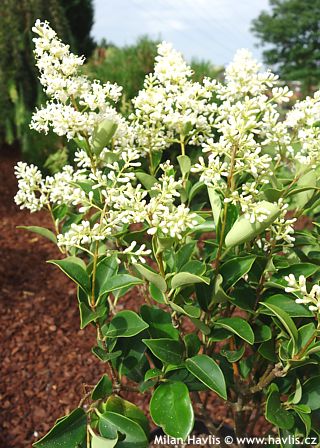
Ligustrum japonicum 'TEXANUM' Japanese privet, waxleaf privet


 Symbivit Tric (arbuscular)
 Symbivit (arbuscular)
Ligustrum
The genus Ligustrum comprises around 44 species of shrubs and small trees distributed mainly across the temperate and subtropical regions of Eurasia, with its centre of diversity in East Asia. Native species also occur in Europe, North Africa and as far as Australia, including Queensland. Somewhat unexpectedly, privets belong to the diverse olive family (Oleaceae), which also includes syringa, fraxinus and forsythia. The greatest species richness is concentrated in China, Japan and Korea, from where privets spread into gardens around the world. Fossil records of Ligustrum are scarce, yet pollen grains and macrofossils from the Tertiary period confirm its presence in warm forests of the Northern Hemisphere. Botanically, the genus is characterised by opposite leaves, small four-petalled flowers arranged in panicles, and drupe-like fruits that are particularly attractive to birds. This very combination of inconspicuous flowers and conspicuous fruit gave rise to the Latin name, derived from ligare, meaning “to bind”, a reference to the dense, interwoven growth of the branches. The genus was formally defined in the 18th century as part of the systematic classification of plants, although its taxonomy has never been entirely free of debate. Some species were historically transferred between the genera Ligustrum and Syringa, mainly because of similarities in flower structure, and only modern molecular analyses have confirmed their distinct status. In European garden culture, privet became a symbol of clipped hedges, while in Asia it was perceived more as a natural component of woodland edges and village gardens.
Ligustrum japonicum, Japanese privet, originates from Japan and adjacent parts of the Korean Peninsula, where it grows as an evergreen shrub or small tree along forest margins, on slopes and near villages and towns. The species was described by Carl Peter Thunberg (1743–1828), a Swedish botanist and pupil of Carl Linnaeus, who collected extensive material of previously unknown plants during his stay in Japan in the 1770s. His work was remarkable not only for its botanical precision, but also because it was carried out at a time when Japan was almost entirely closed to Europeans. Ligustrum japonicum differs from other members of the genus primarily in its thick, leathery leaves with a pronounced gloss, a feature that earned it the English name wax‑leaf privet. This characteristic made it a sought-after ornamental shrub in regions with mild winters, where it retains its foliage throughout the year.
In Japanese culture, its dark fruits are known by the vernacular name nezumi‑mochi (ネズミモチ), literally “mouse droppings”, an example of the disarmingly direct way plants are often named after everyday experience. Neither the wood nor the fruits had significant economic value, but the plant was appreciated for its resilience, tolerance of pruning and long-term reliability; for this reason, Ligustrum japonicum was commonly planted in parks, urban gardens and also within the grounds of temples and shrines. It was introduced to North America in 1845 and soon afterwards spread to southern Europe; in cultivation it became one of the typical evergreen garden shrubs, and in some regions outside its native range it can naturalise.
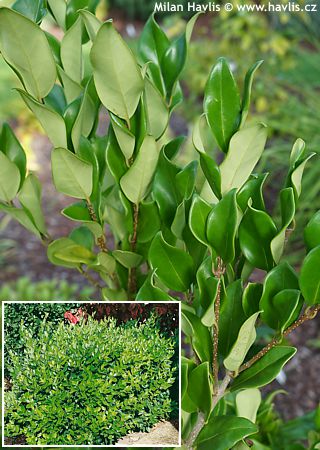
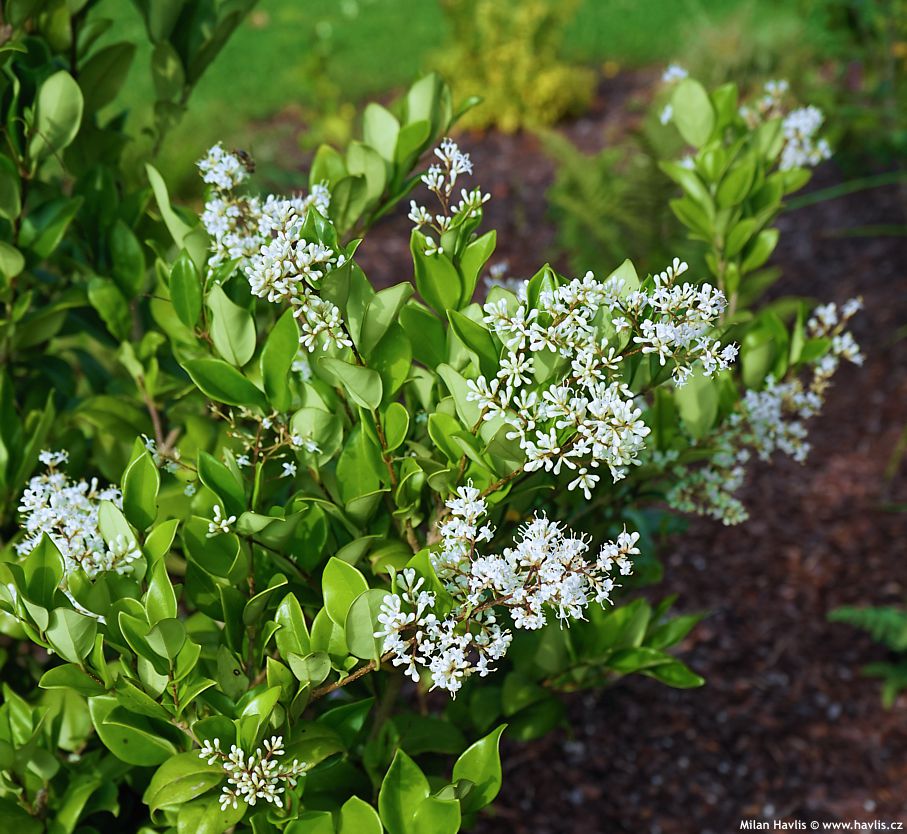
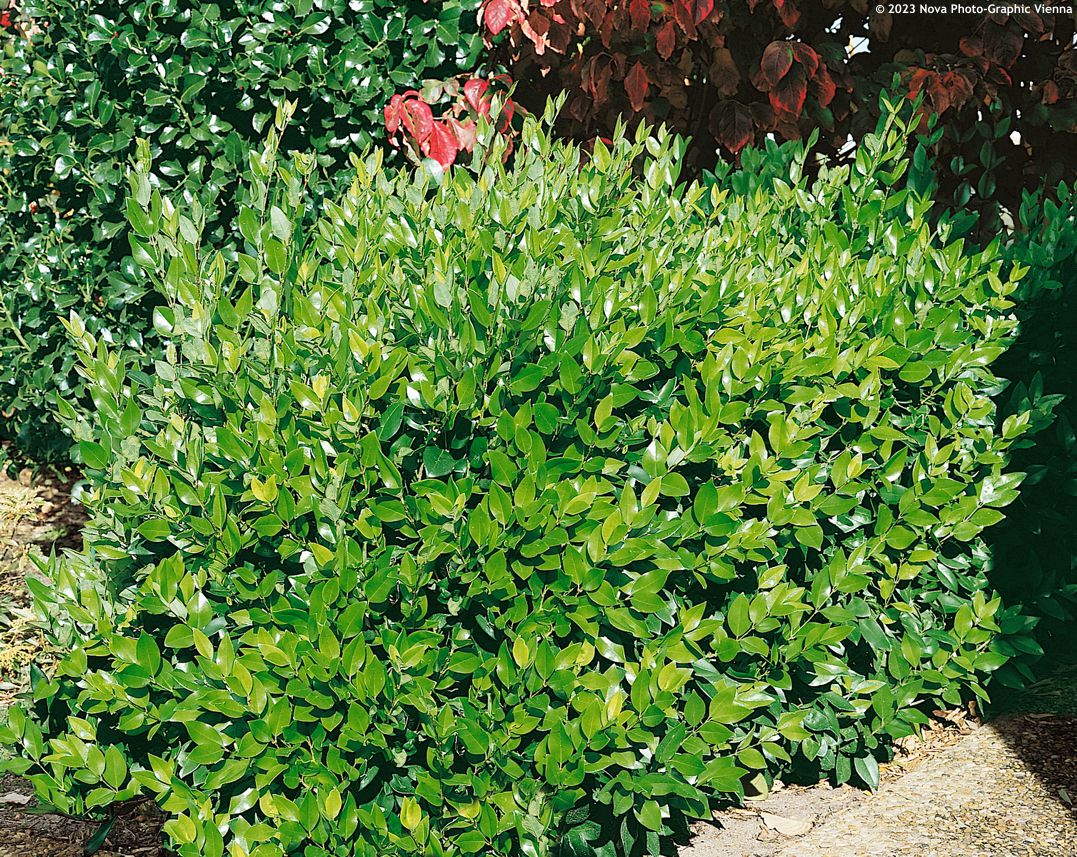
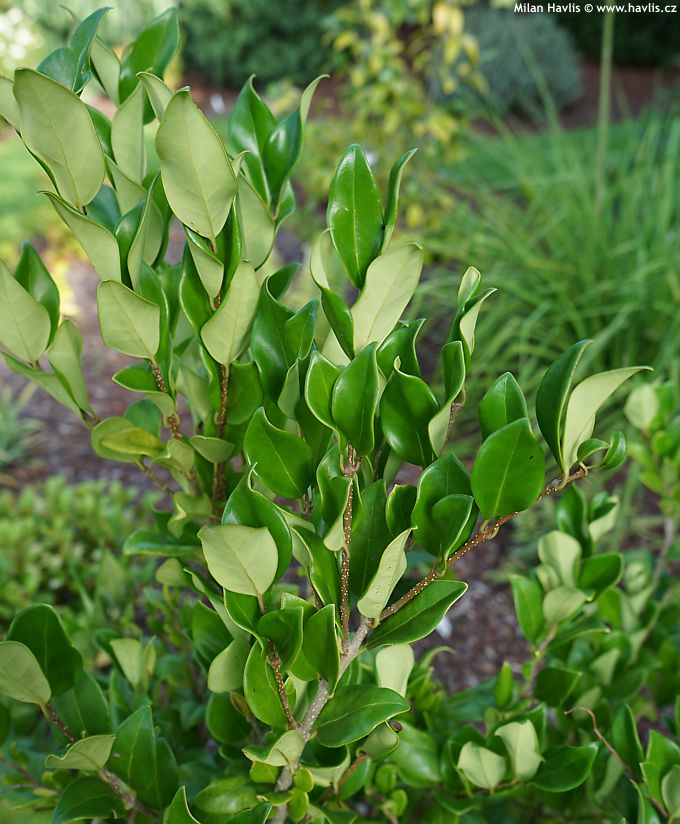
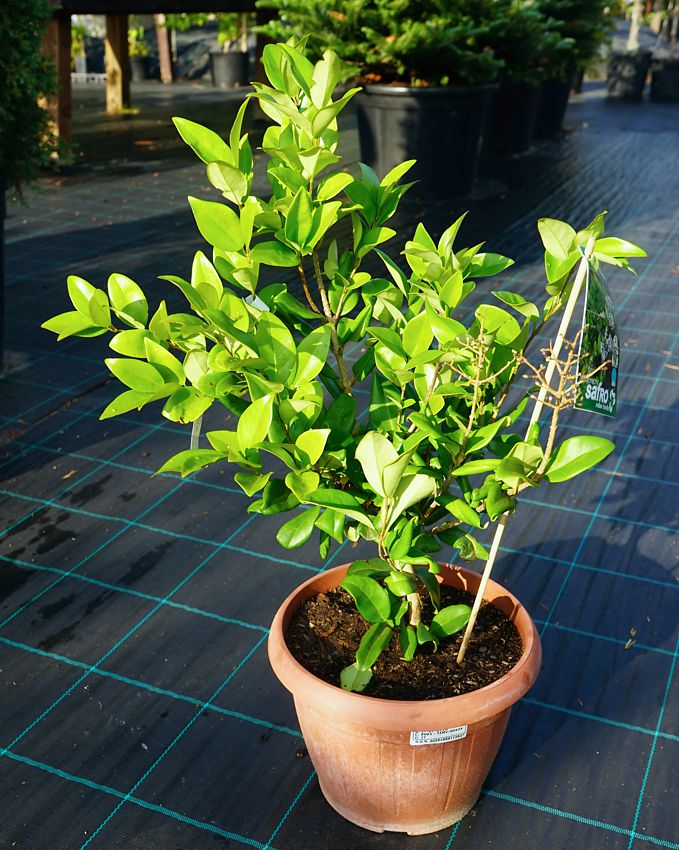
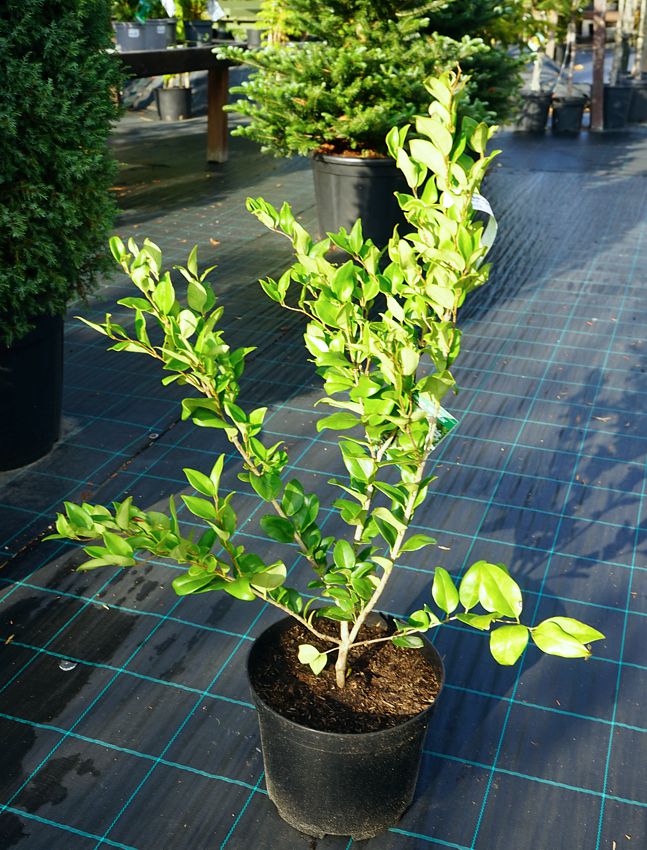
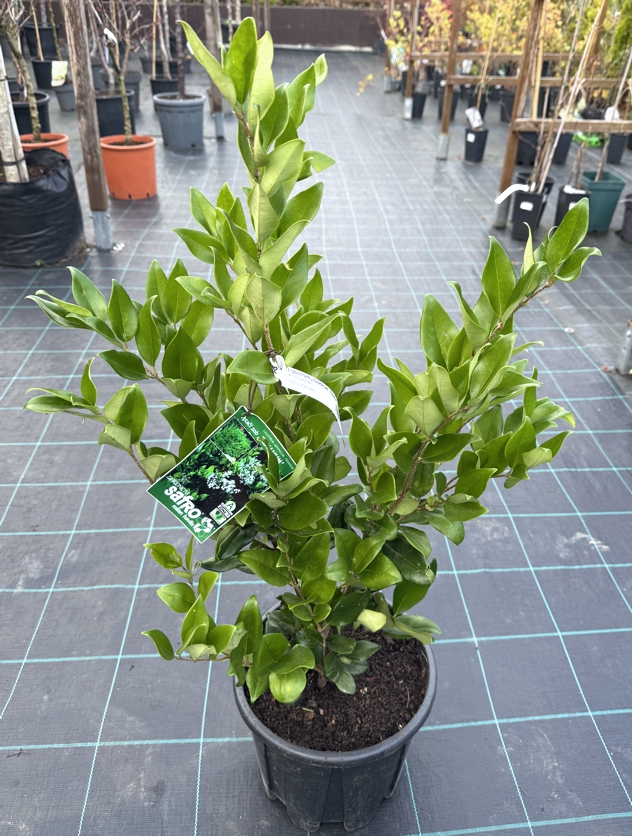
Texanum is a distinctive and easily recognisable cultivar of Japanese privet, notable at first glance for its gently undulating leaves and a fuller, more relaxed habit that is untypical for the species. The leaves are evergreen, leathery, narrowly ovate, usually 4–6 cm long, fresh green and strikingly glossy on the upper surface, while the underside remains paler and matt. Because the leaves are mostly held upright, both surfaces are visible at once, giving the rich green foliage a subtle silvery sheen. The cultivar is further set apart by its distinctly wavy margins, which lend the shrub a somewhat playful, less formal character. In mid-summer, upright panicles around 10 cm long appear at the tips of the shoots, composed of small, cream-coloured, delicately scented flowers. After flowering, blue-black to black fruits may develop; these are readily taken by birds but remain mildly toxic to humans. Growth is slow to moderate, typically around 20–35 cm per year, and the shrub tends to form layered tiers rather than the classic oval outline typical of privets. Pruning is not required, though the plant can be shaped if desired, ideally after flowering.
The precise origin of the cultivar Texanum is not documented in any surviving breeding records, patents or registers, yet a number of consistent references appear in both professional and regional sources. The cultivar is recorded in American literature no later than 1954, in the Sunset Western Garden Book, and has long been known under the name “Texas privet”, strongly suggesting a US origin, most likely in Texas. Japanese privets began to be widely cultivated there at the turn of the 19th and 20th centuries, particularly in central and southern Texas, where favourable climatic conditions allowed them to establish quickly in both public and private landscapes. Some sources associate Texanum with the area around New Braunfels, or more broadly with the region between San Antonio and San Marcos, where privet cultivation had a long-standing tradition. In this context, historical nurseries such as Otto Martin Locke Nursery in New Braunfels, whose roots reach back to the late 19th century, and Aldridge Nursery in Atascosa, active particularly during the 1930s, are occasionally mentioned.
Last update 21-03-2023; 06-04-2026
Evergreen privet requires a well‑drained, moderately fertile soil and thrives in full sun as well as partial shade; in deep shade it flowers less freely and gradually loses its compact form. Permanently waterlogged, heavy clay or otherwise impermeable soils lead to root problems and eventual decline. Once established, it tolerates prolonged summer drought and high temperatures remarkably well, but in winter it is accustomed to regular rainfall. In dry winters, it should therefore be watered thoroughly once a month during frost‑free periods. Mulching the root zone helps retain moisture and provides protection against frost; a generous mulch is recommended throughout the year. Feeding is not essential, though a single application of a balanced fertiliser in spring can be beneficial. To encourage density, maintain shape or limit size, prune after flowering or in late winter, never removing more than one third of the crown at a time. Both fruits and leaves are mildly toxic, so access by children and animals should be prevented. For hedging, plants should be spaced 0.6–1.2 m apart; for specimens or shaped forms, allow 2–4 m. In sheltered locations in Central Europe, Texanum has already withstood temperatures down to −18 °C (USDA zone 7) without damage, and further testing is ongoing.

Goods are shipped all over Europe. For Russia and U.K. and for further details please read about SHIPPING OPTIONS HERE.
Are you interested in a serious discount for orders NOV-FEB? Check your options here.
THE PRICES INCLUDE VAT of 15%. For quick conversion you can use 1 CZK = approx. 0.04 EUR
- STANDARD QUALITY - Plants of this group are 1st class quality with number of branches and overall density adequate to their size and age, considering they were container grown.
- DE LUXE QUALITY - This label guarantees a luxurious quality of manually selected plants that, compared to their height and age, are exceptionally dense and beautiful.
- EXTRA - These plants are usually mature and bigger specimens with exceptional overall appearance.
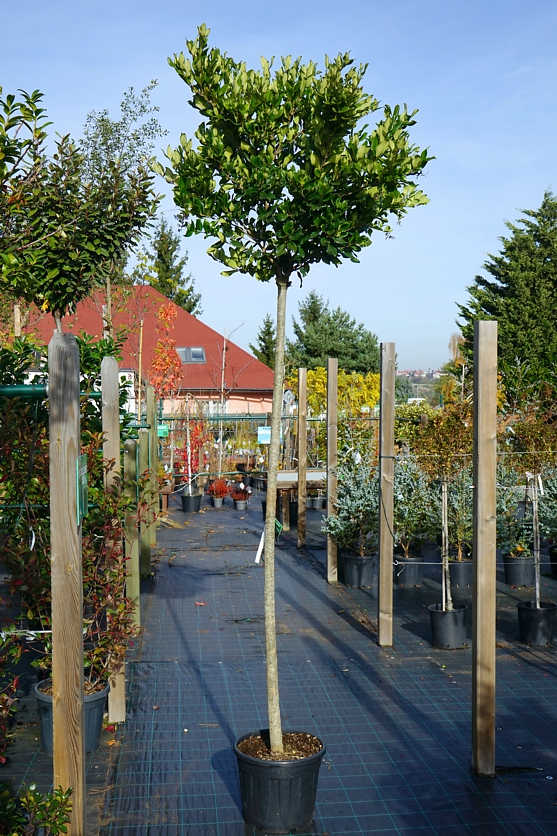
- STANDARD (as described in the plant form) means a tree with a trunk of 190-210 cm and a crown at the top, unless specified differently. The commercial size for trees is their girth measured in the height of 1m from ground.
- HOBBY - These plants are of the same quality as our standard-quality plants but younger and therefore cheaper.
- SHRUB - a woody plant with branches growing bushy from the ground level.
- HALF-STANDARD or MINI-STANDARD - a small tree with shorter trunk, its size is usually specified.
- FEATHERED - These are trees with branches growing already from the base of the trunk and up along the stem.
- GRASSES and PERENNIALS - Sizes given usually read the diameter of the pot or the clump, as specified.
