












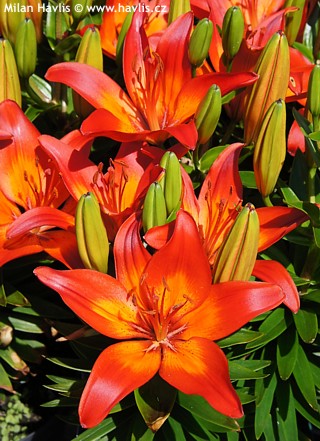
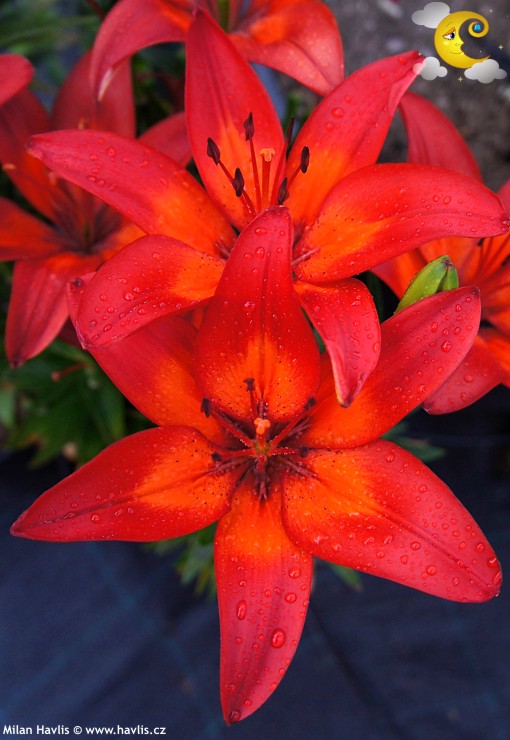
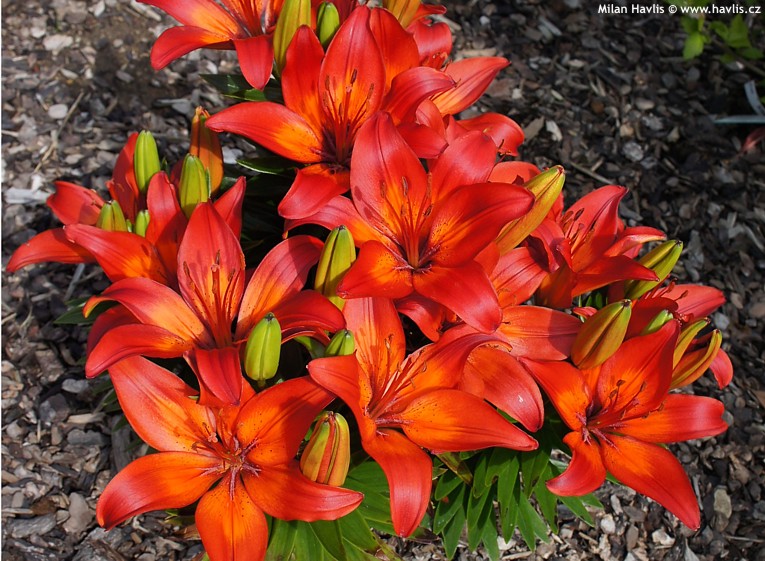
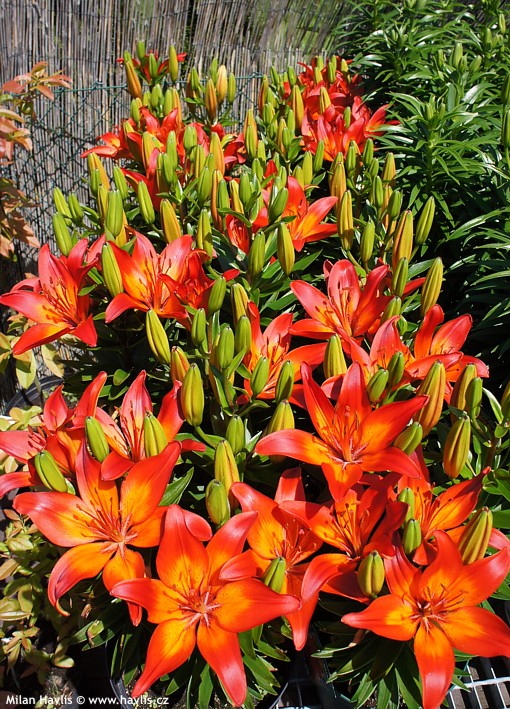
Lilium 'MATRIX' dwarf lily

 Symbivit Tric (arbuscular)
 Symbivit (arbuscular)
Lilium
The genus Lilium is among the oldest and best‑known ornamental plants of the temperate zone. It comprises roughly 115 recognised species with a surprisingly wide distribution: from the Pyrenees and the Balkans across the Caucasus, Siberia and China to Japan, Korea and further into North America. The greatest diversity is East Asian, especially in China, which is home to more than one third of all species. Fossil pollen and leaf impressions from the Miocene confirm that lilies grew in Eurasia more than ten million years ago. The first scientific description of a lily in the modern sense was made by Carl Linnaeus (1707–1778) in 1753 in Species Plantarum, where he established the basic taxonomic framework of the genus, although the taxonomy has been revised several times since, particularly at the end of the twentieth century following molecular analyses. Lilies also have a long cultural history. White lilies symbolised purity in ancient Greece, they appear in Christian iconography for centuries, and in Asia some species were grown not only for their beauty but also for their edible bulbs. To this day they remain among the most sought‑after cut flowers, valued for their showy beauty, large blooms and intoxicating fragrance.
Garden lilies today form several main hybrid groups derived from the botanical sections of the genus Lilium. The most widespread are the Asiatic hybrids, created by crossing species from the section Sinomartagon – notably Lilium dauricum, L. cernuum, L. pumilum, L. davidii and L. lancifolium. Oriental hybrids arise mainly from species of the section Archelirion, such as L. auratum and L. speciosum. Trumpet and Aurelian hybrids are linked to species of the sections Leucolirion and related groups. Martagon hybrids derive from species of the section Martagon, while North American hybrids originate from species of the sections Pseudolirium and other American lineages. Modern groups such as the LA hybrids (Longiflorum × Asiatic) and OT hybrids (Oriental × Trumpet) were created by deliberate crossing between these principal lines.
A distinct category is formed by the dwarf and miniature hybrids, most of which belong to the Asiatic group. They originate from species that are naturally low‑growing and sturdy – particularly L. dauricum, L. cernuum, L. pumilum, L. davidii and L. lancifolium. Their dwarf habit is a genetically stable trait rather than the result of growth retardants. The reduced height makes them suitable for containers, small front gardens and positions close to paths where tall lilies would be impractical. Most dwarf hybrids are unscented, which is advantageous where the strong fragrance of lilies is not desired. Together, the hybrid groups broaden the possibilities for using lilies in the garden – from tall, strongly scented cultivars to compact, unobtrusive dwarf forms.
Matrix is a fiery red lily with an orange throat, belonging to the compact Asiatic hybrids. It reaches approximately 40 to 50 centimetres in height, forming firm, upright stems densely clothed with narrow, deep green leaves and carrying large flowers with fine spotting, which open reliably even in cooler summers. It is part of the commercial Matrix series developed by the Dutch company Mak Breeding, selected for its low, stable habit, broad flowers and very early flowering. The dwarf‑like stature is the result of targeted selection rather than growth retardants, and the plant maintains a firm, balanced structure even when heavily budded.
Last update 14-06-2011; 08-06-2026
Lilies require a sunny position and light, well‑drained soil that dries quickly after rain. Persistent waterlogging is the most common cause of failure, so drainage is essential on heavier soils. When planting, the bulb should be set at a depth roughly equal to three times its height. Watering should be regular but moderate, and feeding light, with a higher proportion of potassium. After flowering, only the spent blooms should be removed – the stems and leaves must remain until they die back naturally so that the bulb can replenish its reserves. In containers, a drainage layer and protection from winter wet are important; in the garden, protection from sudden winter fluctuations is more relevant than protection from cold itself. Bulbs should be left undisturbed for several years and lifted only when the clump becomes congested or begins to weaken. Asiatic hybrids tolerate sun and dry conditions best, Oriental and OT hybrids require deeper, richer and slightly moister soil, while martagons prefer partial shade and cooler, humus‑rich sites. Are fully hardy to around –37 °C provided they are not exposed to winter waterlogging.
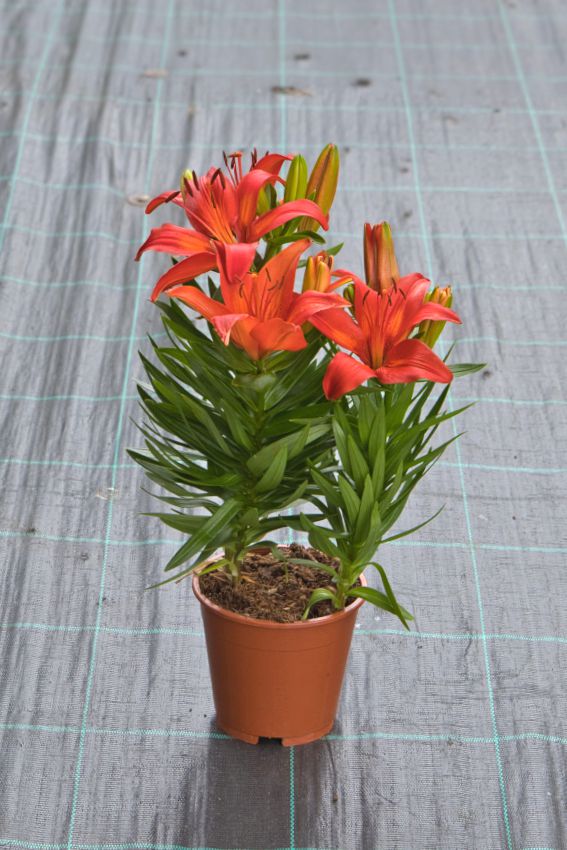

Goods are shipped all over Europe. For Russia and U.K. and for further details please read about SHIPPING OPTIONS HERE.
Are you interested in a serious discount for orders NOV-FEB? Check your options here.
THE PRICES INCLUDE VAT of 15%. For quick conversion you can use 1 CZK = approx. 0.04 EUR
- STANDARD QUALITY - Plants of this group are 1st class quality with number of branches and overall density adequate to their size and age, considering they were container grown.
- DE LUXE QUALITY - This label guarantees a luxurious quality of manually selected plants that, compared to their height and age, are exceptionally dense and beautiful.
- EXTRA - These plants are usually mature and bigger specimens with exceptional overall appearance.
- STANDARD (as described in the plant form) means a tree with a trunk of 190-210 cm and a crown at the top, unless specified differently. The commercial size for trees is their girth measured in the height of 1m from ground.
- HOBBY - These plants are of the same quality as our standard-quality plants but younger and therefore cheaper.
- SHRUB - a woody plant with branches growing bushy from the ground level.
- HALF-STANDARD or MINI-STANDARD - a small tree with shorter trunk, its size is usually specified.
- FEATHERED - These are trees with branches growing already from the base of the trunk and up along the stem.
- GRASSES and PERENNIALS - Sizes given usually read the diameter of the pot or the clump, as specified.
