.jpg)
Monarda 'COLRAIN RED' beebalm

 Symbivit Tric (arbuscular)
 Symbivit (arbuscular)
Monarda
The genus Monarda comprises approximately 16–25 species of North American aromatic herbs whose history begins long before Linnaeus, the father of modern botany. The genus is named after the Spanish physician and botanist Nicolás Monardes (1493–1588), author of the celebrated Historia medicinal de las cosas que se traen de nuestras Indias Occidentales, which introduced Europeans to the medicinal plants of the New World in the 16th century, despite Monardes himself never having visited America. The modern botanical circumscription of the genus was established by Carl Linnaeus in 1753, yet Monardes’s influence remained in the name as a reminder of the early Renaissance fascination with American flora. Monardas grow from Mexico to Canada, in woodland edges, moist meadows, river bottoms and the fringes of prairies, where they form striking patches of colour and provide a key source of nectar for bumblebees and hummingbirds. The genus is botanically coherent but historically entangled: in the 19th century some species were briefly placed in Melissa, Pycnanthemum or Blephilia before their independence was settled. Chemically the genus is remarkable; its high content of thymol and carvacrol links it to thyme and oregano, which explains its traditional medicinal use among Indigenous peoples and early settlers. Monardas appeared in European gardens as early as the 18th century and, thanks to their bergamot-like scent, acquired the nickname “bergamot mint”, while in modern prairie plantings they are among the most prominent summer perennials.
Monarda didyma, bee balm, originates from the Appalachian Mountains, where it had a long cultural history even before European settlement: the Onondaga people prepared from it an aromatic drink known as Oswego tea, later adopted by colonial Americans as a symbol of resistance to British tea after the Boston Tea Party. Didyma differs from other members of the genus in its intense red flowers, strong citrus–bergamot fragrance and exceptional attractiveness to hummingbirds in the United States and to hawkmoths in Central Europe, both of which regard it as one of the most reliable nectar sources. In the 19th century it appears in American horticultural texts as the “flame flower”, a plant capable of lighting up summer borders, and its medicinal uses – antiseptic, for colds, for skin infections – are well documented in ethnobotanical records. Modern breeding adopted it as the principal species for red cultivars, while purple tones derive mainly from the related Monarda fistulosa. At the same time didyma is known for its susceptibility to powdery mildew, which has led to the selection of cultivars with better air circulation and to intensive breeding in recent decades.
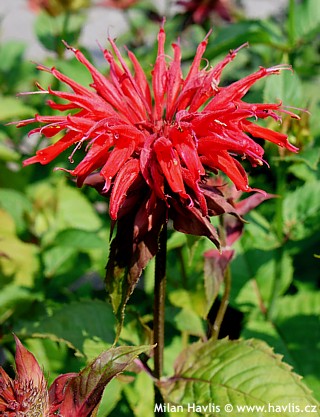
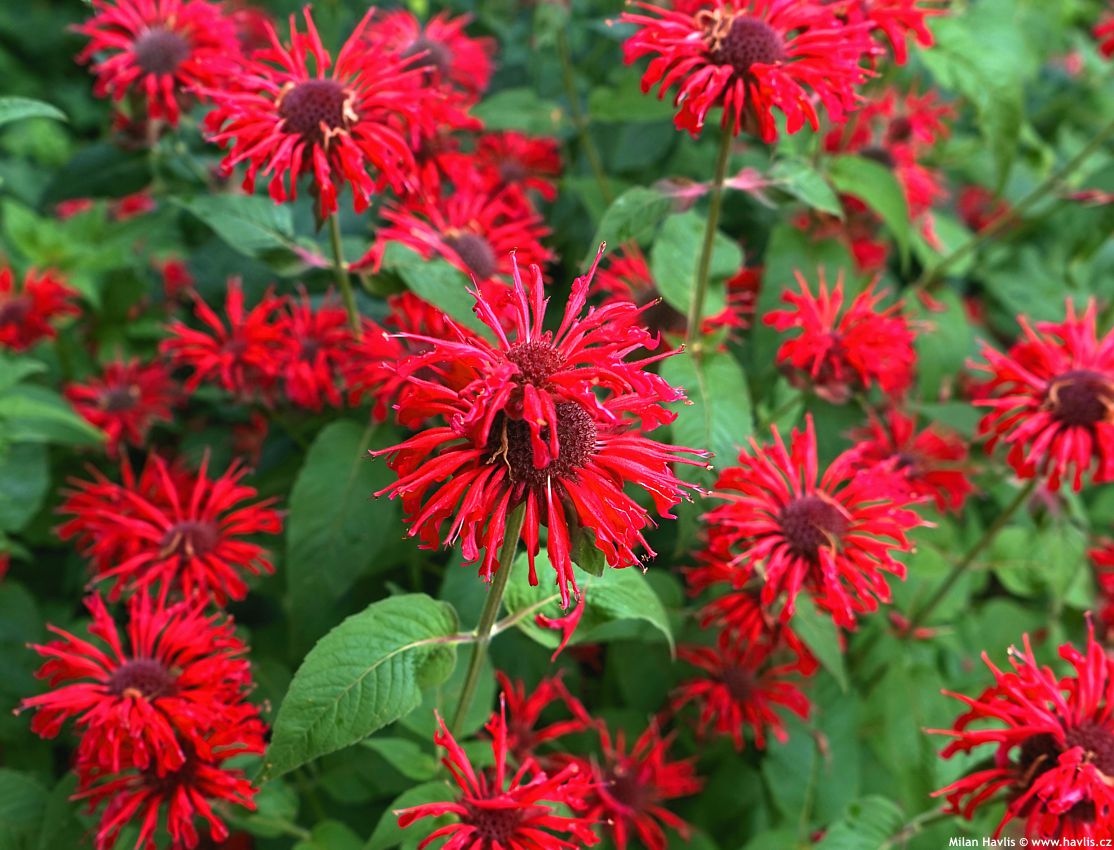
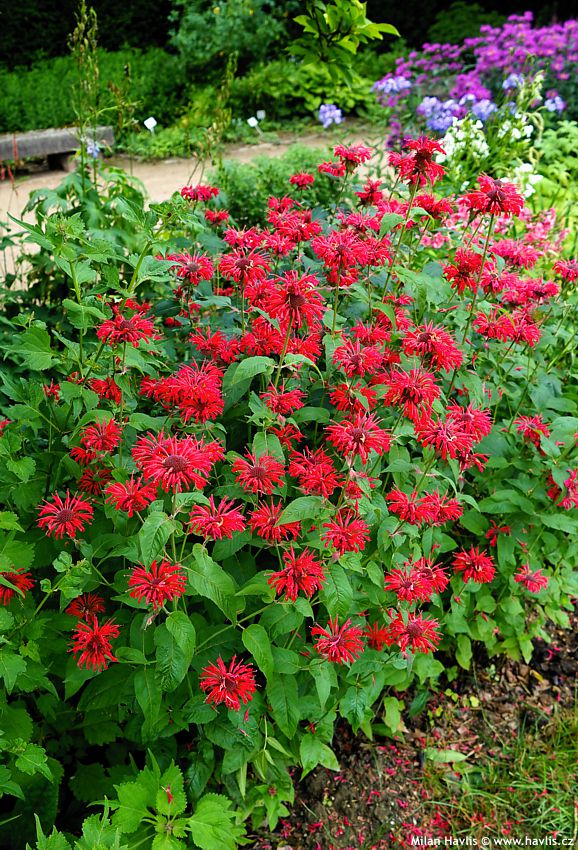
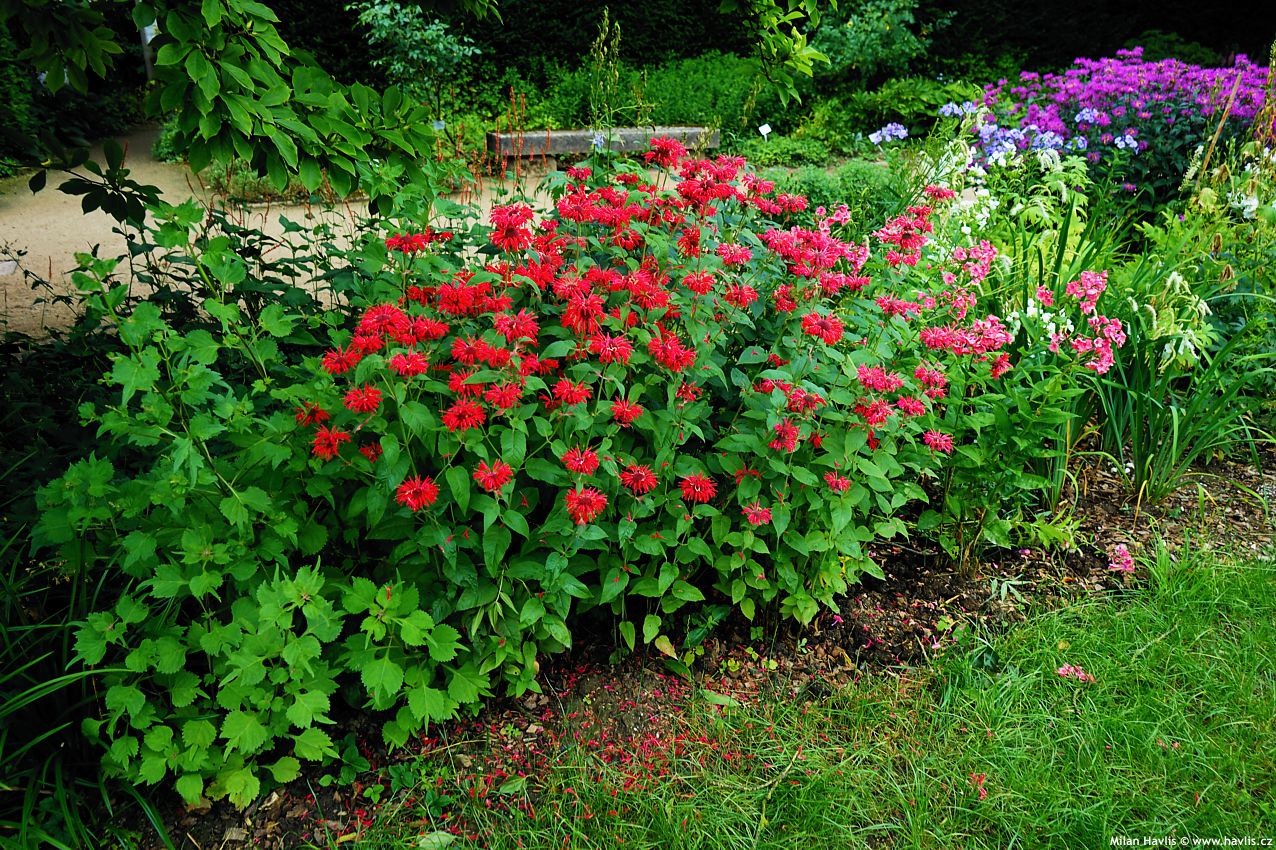
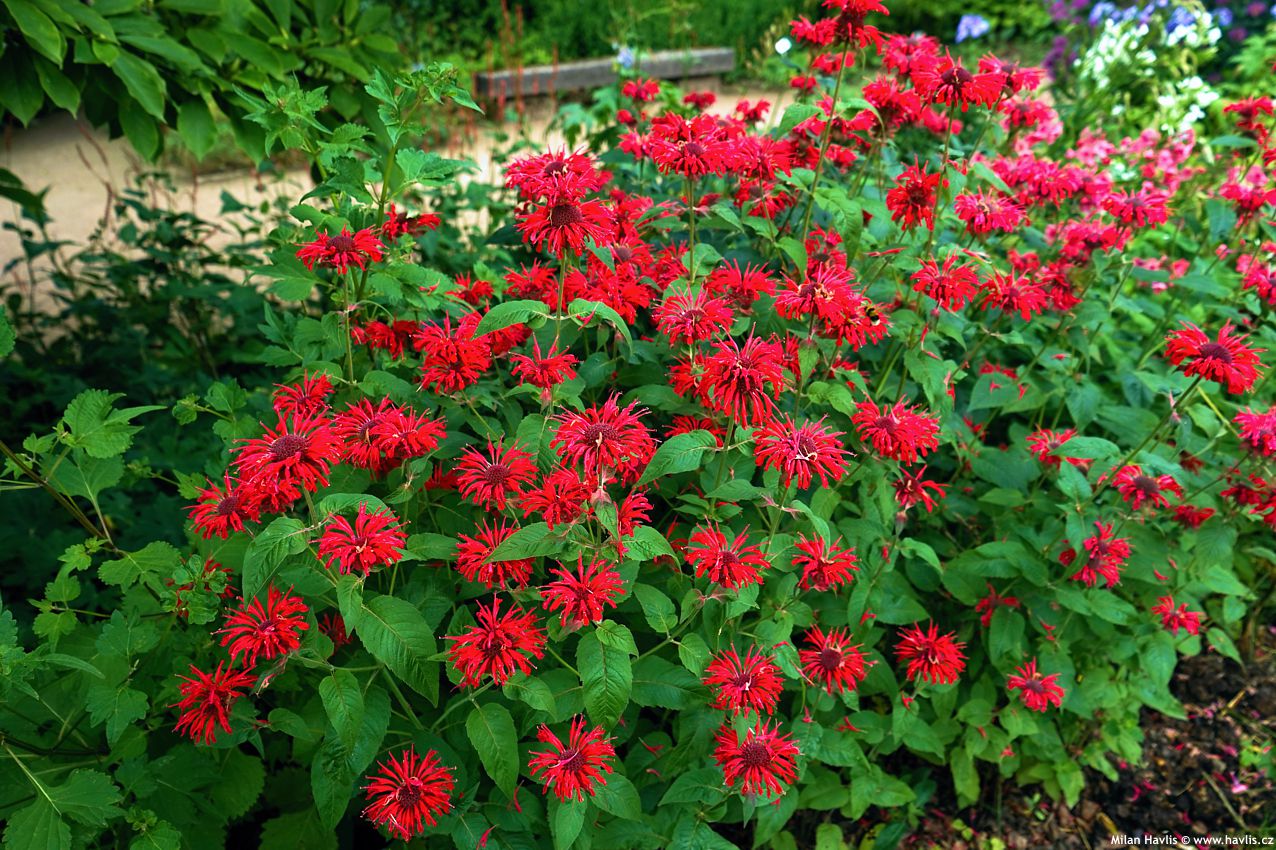
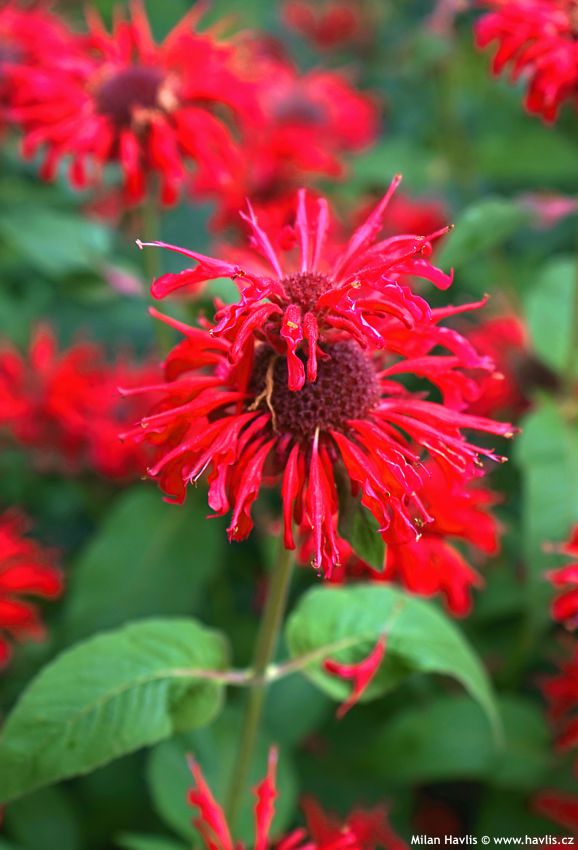
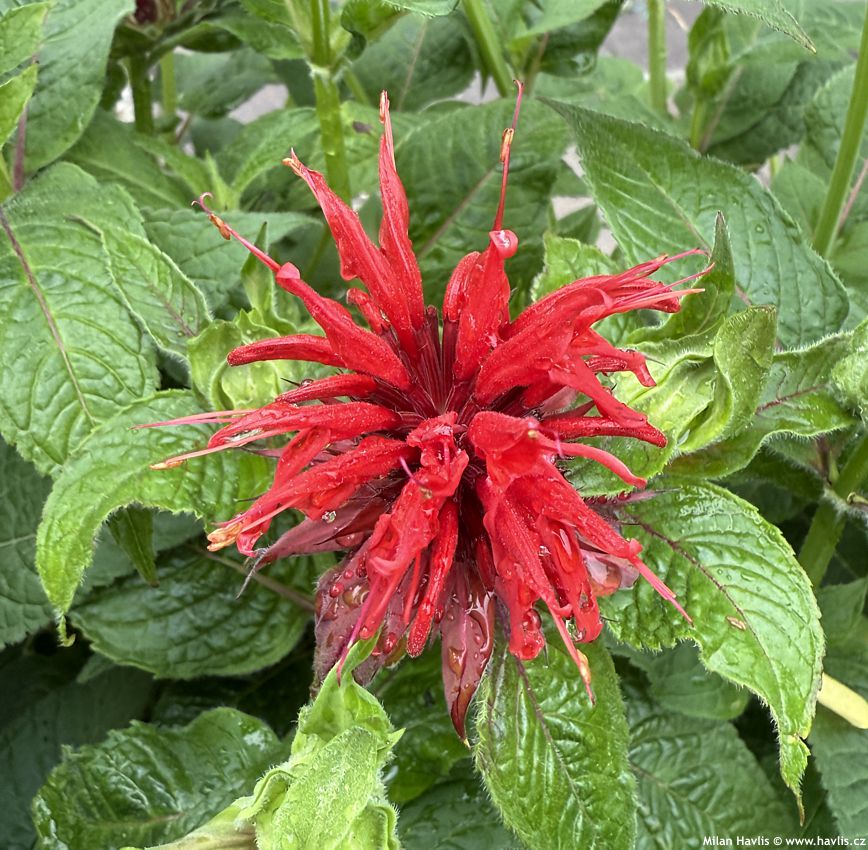
Which colour shines in a garden like a beacon? Red, of course. It is no coincidence that it was chosen as a signal colour to attract attention of every kind. And here it calls for attention outright. Colrain Red monarda carries flowers in such a rich and glowing shade of warm red that it appears like a small burst of flame in a border. It is not purple, nor raspberry, but truly red. The plant maintains a firm, upright habit without the typical midsummer “collapse” often seen in monardas. The leaves are dark green, slightly glossy, with a pronounced citrus–spicy scent that appears even with a light touch; the flower whorls are full and dense and form along the entire stem, so the plant blooms in a continuous wave and looks far fuller than ordinary garden forms. Compared with the species, ‘Colrain Red’ is taller, more compact and has a cleaner, more even shade of red without an orange undertone, which is why it works so well in compositions with dark foliage or blue–purple perennials. The foliage shows excellent resistance to summer powdery mildew. Some growers claim it sheds its lower leaves early, but this is common in taller cultivars and can be prevented with proper feeding.
‘Colrain Red’ has an origin passed on only among devoted gardeners: according to local accounts it was discovered in an old cemetery in Colrain, Massachusetts, by Wayne Winterrowd and Joe Eck, the legendary plantsmen of North Hill Garden in Vermont, renowned for finding exceptional plants in forgotten plantings and giving them new life. From them it reached Elsa Bakalar, the British–American gardener from nearby Heath, who not only grew plants but also named them after the places where they were found, so the name “Colrain” is likely her quiet signature. When this modest local selection, without a patent and without any marketing push, reached the Chicago Botanic Garden, it underwent their multi-year Plant Evaluation Programme, which assesses the durability, vigour, longevity and overall garden performance of perennials. It passed as an outstanding perennial, one of the best and most reliable cultivars for Midwestern conditions. These resemble Central Europe in their continental character of hot summers and cold winters, but they also bring markedly wetter, more thunderous summers and sharper rainfall fluctuations that provide monardas with exactly the kind of fresh prairie moisture to which they are genetically adapted.
Last revision 03–07–2026
Monarda didyma and its hybrids thrive in full sun or light shade in fertile, evenly moist but well-drained soil that must not dry out in summer nor become waterlogged in winter. Although monardas are often classed as prairie perennials, botanically they belong to the wetter part of the prairie gradient and therefore require more moisture than most drought-tolerant prairie species. Good air circulation is essential for maintaining health, as it most effectively limits powdery mildew, to which taller cultivars are naturally prone; plants should not be spaced too closely, and spent flowers should be removed to encourage further blooming. Hybrids with Monarda fistulosa tend to be somewhat more resistant to mildew, but the fundamentals of care remain the same: sun, air, moisture and regular rejuvenation. During the season they appreciate consistent watering and moderate feeding; on heavy soils the addition of compost or grit helps improve aeration. Mature clumps benefit from division every two to three years to maintain vigour and abundant flowering. In winter the top growth is cut back, leaving a low stubble that reliably resprouts in spring. Most cultivars are hardy to about –30 to –34 °C (USDA zone 4-5), so they overwinter in the garden without difficulty, but they are not suitable for permanent containers, where the rootball easily freezes and plants quickly lose vitality.