












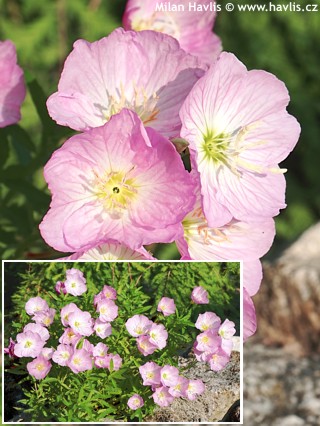
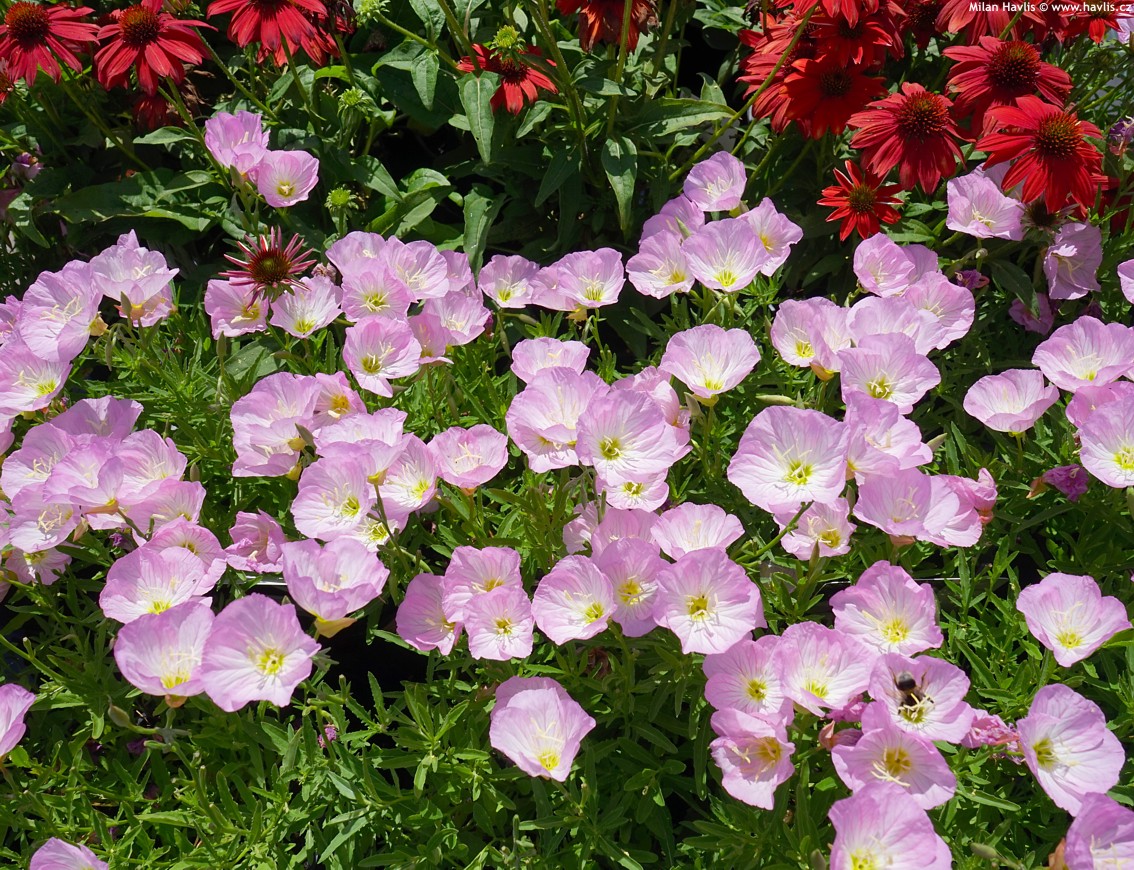
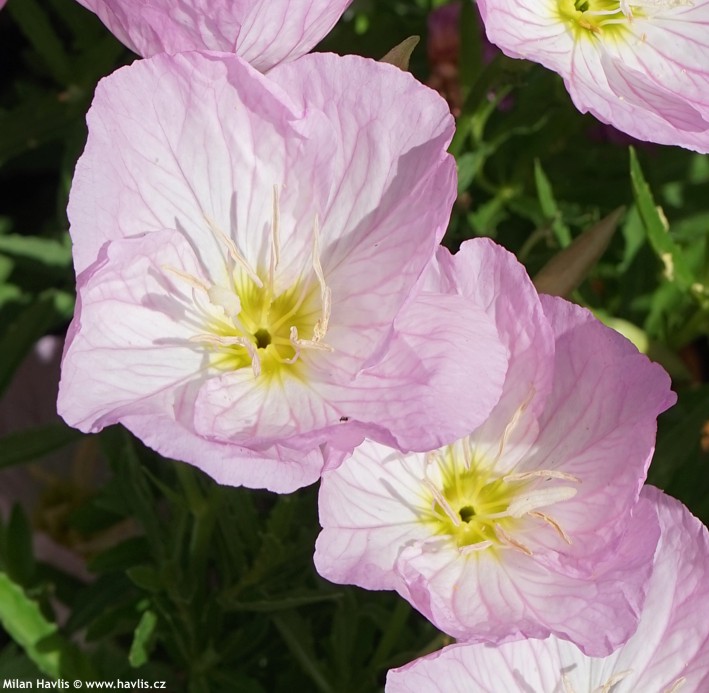
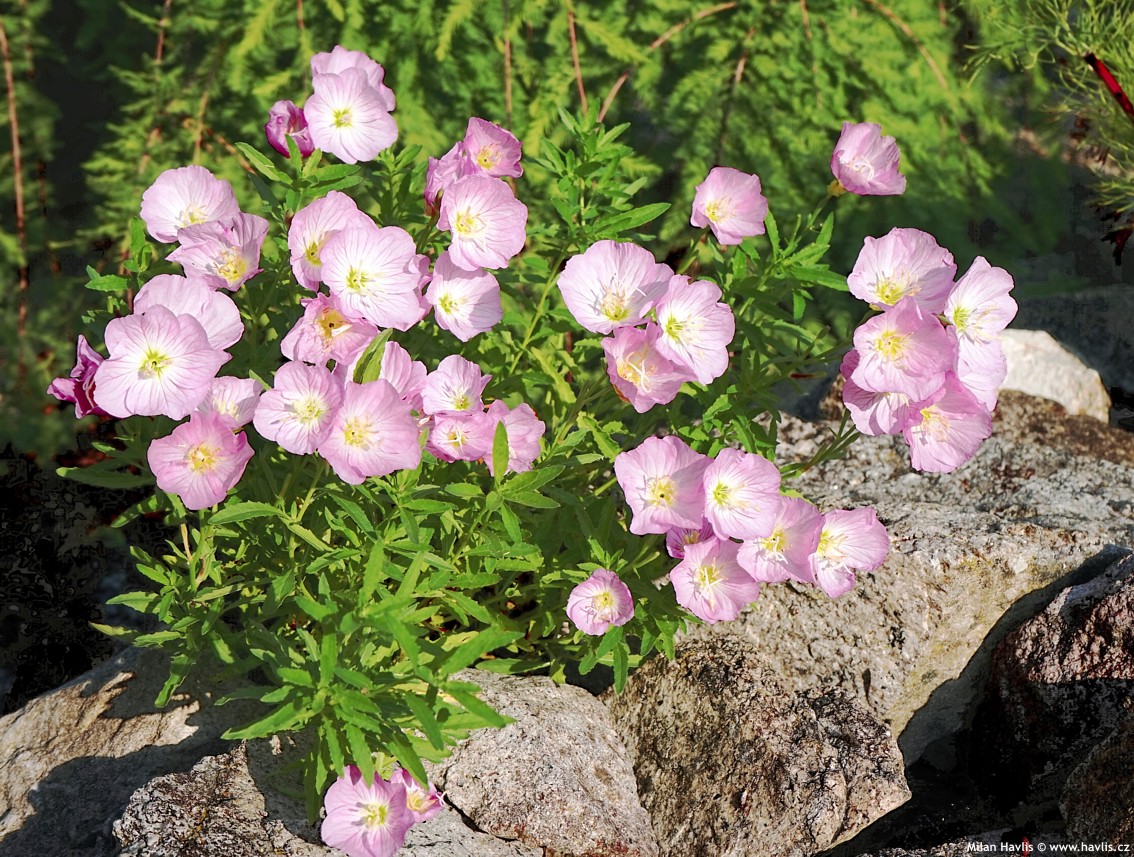
Oenothera speciosa 'SISKIYOU' evening primrose

 Symbivit Tric (arbuscular)
 Symbivit (arbuscular)
Oenothera
Evening primrose is a large genus of many annuals, biennials, and most importantly perennials from sunny and hot landscapes of North America, S.W. USA, and Mexico. A lot of perennial species are hardy enough for C.E. climate, too, they just resent water-logged soils. In our country mostly yellow flowering species are cultivated, especially appreciated for their evening performance of fast flower opening which happens just before your eyes and takes some 5-10 minutes.
Siskiyou is a gorgeous variety of evening primrose producing daytime flowers. They are 5-6 cm wide, weakly fragrant, saucer-shaped, white with pink veins and soft pink hues towards the petal margins. The centre is yellow. Blooming time is often the reason why this perennial evening primrose is so popular - flowers open from early July and continue until early autumn. Leaves are narrowly lance-shaped, medium green, shallowly toothed. Stems are 20-30 cm tall and apart from the side ones they do not tend to bend or creep.
Last update 27-07-2019
Evening primrose naturally occurs in rocky and dry locations with plenty of sun. They hate water-logged, cold, boggy soil. Grow them in poor to only moderately fertile, free-draining, sandy soil or a rockery of any pH, though they prefer neutral to alkaline reaction. Evening primrose is a fast grower forming root runners which are perfect if you want to fill a larger area, however, they may need to be removed if you want to keep the plant in one clump. Hardy to min. -29°C (USDA zone 5b), some sources even believe it can take -34°C (not tested).