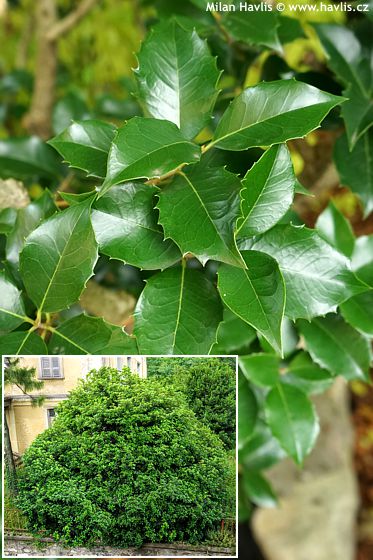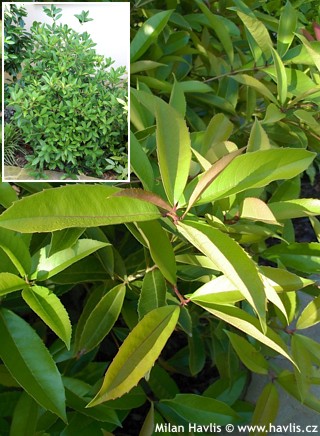
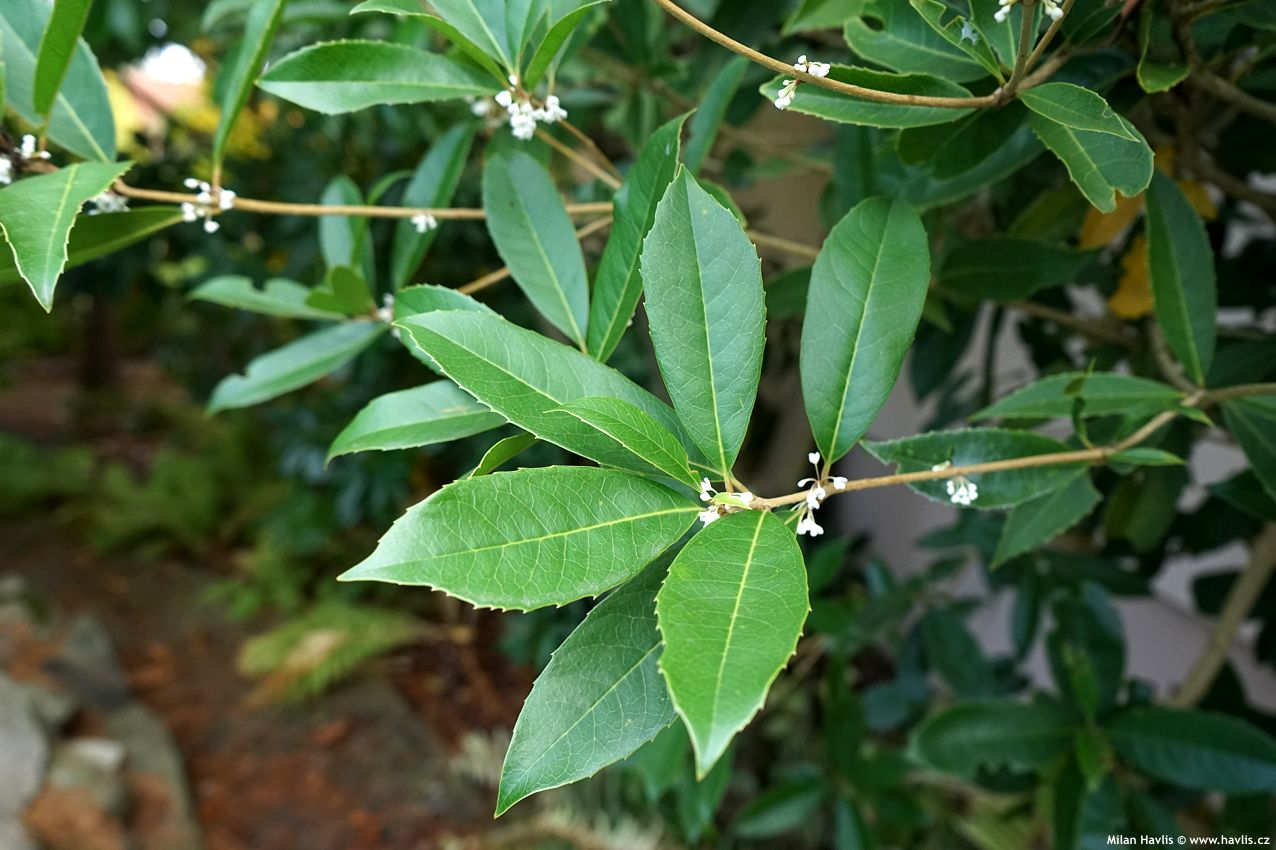
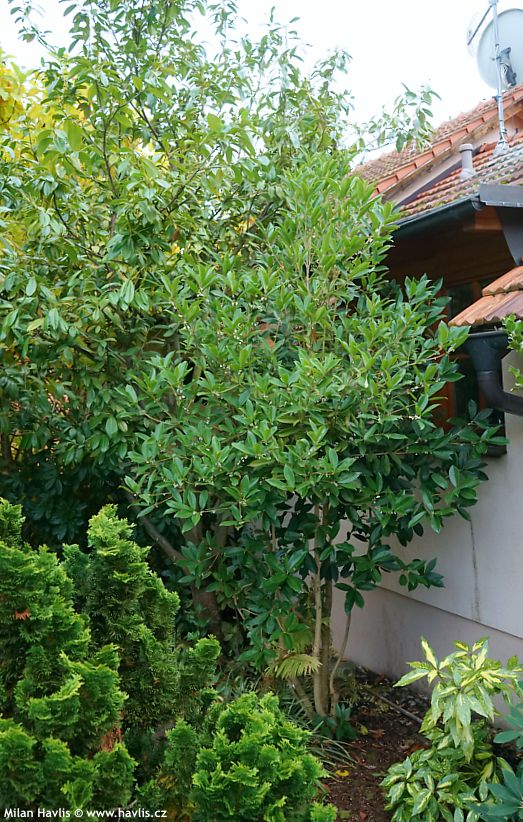
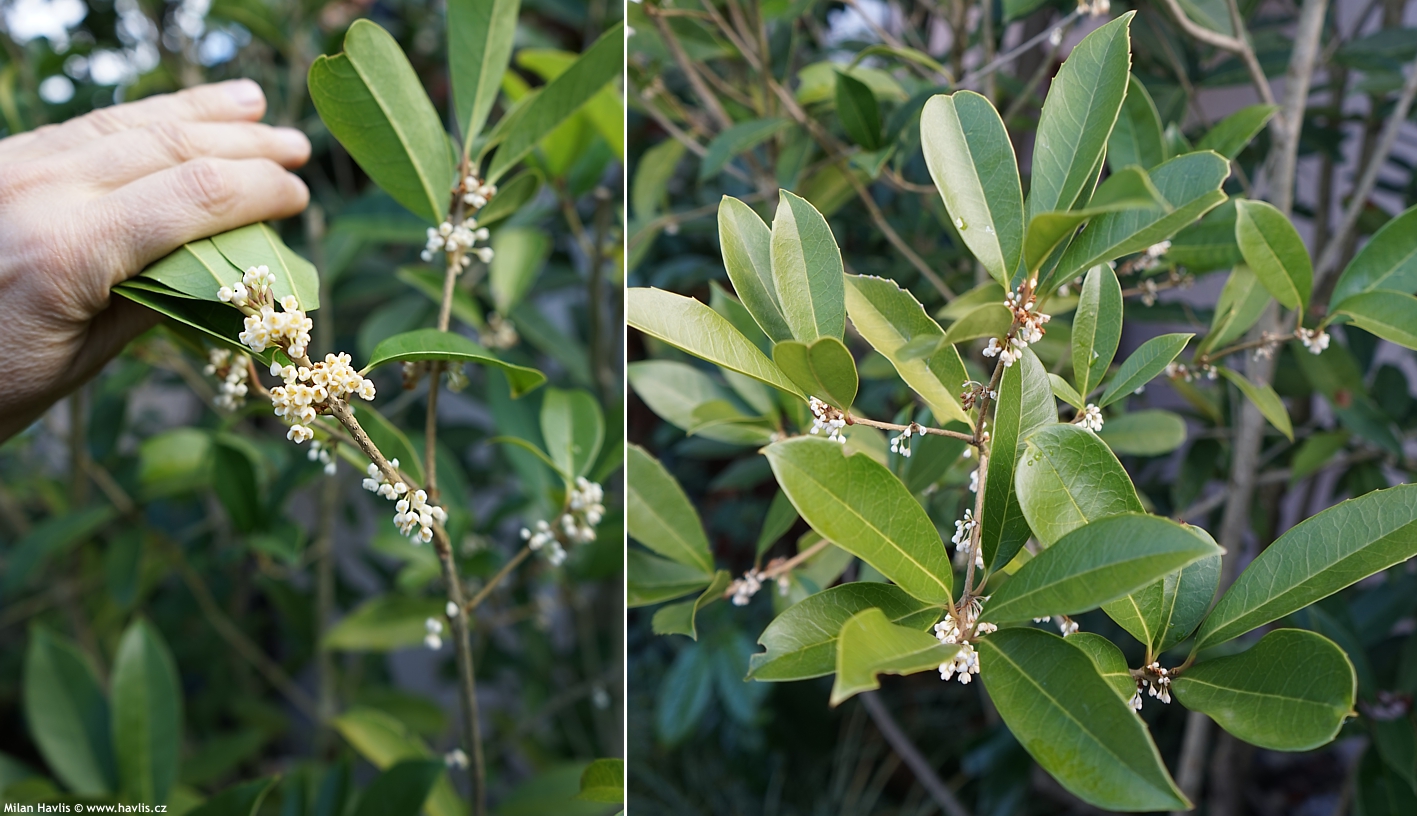
Osmanthus fragrans f. DENTATUS fragrant olive, sweet olive, tea olive


 Symbivit Tric (arbuscular)
 Symbivit (arbuscular)
Osmanthus
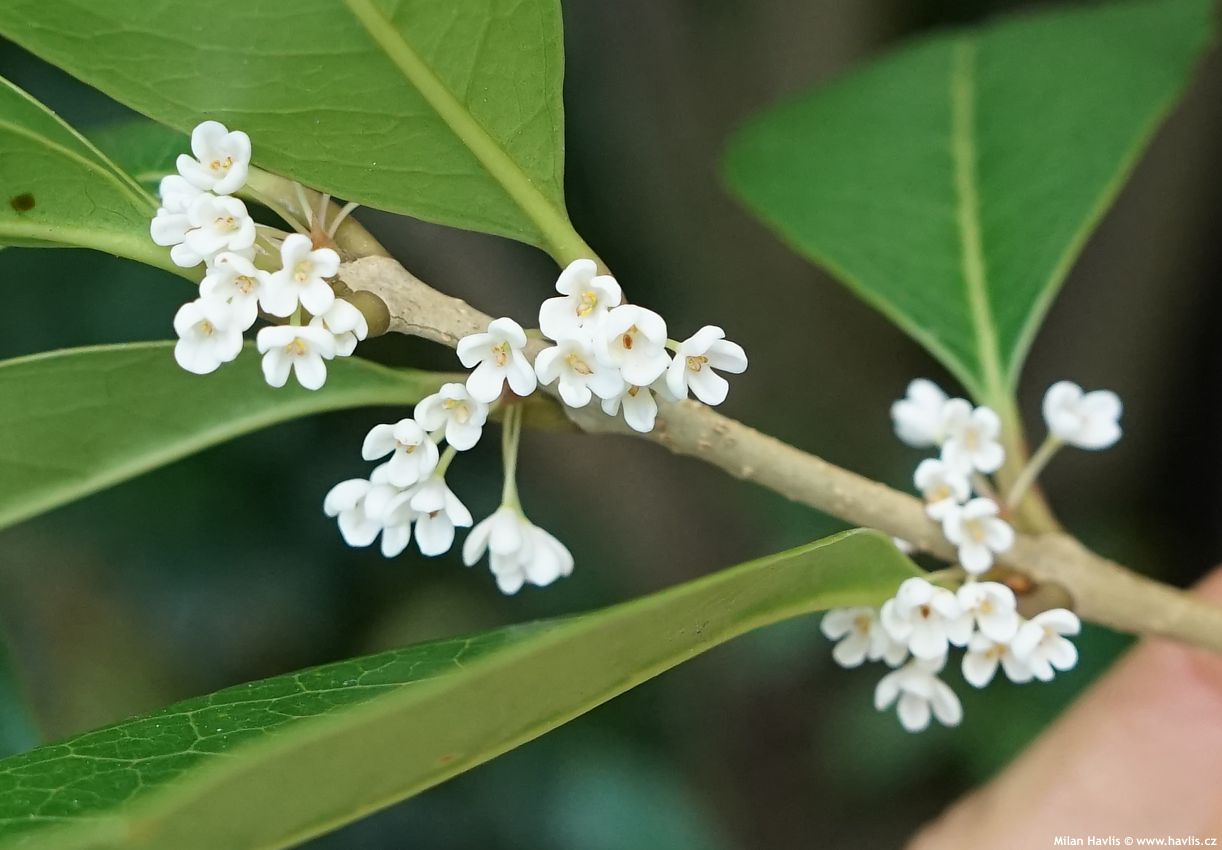
Osmanthus is a genus of only about 15-20 evergreen species and varieties, and a genus which I fell in love with the first time I saw a few plants of. Their leathery and sometimes spiny leaves resemble hollies but osmanthus plants have something extra which gave them their name derived from Greek: osme = fragrance and anthos = flower. Osmanthus has tiny but highly fragrant flowers. I was an amateur when I bought the first plants and I had no idea that in all encyclopedias they were rated too tender for our C.E. climate. And since I never knew I put them to my garden. And after some 15 years of growing I can assure you that all of them not only survived even the worst winter of 2006/2007, they thrive and some of them are taller than me and I am very close to 2m. Including the most tender one o.fragrans. I keep on trialling more species and varieties because I noticed that they have some genetic predisposition for extreme drought tolerance in summer and some are even happy with dry soil in winter. And with current lack of precipitation we will need more of drought tolerant plants.
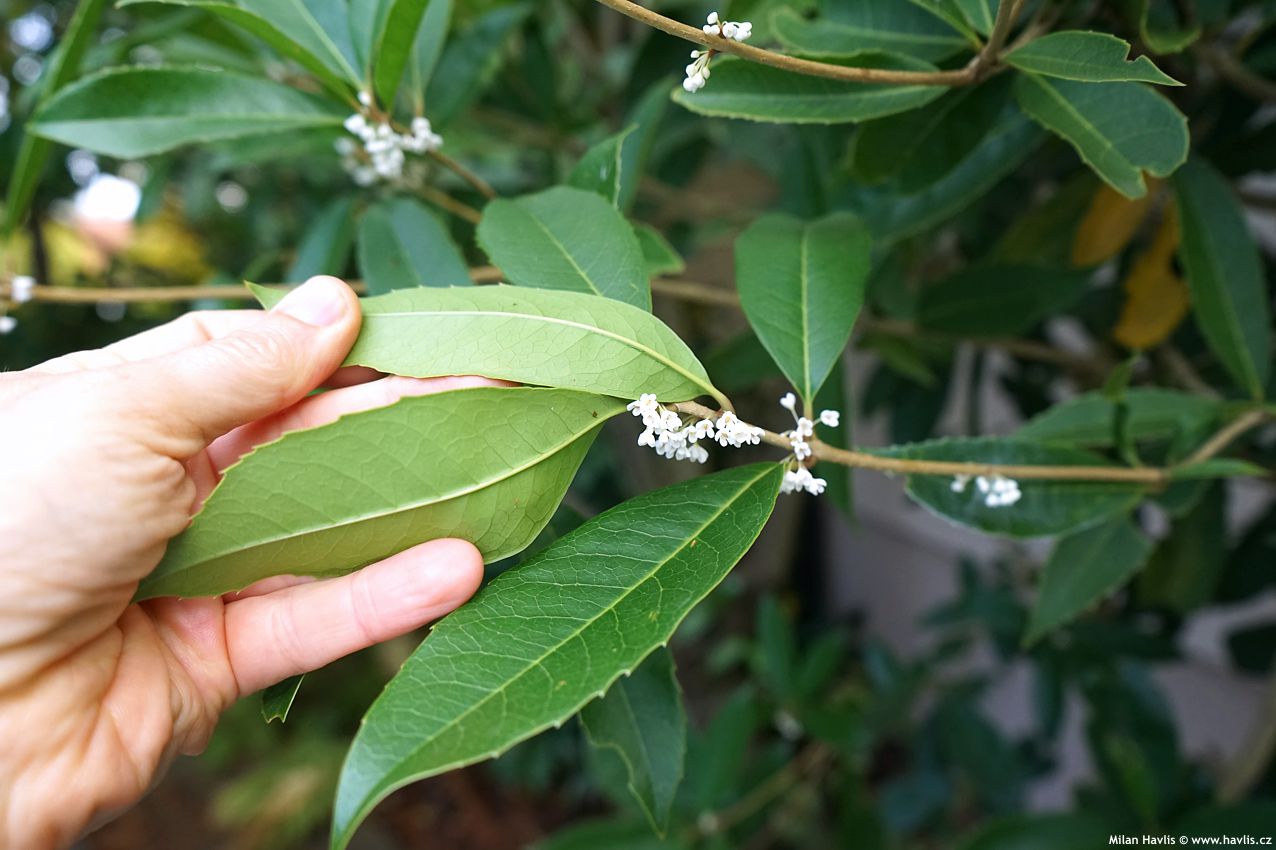
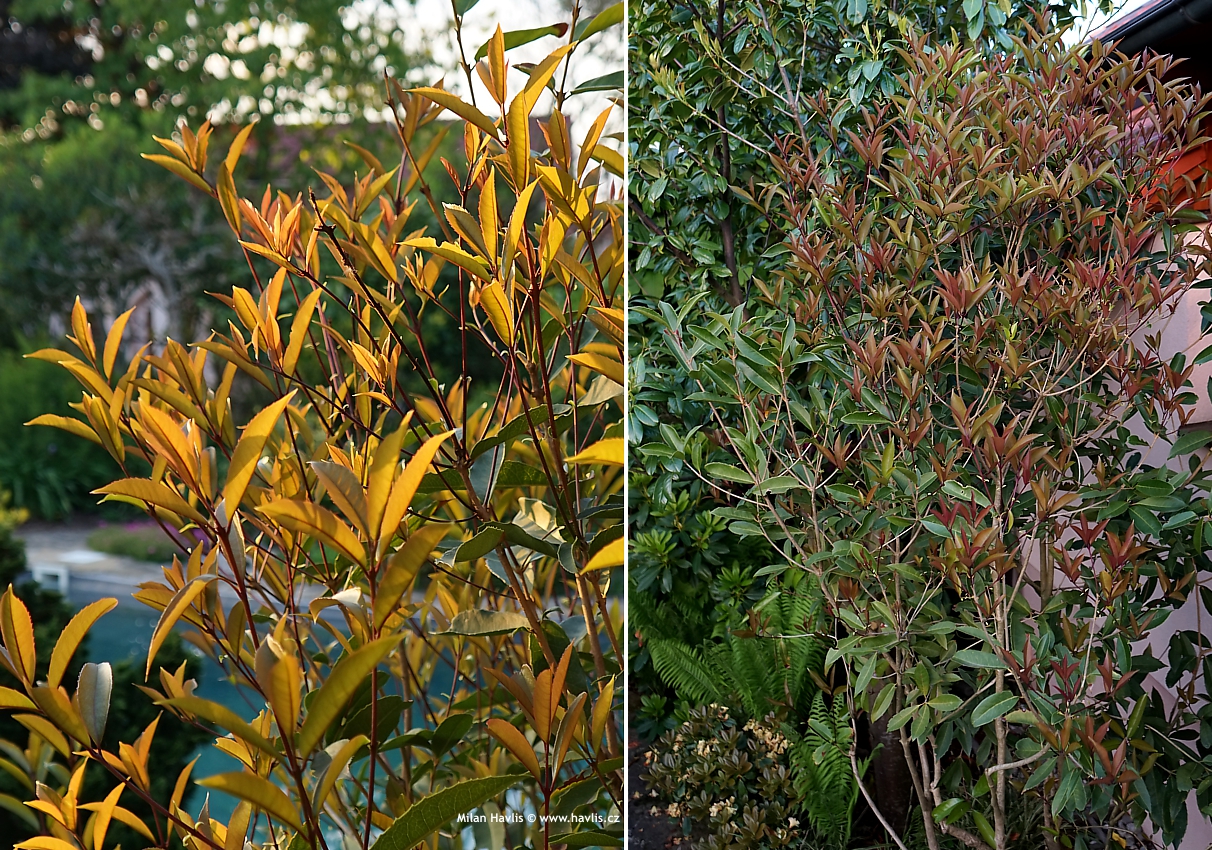
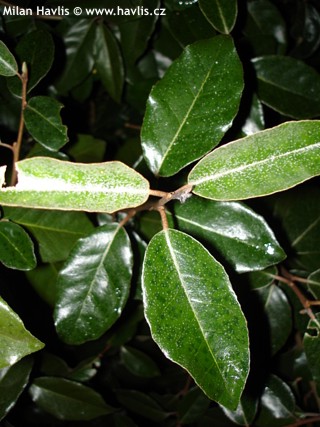
The botanical species of sweet olive is an evergreen shrub from Asia where it occupies a wide area from the western Himalayas to Indochina, and among the large-leaved sweet olive species it stands out with one important feature – it has perfectly smooth (entire) leaf margins without a single prickle. Its evergreen leaves are oval, leathery, medium green, a little glossy, and decorated with fine veining. Young leaves emerge with handsome coppery-red hues.
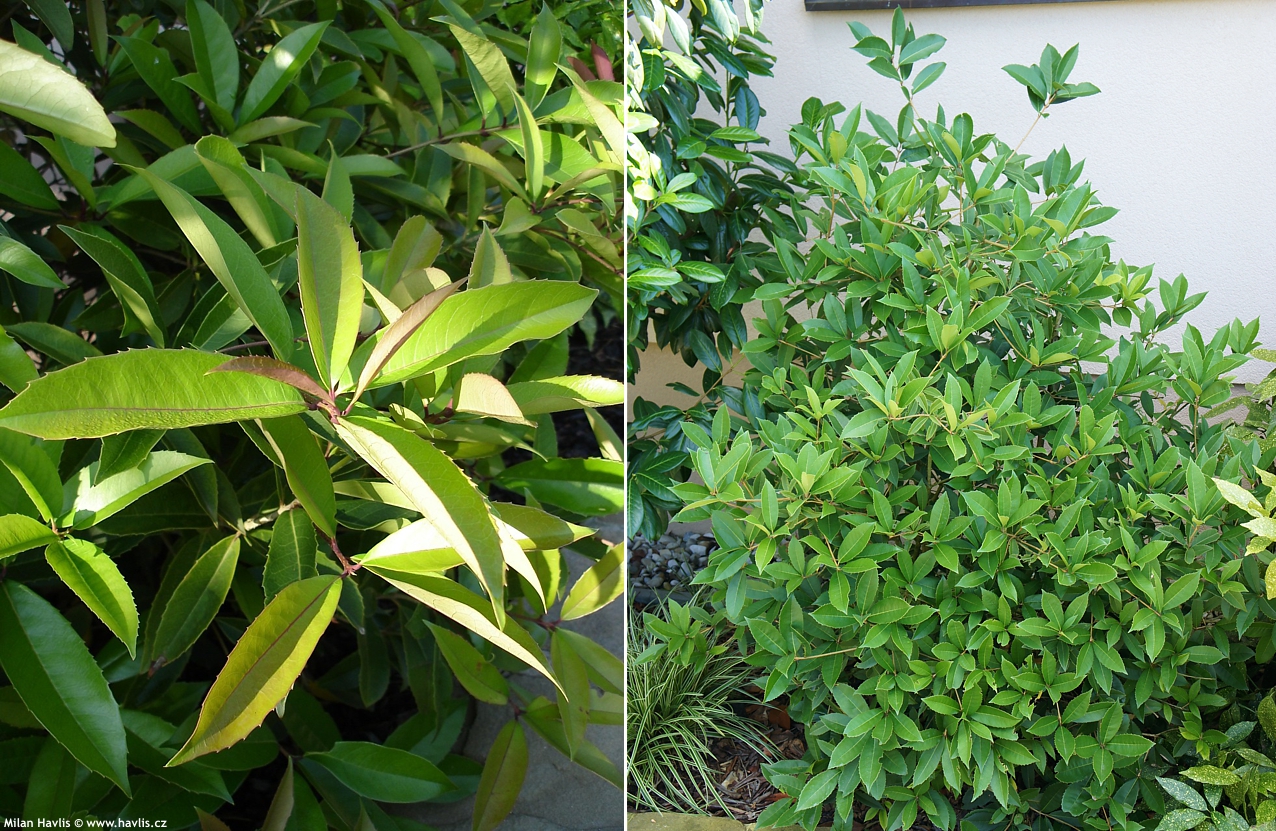
This unique sweet olive is a mid-sized or large, well-branched shrub with thin, flexible twigs which withstand heavy, wet snow without breaking. Its evergreen leaves are leathery, oblong-lance-shaped, medium to dark green, not very glossy, but exceptionally large: up to 16 cm long and 4-6 cm wide. Their margins are either entire or gently serrated with a few, almost invisible, harmless spines. In spring they emerge a fantastic shade of coppery red and amber orange and remain glossy until they mature. In October appear plenty of tiny, white, sweetly scented flowers which fill the surroundings with sweet citrus and fruit fragrance.
It grows moderately or fast into an upright shrub of circular to oval habit. Older plants may be limbed up into an attractive, small, multi-stemmed tree, or shaped in any way (mushroom-head, ball, pyramid), preferably in spring after all frosts. Late summer trimming is not recommended in zone 6.
Last update 18-11-2019; 05-02-2021
Grow osmanthus in moist but well-drained, humus rich, preferably acidic soil. Provide plenty of mulch for winter to protect the roots from fast freezing. It loves full sun but in colder regions find it a location sheltered from late winter and early spring sunlight but with plenty of light during the growing season. Use only plants with mature wood in zone 7 and transplant it no later than late summer in order to avoid frost damage after the first winter. Soi far we have tested its hardiness down to -17 °C without significant damage (USDA zone 7), only with some sunscorch after its first winter. Further trials continue. It does not suffer from diseases, but vine weevil can be a problem.

.jpg)