










Phellodendron amurense Amur cork oak

 Symbivit Tric (arbuscular)
 Symbivit (arbuscular)
Amur Cork Tree is a beautiful specimen tree native to a large area around the Amur River in N.E. Asia - Manchuria, the Amur region in Russia, and Mongolia. Since the winter temperatures can drop to -40 °C there, no wonder that it is popular especially in countries with colder climates where it is planted for its exotic appearance and attractive bark. It used to be mined for production of cork pulp as well as medicinal purposes. It is well-known in Chinese medicine.
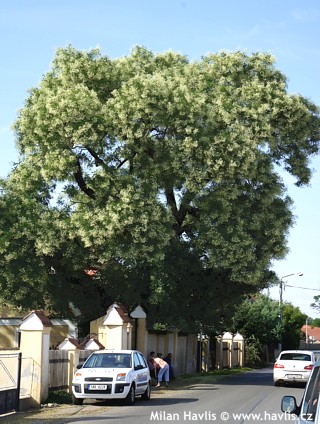
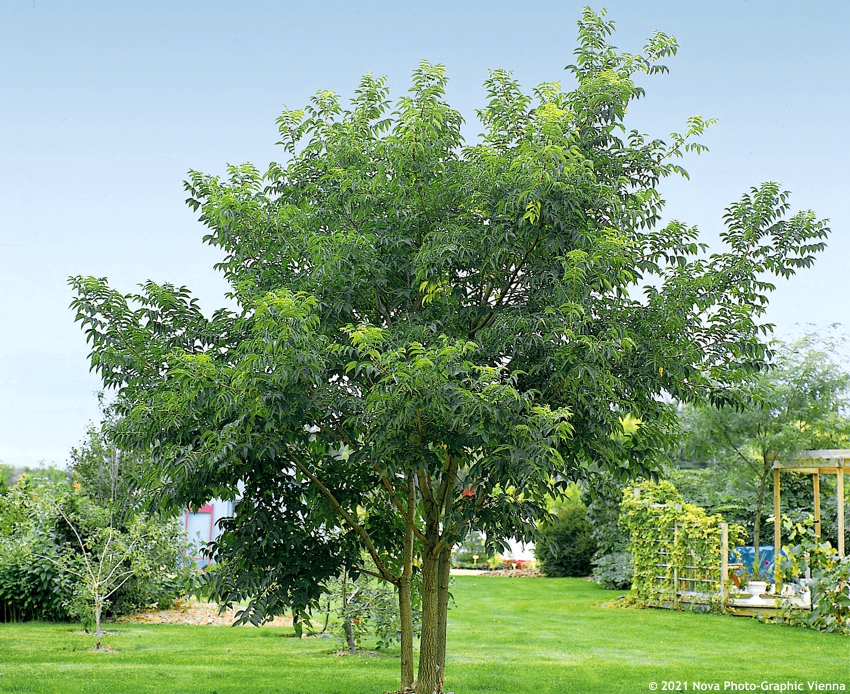
It is a medium-sized, fast-growing, massive-trunked tree that naturally forms picturesque, spreading canopies of similar shape as oak trees thanks to which it is sometimes incorrectly called Amur cork oak, although it is from a completely different family (routaceae) than oak (fagaceae). Each tree is unique in shape and grows between 8 and 15 meter tall and wide.
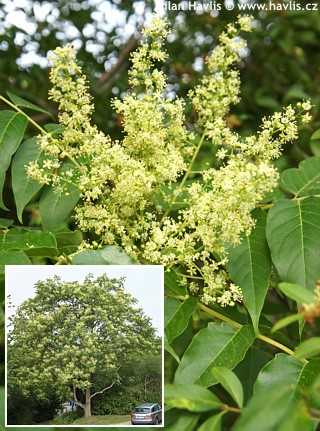
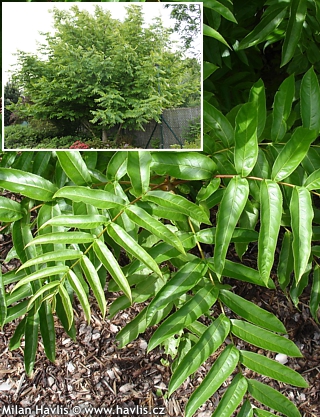
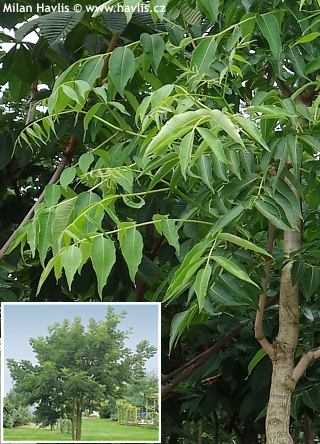
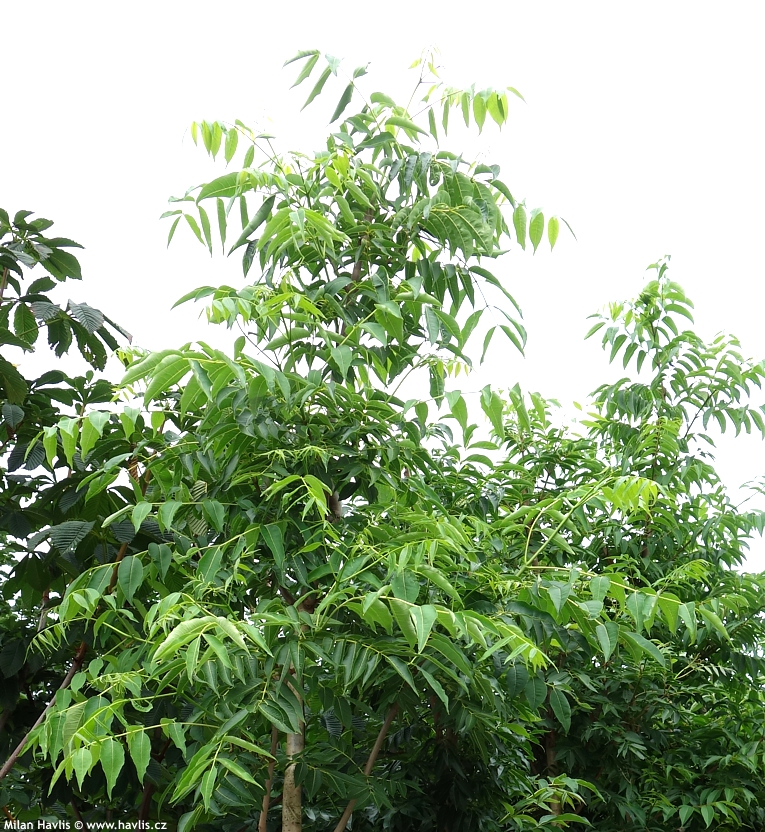
It bears rather exotic-looking, 30 to 50 cm long, deciduous, pinnate leaves composed of medium green, 8-15 cm long, highly glossy, ovate, conspicuously pointed leaves which turn yellow for a short period of time in autumn. They resemble foliage of ailanthus or juglans nigra. In June, it blooms with panicles composed of small, yellow-green flowers that provide good bee food. Pollinated flowers may be followed by small black fruits in autumn that persist on the tree long into the winter before the birds eat them. However, Amur cork tree is dioecious and needs pollen from another tree to produce fruit.
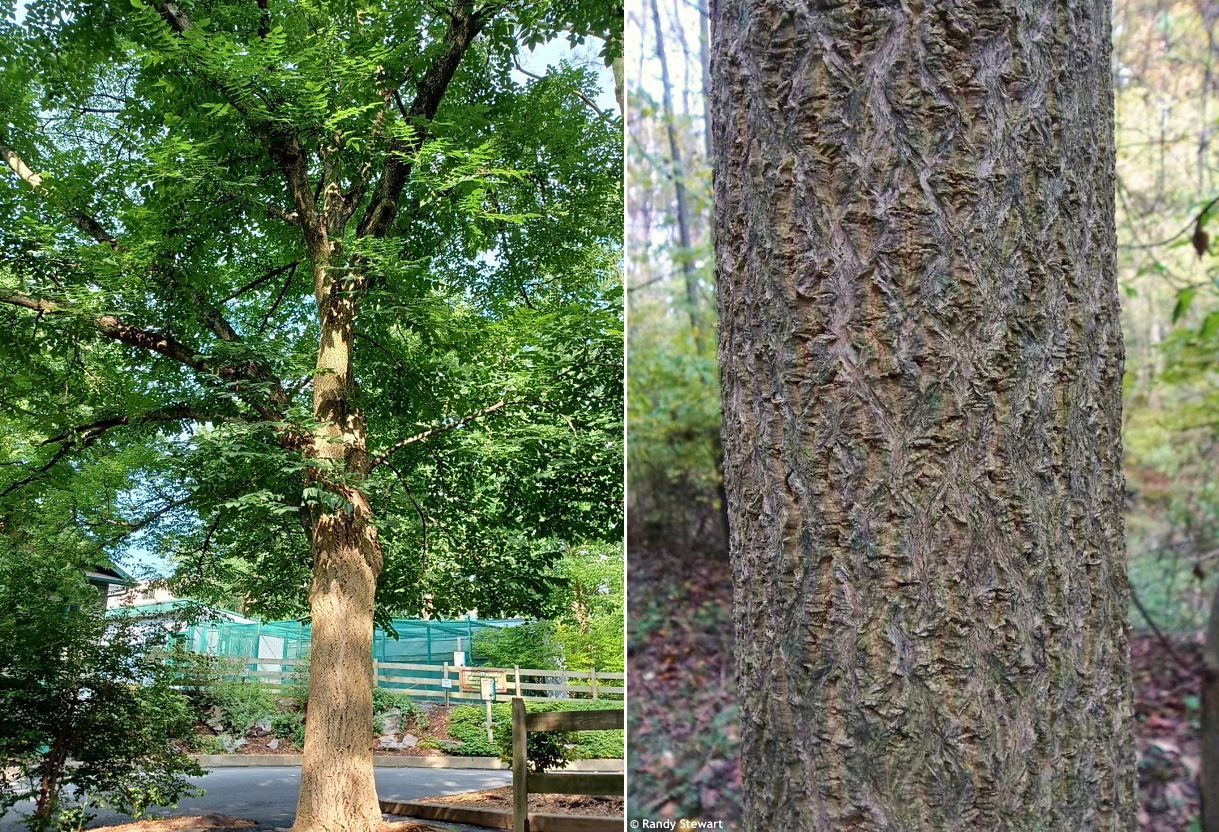
The deeply furrowed bark was not only the source of cork, it is also an ornamental feature for which this majestic tree is cultivated. Its breadth requires spacious locations but there is a way how to enjoy it in a smaller garden, too. It is called pollarding. It is a form of pruning when at the end of winter you cut back the branches right to the top of the stem, let them re-grow in spring, making long branches with extremely large leaves. Such action must be repeated annually. The advantage of pollarding is the possibility to grow large trees also in small spaces, the disadvantage is a not very attractive silhouette in winter after the leaves have fallen, the outline is sometimes called a hairy lollipop.
Last update 23-11-2021
Amur cork tree is undemanding as to the soil type provided it is well-drained, though, it performs best in deep, fertile, moist soils in full sun. It does not tolerate salt spray and paved areas or other root restrictions. Newly planted trees with a trunk height of 1.5 m and taller need to be staked to a strong support for at least 3 years before the roots establish. It can cope with severe frosts down to approx. -40 °C (USDA zone 3).