

































.jpg)
Phlox 'Koningin Paola' JS QUEEN PAOLA perennial phlox (panicle type)

 Symbivit Tric (arbuscular)
 Symbivit (arbuscular)
Phlox
The genus Phlox was described by Carl Linnaeus (1707–1778) in 1753 and placed in the family Polemoniaceae, one of the most botanically diverse North American families. Kew lists 69 accepted species, most of them originating from a wide range of North American habitats – from moist woodlands and river floodplains to prairies, rocky outcrops and alpine tundra. The name comes from the Greek phlox, meaning “flame”, which aptly captures the impression their colours made on early botanists. By the 18th century the genus had already attracted the interest of European growers, as it brought into gardens something the flora of the time lacked: vivid colours, long flowering periods and fragrance. Several historical synonyms appeared in taxonomy, such as Lychnidea Hill (1756) or Armeria Kuntze (1891), reflecting attempts by various authors to capture the morphological variability of the genus. The deepest scientific insight into its evolution and diversity was provided by the American botanist Verne Grant (1917–2004), whose 1959 monograph on Phlox remains a cornerstone of modern understanding. The very first Phlox seeds reached Europe from Virginia in the first third of the 18th century, arriving in England.
Phlox paniculata, the perennial phlox, described by Carl Linnaeus in 1753, originates from the eastern United States, where it grows along meadow edges, woodland margins and stream banks. It reached Europe as early as around 1732, well before its formal description. At that time North America was being systematically explored by John Bartram (1699–1777) and his son William Bartram (1739–1823), who supplied European gardens with seeds and plants; their collections were likely responsible for the spread of phloxes in England and France. In Czechia they appeared at the end of the 19th century, and by around 1900 they were among the most widely grown perennials – nurseries offered dozens of cultivars and large gardens planted them in groups visible from afar. Their popularity was pan‑European, especially in England, still a perennial paradise today, where the Royal Horticultural Society devoted three full A4 pages to phloxes in its encyclopaedia. Breeding developed from the 19th century onwards, first in England and France, later in Germany, where Georg Arends (1863–1952) created the first hybrids of P. paniculata × P. divaricata. Modern breeding focuses on more compact growth, resistance to powdery mildew and clean, contemporary colours.
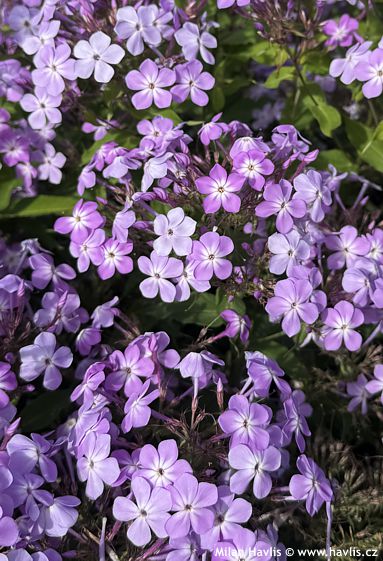
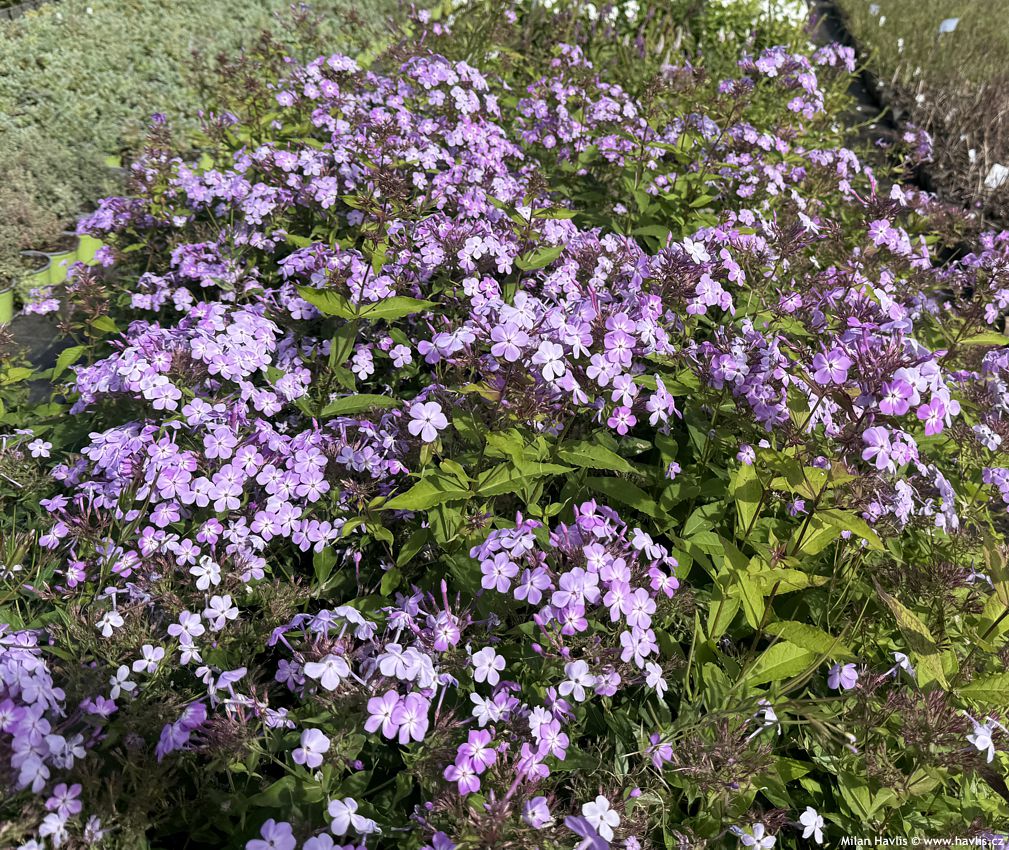
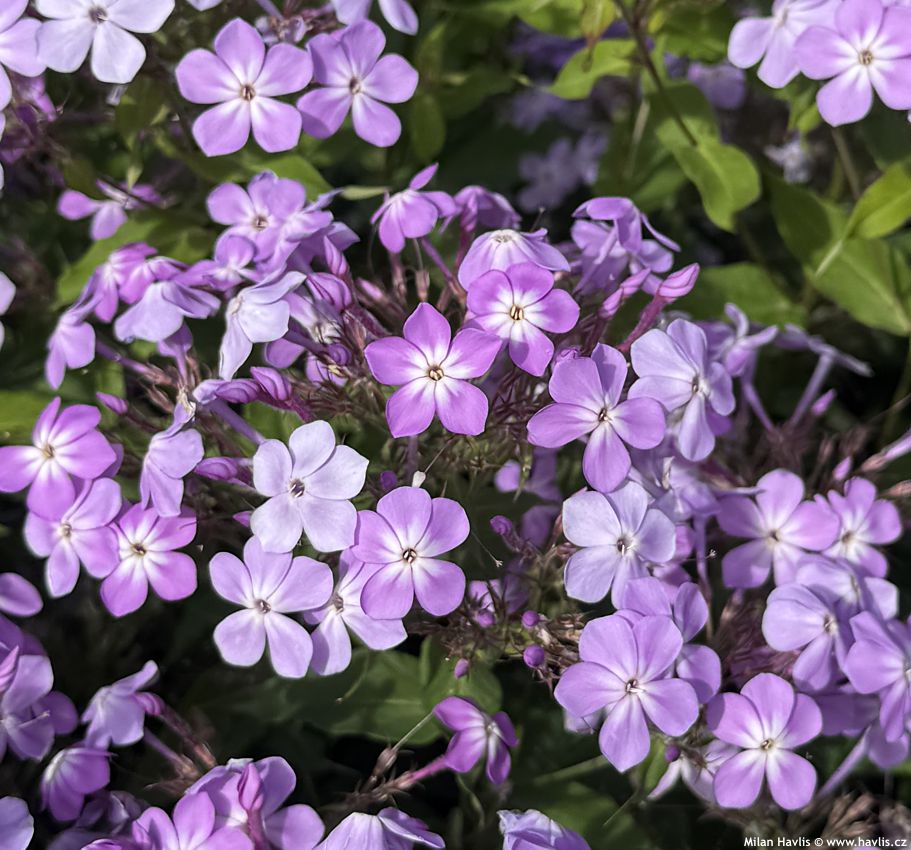
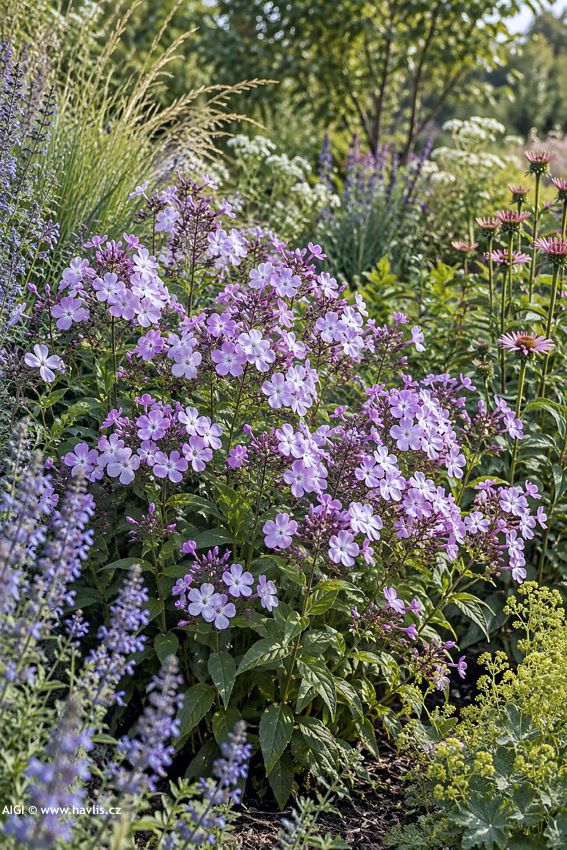
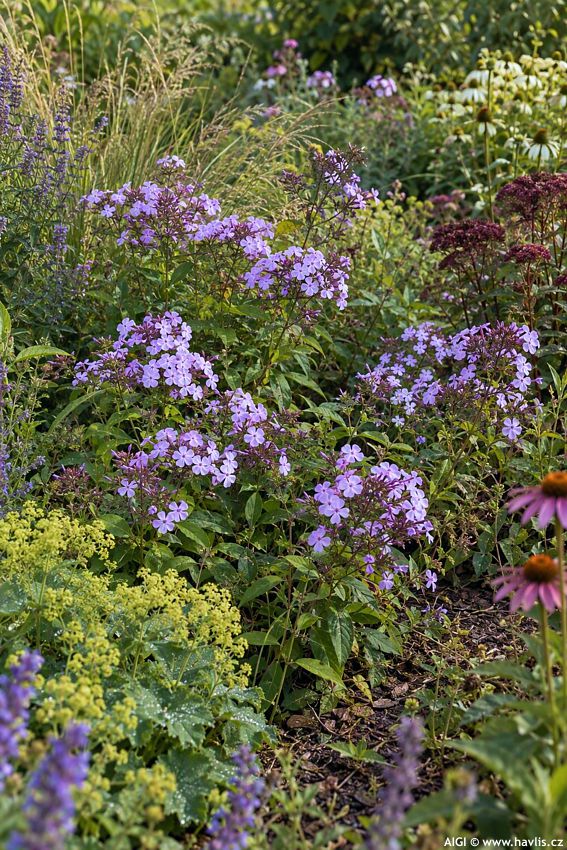
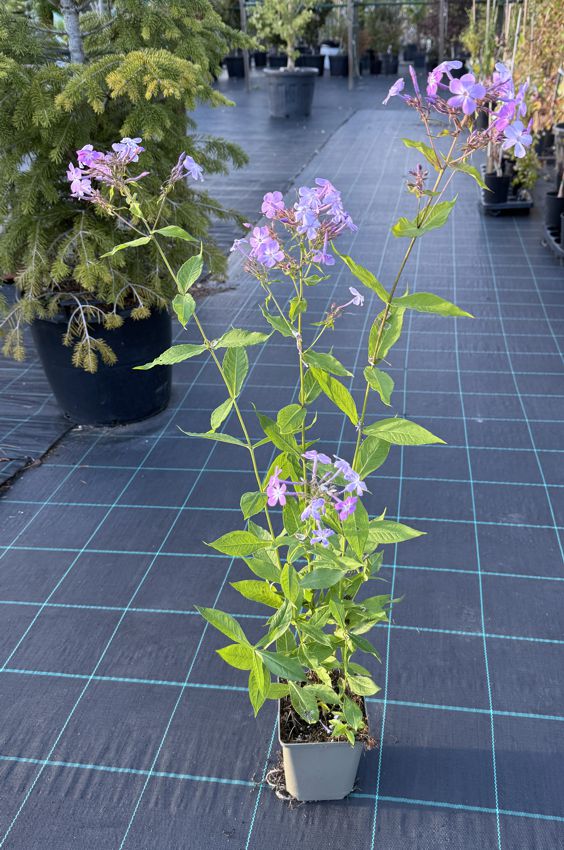
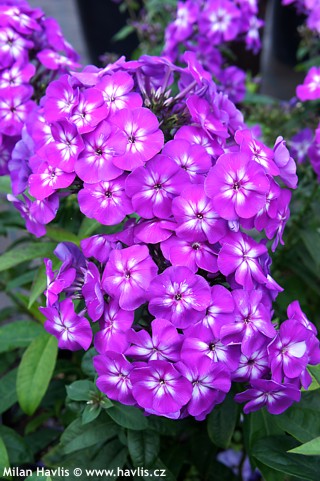
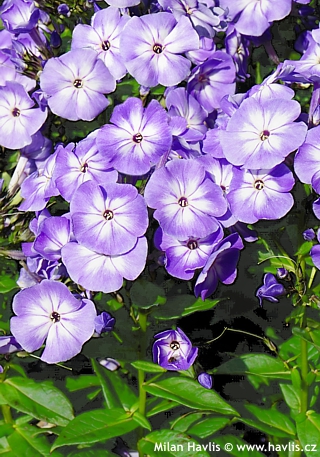
Phlox JS Queen Paola wins you over with several qualities at once. The first thing you notice is its beautifully coloured flowers, blending shades from rosy purple to soft mauve combined with white, forming dense, regular panicles that look like tiny garden lanterns lit from June well into autumn. This leads to another useful trait – extended flowering. It starts in June, the panicles hold for at least a month, and once they are removed, the plant produces new inflorescences from its lateral shoots, allowing it to bloom into September or even October in temperate climates. The habit is compact, forming a firm, healthy clump around 60 cm tall, with foliage that remains clean even in wet summers – almost a small miracle for a phlox.
If you know your phlox well, you may notice that some of the key traits in both appearance and behaviour resemble those of Phlox amplifolia: larger, notably healthy leaves, repeated flowering and slightly looser inflorescences. These features are the reason why P. amplifolia is often used as one of the parents in modern breeding, and although the breeder does not specify the parentage here, JS Queen Paola displays these advantages as well. It was bred by the Belgian plantsman Jan Spruyt and named in honour of Paola Ruffo di Calabria (born 1937), Queen of the Belgians, known for her long-standing support of cultural and horticultural projects. The cultivar is protected under European PBR rights, number 64346 from 2023.
Jan Spruyt (born 1958) is one of the most distinctive European breeders of modern perennials, whose work is not confined to a single genus. Among his introductions you will find anemones, asters, coreopsis, salvias, phlox, echinaceas, geraniums and many others. His approach is rooted in long-term observation of plants in ordinary garden conditions rather than in trial fields alone, resulting in cultivars with exceptional resilience, healthy foliage and stable growth. He established the JS series as a response to the common problems of each perennial group he aimed to improve, and over two decades created a collection that has received numerous European awards, including several ISU Awards for consistent performance across different climates.
Last revision 01-10‑2026
Perennial phlox and their hybrids require a sunny position and a fertile, evenly moist soil that does not dry out in summer. They grow best in loamy, slightly acidic to neutral soils rich in humus; heavy clays should be improved with compost and sand, though once established they succeed even there. Watering is crucial mainly in July and August, when they form their largest panicles – drought leads to smaller flowers, shorter flowering and is one of the causes of powdery mildew in older, non‑tolerant cultivars, just as excessive moisture during very rainy summers can be. They appreciate a steady supply of nutrients: a spring application of compost or slow‑release fertiliser is beneficial, and light feeding in summer supports the formation of secondary panicles.
To maintain a compact shape, it is best to plant them where air can circulate; dense plantings increase the risk of mildew, even though modern cultivars are more resistant. Removing spent panicles encourages the formation of smaller, late‑season panicles along the stem. In autumn the stems can be cut back to ground level for a tidy appearance, though the cut can just as well be done in early spring. They are fully hardy to at least −34 °C, and some sources suggest that well‑established plants under snow cover may withstand −40 °C (we have not been able to verify this). In good conditions they persist for many years, gradually forming wider, stable clumps without requiring division like many other perennials.
Goods are shipped all over Europe. For Russia and U.K. and for further details please read about SHIPPING OPTIONS HERE.
Are you interested in a serious discount for orders NOV-FEB? Check your options here.
THE PRICES INCLUDE VAT of 15%. For quick conversion you can use 1 CZK = approx. 0.04 EUR
- STANDARD QUALITY - Plants of this group are 1st class quality with number of branches and overall density adequate to their size and age, considering they were container grown.
- DE LUXE QUALITY - This label guarantees a luxurious quality of manually selected plants that, compared to their height and age, are exceptionally dense and beautiful.
- EXTRA - These plants are usually mature and bigger specimens with exceptional overall appearance.
- STANDARD (as described in the plant form) means a tree with a trunk of 190-210 cm and a crown at the top, unless specified differently. The commercial size for trees is their girth measured in the height of 1m from ground.
- HOBBY - These plants are of the same quality as our standard-quality plants but younger and therefore cheaper.
- SHRUB - a woody plant with branches growing bushy from the ground level.
- HALF-STANDARD or MINI-STANDARD - a small tree with shorter trunk, its size is usually specified.
- FEATHERED - These are trees with branches growing already from the base of the trunk and up along the stem.
- GRASSES and PERENNIALS - Sizes given usually read the diameter of the pot or the clump, as specified.
