












Photinia serratifolia 'Oploo5' PINK CRISPY Chinese photinia


 Symbivit Tric (arbuscular)
 Symbivit (arbuscular)
Photinia
Chinese photinia is a species which is less common in trade and almost nonexistent in European nurseries. I think that Fraser’s photinia took over with its fast growth and cheaper price. Yet there are new varieties of Chinese photinia which look great and will win in any competition. Exactly like PINK CRISPY photinia which was awarded Gold Medal at Dutch exhibition Plantarium in 2015. It was bred by Alexander van Oploo, the same breeder who brought Red Light photinia.
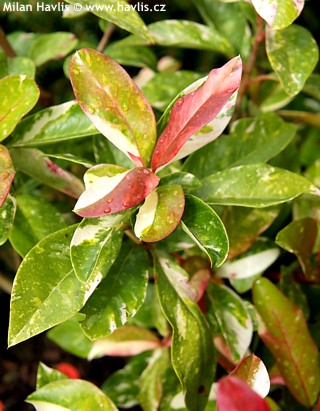
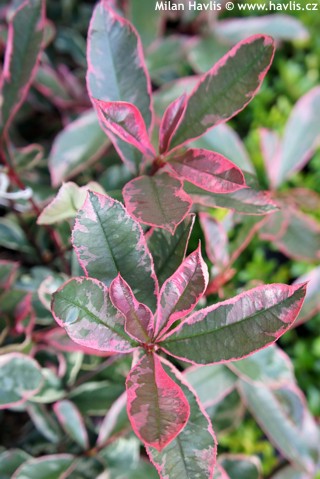
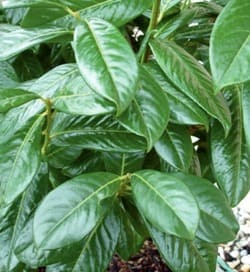
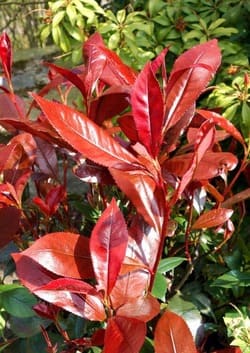
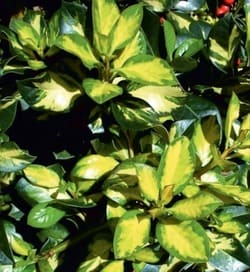
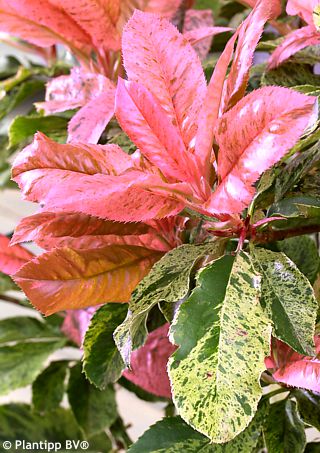
PINK CRISPY photinia is a drama at first glance. Exceedingly showy foliage reveals creamy white variegation on dark green, slightly undulated, gently serrated, and broadly oval to obovate, evergreen leaves. And the real extravaganza show kicks off when new leaves emerge. They are so intensely pink you can hardly believe that this plant is not made of plastic. A true gem that can easily go solo as a stand-alone specimen in the middle of a lawn, or wisely placed among other green plants where it will take no time to play the diva role. Ever considered trying a variegated plant? Go for PINK CRISPY, you will want no other.
PINK CRISPY photinia grows slowly making strong, strictly upright, and stiff branches into a well-behaved habit (unlike fast growing Fraser’s photinias). Here in zones 6 we find it a place sheltered from strong, drying winds in winter. The breeder indicates a mature height of around 170 cm, which is unrealistic, as 10-year-old shrubs have already exceeded 2 meters. Considering that the species can reach around 4 meters in the cooler conditions of Central Europe, it is expected that this variety might only be slightly smaller – approximately 3 meters. However, since it is still very new, the ultimate mature height is not yet known.
Last update 04-09-2018; 05-04-2025
Pruning can be done from early spring until midsummer but is not necessary. It needs moist but well-drained, humus-rich soil and mulching. Provide extra watering in hot summers and in frost-free periods in the winter if the ground is not frozen, not leaving the sun sucking away all its water present in the evergreen foliage. It is marketed as hardy to min. -20°C with a suggestion that it can take a few more degrees lower.