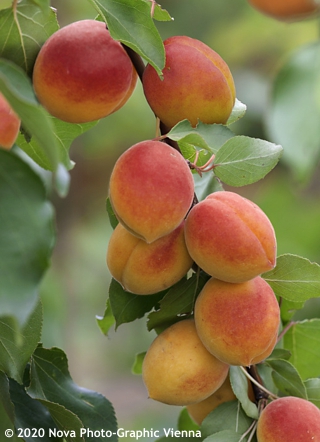
The apricot, Prunus armeniaca, is one of the oldest fruit trees cultivated by humans. Although its Latin name refers to Armenia, where it was widely grown in antiquity and from where it reached Europe, its true origin lies further east – in Central Asia, northern China and the Tian Shan mountains, where genetically rich wild populations still grow and form the foundation of the species. The apricot reached Europe via Persia and Armenia, where it was cultivated as early as the time of Alexander the Great. The Romans knew it as malum armeniacum and spread it throughout their empire. In the Middle Ages it survived mainly in monastic gardens and in the warmer parts of southern Europe. It arrived in Central Europe later but adapted quickly thanks to its ability to tolerate continental climates, even though growers had to accept its defining trait – its tendency to flower very early, often exposing the blossoms to frost damage. Yet the fruit is so delicious that even regions at risk were unwilling to give it up. The apricot is a velvety drupe with orange flesh rich in carotenoids and a large stone whose kernel may be sweet or bitter depending on origin. The tree has a deep, strong root system that allows it to withstand drought, but it requires well‑drained soils free of waterlogging. The species is genetically highly variable – European, Central Asian, Chinese and Armenian lines differ in phenology, flavour, fruit size and resilience, forming the basis of modern breeding.
Apricots hold an unusually prominent place in many cultures, far more significant than might appear at first glance. In China, they are a symbol of talent, learning, and spring. The ancient Chinese saying "to study beneath the apricot tree" refers to the legend of the scholar Dongfang Shuo, who taught his students under an apricot tree. From this tradition also comes the term xinglin (杏林), meaning "apricot grove", a traditional poetic expression for the medical profession. In Persia and Armenia, the apricot was regarded as the fruit of the sun. Armenian tradition considers it a national symbol, and apricot wood is used to make musical instruments, most notably the duduk, whose warm, melancholic tone is inseparably linked to Armenian identity. Throughout the Mediterranean, apricots were associated with fertility and feminine beauty. Arab cultures regarded them as a fruit with aphrodisiac qualities, a reputation reflected in both poetry and cuisine.
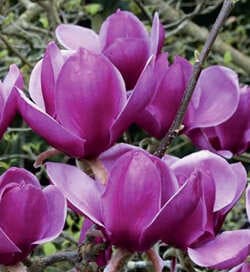
In Europe, the apricot became a symbol of early spring and fragility, as its blossoms can be damaged by late frosts, and this vulnerability has also found its way into literature. In folk culture, the apricot tree was regarded as a tree that “brings the first joy of spring”, yet at the same time as a capricious one: it flowers beautifully, but its crop is never guaranteed. In art, the apricot appears less frequently than the cherry or peach, although its blossoms inspired numerous artists, particularly in East Asia. In Chinese and Japanese painting, the apricot blossom symbolises purity, renewal, and delicate beauty. It is often depicted alongside bamboo and pine as part of the traditional trio known as the “Three Friends of Winter”(Suihan Sanyou, 歲寒三友).
Apricots are eaten fresh, dried, preserved, and used to make compotes, juices, cakes, dumplings, fruit spirits and, perhaps most commonly of all, jams, where producers constantly compete to achieve the finest quality. The most knowledgeable cooks and fruit processors know that a significant part of the characteristic apricot flavour and fragrance is concentrated in and just beneath the skin. For that reason, they never peel the fruit, only remove the stones. In Czechia, apricots are most closely associated with Moravia, where they have given rise to numerous traditional specialities, including meruňkovice (apricot brandy), apricot dumplings, and apricot traybake.
Description of the plant
Imola is a town in Italy renowned for the race track The Autodromo Internazionale Enzo e Dino Ferrari. It is close to Bologna in a region called Emilia-Romagna, possibly the most important Italian region for production of fruit.
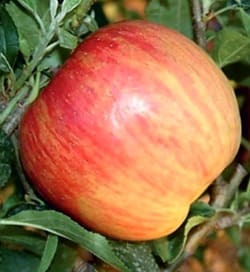
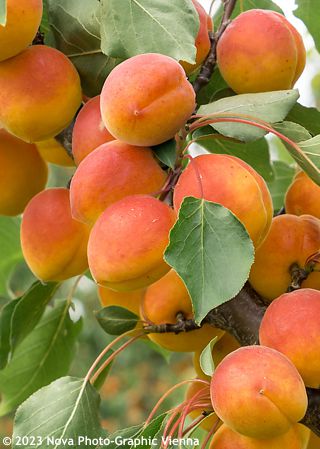
Bella d’Imola is an early apricot tree variety which originated in one of Imola’s orchards. It produces oval to rounded fruit of deep orange colour with some red russets. The flesh is aromatic, juicy, medium firm, and the taste is slightly acidic which makes it an excellent variety for heat processing such as canning, making preserves or using in sweet cuisine where its sharp taste stands out and the sweetness level can be balanced with a suitable sweetener. It ripens approximately from the first decade of July and is suitable for warmer areas.
It is self-fertile (needs no other tree to pollinate its flowers) and productive but will benefit from a different variety grown nearby. Apricot trees are best with no pruning. Still, if you need to cut it do so after flowering when leaves are borne, or immediately after harvest. This way it will have enough time to produce new twigs and flower buds for the following year.
The tree grows moderately vigorously into an evenly upright and spreading canopy. Hardy to about -26°C (USDA zone 5b).
Last update 17-01-2023
Growing conditions and care
Apricots require a warm, airy site with deep, well‑drained soil, as they tolerate short periods of drought far better than prolonged waterlogging, which leads to root dieback and canker‑type necroses. In the first years after planting they need regular watering; later, moderate irrigation and mulching are preferable to excessive watering. Nitrogen is problematic in apricots: it promotes vigorous growth but impairs wood maturation, increases frost sensitivity and encourages brown rot of the fruit, so potassium and magnesium are generally more beneficial. Pruning must be approached with care — apricots bear on two‑year‑old and older wood and do not tolerate heavy winter cuts into old branches, especially in cold, wet weather, which easily opens the way to cankers. The best approach is light summer to late‑summer pruning that keeps the crown airy, removes overloaded or crossing branches and gradually renews fruiting wood, but it should not be performed mechanically every year. Large cuts should be made only when truly necessary — apricots do not respond well to “rejuvenation pruning” on old wood.
The most significant diseases include blossom and shoot blight, brown rot of the fruit, apricot rust and various forms of branch and trunk canker. Blossom blight attacks flowers during cold, wet weather; flowers turn brown and remain attached, shoots die back and exude gum. The same pathogen later causes fruit rot, especially when “mummies” remain on the tree. Apricot rust leads to premature leaf fall and weakens the tree. Hygiene is the foundation of protection: removing mummified fruits, heavily infected branches and fallen rotten fruit. Chemical treatments are meaningful only when timed to risk periods — wet spring during bloom and the pre‑harvest period — otherwise it is better to leave the tree alone rather than chase every minor symptom. Apricots are relatively short‑lived fruit trees: under good conditions they may reach 40–50 years, but the period of high‑quality, regular cropping usually lasts 15–25 years. Older trees show greater yield fluctuations, more frequent branch dieback and increased susceptibility to cankers; at a certain point it is wiser to plant a new tree than to maintain an ageing one. European apricots generally have good winter hardiness in the wood down to at least –25 °C, though differences between cultivars are notable.
Watchdog
We don't have this item at the moment, but I'm a watchdog and I'll keep an eye out for when it's back, do you want it? Enter your email, copy the code from the picture and send :-)
By pressing the „I Agree“ button, you agree that we will provide you with meaningful and useful services based on your web browsing tracking data.
Of course, you can change your consent at any time in the „Settings“ section.
Settings
I agree
Cookie settings
You can choose how your personal data is used.
Technical Cookies
The use of cookies ensures that this website remains functional and usable with all content. In addition, this will allow us to ensure the most comprehensive measurement and evaluation of the range.
I agree
Better service offerings
The use of cookies allows us to optimize this website for your needs. Based on the measured data, we will know what we can improve and ensure that we continuously adapt our services and offers for the best possible experience.














 Symbivit Tric (arbuscular)
 Symbivit (arbuscular)