












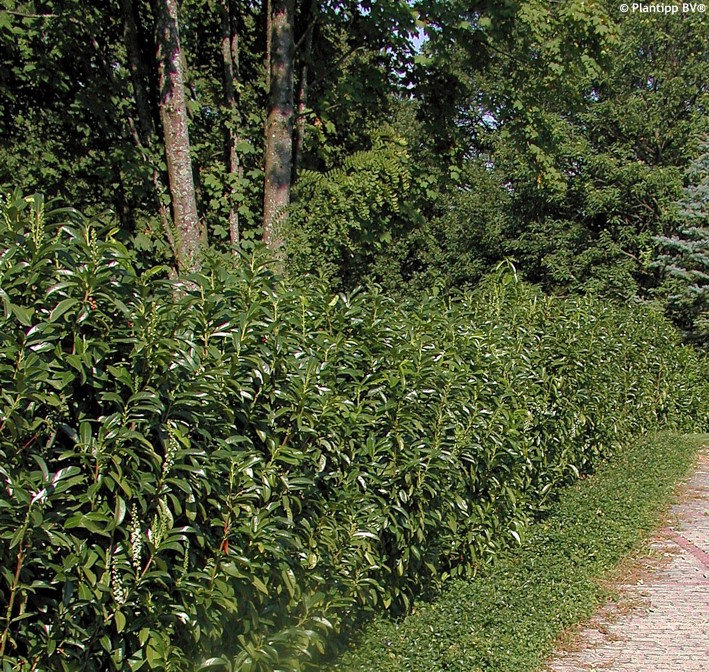
Prunus laurocerasus 'Mariblon' GENOLIA® cherry laurel

 Symbivit Tric (arbuscular)
 Symbivit (arbuscular)
Prunus
The genus Prunus is quite extensive and, above all, remarkably diverse – it includes around 350 different species, some of which you would hardly place in the same group at first glance. Its representatives occur from Asia through Europe and North Africa to North America. The genus comprises trees and shrubs valued mainly for their abundant and attractive flowering, as well as species with delicious edible fruits, and in this particular case an evergreen species whose persistent foliage becomes especially important during the dormant season, when most other woody plants are leafless. This species is known as cherry laurel (Prunus laurocerasus) and originates from regions around the Black Sea, the Caucasus, and northern Turkey, where it grows in submontane forests and on moist, shaded slopes. Its glossy, leathery leaves resemble those of true laurel, and this similarity that gave rise to its name – lauro‑cerasus, meaning “laurel cherry.” It reached Europe as early as the 16th century and, thanks to its frost hardiness, is today one of the most important evergreen woody plants even in Central European climate.
Cherry laurel was scientifically described in 1753 by Carl Linnaeus in his seminal work Species Plantarum, where it received its still accepted name Prunus laurocerasus. A later, now obsolete name, Laurocerasus officinalis, nevertheless points to a much older history of cultivation and use. A laurel‑like plant identified with cherry laurel is already mentioned by Theophrastus, Dioscorides and Pliny the Elder, who noted its unusual properties. From the leaves of cherry laurel, a distillate known as aqua laurocerasi was prepared and, when used with due caution, employed as a sedative – hence the Latin epithet officinalis, meaning medicinal. Historically and with documentary support, cherry laurel, its introduction, and its first cultivation in European gardens can be traced to the year 1576. This date fits well within the period of diplomatic missions between the Ottoman Empire and the Habsburgs, when seeds, cuttings, and young plants of previously unknown species were brought from Constantinople to Central Europe through networks associated with figures such as the imperial envoy David Ungnad (1530–1600) and the botanist Carolus Clusius (1526–1609). The transfer of newly discovered plants was regarded as a gift equal in value to gold, works of art, or archaeological finds, and represented an important expression of learning, prestige, and practical knowledge of the natural world.
GENOLIA® cherry laurel originates from Switzerland, where it was selected in 2002 at the nursery Pépinières de Genolier. It is a selection of a chance seedling that not only offered a distinct appearance but also demonstrated high hardiness following an unusually severe winter. The cultivar is protected by Plant Breeders’ Rights (PBR) No. EU 17887, granted in 2009.
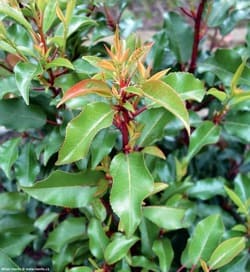
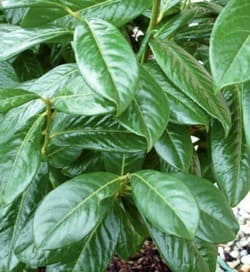
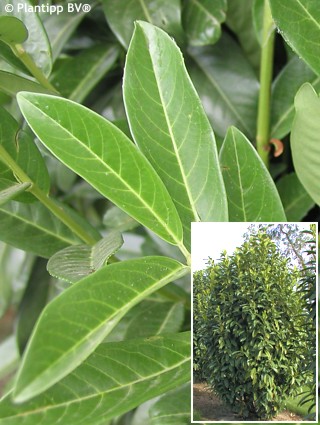
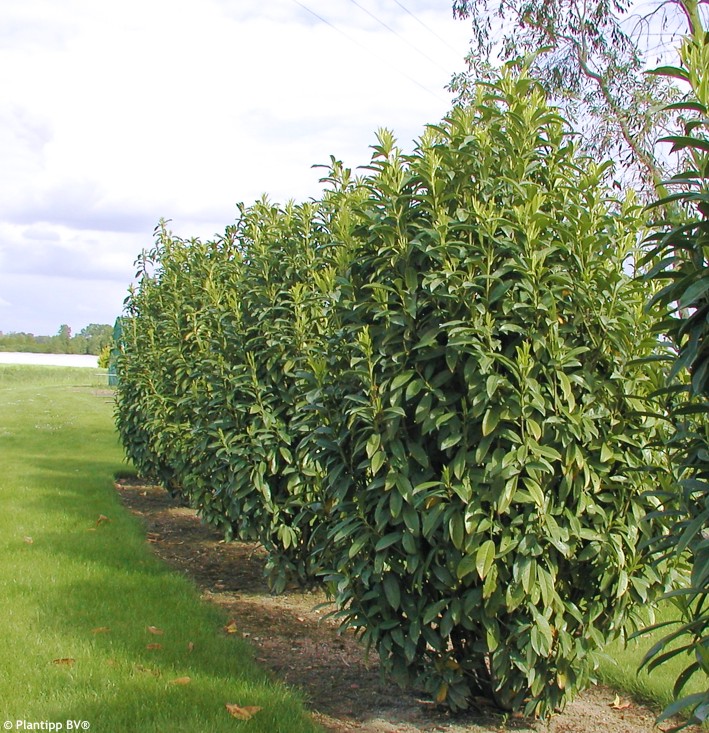
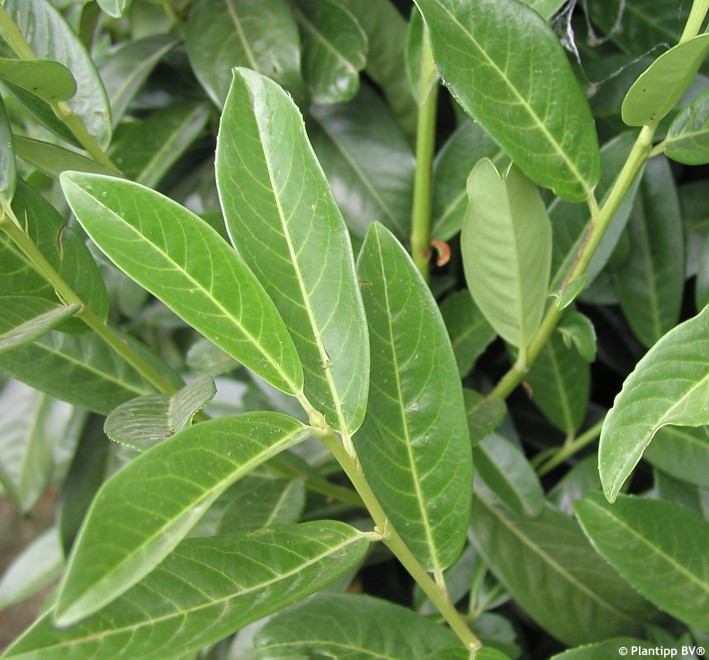
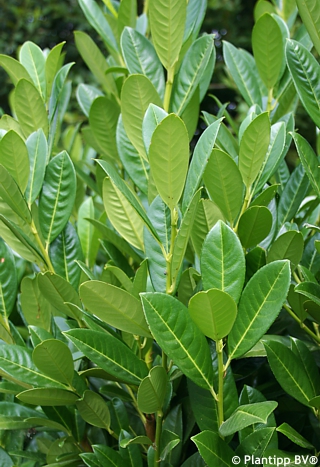
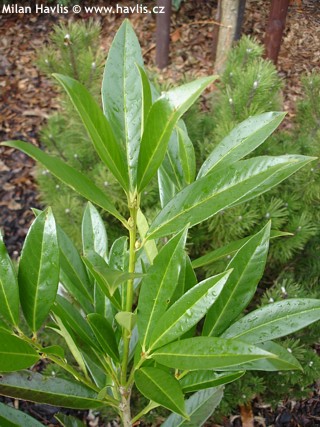
Genolia grows as a neat, strictly upright, columnar shrub with leathery leaves that are elongated obovate in shape, medium to dark green in colour, with pronounced veining and an attractive glossy surface. It grows upright and rather quickly develops a columnar form without requiring pruning. Naturally well‑branched, it appears full and compact from the base. Thanks to this habit, it is well suited for hedges, narrow green screens, or as a vertical element where space is limited. Annual growth typically reaches 25–30 cm. In 2005, Genolia was awarded a silver medal at the international Plantarium novelty fair.
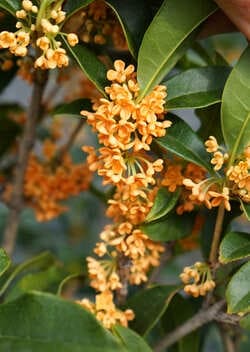
The flower clusters are upright, composed of small white blossoms with a gentle fragrance reminiscent of lilac, and they may appear again in autumn. After pollination, glossy black fruits develop and are a favoured food source for birds. Tests concerning fruit toxicity (source: Plants For A Future) have shown that any risk lies solely in the consumption of leaves and the seeds of unripe fruits; fully ripe or fallen fruits pose no health risk even to children.
Last update 29-10-2018; 22-12-2025
Cherry laurels require moist but well‑drained soil, ideally acidic to neutral and rich in nutrients. They do not tolerate compacted, heavy clay, muddy, or permanently waterlogged soils. They are sensitive to lime in the soil, which most commonly manifests as chlorosis – the leaves lose their green colour and the vein pattern becomes pronounced. Similar symptoms may also occur in cases of nutrient deficiency. In both situations, the application of magnesium sulphate (Epsom salt), organic fertilisers, or adjustment of soil pH towards a more acidic reaction is beneficial. They tolerate pruning of any intensity and respond particularly well to rejuvenation pruning into old wood, from which they readily regenerate. The best time for pruning is in spring after the risk of frost has passed; shaping cuts are carried out in mid‑summer. Because they retain their leaves year‑round – even in winter – and continuously transpire water, they require an adequate supply of moisture. Until a sufficiently deep root system develops, it is advisable to water them at least once a month during dry winters to prevent dehydration and subsequent leaf scorch caused by strong winter sun. To retain moisture and protect against temperature fluctuations, year‑round mulching is strongly recommended. The currently verified frost hardiness is –23 °C, with expectations that it may tolerate even lower temperatures. It has also demonstrated sufficient resilience when grown outdoors year‑round in large containers (min. size 80×80×80 cm).
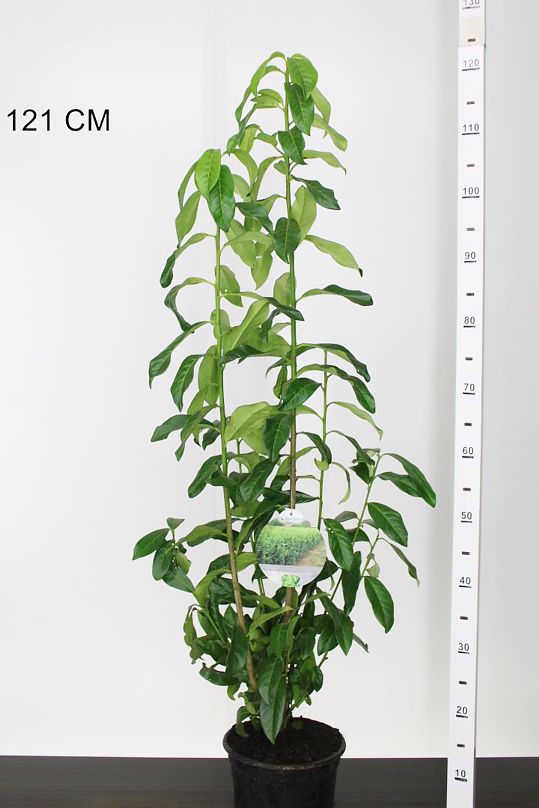
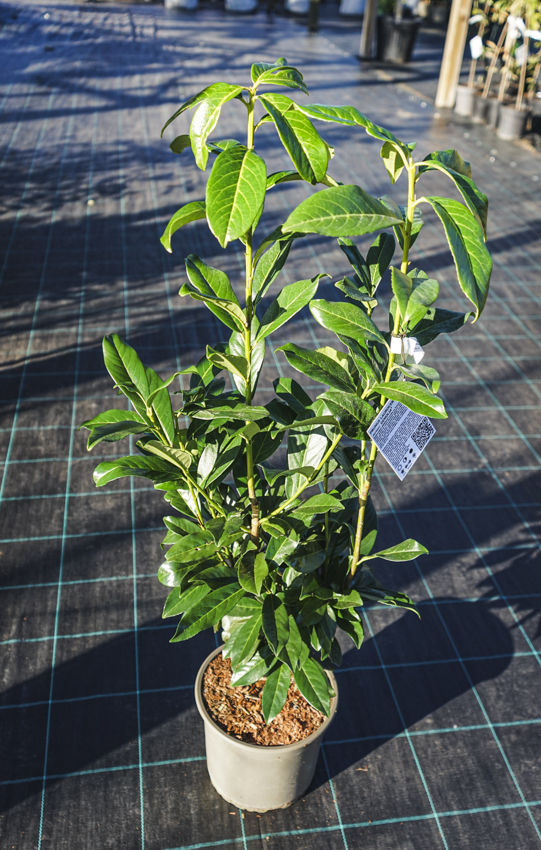
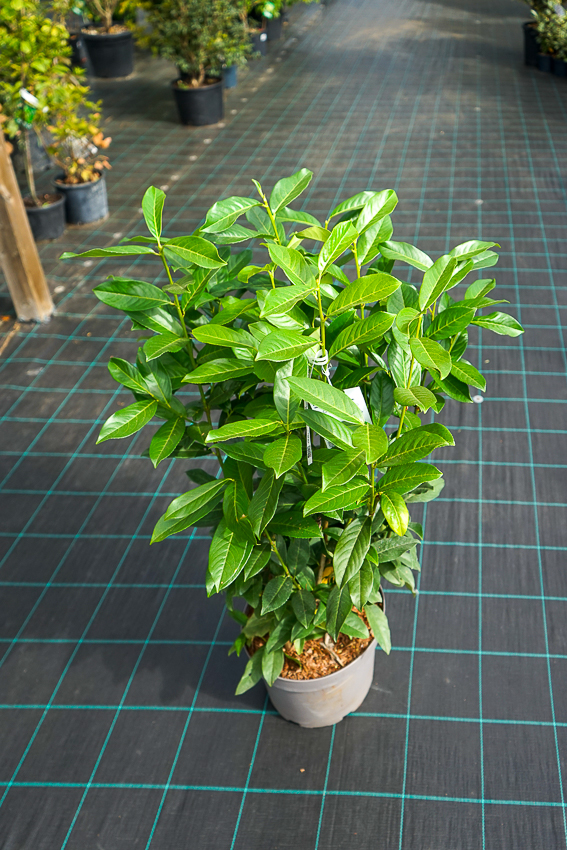

Goods are shipped all over Europe. For Russia and U.K. and for further details please read about SHIPPING OPTIONS HERE.
Are you interested in a serious discount for orders NOV-FEB? Check your options here.
THE PRICES INCLUDE VAT of 15%. For quick conversion you can use 1 CZK = approx. 0.04 EUR
- STANDARD QUALITY - Plants of this group are 1st class quality with number of branches and overall density adequate to their size and age, considering they were container grown.
- DE LUXE QUALITY - This label guarantees a luxurious quality of manually selected plants that, compared to their height and age, are exceptionally dense and beautiful.
- EXTRA - These plants are usually mature and bigger specimens with exceptional overall appearance.
- STANDARD (as described in the plant form) means a tree with a trunk of 190-210 cm and a crown at the top, unless specified differently. The commercial size for trees is their girth measured in the height of 1m from ground.
- HOBBY - These plants are of the same quality as our standard-quality plants but younger and therefore cheaper.
- SHRUB - a woody plant with branches growing bushy from the ground level.
- HALF-STANDARD or MINI-STANDARD - a small tree with shorter trunk, its size is usually specified.
- FEATHERED - These are trees with branches growing already from the base of the trunk and up along the stem.
- GRASSES and PERENNIALS - Sizes given usually read the diameter of the pot or the clump, as specified.
