












.jpg)
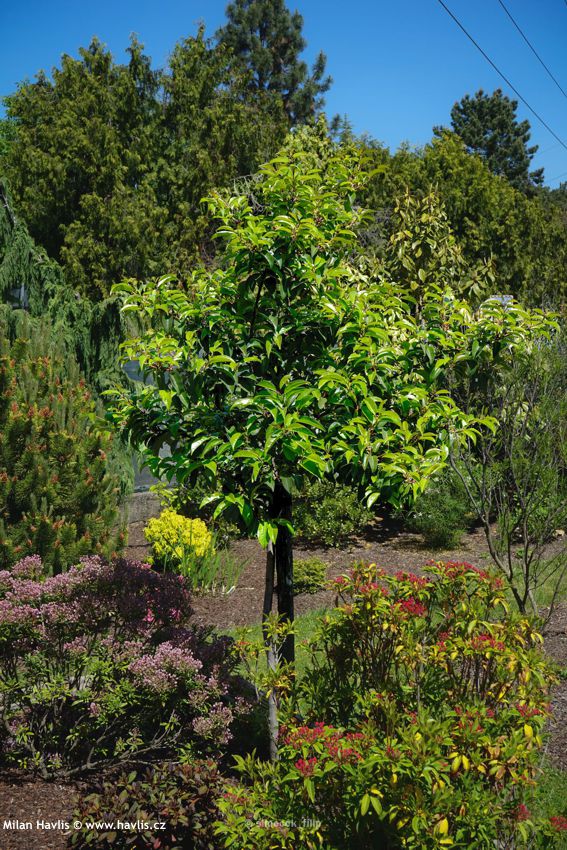
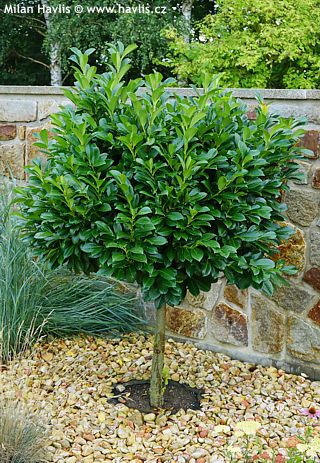
Prunus lusitanica ssp. azorica 'Ybrazo1' TICO® Portugal laurel - STANDARD TREE

 Symbivit Tric (arbuscular)
 Symbivit (arbuscular)
Prunus
The genus Prunus is very extensive and, above all, remarkably diverse, comprising approximately 350 species that can differ greatly in both appearance and use. Its representatives occur from Asia through Europe and North Africa to North America. The genus includes ornamental trees and shrubs valued for their abundant and attractive flowering, fruit-bearing species with edible crops, and in this particular context also evergreen species, whose persistent foliage plays an important role especially during the dormant season, when most other woody plants are leafless. The best-known representative of this group is cherry laurel (Prunus laurocerasus), native to the regions around the Black Sea, the Caucasus and northern Turkey, where it grows in montane forests and on moist, shaded slopes. A second species, surprisingly even more frost-hardy, is Portuguese laurel (Prunus lusitanica), which has been cultivated in western Europe since the late 17th century. In central and eastern Europe, however, it began to be deliberately introduced only at the turn of the 20th and 21st centuries, when it was first brought into cultivation and subjected to long-term testing under Czech conditions by Milan Havlis around 2006. Since then, it has rightfully become one of the most important hardy evergreen species for gardens and landscapes in our climate.
Prunus lusitanica, commonly called Portugal laurel, takes its name from Lusitania, the ancient Roman designation for the territory of present‑day Portugal. It is an exclusively European species; its natural occurrence tied to the Atlantic slopes of the western Mediterranean islands and coasts. The first comprehensive description appears with Johann Jacob Dillenius (1684–1747) in Hortus Elthamensis (1732), where he mapped and illustrated the rare and cultivated plants grown in the garden of James Sherard (1666–1738) at Eltham, an English apothecary and enthusiastic amateur botanist and collector. However, older records show that it has been deliberately grown in gardens as an ornamental and useful shrub at least since 1648. It should be added that it took a long time before the species was clearly distinguished – it was often confused with common cherry laurel. Thanks to its hardiness, exceptional elegance and longevity it soon became an equal partner to those laurels in evergreen plantings. While you will often meet it in gardens today, in the wild it is rather scarce – wild stands are scattered in isolated pockets, they carry distinct genetic value and in some places are subject to local protection.
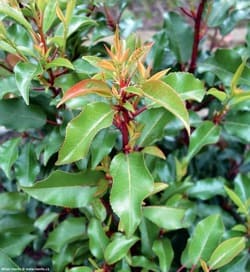
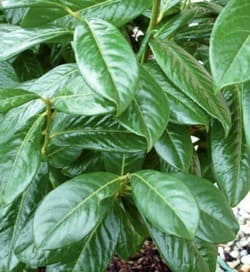
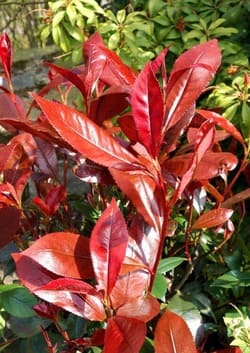
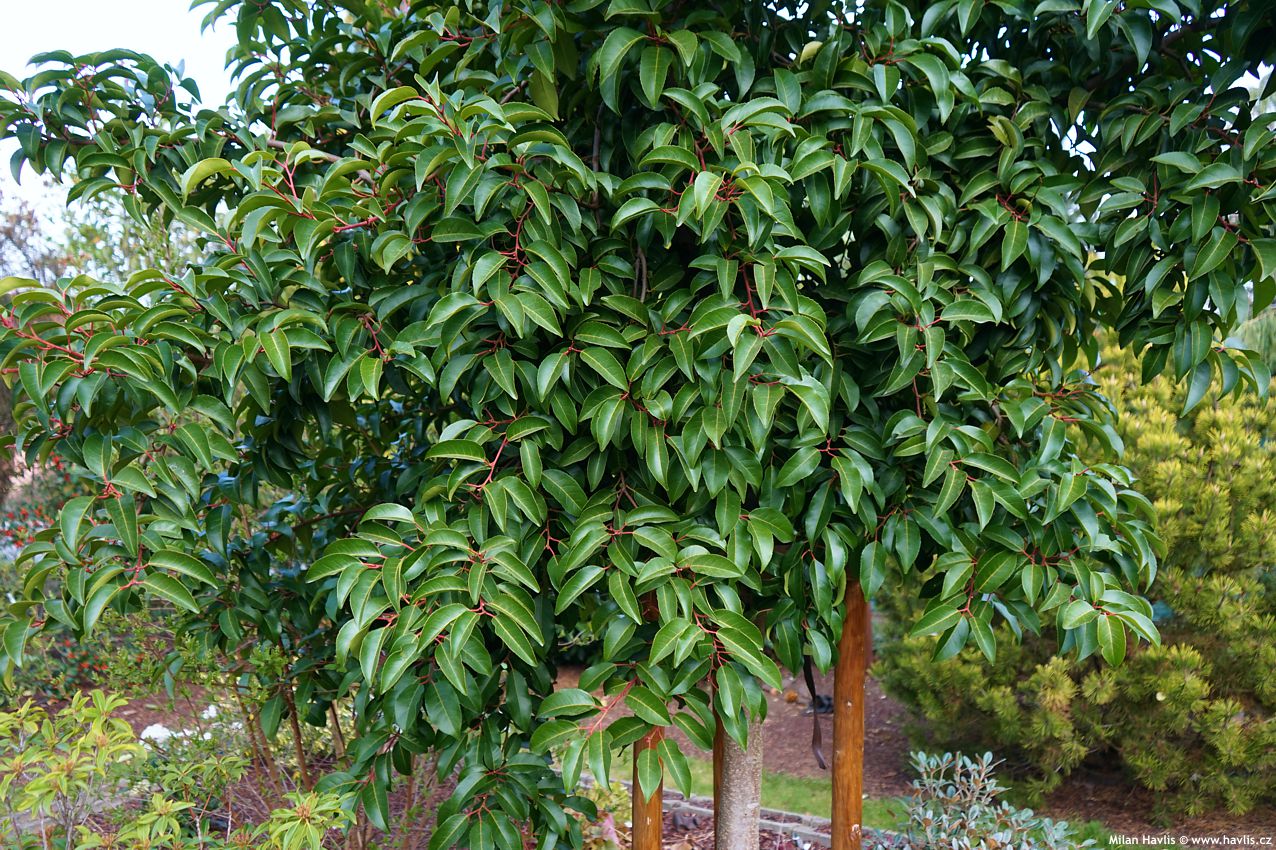
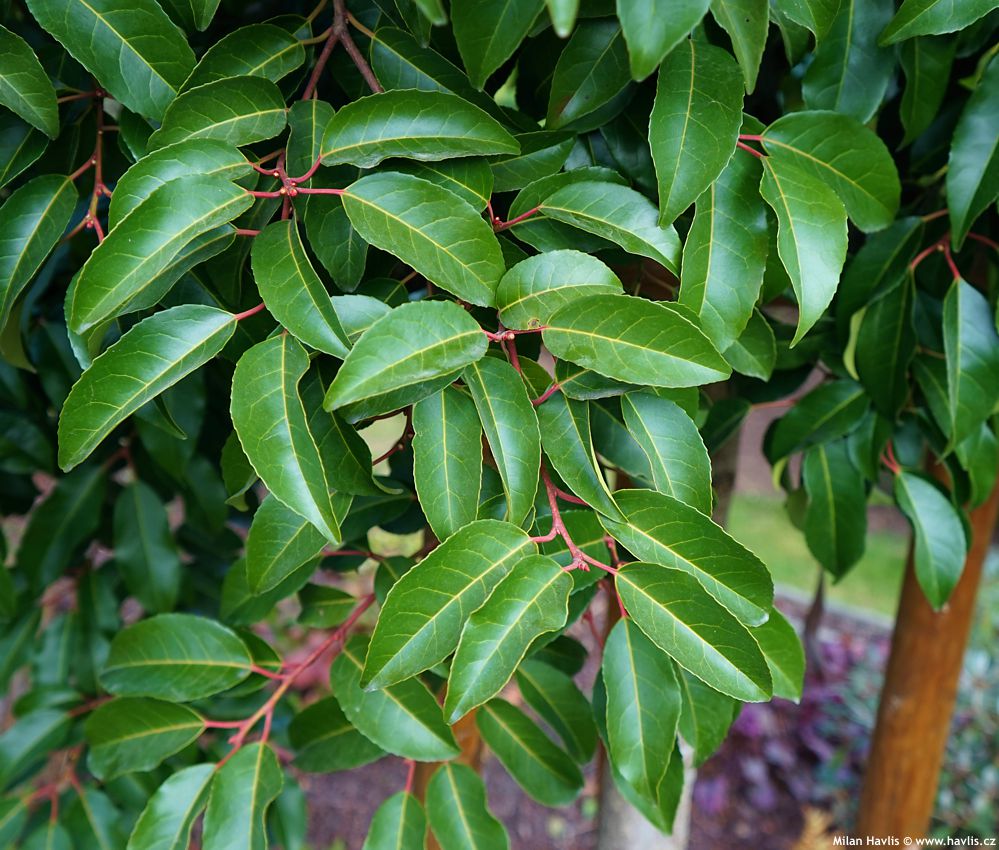
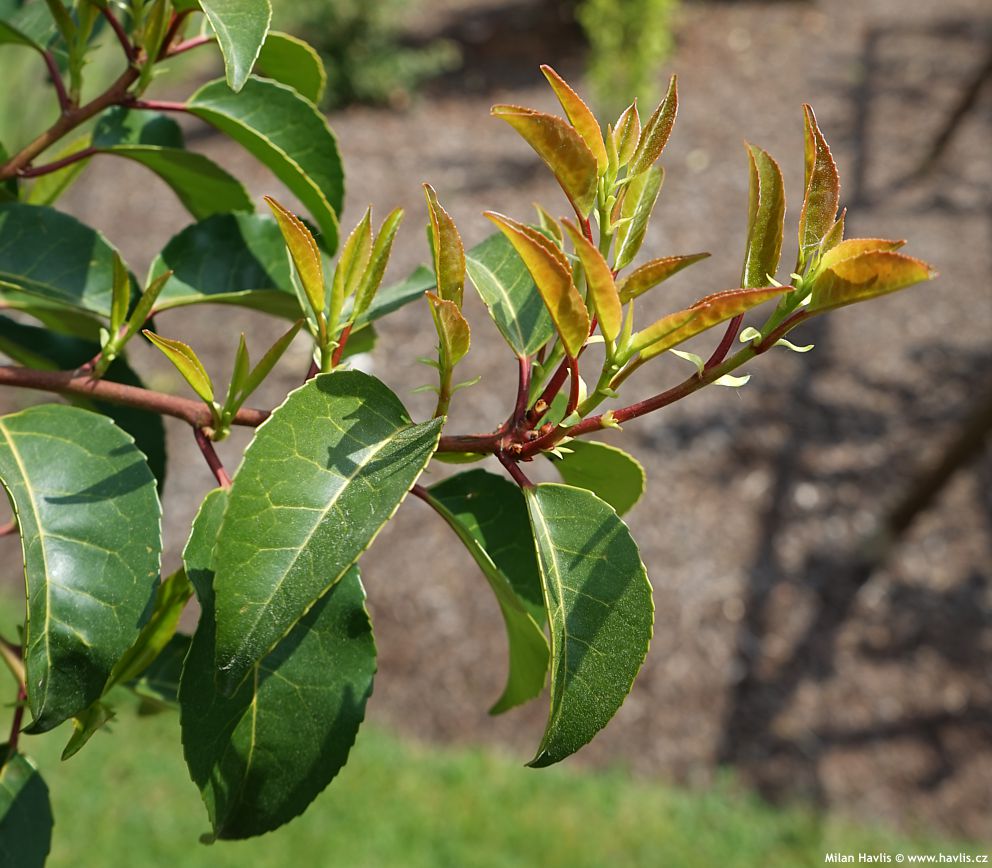
TICO® Portugal laurel is exceptional. It is a vigorously growing, large‑leaved form of this evergreen species, which I fell in love with the very first moment I encountered its luxurious foliage – one of the most distinctive features of this selection. The leaves are conspicuously large, thick, glossy and broadly obovate, with finely serrated margins, and in their overall appearance they recall those of the evergreen Viburnum odoratissimum ‘Awabuki’. While this viburnum is far too tender for the conditions of Central Europe, TICO® offers a comparable aesthetic effect in the form of a fully hardy and long‑term reliable woody plant. Newly emerging leaves display a striking bronze‑orange tint, gradually turning a fresh grass‑green and finally maturing to a deep, rich green. Young shoots are reddish at emergence and, with the arrival of cooler autumn weather, develop even more intense red to wine‑coloured tones that persist until spring, giving the plant a distinctly multicoloured character even outside the peak growing season.
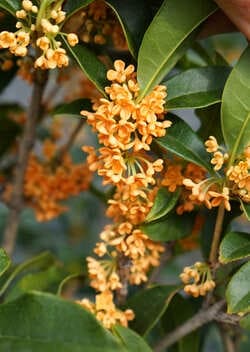
Flowering is rather modest in comparison with the botanical species and cannot be regarded as the main ornamental value of this cultivar; inflorescences appear irregularly and in smaller numbers, typically in June, in the form of slender racemes 10–20 cm long composed of small, fragrant, white flowers. After flowering, fruits may develop that are not considered poisonous; these, however, occur only rarely and in limited numbers. The cultivar was selected by Yves Brenelière in Machecoul, France, in 2012, and is protected by European Plant Breeders’ Rights no. 48984, granted in 2018.
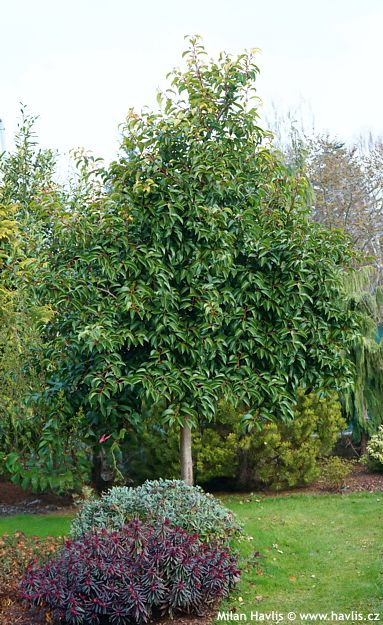
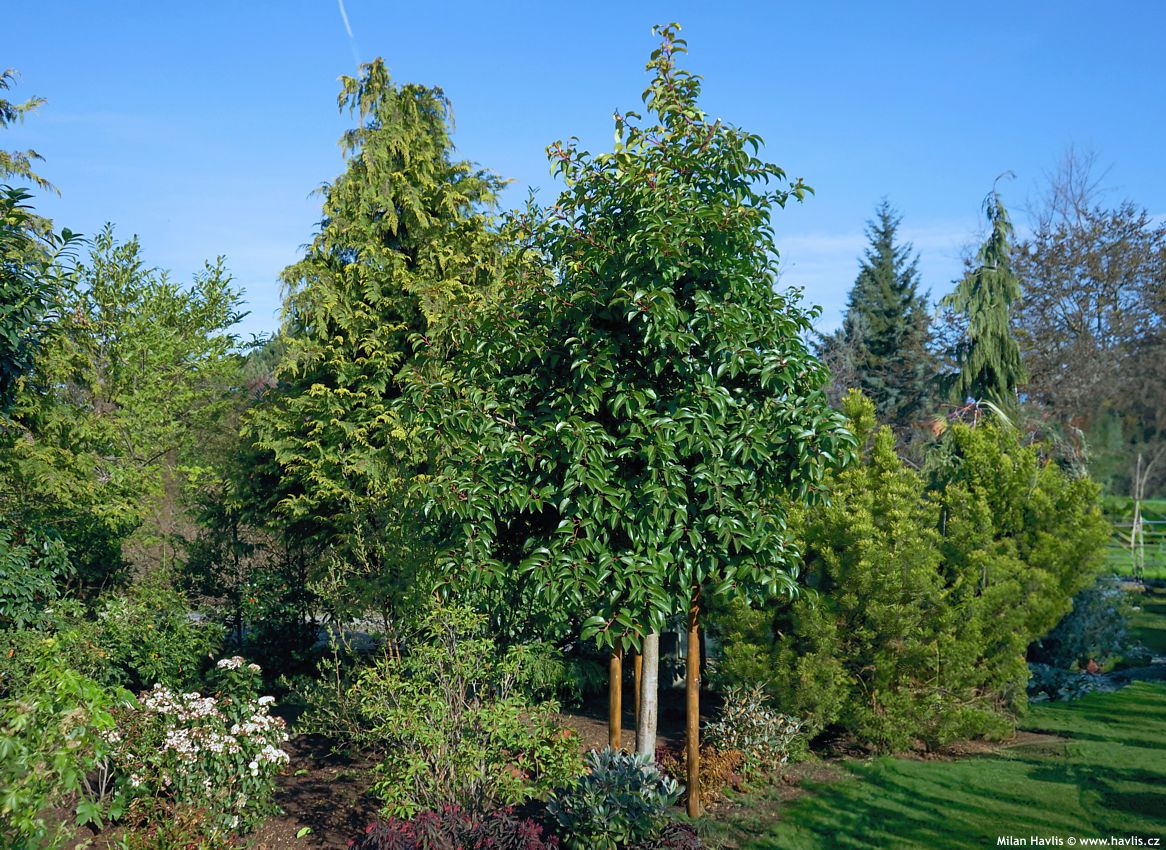
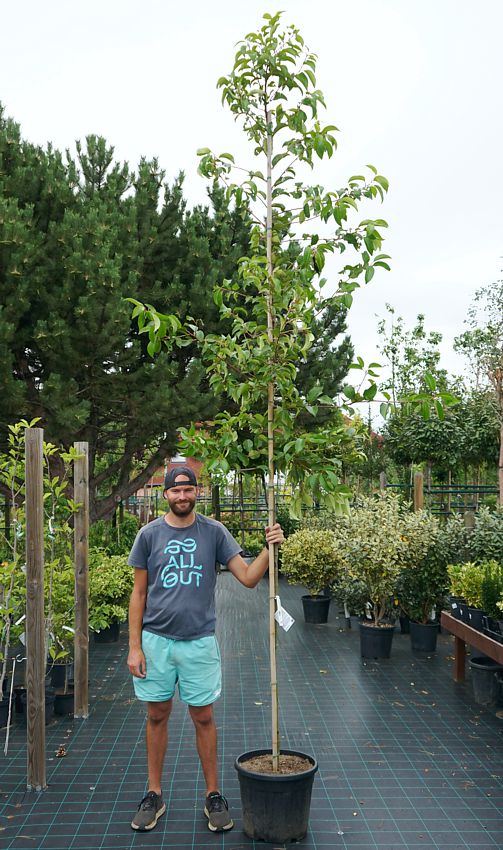
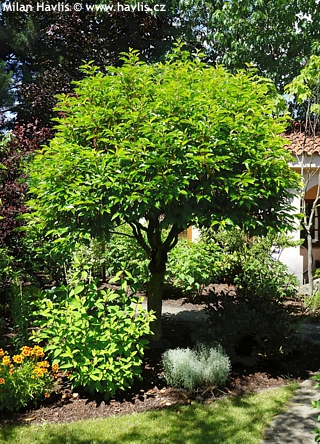
A single‑stem, or standard tree, is an attractive way to grow evergreen woody plants. It offers permanent greenery at a higher level than shrubs branching from the base, allows free passage beneath the crown, and creates an airy, bright space for underplanting. It also provides better screening from unwanted views from neighbouring windows, as the main foliage mass sits higher than in shrub forms. The eventual height depends on how the plant was trained: non‑grafted trees formed by removing side shoots along the stem reach the same height as shrub forms of the given species or cultivar, while grafted trees may exceed this by the height of the rootstock. They are commonly offered as half‑standards with a stem of around one metre, three‑quarter standards, or full standards with the crown set at approximately two metres. Like all single‑stemmed trees, they require firm staking for the first three years and a clean area above the roots, free of lawn and weeds. Portuguese laurel quickly develops strong stems, especially at the base, so after just a few years it reveals attractive, sturdy wood close to the ground, a feature often used when training shrubs into striking multi-stem forms. The bark is grey, sometimes with a hint of beige, relatively smooth and almost invites a touch.
Botanically, this cultivar belongs to the subspecies azorica originating from the Azores, where – unlike the scattered and almost vanished populations on the European mainland – it has been preserved in the form of continuous, historically uninterrupted forest complexes. There it grows in moist montane forests, mist zones and deep valleys with a long‑term stable microclimate. The isolation of the islands and limited agricultural pressure have allowed these stands to survive in a form of exceptional historical, ecological and genetic value.
Last update 07-10-2018; 07-02-2026
Portugal laurel prefers deep soils with ample nutrients and moisture, but thanks to its long roots it is able, over time, to find both nutrients and water almost anywhere. The soil must be well drained – it does not tolerate waterlogging. Once established, it copes very well with prolonged summer droughts and the heat of southern Europe. Nevertheless, it performs best in the moist climate typical of Great Britain, north‑western Europe (the Benelux countries) and the peat‑rich regions of northern Germany, where additional moisture promotes denser foliage. In acidic soils the leaves develop a deeper colour, although this is not essential for healthy growth; simply avoid strongly calcareous soils. Mulching is particularly beneficial for young and newly planted specimens, helping to retain moisture around the roots and protecting them from temperature fluctuations in winter. Hardiness is high – better than that of large‑leaved cherry laurels – because its thinner leaves manage water more efficiently in winter and are less prone to dehydration and scorch. Established plants (approximately 3–5 years after planting) can tolerate temperatures down to −23 °C (USDA zone 6). Fertilising is possible but not necessary; the use of mycorrhiza at planting is ideal. Pruning can be carried out in early spring to encourage branching or in mid‑summer for shaping. The plant also tolerates deep rejuvenation pruning into old wood.
Goods are shipped all over Europe. For Russia and U.K. and for further details please read about SHIPPING OPTIONS HERE.
Are you interested in a serious discount for orders NOV-FEB? Check your options here.
THE PRICES INCLUDE VAT of 15%. For quick conversion you can use 1 CZK = approx. 0.04 EUR
- STANDARD QUALITY - Plants of this group are 1st class quality with number of branches and overall density adequate to their size and age, considering they were container grown.
- DE LUXE QUALITY - This label guarantees a luxurious quality of manually selected plants that, compared to their height and age, are exceptionally dense and beautiful.
- EXTRA - These plants are usually mature and bigger specimens with exceptional overall appearance.
- STANDARD (as described in the plant form) means a tree with a trunk of 190-210 cm and a crown at the top, unless specified differently. The commercial size for trees is their girth measured in the height of 1m from ground.
- HOBBY - These plants are of the same quality as our standard-quality plants but younger and therefore cheaper.
- SHRUB - a woody plant with branches growing bushy from the ground level.
- HALF-STANDARD or MINI-STANDARD - a small tree with shorter trunk, its size is usually specified.
- FEATHERED - These are trees with branches growing already from the base of the trunk and up along the stem.
- GRASSES and PERENNIALS - Sizes given usually read the diameter of the pot or the clump, as specified.
