

































.jpg)
Prunus Pluot® 'DAPPLE DANDY' pluot (plum x apricot)

 Symbivit Tric (arbuscular)
 Symbivit (arbuscular)
Prunus
When the Japanese plum decided to join forces with the apricot, the result was one of the most delicious experiments in modern fruit breeding – the pluot. This interspecific hybrid, technically referred to as an interspecific plum, carries approximately three-quarters of plum genetics and one-quarter apricot [(Prunus salicina × (Prunus salicina × Prunus armeniaca)) × Prunus salicina]. Its smooth skin, juicy flesh, and sugar content that often surpasses both parents make it a sweet champion among stone fruits. Pluot is no accident of nature, but the result of deliberate breeding perfected in the 1980s by American horticulturist Floyd Zaiger (1926–2017). He built on the work of the legendary Luther Burbank (1849–1926), who at the turn of the century experimented with so-called plumcots – the first plum-apricot hybrids. While Burbank’s creations were too delicate for commercial cultivation, Zaiger went further: he crossed plumcot with plum, creating a new generation of hybrids now known under the trademarked name Pluot®.
If Luther Burbank opened the door to interspecific breeding of stone fruits, Floyd Zaiger flung it wide open with tireless precision. His lifelong passion was the breeding of fruit trees – especially peaches, nectarines, apricots, cherries, and plums – with the goal of creating varieties with better flavour, longer shelf life, and improved climate adaptability. In his family-run company Zaiger’s Genetics, based in Modesto, California, he developed over 400 patented cultivars, all through traditional crossbreeding – without genetic modification. Zaiger considered the pluot his greatest achievement: the result of thousands of hand-made crosses was a fruit that not only tasted better than its parents but could also be grown and shipped on a commercial scale. Unlike the plumcot, which is a direct cross between plum and apricot, the pluot is the result of repeated backcrossing of plumcot with plum, giving it a distinctly plum-like character – smooth skin, intense colour, and sugar levels often exceeding 20 °Brix.
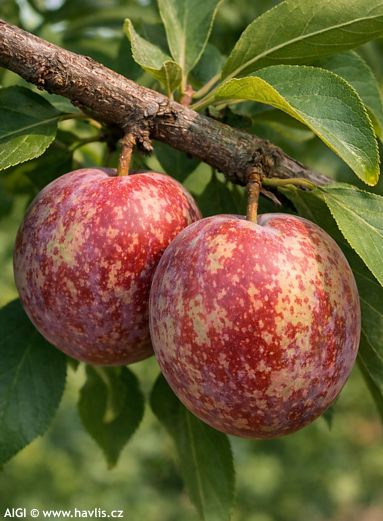
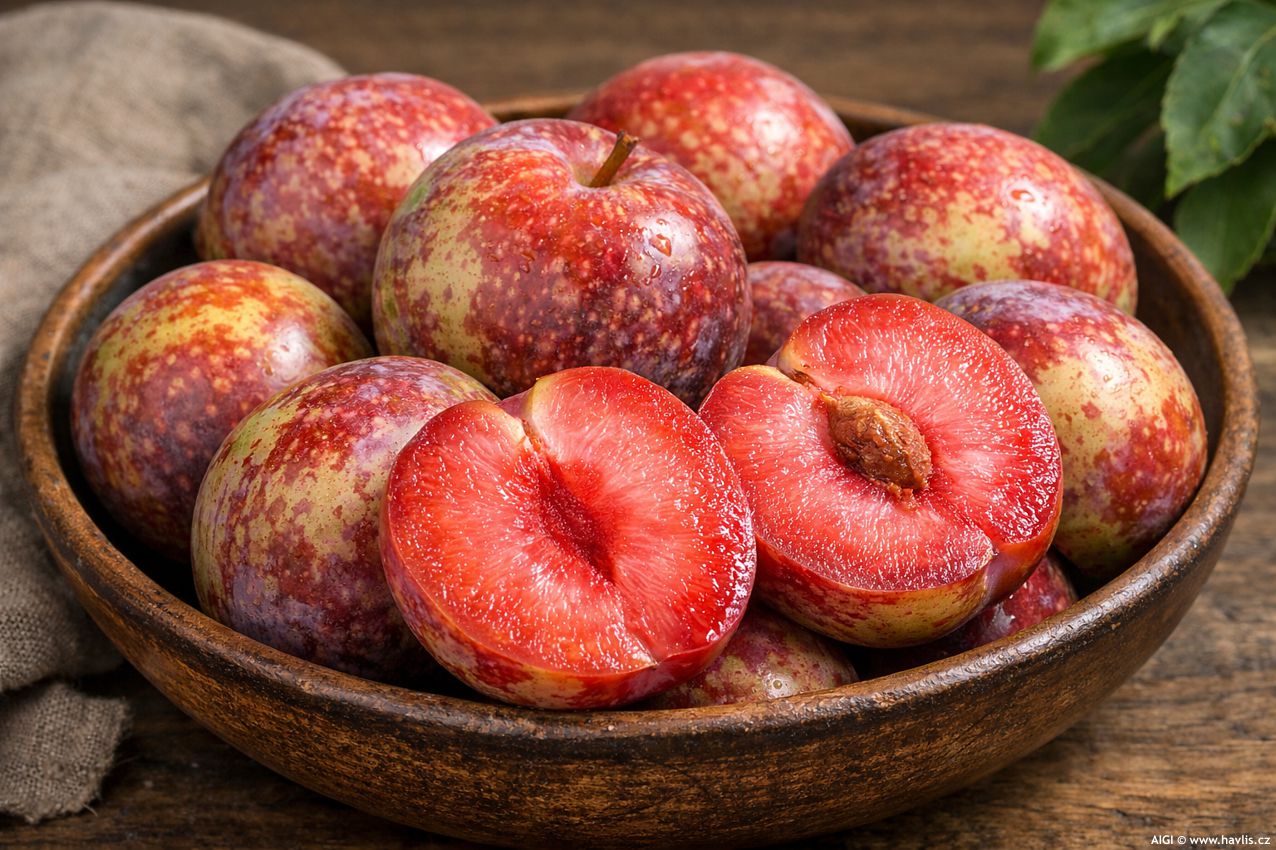
The pluot cultivar Dapple Dandy was given an irresistibly playful commercial name in the United States: Dinosaur Egg®. The marketing team clearly leaned into the idea that prehistoric eggs might once have been mottled and irregular, much like the fruit of this variety. Its skin looks as if someone had brushed it with watercolour and then borrowed the speckled pattern of a quail’s egg for good measure, creating a marbled surface unlike anything usually seen among stone fruits. The fruits are genuinely large, typically 55–60 mm and 100–150 g, firm to the touch and softening only slightly when fully ripe – the moment when their flavour opens completely. The flesh is pink to red, juicy and surprisingly bright: sweetness of around 17–18 °Brix meets a clear acidity, so the first bite recalls a blend of plum and raspberry with a faint citrus edge. When stored cold, the skin continues to redden, sometimes muting the characteristic dappled pattern, but the flavour remains stable and expressive. In temperate climates the fruits ripen from early to mid‑September, settling into a yellow‑green base colour dotted with red speckles.
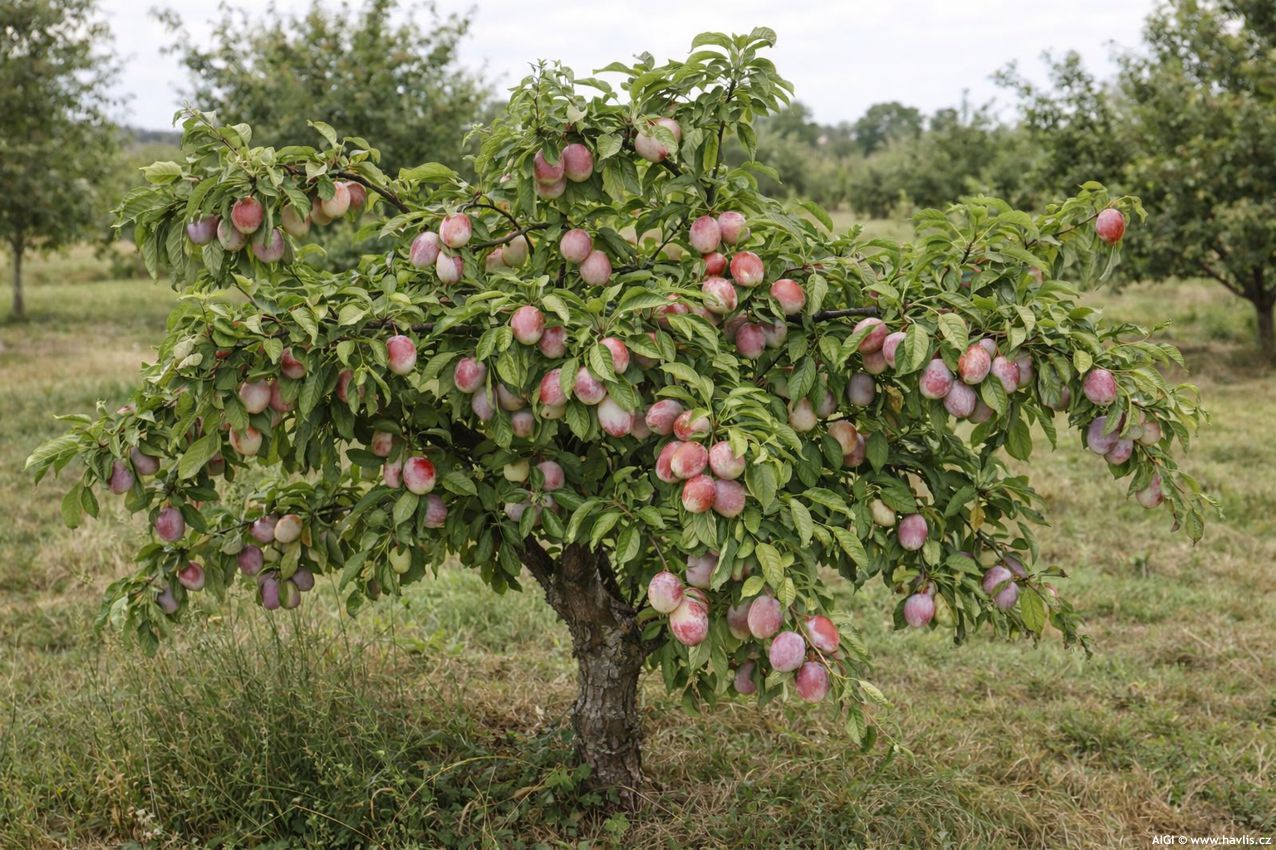
The tree grows with moderate vigour, forming a broad, easily shaped crown reaching about 3.5–4.5 metres in height and width. It flowers early in spring with a profusion of white blossoms that are not self‑fertile yet respond very well to the presence of other plums or pluots, which markedly increase fruit set. It is most commonly grafted onto Citation, a rootstock that encourages early bearing and a more compact habit, while Myrobalan offers greater vigour in heavier soils. Dapple Dandy was bred by the Zaiger’s Genetics team led by Chris F. Zaiger (1926–2020) and introduced by Dave Wilson Nursery in the mid‑1990s. Patent PP9254 describes its origin precisely: a hybrid of the Japanese plum selection 58GA338 (Laroda × Queen Ann) crossed with a plumcot of unknown parentage.
Last update 28-06-2026
Pluot requires a sunny location, sheltered from strong or persistent winds, and deep, well-drained soil with a pH between 6.0 and 7.0. It does not tolerate waterlogging, so in heavier soils, drainage or raised beds are necessary. The tree grows moderately vigorously; staking is recommended in the early years. Regular watering during dry periods and balanced fertilization support healthy growth and fruit production. Its cold hardiness ranges from –27 to –29 °C (USDA zone 5), making it suitable for cultivation in most parts of Central Europe. The tree is not prone to disease, though in wet years it may be sensitive to brown rot (Monilinia). As for pruning, opinions vary, but we recommend occasional summer thinning of overcrowded branches to maintain an airy crown. The seeds inside the pits contain trace amounts of amygdalin and should not be consumed.

.jpg)
