



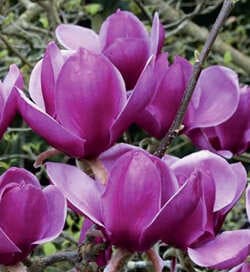
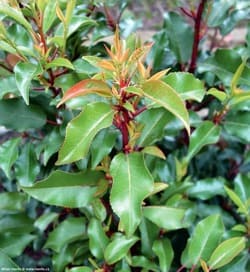
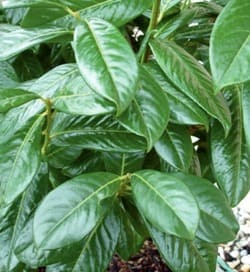
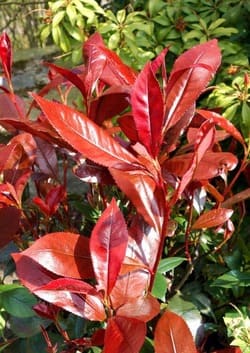








Quercus myrsinifolia bamboo-leaved oak, Chinese evergreen oak

 Ectovit (ectomycorrhizal)
Quercus
The genus Quercus – oaks – is one of the richest tree genera of the Northern Hemisphere, comprising approximately 450 to 600 species. They are predominantly found in temperate and subtropical zones, with the highest diversity in North America and East Asia, though they also reach into tropical mountain regions. Oaks can be deciduous or evergreen, ranging from massive trees to small shrubs. They are monoecious, with inconspicuous flowers in catkins pollinated by wind, and their typical fruit is the acorn – a single-seeded nut enclosed in a cup-like structure. Oak leaves are alternate and highly variable: they may be lobed, toothed, serrated, or entire, and often show significant variation even within a single species, which makes identification challenging. Oaks are known for their hard, durable wood and their ability to grow into long-lived, majestic trees. They play an important role in ecosystems and culture – providing food for wildlife, wood for construction, cork, tannins, and medicinal substances. They are also considered symbols of strength and endurance in many mythologies and religions and are often associated with the masculine element.
Bamboo-leaved oak was scientifically described in 1851 by the German-Dutch botanist Carl Ludwig Blume in his work Museum Botanicum Lugduno-Batavum. It belongs to section Cyclobalanopsis, commonly known as the ring-cupped oaks, whose acorns are distinguished by cupules formed of conspicuous concentric rings. The species name refers to the resemblance of its leaves to those of the genus Myrsine, a comparison that describes their narrow, glossy appearance rather well. In Japan it is known as shirakashi (白樫), meaning “white oak”, and few trees there enjoy such popularity. For centuries it has been planted around temples and shrines, and today it ranks among the country’s most widely used urban trees, even in remarkably confined spaces where the Japanese will do almost anything to make room for it 😊 Once you see what they can squeeze between a road, a pavement, and a house, it becomes easy to understand why this elegant oak holds such a special place. Its timber is hard, resilient, and highly valued. It is used for traditional bokken training swords, furniture, tools, and various structural applications.
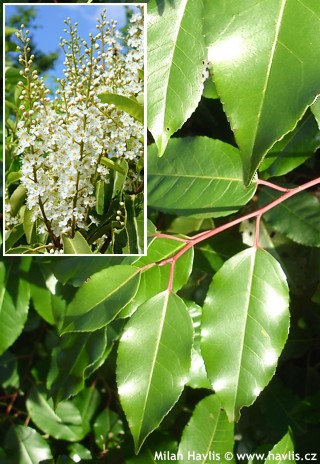
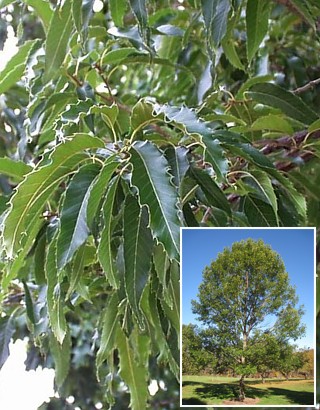
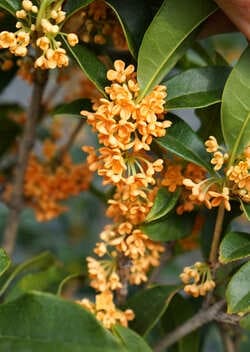
Bamboo-leaved oak has a charm that photographs rarely do justice to and only fully reveals itself when you first stand beneath it and listen to the whisper of its foliage. It is a small to medium-sized evergreen tree whose leaves resemble those of bamboo. They are narrow, elongated to lance-shaped, with finely serrated margins. The emerging foliage is among its greatest attractions and can vary considerably from one plant to another. Shades range from bronze, salmon, and red to deep burgundy, sometimes so dark that they appear almost black. As the leaves mature, they turn fresh to mid-green, retain a subtle gloss, and, most importantly, remain reliably evergreen. This is worth mentioning because many other evergreen oaks shed at least part of their foliage during winter in the cooler regions of Central Europe, whereas bamboo-leaved oak keeps its crown green throughout the year.
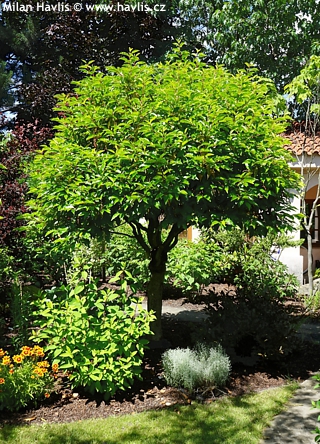
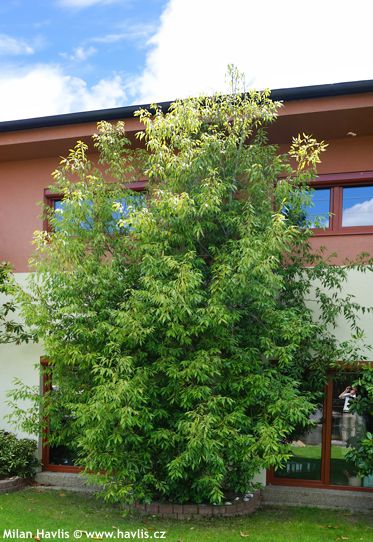
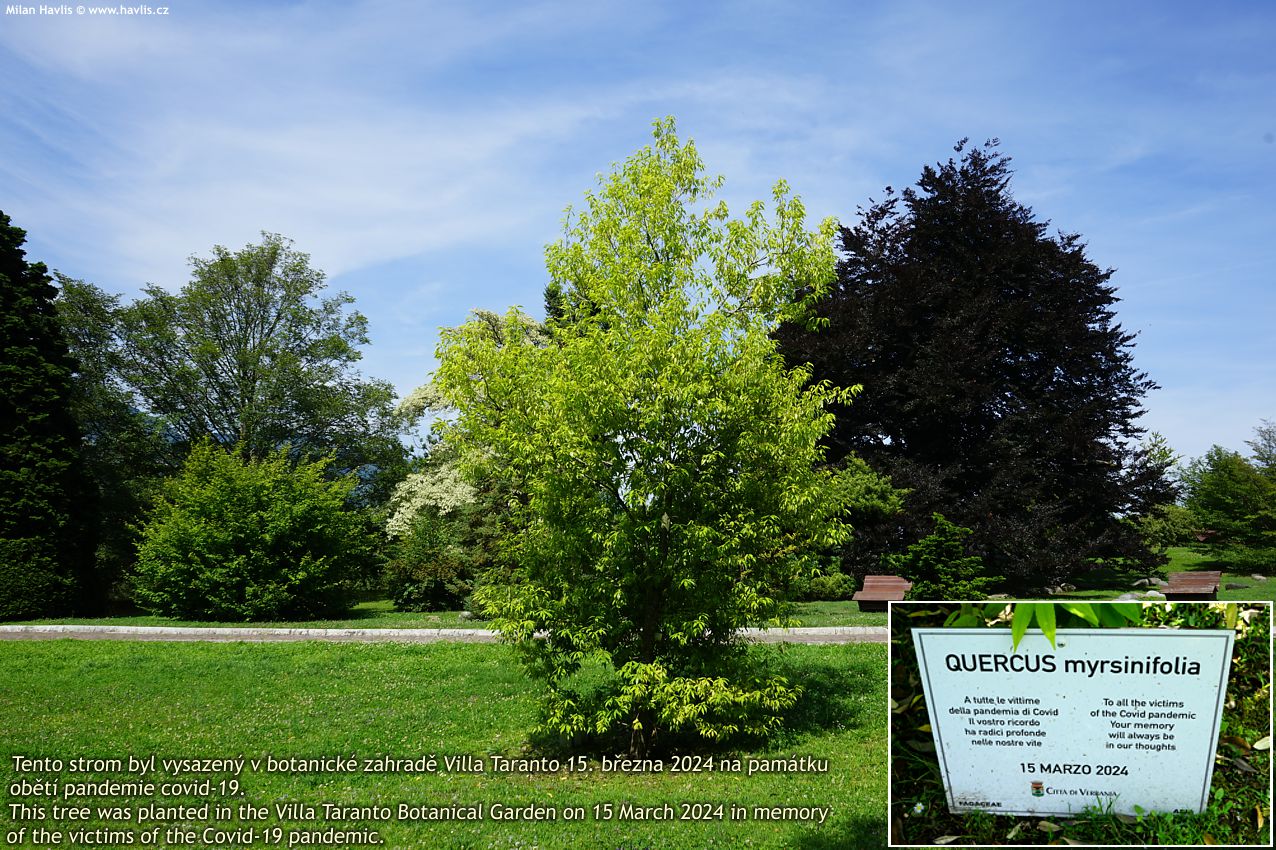
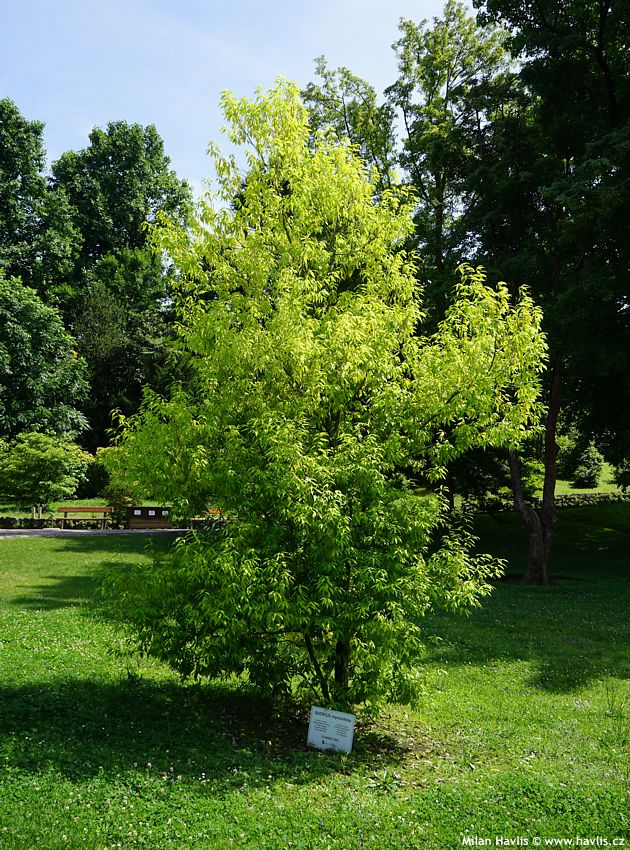
An even more striking difference becomes apparent in the tree's overall appearance. Many evergreen species that can be grown as standard trees in our climate, such as cherry laurel or holly, are undoubtedly attractive but often retain the visual character of a shrub trained onto a trunk. Bamboo-leaved oak does nothing of the sort. From an early age it behaves like a true tree and looks the part as well. Its branches are arranged in the manner we associate with oaks, beeches, and maples, it develops a naturally balanced framework, and without intervention forms an elegant, harmonious crown. The slightly pendulous leaves lend it a calm, almost Zen-like presence. It typically reaches 5-10 m in height and develops a dense, compact, rounded canopy that remains attractive throughout the year.
Today it is cultivated mainly in warmer parts of the United States and Asia, while in Europe it remains something of a collector’s treasure. Its unusual appearance and proven hardiness, however, are gradually bringing it into our gardens as well. It is particularly appreciated by landscape architects who recognise its distinctive character. The gently drooping foliage gives the tree a calm, almost Zen-like quality without making it look like an exotic curiosity that wandered here by mistake. Although historically it has often been clipped and shaped in Japan, where its foliage is used to create the so-called kashi-no-igakaki (樫の生垣) – green walls closely resembling our hedges – as a tree it possesses such individuality that most gardeners are content to leave their pruning shears at rest when faced with its picturesque crown. Its acorns are edible after proper preparation and were once used as an emergency food source and, in some areas, as a coffee substitute. They contain tannins, however, and must be thoroughly leached before consumption.
Quercus myrsinifolia is often confused with Quercus glauca because both belong to section Cyclobalanopsis and share evergreen leaves and acorns with concentric cup scales. Nevertheless, the two can usually be distinguished quite readily. Q. myrsinifolia generally, though not invariably, bears narrower, elongated to lance-shaped leaves with finely serrated margins that often hang slightly and evoke the appearance of bamboo. By contrast, Q. glauca has broader, elliptic to obovate leaves with more pronounced teeth, dark green above and grey-green to bluish beneath, the undersides being finely felted. New growth on Q. glauca is typically bronze to purple, whereas in Q. myrsinifolia the colours vary considerably between individual plants and may even approach blackish burgundy. The acorns of both species are similar, although those of Q. glauca tend to be somewhat shorter and their cupules usually enclose a smaller portion of the nut. In addition, Q. glauca often develops as a shrub or multi-stemmed tree, while Q. myrsinifolia naturally maintains a distinctly tree-like habit with a compact crown.
The bamboo-leaf oak is not demanding in terms of soil pH, but slightly acidic conditions are recommended for richer leaf colouration. It thrives best in well-drained, fertile, and moist soil that should not be heavy, although clay in the lower soil profile (30 cm and deeper) is beneficial as a nutrient reservoir. The planting site should be sheltered – not in open, wind-exposed landscapes or on hilltops – and ideally feature a mild microclimate, with full sun to partial shade. During the first three years after planting, it is essential to secure the tree with a strong wind-stabilizing support to help it root and establish. The root zone must remain free – no grass or competing plants should be planted above it. Watering is especially important during frost-free periods in winter, when the tree continues to transpire. It grows relatively quickly (30–40 cm per year), responds well to pruning, and thickens nicely after shaping. Pruning is best done in spring after the last frosts. Its reliable hardiness has been tested down to –23 °C (USDA zone 6), with occasional winter watering (once a month) to prevent desiccation, and it can withstand even stronger frosts for short periods. Keep it mulched.
Last update 20-06-2010, 19-02-2012, 13-10-2025; 15-11-2026