Rhododendron (lepidote) 'SNIPE' dwarf rhododendron

 Rhodovit (ericoid)
Rhododendron
Rhododendron is a large genus within the Ericaceae family, currently comprising around 1,000 recognized species, with the greatest species diversity found in the Himalayas, southwestern China, and the Japanese archipelago. The natural range of the genus extends from Arctic regions of the Northern Hemisphere through the montane forests of Europe and Asia to the tropical cloud forests of Southeast Asia and New Guinea; fossil and molecular evidence points to an ancient origin with major diversification during the Tertiary and Neogene periods. Rhododendrons reached Europe on a larger scale in the 18th and 19th centuries through collecting expeditions and botanical gardens; among the early key figures were Francis Buchanan‑Hamilton (1762–1829) and Nathaniel Wallich (1786–1854), followed later by Robert Fortune (1812–1880). A major breakthrough came with the work of William Jackson Hooker (1785–1865) at Kew and subsequently his son Joseph Dalton Hooker (1817–1911), who during expeditions to Sikkim and the Himalayas described and introduced dozens of new species, profoundly influencing modern breeding. The tradition of plant collecting and breeding was later continued by Ernest Wilson (1876–1930) and others.
Lepidote rhododendrons form a broad and botanically very diverse group of evergreen species and hybrids, defined at the turn of the 19th and 20th centuries and characterised by smaller leaves bearing distinctive surface scales (lepids). Most originate from the mountainous regions of the Himalayas, western China and Southeast Asia, where they grow in cool, moist conditions along forest margins, in scrub and on open mountain slopes. They reached Europe through botanical expeditions to the Himalayas and western China, notably through the work of botanists and plant collectors such as Joseph Dalton Hooker (1817–1911), George Forrest (1873–1932) and Frank Kingdon‑Ward (1885–1958). Their true horticultural importance, however, emerged only in the 20th century, when the breeder Peter A. Cox (b. 1938) fully recognised their value for further hybridization – above all their low growth, high resilience and fine foliage texture, which made it possible to use rhododendrons in situations where large‑leaved species and hybrids would fail. Many lepidote species also possess aromatic foliage, notably R. davidsonianum, R. pemakoense and R. anthopogon, whose leaves release a resinous scent when touched, reminiscent of the fragrance familiar from European heathlands.
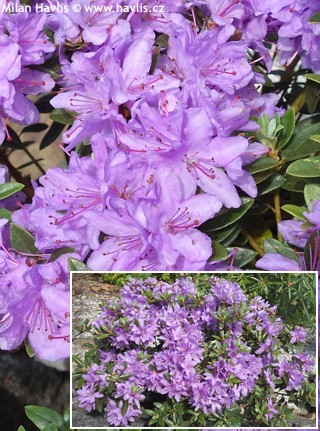
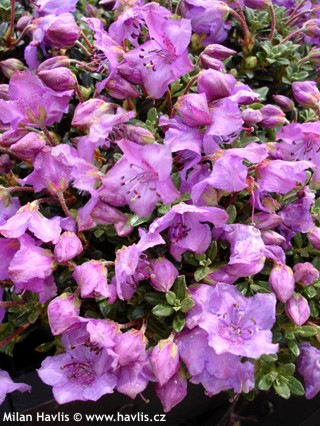
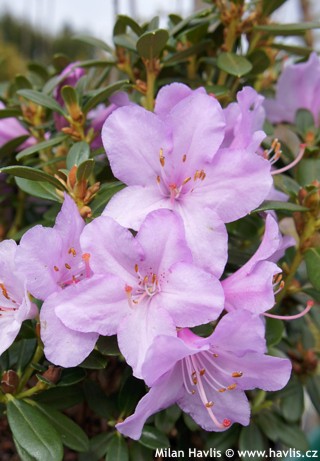
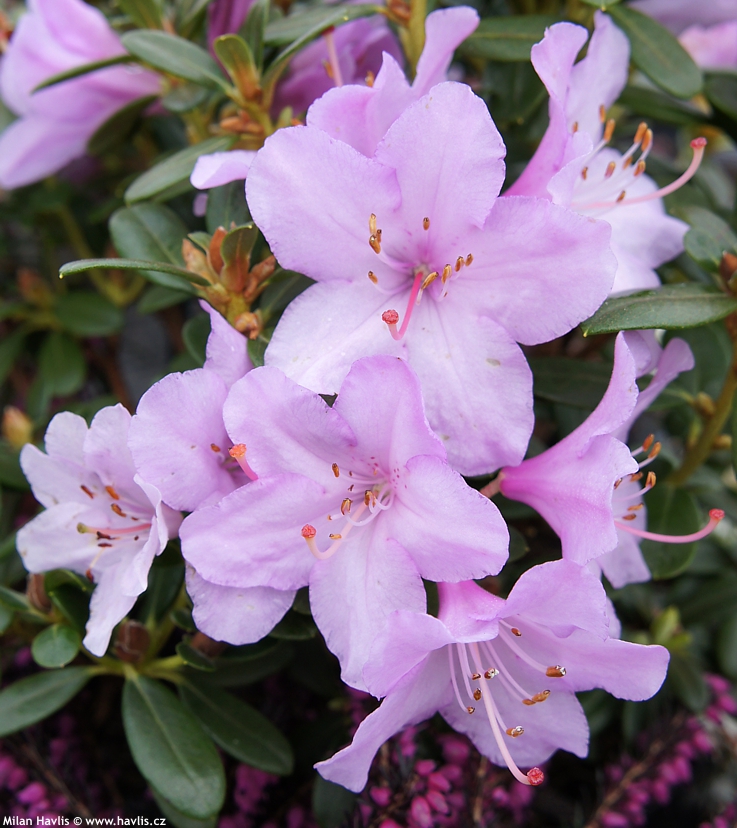
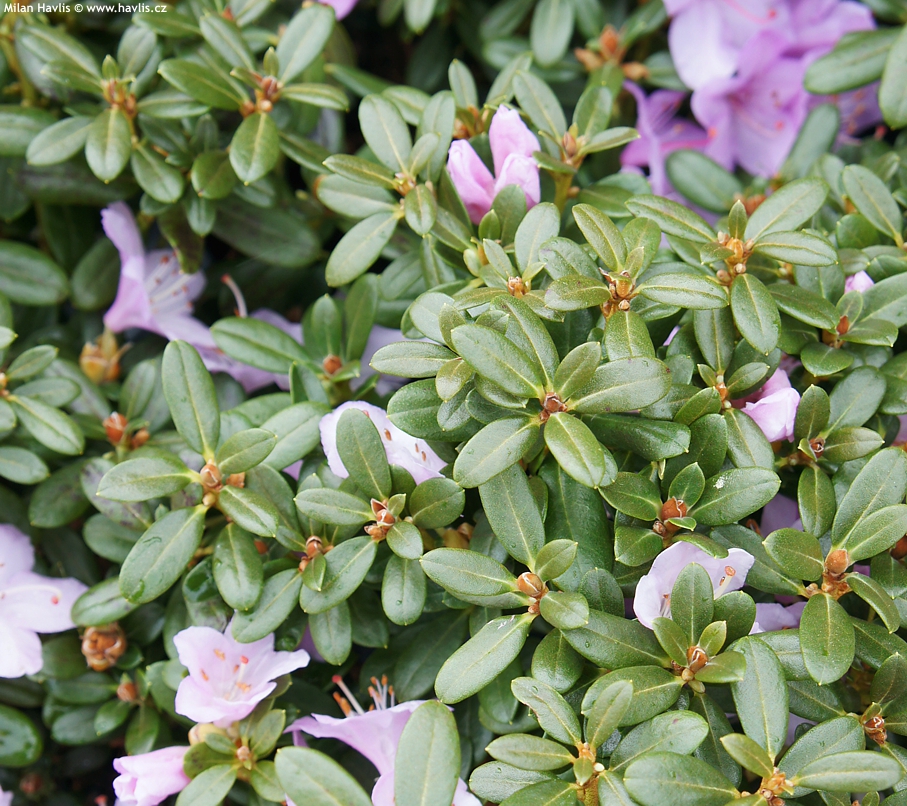
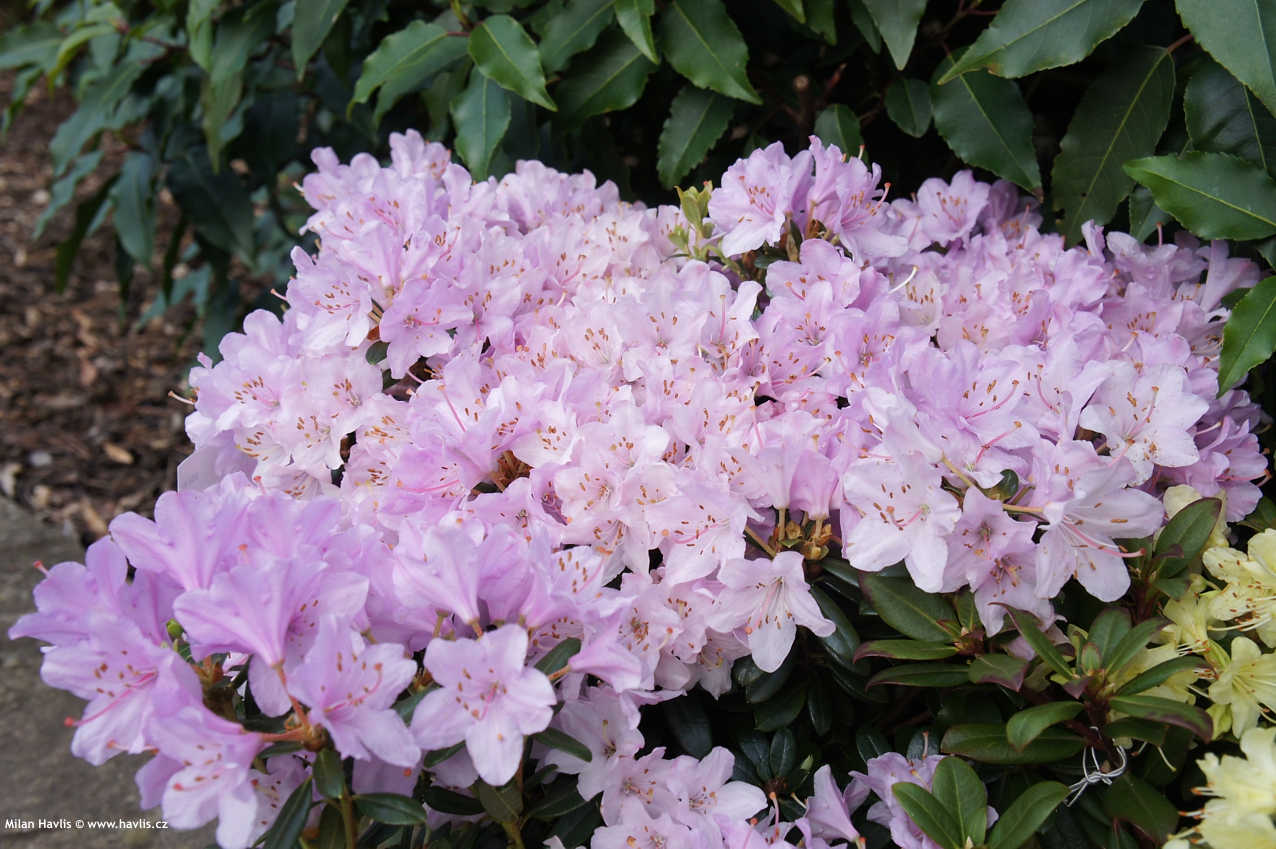
Snipe is an attractive dwarf rhododendron raised as a hybrid of R. pemakoense and R. davidsonianum, introduced in 1975 by the British breeder Peter A. Cox (b. 1938), the author of more than thirty cultivars. It flowers in the first half of April, producing strikingly large blooms in soft lilac to pale pink tones. In relation to the size of the leaves, the flowers appear surprisingly bold, almost as if they did not belong to the plant at all, a visual effect reminiscent of some low‑growing azaleas. The flowers are openly funnel‑shaped and stand well above the compact mass of foliage.
The plant forms a low, evergreen shrub with numerous small, narrowly elliptic to obovate, glossy leaves of a dark olive‑green colour. The foliage is gently aromatic, releasing a pleasant resinous scent when touched, reminiscent of heathland vegetation, which adds an additional sensory dimension to the plant. Dense foliage creates a compact, almost impenetrable cushion that retains its shape throughout the year. Growth is very slow; at around ten years of age the shrub typically reaches about 60 cm in width and roughly half that in height.
Thanks to its good tolerance of sunny positions, ‘Snipe’ is suitable not only for heathland plantings but also for rock gardens and the front of borders, where its naturally compact habit can be fully appreciated. It is often used as underplanting beneath taller shrubs or trees, forming a continuous evergreen carpet while introducing a subtle aromatic element along paths and seating areas. Its small size makes it particularly well suited to smaller gardens and specialist collections. Pruning is generally unnecessary and not recommended, as the plant maintains a balanced form on its own; any intervention should be limited to exceptional cases and carried out shortly after flowering.
Last update 08-04-2012; 28-02-2026
Small‑leaved and dwarf rhododendrons of the lepidote group and their hybrids prefer bright to semi‑shaded positions, but most also tolerate full sun throughout the day and cope well with exposed sites subject to wind and cold. They require shallow planting in acidic, humus‑rich, well‑drained soil with even moisture and no waterlogging; the roots are shallow and spread laterally, so plants should never be set too deeply, with the top of the root ball kept just below soil level and ideally protected by a mulch of leaf litter or bark. For a tidier appearance, spent flowers may be carefully removed after flowering to avoid damaging new shoots, although this is not essential for the health of the shrub. Regular pruning is unnecessary; if rejuvenation or size control is required, pruning should be carried out immediately after flowering, with more severe rejuvenation cuts made in late winter before sap flow begins. Feed sparingly with fertilisers formulated for ericaceous plants in early spring and, if needed, again during summer, avoiding excess nitrogen and checking plant health regularly. ‘Snipe’ is reliably hardy to at least −25 °C, including the flower buds; greater hardiness is possible but has not yet been confirmed.