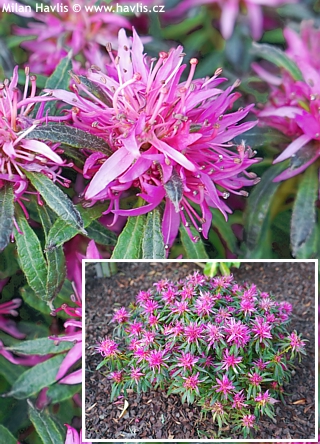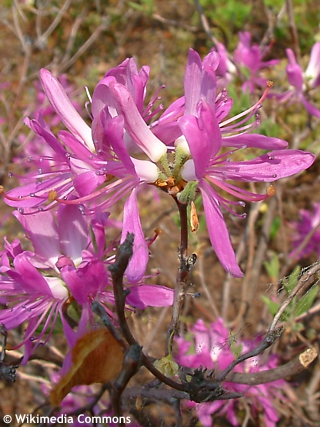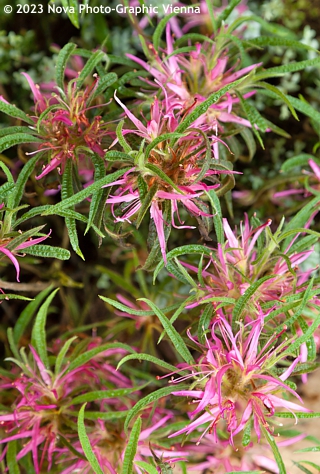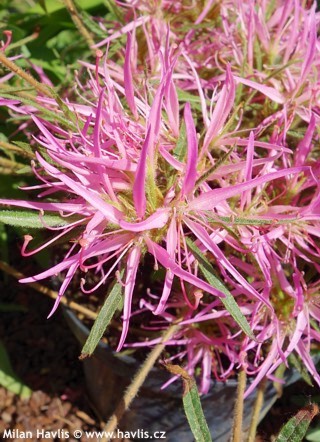
Rhododendron stenopetalum 'SCHÖNBRUNN' spider azalea

 Rhodovit (ericoid)
Rhododendron
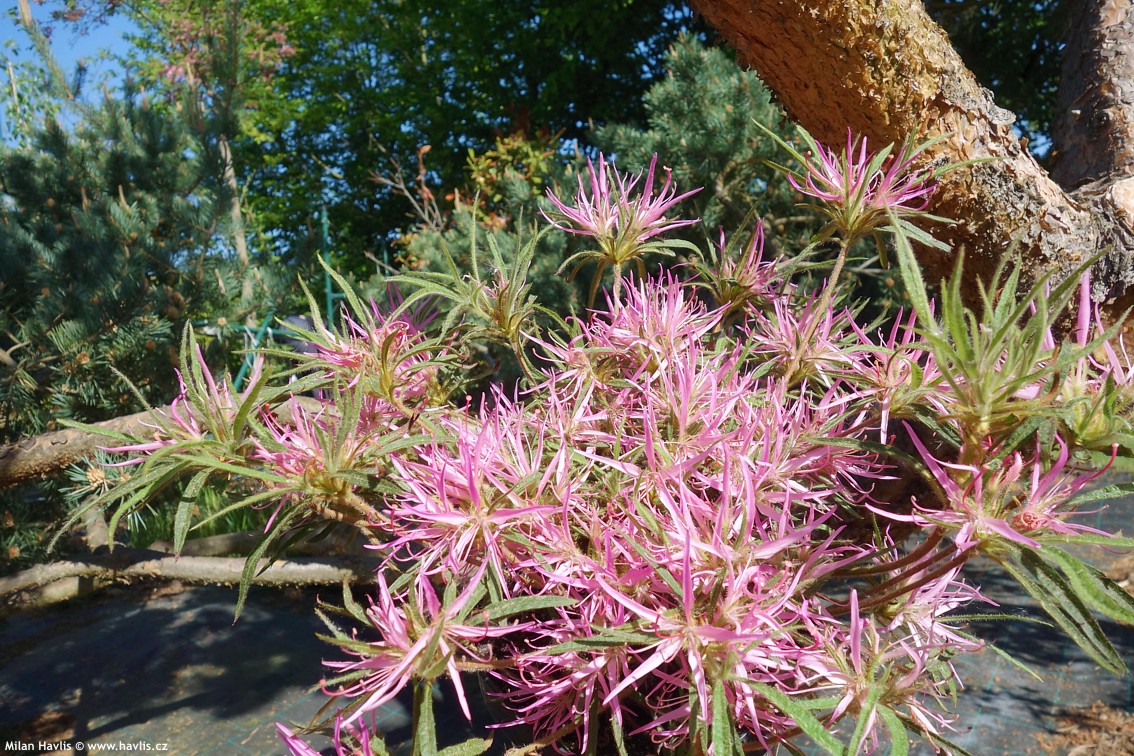
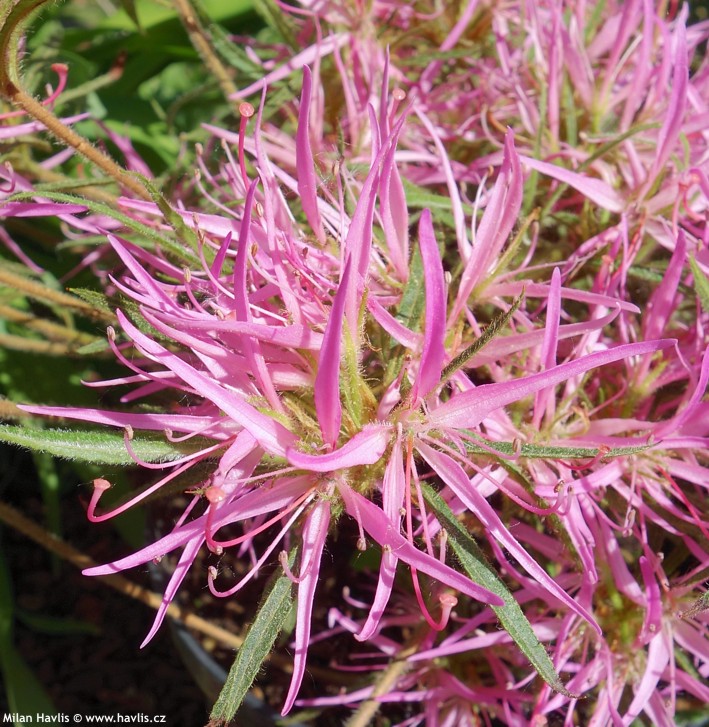
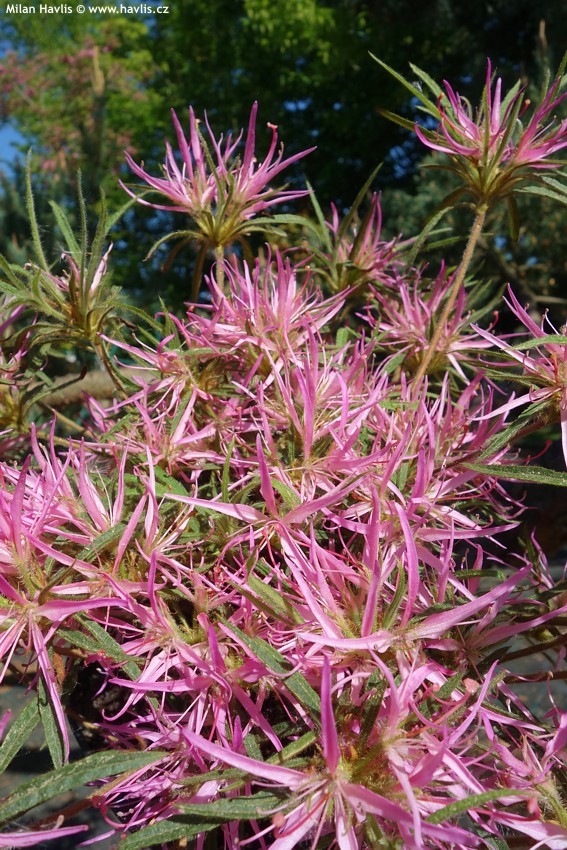
Rhododendron stenopetalum is an unusual species of deciduous azalea, although some garden selections and hybrids may be semi‑evergreen or even fully evergreen. It is native exclusively to the Japanese islands of Honshu and, marginally, Shikoku. Its narrow, thread‑like petal lobes, fine foliage and light, airy habit create a clean, graphic appearance that aligned well with the aesthetic principles of traditional Japanese gardens. The species was accurately described by Siebold (Philipp Franz von Siebold, 1796–1866), who collected plants from Japanese gardens and mountain regions in the first half of the nineteenth century. His collections remain a foundation of European knowledge of Japanese azaleas.
Stenopetalum grows naturally in bright mountain woodlands, where its narrow, deeply divided flowers appear as the forest begins to wake and resemble delicate paper ribbons suspended among the low branches of the surrounding vegetation. This flower shape is entirely unique within the genus and is rarely found in other azalea groups. Japanese scholars were interested in the species long before Siebold; records of its cultivation appear as early as the Edo period (1603–1868). In temple and samurai gardens it was maintained as a valued shrub and observations were recorded in garden journals. Because foreigners were not allowed to move freely within Japan at the time, even for scientific purposes, the plant was brought to Siebold by local physicians and rangaku scholars as one of the botanical curiosities of their flora.
Schönbrunn is a unique and beautiful semi-deciduous azalea. The flower petals are extremely narrow just like its linear, ribbon-like leaves. They are mid green, matte, and remain evergreen through mild winters. After cold winters they dry out and are replaced with new foliage after flowering. Annual growth is only about 15-20 cm and the shrub exhibits a low, spreading habit. Thanks to delicate flowers and fine foliage it looks fluffy and exotic. Blooming begins in late April and continues until mid May, however, in semi-shaded location the flowering period may double. This azalea has not been tested in all possible conditions but so far has proved hardy to -24°C (USDA zone 6).
Last update 02-04-2019
Evergreen and semi‑deciduous azaleas are ericaceous plants that prefer partial shade to full sun and a light, acidic soil that remains gently moist yet well drained. When planting, provide a light, open mix with peat, non‑limed compost and leaf mould. Always create a shallow planting bed and never place them in a deep hole or heavy clay soil. They tolerate short periods of summer dryness, but their leaves may then become weaker and more susceptible to fungal diseases. If spots appear on the foliage, or the leaves begin to curl or lose colour, it is advisable to apply a fungicide without delay; one or two treatments are usually sufficient to keep the plant healthy until winter. Azaleas are generally not pruned – only if you need to adjust the shape or rejuvenate a fast‑growing shrub, do so early in spring so that it can produce new shoots with flower buds for the following year. They regenerate reliably. Their numerous surface roots draw moisture and nutrients from the upper soil layer, so they benefit from year‑round mulching.