












Sarcococca hookeriana FRAGRANT MOUNTAIN Hooker's sweet box

 Symbivit Tric (arbuscular)
 Symbivit (arbuscular)
Sarcococca
The genus Sarcococca, commonly known as sweet box, comprises approximately fifteen species of evergreen shrubs and small woody plants belonging to the box family (Buxaceae), distributed from Afghanistan through the Himalayas to China and Southeast Asia. The genus was described by John Lindley (1799-1865) in 1826 and named for its fleshy fruits, reflected in the Greek words sarx (flesh) and kokkos (berry or grain). Although sweet boxes are closely related to boxwood, their taxonomic classification was not always fully settled, and several species were repeatedly transferred between related genera. The greatest diversity of species occurs in the forested regions of the Himalayas and south-western China, where they form part of the evergreen understorey of mountain and foothill forests. For gardeners, sweet boxes represent an attractive group of shrubs combining easy growth in shade, year-round foliage and unusually early winter flowering.
Sarcococca hookeriana, Hooker's sweet box, is an evergreen shrub native to the mountain forests of the Himalayas, Nepal, Bhutan, Tibet and south-western China, where it occurs from subtropical to temperate vegetation zones. The species was described by Henri Ernest Baillon (1827-1895) in 1859 and named in honour of Joseph Dalton Hooker (1817-1911), one of the most influential British botanists of the 19th century, renowned for his exploration of the Himalayan flora and later director of the Royal Botanic Gardens, Kew. Hooker was also a close friend and scientific ally of Charles Darwin (1809-1882) and became one of the leading proponents of Darwin's theory of evolution within the botanical world. Compared with the commonly cultivated Sarcococca confusa, Hooker's sweet box has a more refined appearance, thanks to its narrower and more regularly shaped leaves, as well as its generally more compact and lower-growing habit. In its native range it inhabits forests at elevations of approximately 1,000 to 3,500 metres, where it forms part of the evergreen understorey alongside rhododendrons, ferns and other shade-loving woody plants.
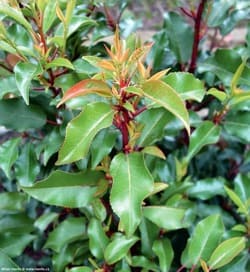
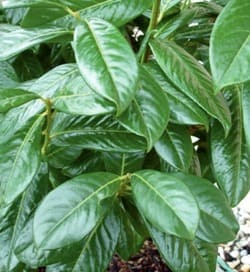
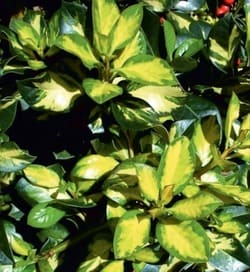
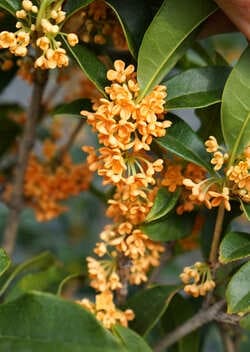
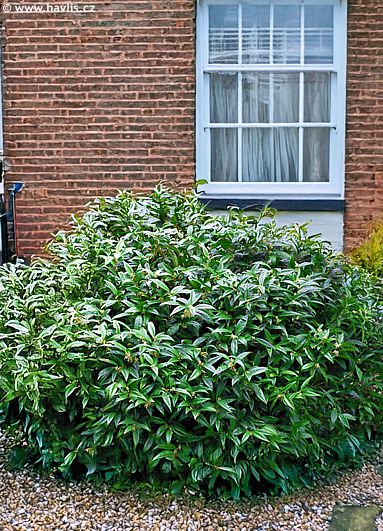
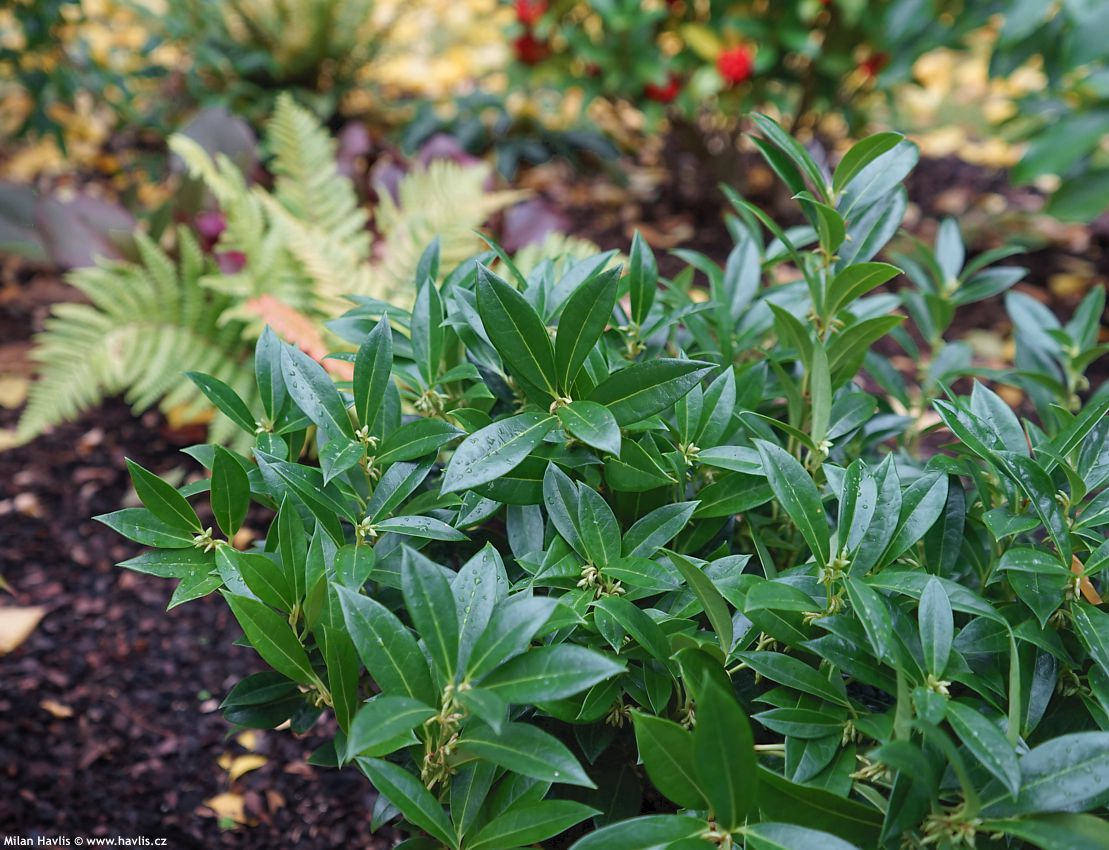
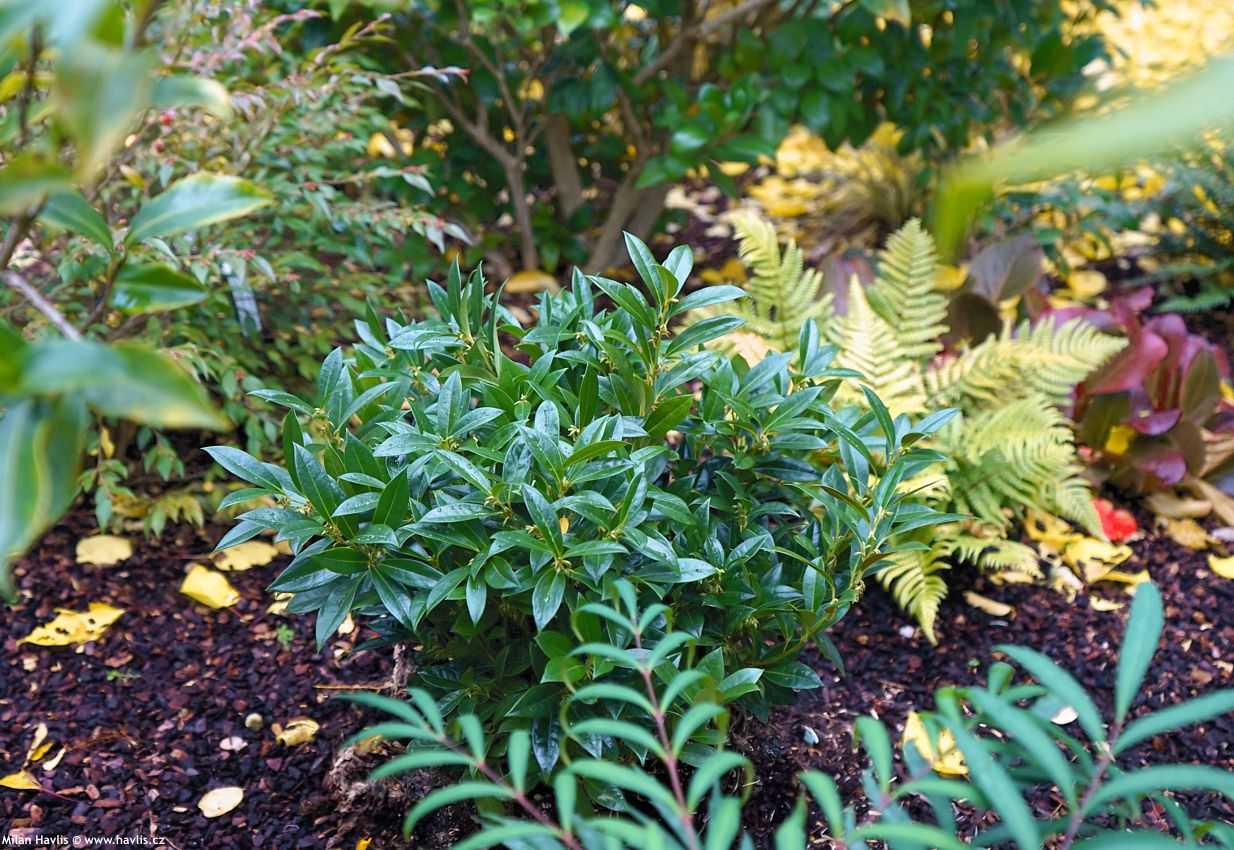
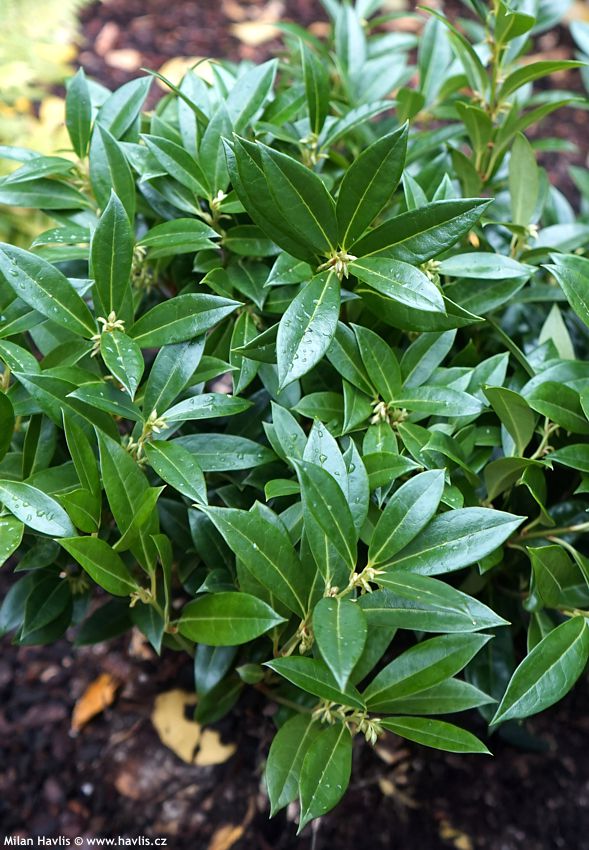
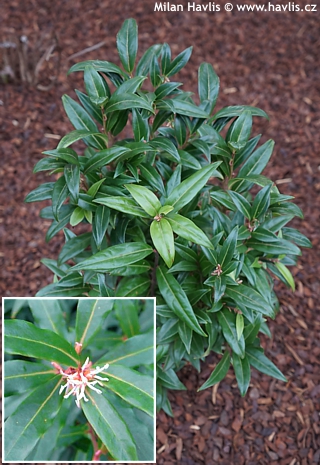
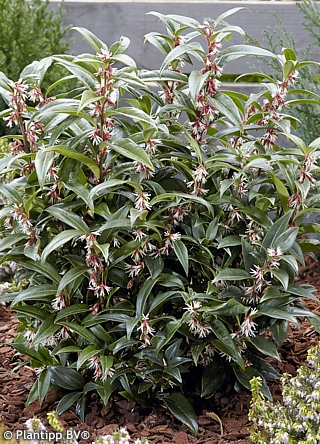
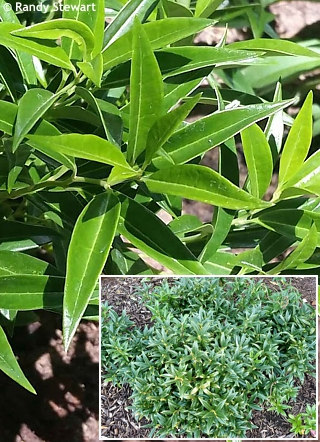
Although FRAGRANT MOUNTAIN sweet box promises fragrance in its name, the experienced eye quickly notices something else. While most sweet boxes are grown primarily for their winter flowers, this cultivar remains attractive throughout the other eleven months of the year thanks to its exceptionally dense habit and glossy dark green leaves that appear almost carefully polished. This compact evergreen shrub naturally develops a neat, symmetrical shape without the need for regular trimming, and from February to April it is further enhanced by small creamy white flowers emerging from dark red buds. Their sweet scent is particularly strong, even by the standards of a genus celebrated for its winter fragrance. Compared with typical forms of Hooker's sweet box, FRAGRANT MOUNTAIN appears denser, tidier and more refined, largely because of the quality of its foliage.
The cultivar was selected by Canadian nurseryman Gurjit Sidhu of Sidhu & Sons Nursery in British Columbia. His breeding programme has long focused not only on sweet boxes but also on other ornamental shrubs, seeking improvements in density, more compact growth and superior foliage quality, characteristics that are increasingly valued in modern gardens. The cultivar is protected by European Plant Breeders' Rights, PBR No. 55615, granted in 2020.
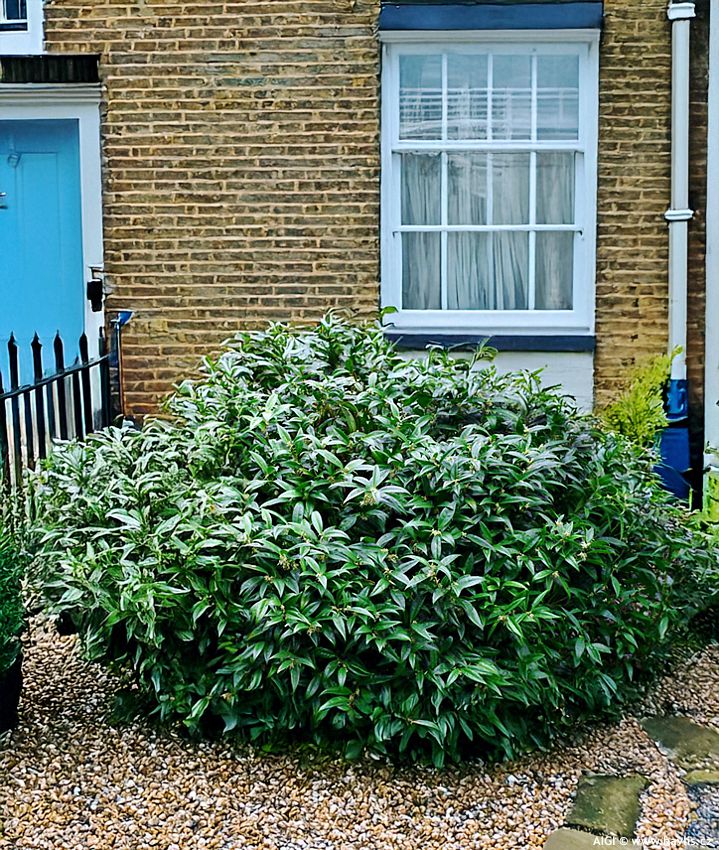
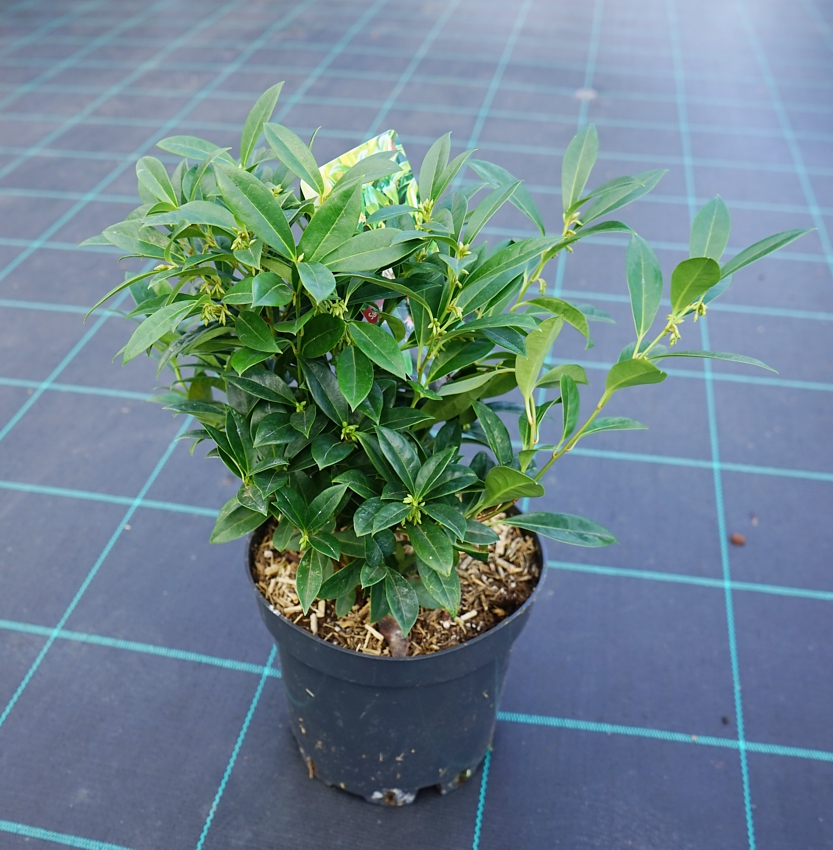
Thanks to its slow to moderate growth rate and naturally compact habit, FRAGRANT MOUNTAIN is ideally suited wherever a tidy evergreen presence is required throughout the year without the need for regular clipping. It performs particularly well as a low underplanting beneath trees, along shaded pathways or among taller rhododendrons, where its fragrance can be a delightful surprise in winter and early spring, often before the tiny flowers themselves are noticed. Over time it gradually spreads by means of short underground rhizomes, forming broader colonies without the aggressiveness associated with some ground-cover shrubs, and consequently retains clearly defined planting boundaries even after many years. The dark glossy foliage provides an elegant contrast with ferns, hostas, heucheras, sedges and low-growing evergreen azaleas. Its compact growth also makes it highly suitable for containers on terraces or beside entrances.
Last revised: 29 October 2026
Hooker's sweet boxes rank among the most rewarding evergreen shrubs for partial shade and full shade, thriving in ordinary garden soils, including relatively poor ground, though they reach their finest condition in fertile soil. They perform best in moist but well-drained soils that are slightly acidic to neutral. Once established, however, they tolerate prolonged periods of summer drought better than most other shade-loving woody plants. Although capable of growing in full sun, foliage may lose some of its gloss and rich green colour in warmer regions and, particularly when exposed to winter winds, can suffer damage during severe frosts. Plants grow at a slow to moderate rate, require little pruning, and any necessary shortening of shoots is best carried out immediately after flowering. Their natural tendency to produce underground rhizomes allows them gradually to form larger groups without becoming difficult to manage. Where spread needs to be restricted, a weed-suppressing membrane may be used. They can also be grown successfully in large containers, where their winter and early spring fragrance is especially valuable. The fruits are not poisonous but are not intended for consumption. Most forms reliably tolerate temperatures of approximately -27 to -29 °C.
Goods are shipped all over Europe. For Russia and U.K. and for further details please read about SHIPPING OPTIONS HERE.
Are you interested in a serious discount for orders NOV-FEB? Check your options here.
THE PRICES INCLUDE VAT of 15%. For quick conversion you can use 1 CZK = approx. 0.04 EUR
- STANDARD QUALITY - Plants of this group are 1st class quality with number of branches and overall density adequate to their size and age, considering they were container grown.
- DE LUXE QUALITY - This label guarantees a luxurious quality of manually selected plants that, compared to their height and age, are exceptionally dense and beautiful.
- EXTRA - These plants are usually mature and bigger specimens with exceptional overall appearance.
- STANDARD (as described in the plant form) means a tree with a trunk of 190-210 cm and a crown at the top, unless specified differently. The commercial size for trees is their girth measured in the height of 1m from ground.
- HOBBY - These plants are of the same quality as our standard-quality plants but younger and therefore cheaper.
- SHRUB - a woody plant with branches growing bushy from the ground level.
- HALF-STANDARD or MINI-STANDARD - a small tree with shorter trunk, its size is usually specified.
- FEATHERED - These are trees with branches growing already from the base of the trunk and up along the stem.
- GRASSES and PERENNIALS - Sizes given usually read the diameter of the pot or the clump, as specified.
