.jpg)
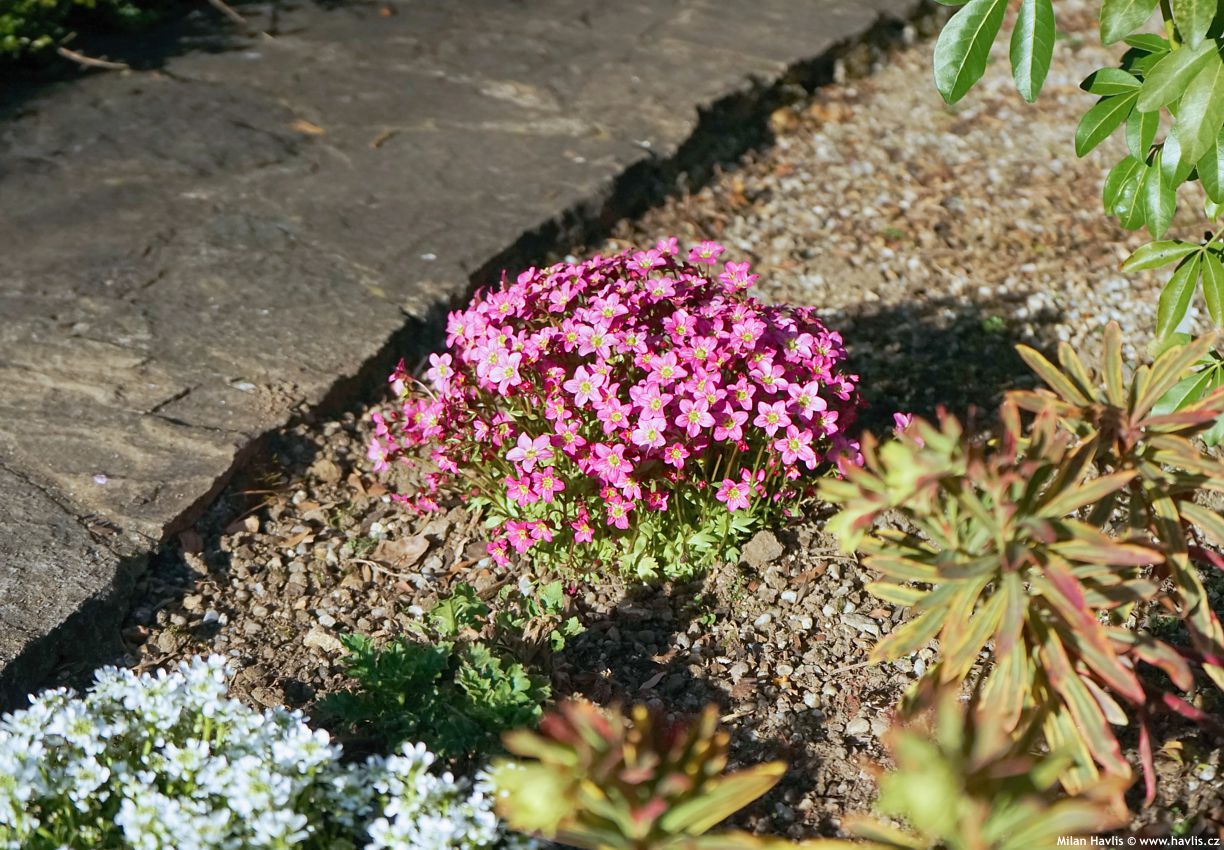
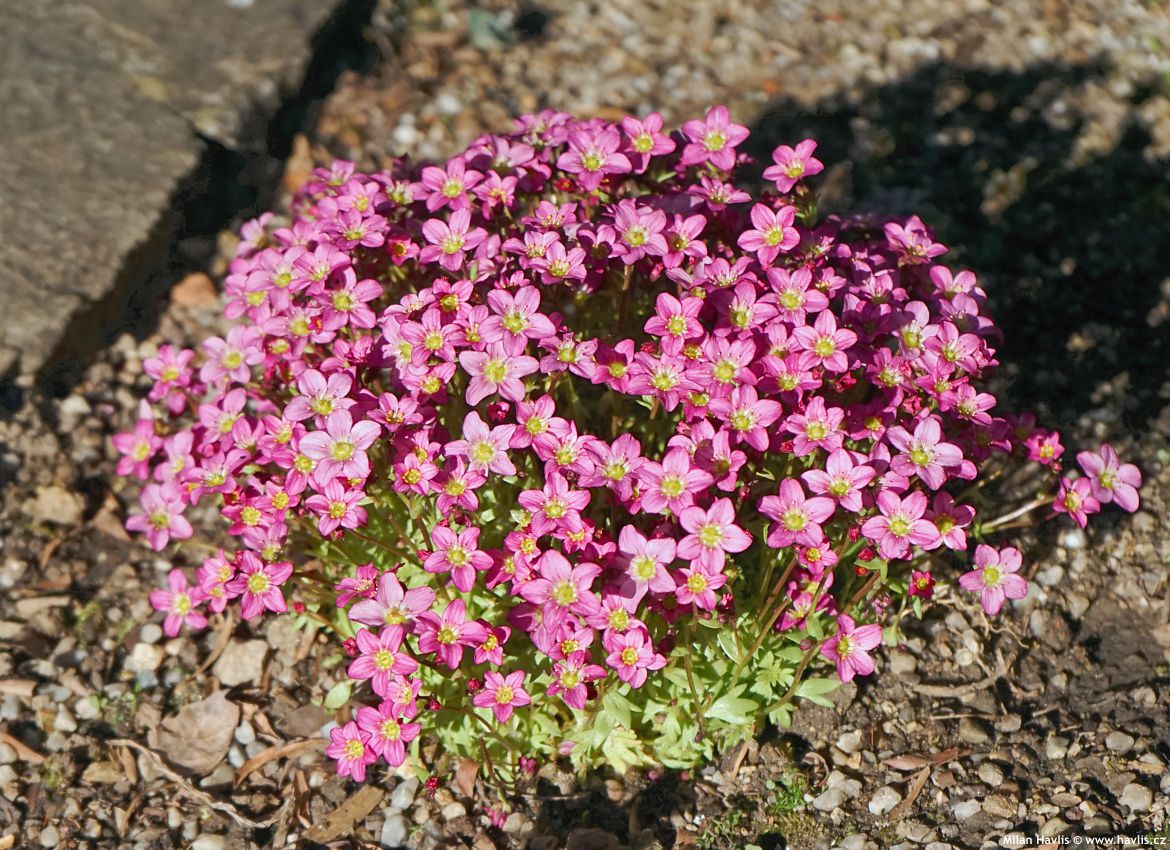
Saxifraga TOURAN™ PINK 'Saxz0011' moss saxifrage

 Symbivit Tric (arbuscular)
 Symbivit (arbuscular)
Saxifraga
Saxifraga is one of the most extensive genera of the Northern Hemisphere, comprising more than 400 species distributed from arctic regions to the high mountain ranges of the Himalayas. Most of them inhabit places where other vegetation would struggle to survive – scree slopes, rocky ledges, moist springs or fissures in limestone walls. Their ability to anchor themselves in tiny pockets of soil with just a trace of moisture gave the genus its name: saxum means stone and frangere to break, although saxifrages do not literally break rock; they simply exploit its natural cracks. The genus was described by Carl Linnaeus in 1753, but its internal classification has been revised many times since, as saxifrages are notorious for hybridisation and morphological variability. The botanical species that later became the foundation of garden hybrids originate mainly from European and Asian mountains – for example S. hypnoides, S. rosacea or S. paniculata – and share small rosettes of leaves, five‑petalled flowers and the ability to form dense, low mats in cool, moist habitats.
The hybrid group Saxifraga × arendsii emerged at the turn of the 19th and 20th centuries thanks to the German breeder Georg Arends (1863–1952), who crossed several mountain species to create perennials suited to semi‑shaded gardens and urban rockeries. Arends’s plants quickly gained popularity because they offered something gardens of the time lacked – spring colour, compact growth and the ability to thrive even where the soil is cooler and more humid. Over time, an entire group of hybrids developed, characterised by moss‑like rosettes, delicate flowers in shades of pink, red and white, and reliable spring blooming.
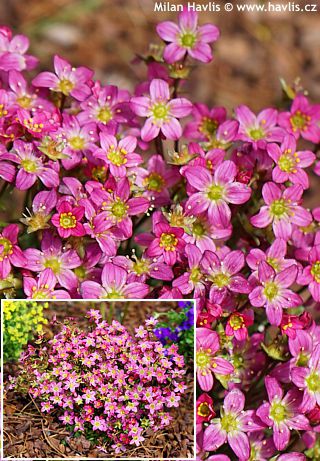
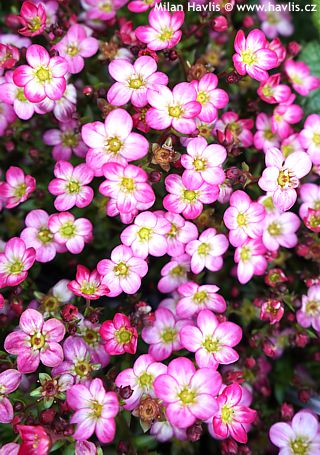
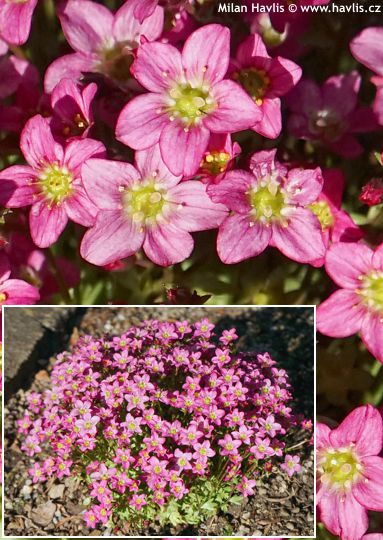
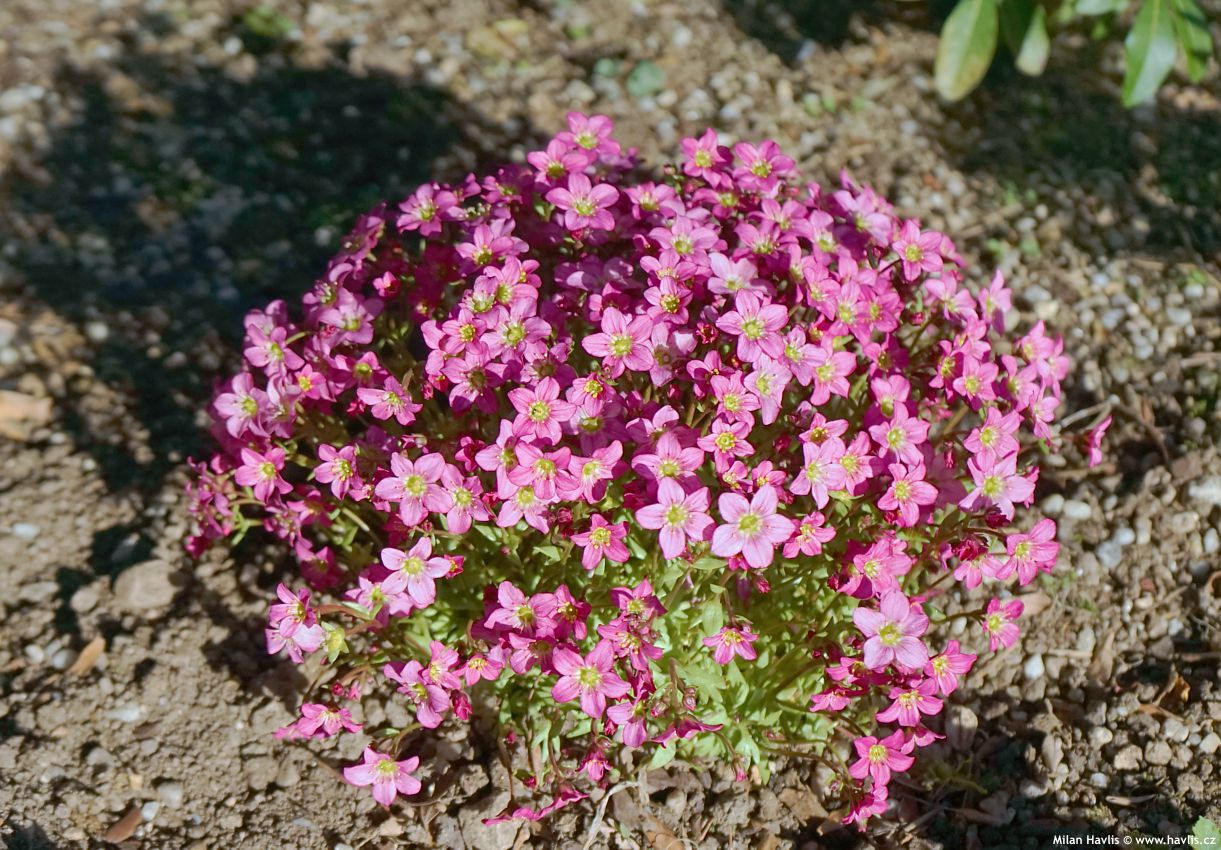
TOURAN™ PINK is a modern moss saxifrage cultivar from the TOURAN™ series, created by the Dutch breeder Martien Everett Gutter and marketed by Syngenta Flowers. It was chosen as a compact, evenly growing form with abundant spring flowering in a cheerful pink shade – neither garish nor washed‑out, simply a pleasant, clear pink. It forms low, firm cushions of small rosettes with finely lobed, deep to fresh green, evergreen leaves that give the plant a moss‑like appearance. To the touch they are surprisingly resilient and dense, so the plant never feels fragile, even in winter. Like the other cultivars in the series, it is valued for its uniformity, stable growth and dependable vigour. It is protected by European plant breeders’ rights under number 39489 (2015).
TOURAN™ PINK performs best where fine texture and spring colour are needed in a small space. It can fill narrow gaps between stones, create a soft transition between perennials and rock, or gently define the edge of a border without drawing too much attention. In cushion plantings it adds rhythm thanks to its regular growth and delicate foliage texture. It pairs well with plants that have more pronounced leaves or a different growth dynamic – for example sun‑loving heucheras, campanulas and other small perennials that, like saxifrages, dislike complete drying out. In semi‑shaded corners it brings freshness and a gentle brightness that reflects off the pink flowers in spring.
Last update 14-04-2026
Arends saxifrage hybrids share growing requirements shaped by their mountain origins. They thrive in partial shade or in bright positions protected from harsh midday sun. They need cool, humus‑rich and slightly moist soil that must nevertheless be very well drained – prolonged waterlogging as well as complete drought are their greatest risks. A mixture of garden soil with fine gravel or coarse sand is ideal. During the growing season they need a little bit of watering so that the soil never dries out completely but also never remains wet. Feeding should be minimal, just a light application of compost or a weak fertiliser for rocky plants in spring. After flowering it is advisable to remove the spent flower stalks to maintain a compact shape. In older clumps it is common for the centre to open and brown – a natural growth cycle of the rosettes that accelerates with excess moisture or poor air circulation, so very free‑draining soil and watering at the base rather than over the leaves are essential. They are usually hardy to around −34 °C, ensuring reliable overwintering even in colder regions. Troughs and containers are unsuitable, as they heat up quickly in summer and may become waterlogged in winter, conditions saxifrages tolerate poorly.