.jpg)
Sciadopitys verticillata 'GRÜNE KUGEL' (GREEN BULLET) Japanese umbrella pine

 Symbivit Tric (arbuscular)
 Symbivit (arbuscular)
Sciadopitys
The Japanese umbrella pine (Sciadopitys verticillata) ranks among the oldest surviving conifer species and represents a remnant of vegetation that was already widespread during the Tertiary period. From a botanical perspective, it is an extraordinary tree: the sole living species of the genus Sciadopitys and the only representative of the entire family Sciadopityaceae, with no close relatives among modern conifers. This isolated position makes it a true evolutionary relic that has survived virtually unchanged for millions of years. It continues to attract attention primarily because of the structure of its needles. Although they may resemble those of a thick‑needled pine at first glance, they are in fact much closer to the foliage of long‑extinct horsetails. In its native land, the tree is valued not only for its unique appearance but also for its longevity, stability, and ability to endure changing conditions. In Japanese culture, it has a long tradition as a sacred tree, often planted near Shinto shrines and Buddhist temples.
In the wild, the Japanese umbrella pine grows exclusively in Japan, specifically in the mountain forests of the islands of Honshu and Shikoku. Its main natural habitats lie on Mount Kōya and in the Kiso River valley in Wakayama Prefecture, where it forms part of moist, shaded woodland with acidic soils. European botanists were introduced to the species in 1842, when it was formally described by Philipp Franz von Siebold and Joseph Gerhard Zuccarini based on material brought from Japan. The first living plant was sent to England by the botanist Thomas Lobb in 1853, although it did not survive. During the 1860s, seeds were repeatedly imported into Europe, enabling the species to spread more widely in cultivation.
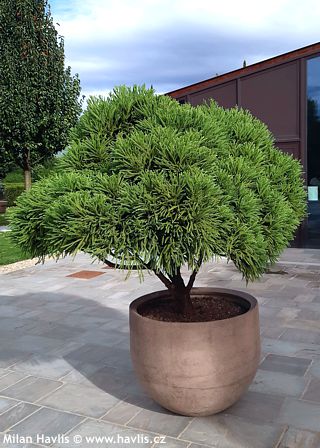
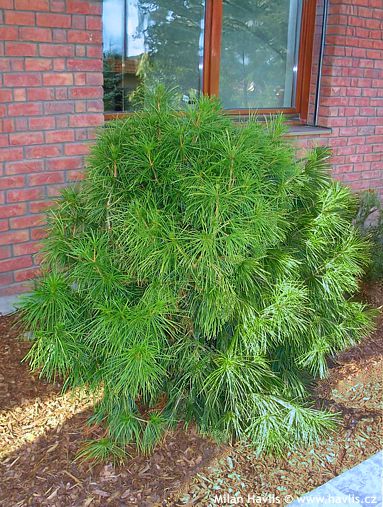
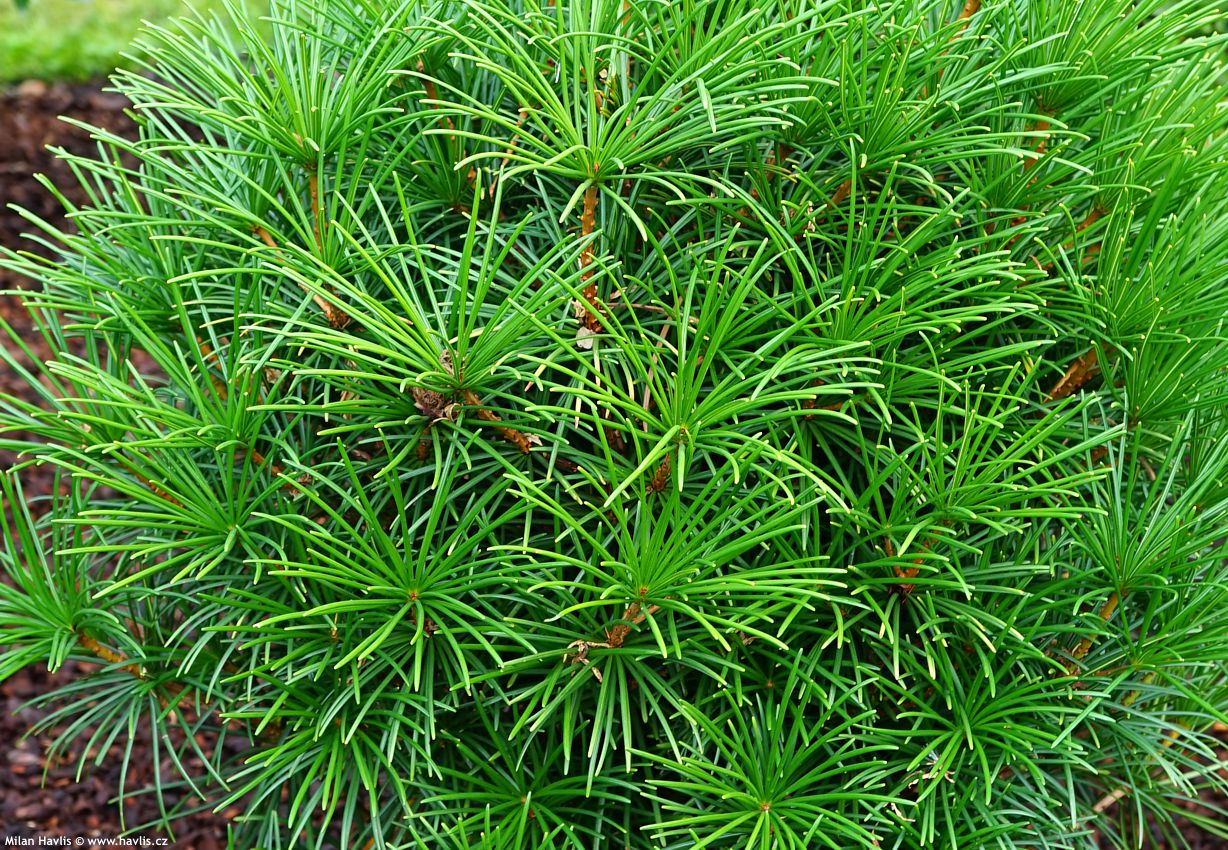
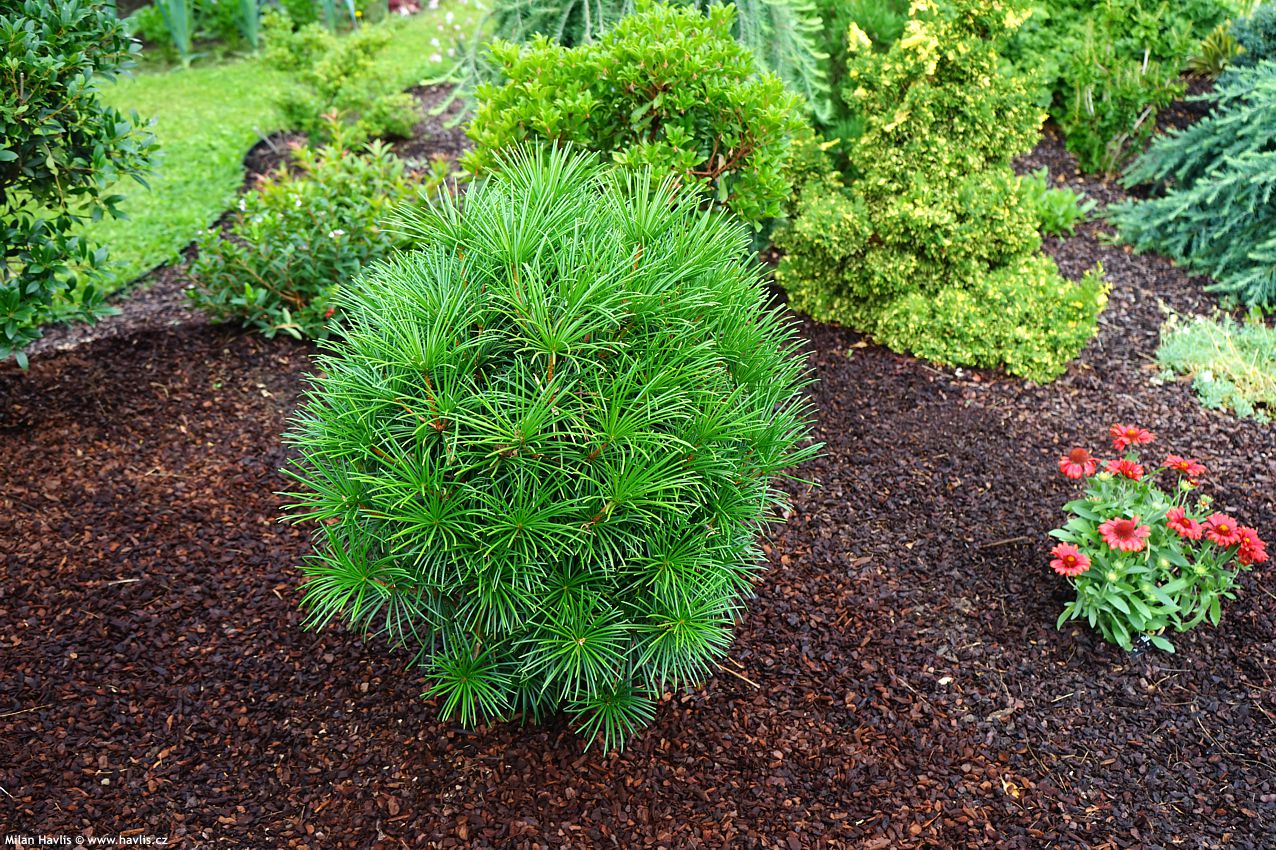
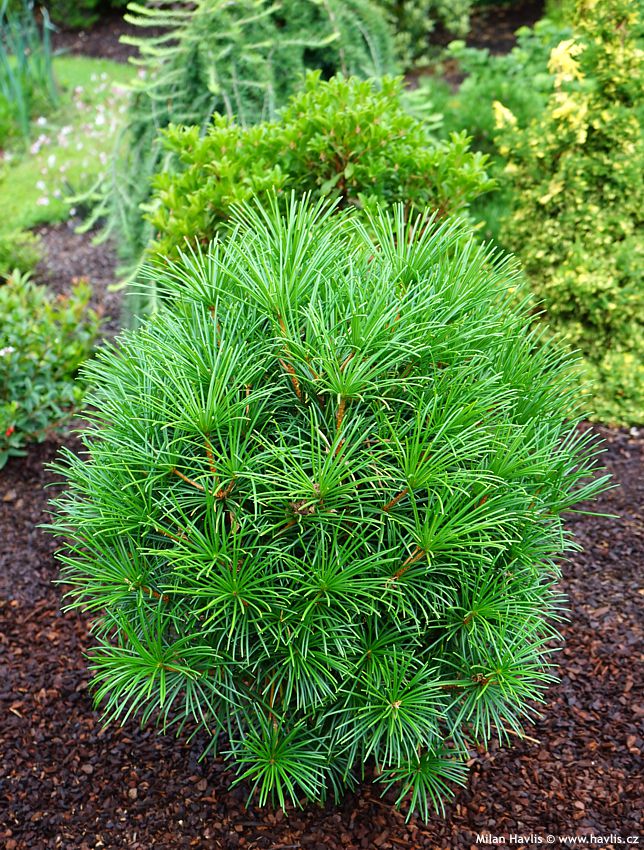
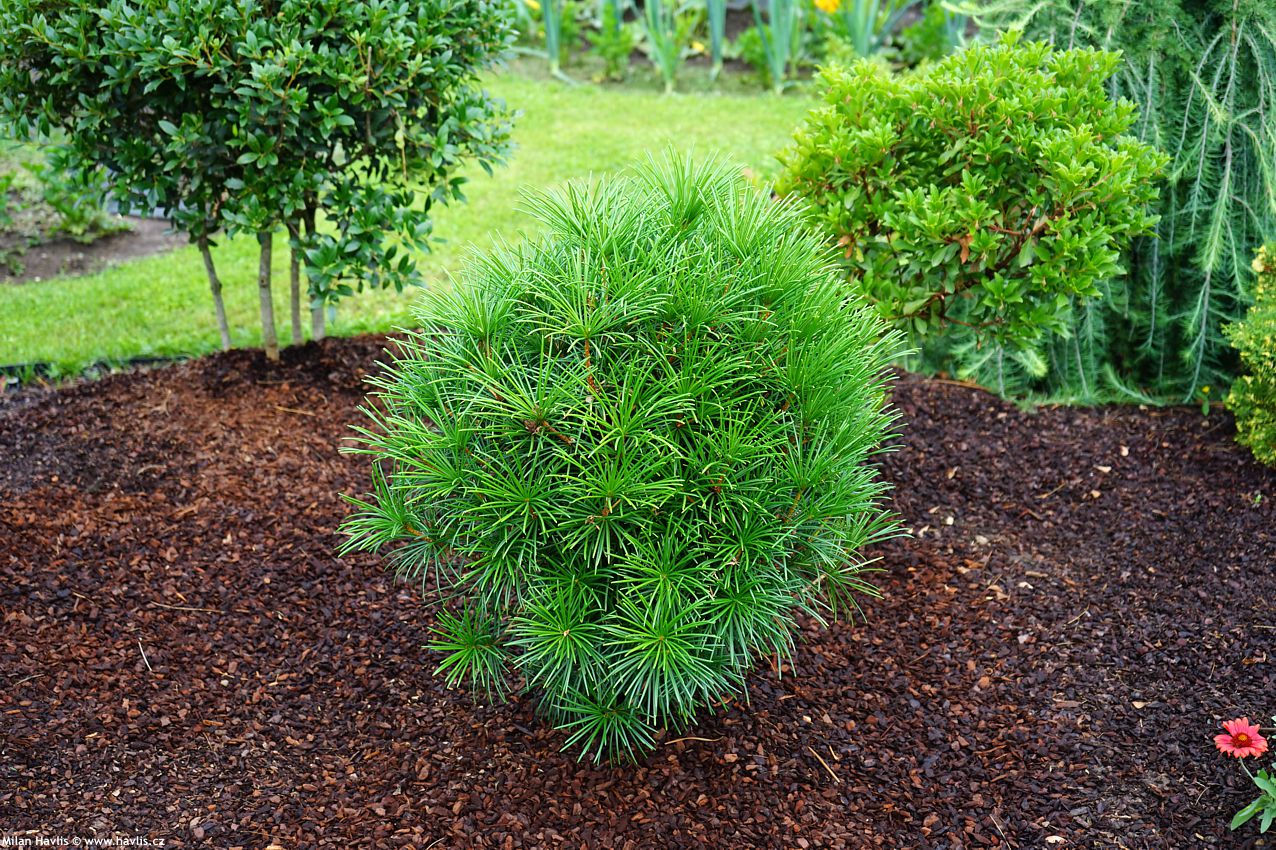
Grüne Kugel is a beautiful German cultivar of the umbrella pine, far more attractive than the sound of its cultivar name, a name that clearly did not receive much creative effort: “Green Ball”. Somewhat more fitting is the alternative English name Green Bullet, which better captures the plant’s compact, concentrated character. It is a dwarf, very slow‑growing conifer with an exceptionally neat, genuinely spherical to short cylindrical form. The needles are dark green, long, glossy, fleshy and soft, borne in dense whorls reminiscent of horsetail foliage, giving the plant a firm, almost sculptural appearance. Its mature height and width usually reach only about 1 to 1.5 metres, with annual growth of roughly 8 to 10 centimetres, while the shape remains stable without any need for intervention.
In the garden, ‘Grüne Kugel’ acts as a green jewel, an intelligently chosen small‑scale specimen where both form and texture can truly stand out. It is well suited to larger rockeries, gravel beds, Japanese‑style compositions or collector plantings of slow‑growing woody plants. Thanks to its size, it is also ideal for smaller gardens or front gardens, especially when combined with stone, moss or finer‑textured perennials. The cultivar originated in Germany as a selection aimed at extremely compact growth and a stable, rounded form. Specialist literature records its introduction to the market in 1990, when it was mentioned by Karel Hieke in his Encyclopaedia of Coniferous Trees (2008). The exact year of selection and the identity of the breeder are not clearly documented, but the cultivar has appeared in European nursery catalogues since the late twentieth century.
Last update 13-08-2019; 19-02-2026
Despite its exotic appearance, the Japanese umbrella pine is far from delicate. With a well‑chosen site, it requires little care beyond watering during the first year after planting. The key is an acidic, humus‑rich, well‑drained soil with even moisture, avoiding both prolonged waterlogging and drought; permanent mulching is ideal. It thrives best in a sunny position, and, in moist soil, it even tolerates midday scorching sun. It can also be grown in shade, where it tends to stretch toward the light and becomes slimmer and thinner. Exposed, windy sites are unsuitable: not only do the soft branches bend with the wind, but needle drop often occurs. Fertilization is not essential, though it can be beneficial. Pruning is unnecessary but possible on late winter; careful nurseries often use it to produce compact, dense plants at saleable sizes. Older literature frequently describes the species as poorly hardy, but this no longer reflects current experience or modern sources. Practical experience shows that it can withstand several days of frost down to −27 °C without damage, and some modern databases even place it in USDA hardiness zones 4b to 5 (down to −32 °C). The Japanese umbrella pine is also exceptionally long‑lived, capable of surviving for several centuries while retaining its stable form and vitality. It is not a tree for quick results, but a calm, enduring presence in the garden – one whose value increases with time.