Sedum 'Dazzleberry' SUNSPARKLER® DAZZLEBERRY stonecrop

 Symbivit Tric (arbuscular)
 Symbivit (arbuscular)
Sedum
Stonecrops, botanically known as Sedum, form a vast genus of succulent plants in the family Crassulaceae, comprising hundreds of species spread across the Northern Hemisphere – from alpine crevices to Mediterranean slopes. They are masters of survival, not only for themselves but for their surroundings: their fleshy leaves store water, their flowers offer nectar to pollinators even in drought, and their growth strategy adapts to extreme conditions. The genus was systematically and comprehensively described by Swedish botanist Carl Linnaeus in 1753 in his landmark work Species Plantarum, where he included 15 species, notably the iconic Sedum acre. The Latin name Sedum derives from sedere (“to sit”) referring to their low, ground-hugging habit.
Stonecrops are among the most ancient evolutionary lineages of flowering plants. Fossil evidence from the Eocene epoch (about 40 million years ago), found in the Green River Formation of present-day Wyoming, reveals plants with morphology strikingly similar to modern Sedum — fleshy leaves, star-shaped flowers, and a low-growing habit. Although not classified directly as Sedum, their features match early representatives of the Crassulaceae family. This suggests that the succulent survival strategy of these plants began evolving at a time when the climate was shifting toward greater seasonality and aridity.
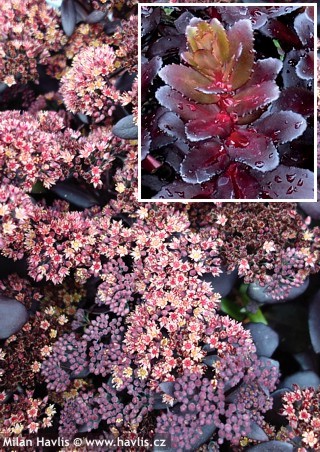
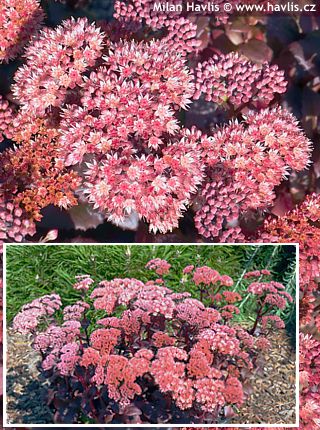
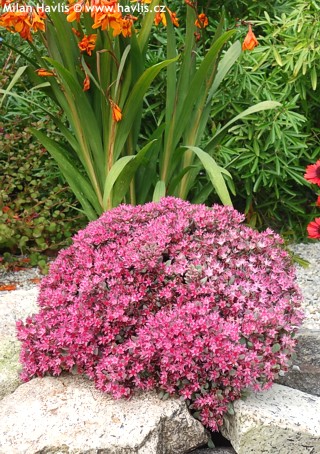
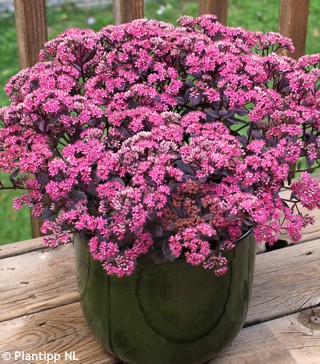
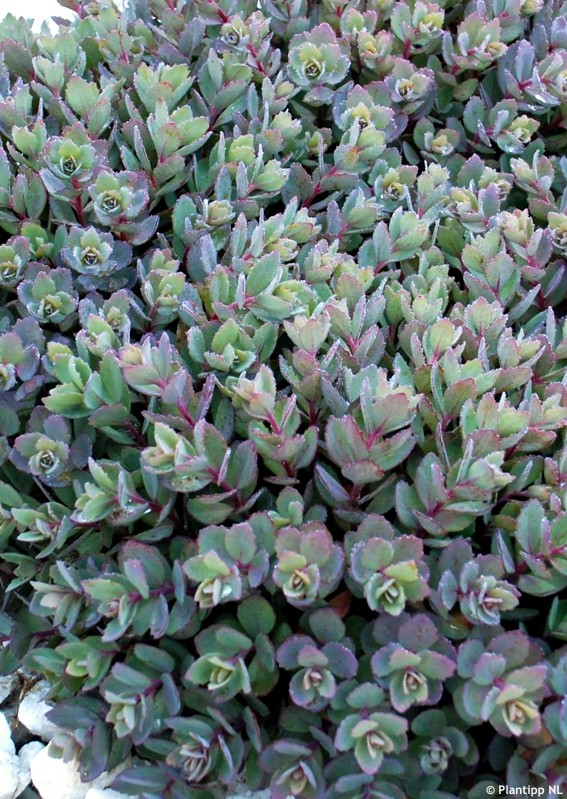
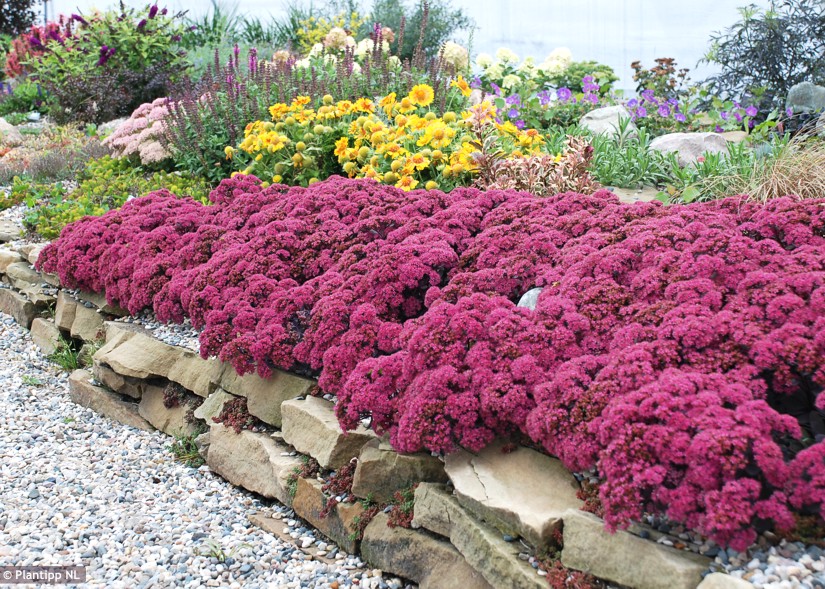
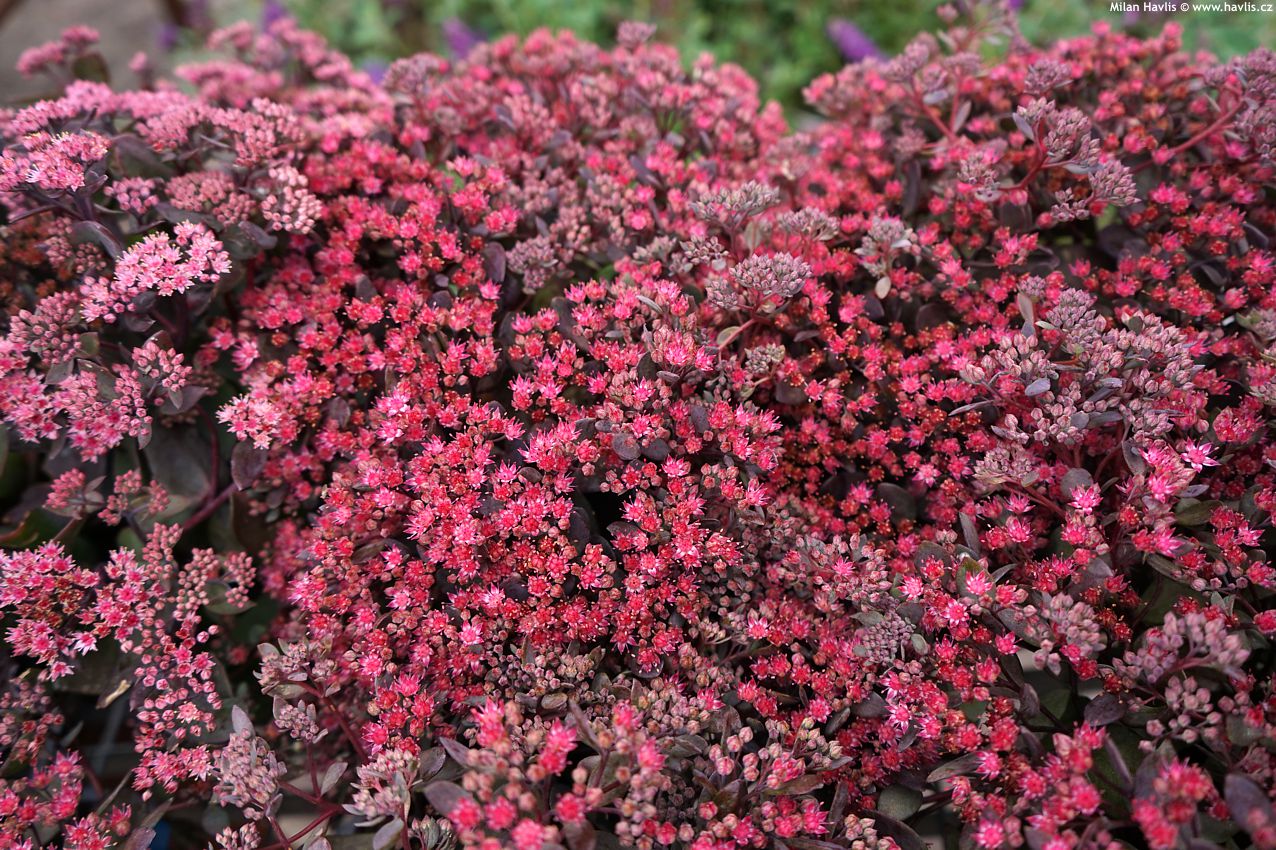
DAZZLEBERRY stonecrop is the very first cultivar of the SUNSPARKLER® series, bred in the United States by Chris Hansen, and it is truly unique. Its small, oval leaves have finely serrated edges, emerge blue‑green with a strong dark wine‑red overlay, and once the plant begins forming buds in summer, the foliage darkens significantly to a deep wine colour. In late August, the small buds gradually open into star‑shaped, dark, vivid pink flowers for approximately six to eight weeks. It grows slowly and forms beautiful, compact mounds. It stands out among rocks just as well as in a perennial border mulched with light gravel or river pebbles. It also thrives in well‑drained troughs and other containers.
In the garden, SUNSPARKLER® DAZZLEBERRY works beautifully as a ground-covering perennial in sunny spots with well-drained soil. It pairs well with other low-growing succulents such as Sempervivums, delospermas, or creeping thymes. It also shines alongside perennials with dark foliage like heucheras or Stachys, and contrasts elegantly with silvery leaves of Helichrysum, Senecio, or compact cultivars of Salvia. It brings colour to modern gardens while in naturalistic plantings it behaves as a quiet but reliable filler amongst showier plants. Thanks to its late flowering, it provides a valuable nectar source for bees and butterflies at the end of the season.
American plant breeder Christopher M. Hansen is the kind of person who can ignite not just a spark but a whole firework of enthusiasm for plants even in people who previously thought that “succulents are just pebbles with leaves”. That’s why his friends and colleagues call him Sparky. His passion began at the age of five, when he collected his first houseleeks, and he hasn’t stopped since: he went through the Missouri Botanical Garden, Longwood Gardens, and Wayside Gardens, where he learned the craft in depth. Today he leads his own company and team at Garden Solutions and introduces series that carry exactly his kind of energy – SunSparkler® sedums, Chick Charms® sempervivums, Gnome Domes® orostachys, and even the Winter Thriller® hellebores, which were in fact his first major success. Sparky is a breeder who tests plants under extreme conditions, loves colour, contrast, and playfulness, and aims to bring joy back into gardens. His projects are not just about genetics – they are about helping people fall in love with plants as spontaneously as he once did, and that resonates with me deeply.
Last update 27-09-2017; 15-08-2026
Ground-covering stonecrop needs very well-drained soil and doesn’t tolerate excess moisture – heavy soil or constantly wet spots may cause root and stem rot. Beyond that, care is minimal: no fertilizing, pruning, or winter protection required. In spring, remove old stems by cutting them close to the ground and allow fresh growth to emerge from below. Don't snap the stems off – use pruning shears to avoid damaging new buds forming at the base, often already present from the previous autumn. Watch out for slugs and act promptly if they appear. It is hardy down to min. –34 °C (USDA zone 4) and suitable for well-drained planters.