Sedum groundcovering stonecrops

 Symbivit Tric (arbuscular)
 Symbivit (arbuscular)
Sedum
Stonecrops, botanically known as Sedum, form a vast genus of succulent plants in the family Crassulaceae, comprising hundreds of species spread across the Northern Hemisphere – from alpine crevices to Mediterranean slopes. They are masters of survival, not only for themselves but for their surroundings: their fleshy leaves store water, their flowers offer nectar to pollinators even in drought, and their growth strategy adapts to extreme conditions. The genus was systematically and comprehensively described by Swedish botanist Carl Linnaeus in 1753 in his landmark work Species Plantarum, where he included 15 species, notably the iconic Sedum acre. The Latin name Sedum derives from sedere (“to sit”) referring to their low, ground-hugging habit.
Stonecrops are among the most ancient evolutionary lineages of flowering plants. Fossil evidence from the Eocene epoch (about 40 million years ago), found in the Green River Formation of present-day Wyoming, reveals plants with morphology strikingly similar to modern Sedum — fleshy leaves, star-shaped flowers, and a low-growing habit. Although not classified directly as Sedum, their features match early representatives of the Crassulaceae family. This suggests that the succulent survival strategy of these plants began evolving at a time when the climate was shifting toward greater seasonality and aridity.
Groundcovering stonecrops are alpine perennials which are available in so many species and varieties that everyone can find his favourite. They are native to almost all continents including their coldest parts, except for Australia and Antarctica.
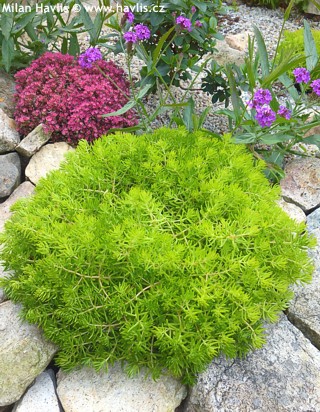
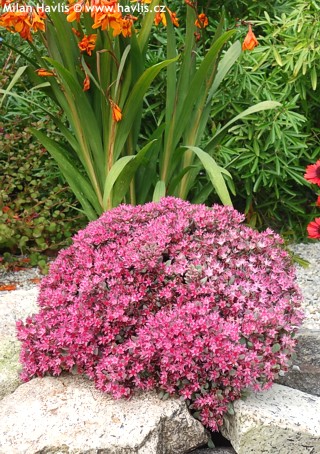
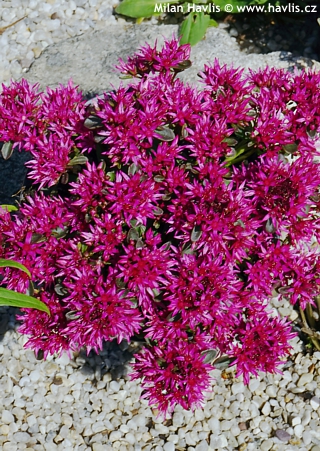
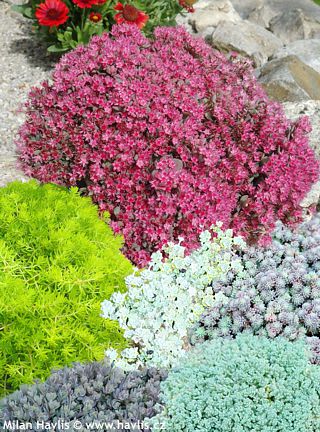
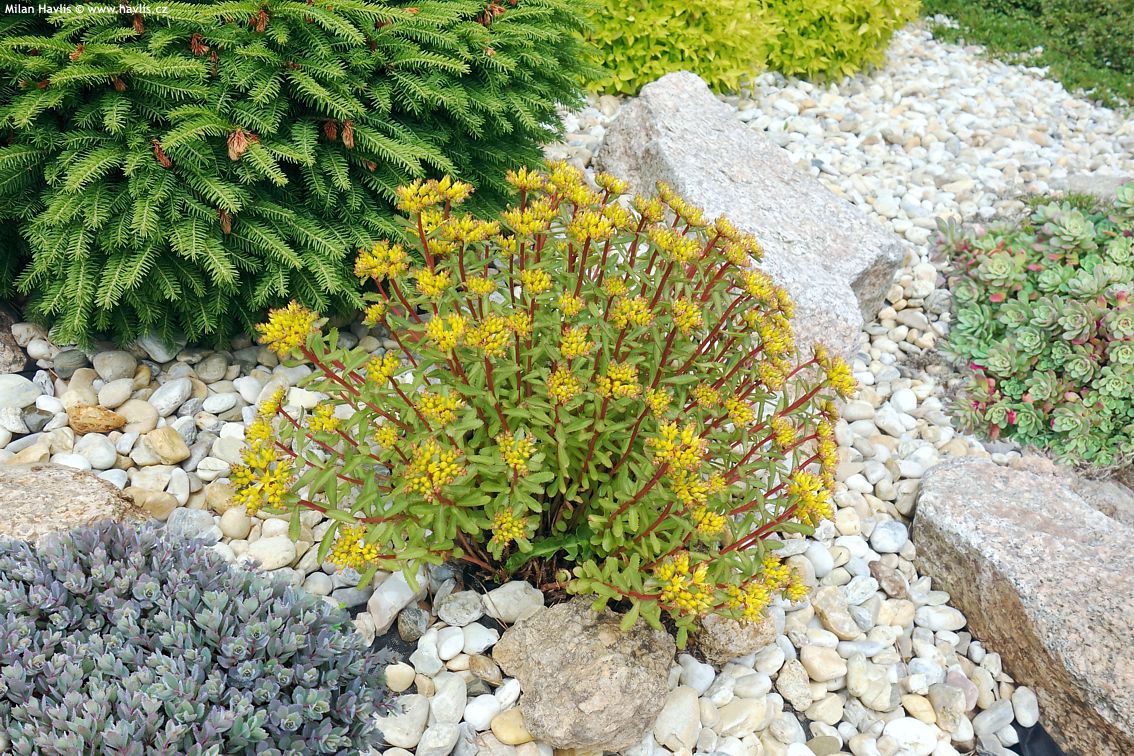
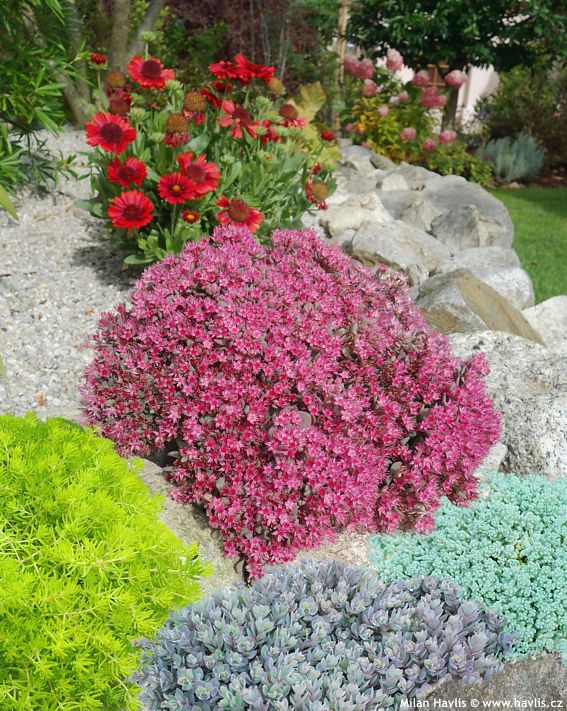
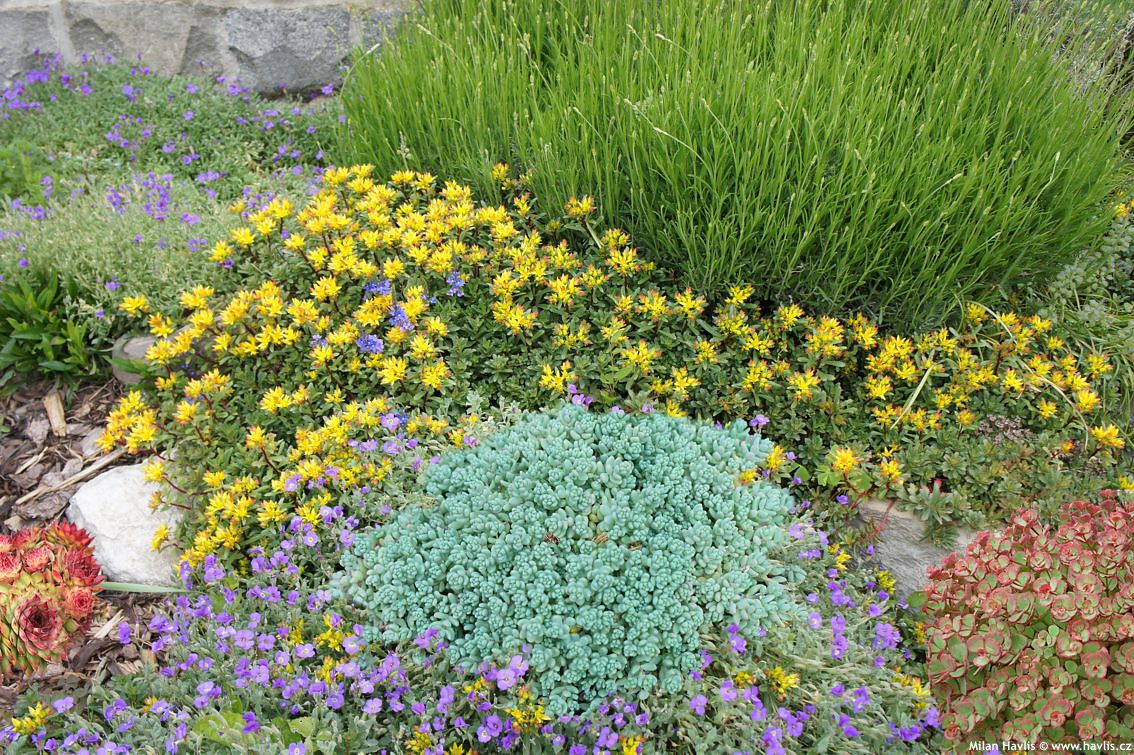
They are cultivated for their spreading, low habit, and offer a wide range of leaf shapes and colours, as well as melliferous flowers. Many of them are evergreen, some are deciduous. Their leaves are silvery blue, blue-green, all shades of green, yellow, burgundy to maroon red, and tinted pink or flushed red. Those which bloom produce flowers very often in profusion. They are commonly star-shaped, white, yellow, or pink, and each species or variety blooms a different part of the season. Other species and varieties which are not listed here can be found here.
Groundcovering stonecrops make low, spreading cushions or carpets, and look great among rocks, or surrounded by gravel in an alpine border, or in and above walls. They can be wisely combined with low perennials with identical growing demands but different habit for an attractive contrast. They also do well in troughs and other outdoor pots.
Last update 10-10-2019
Ground-covering stonecrop needs very well-drained soil and doesn’t tolerate excess moisture – heavy soil or constantly wet spots may cause root and stem rot. Beyond that, care is minimal: no fertilizing, pruning, or winter protection required. In spring, remove old stems by cutting them close to the ground and allow fresh growth to emerge from below. Don't snap the stems off – use pruning shears to avoid damaging new buds forming at the base, often already present from the previous autumn. Watch out for slugs and act promptly if they appear. It is hardy down to min. –34 °C (USDA zone 4) and suitable for well-drained planters.