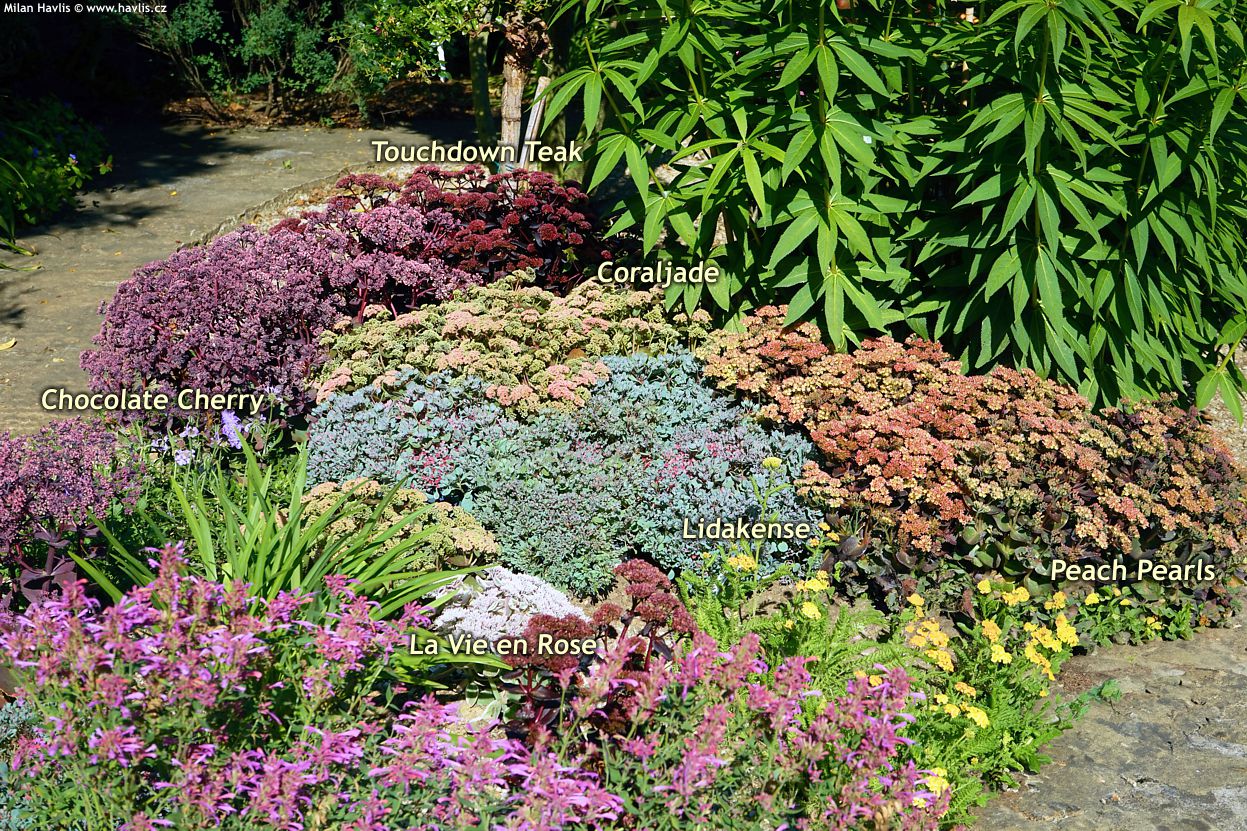
Sedum 'PEACH PEARLS' stonecrop, orpine

 Symbivit Tric (arbuscular)
 Symbivit (arbuscular)
Sedum
Stonecrops, botanically known as Sedum, form a vast genus of succulent plants in the family Crassulaceae, comprising hundreds of species spread across the Northern Hemisphere – from alpine crevices to Mediterranean slopes. They are masters of survival, not only for themselves but for their surroundings: their fleshy leaves store water, their flowers offer nectar to pollinators even in drought, and their growth strategy adapts to extreme conditions. The genus was systematically and comprehensively described by Swedish botanist Carl Linnaeus in 1753 in his landmark work Species Plantarum, where he included 15 species, notably the iconic Sedum acre. The Latin name Sedum derives from sedere (“to sit”) referring to their low, ground-hugging habit.
Stonecrops are among the most ancient evolutionary lineages of flowering plants. Fossil evidence from the Eocene epoch (about 40 million years ago), found in the Green River Formation of present-day Wyoming, reveals plants with morphology strikingly similar to modern Sedum — fleshy leaves, star-shaped flowers, and a low-growing habit. Although not classified directly as Sedum, their features match early representatives of the Crassulaceae family. This suggests that the succulent survival strategy of these plants began evolving at a time when the climate was shifting toward greater seasonality and aridity.
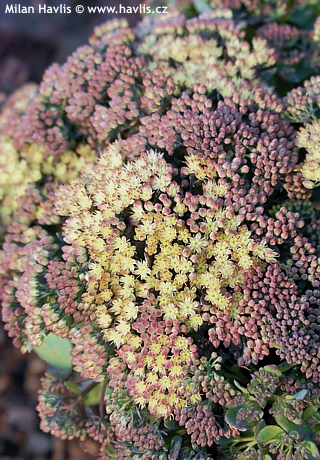
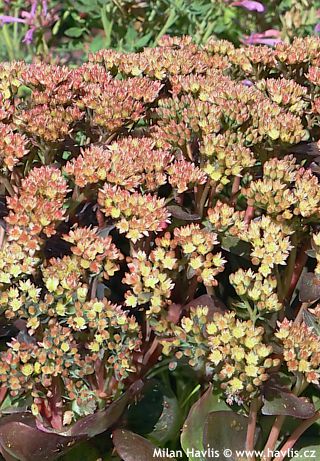
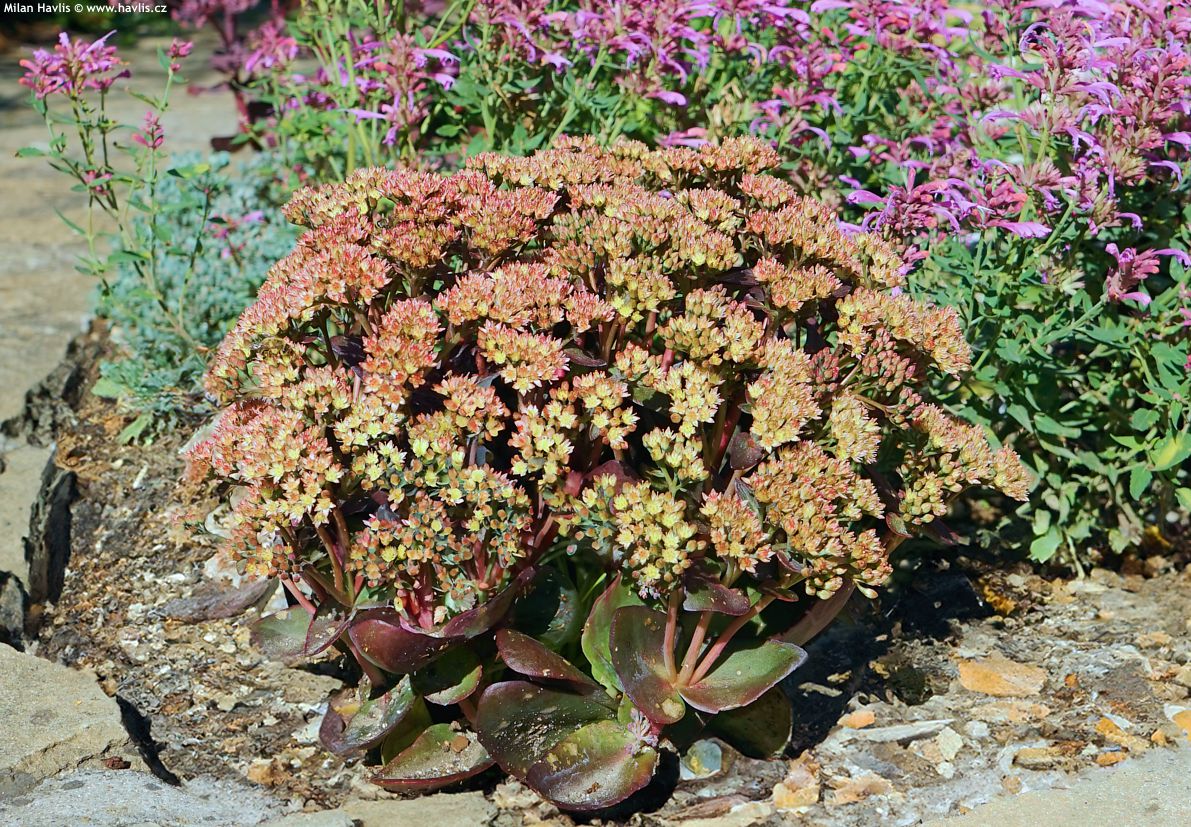
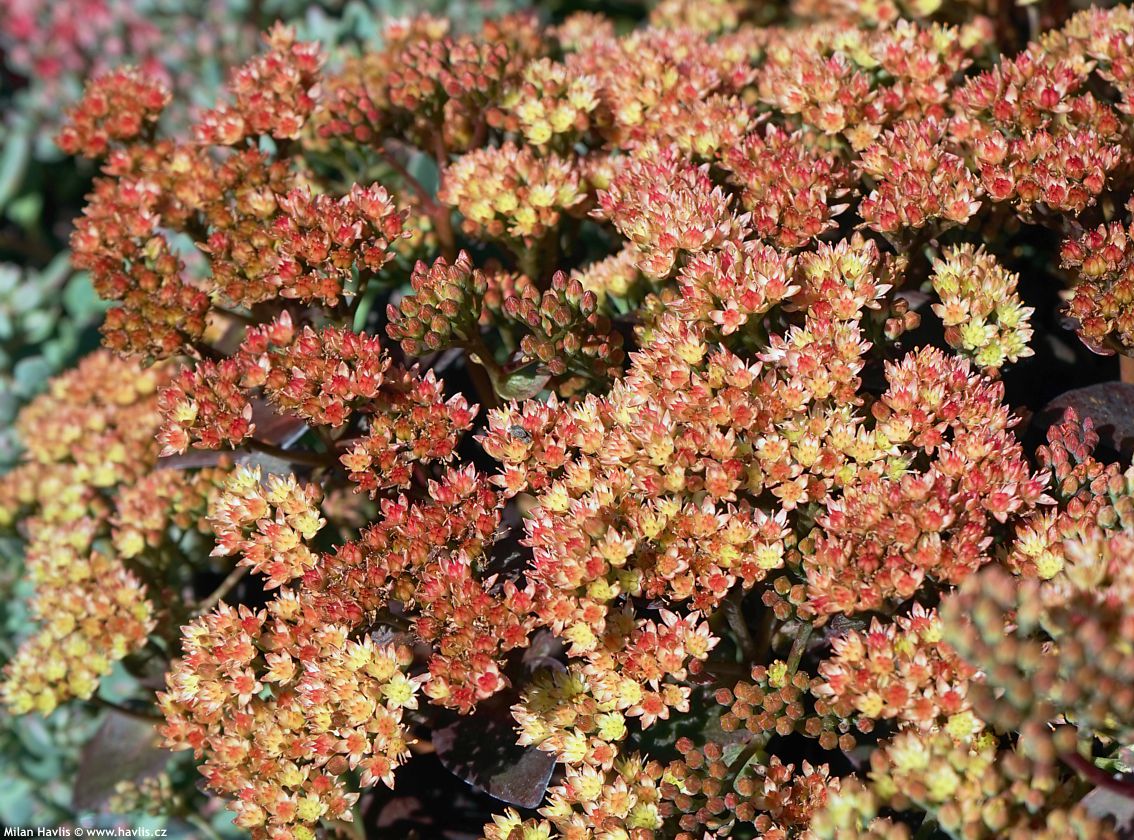
Peach Pearls is a deciduous variety of orpine introduced by Terra Nova Nursery from Oregon, USA. It is a low-growing, compact perennial forming elegantly smooth cushions with fleshy, ovate, olive-green leaves with rich maroon hues on insolated parts. From mid-summer are formed cymes of dusky pink buds that are soon followed by small, vanilla yellow, star-shaped flowers which mature to peachy orange and pink, and completely cover the entire plant.
This is a hybrid variety of stonecrop that combines the low habit of ground-covering species and upright stems of hylotelephium species. Mature plants can reach up to 45 cm tall in full bloom, and around 60 cm in width, but it is common practice to prune the whole plant in half in mid-June and with the help of a liquid fertilizer they will soon regrow forming a compact, heavily blooming, dome-shaped plants of a smaller size.
As every upright sedum it looks best planted in a mass or at least three plants together for a richer display of its flowers. Flowers provide excellent food for bees, especially in autumn when there is not much nectar in the landscape.
Last update 19-08-2024
Ground-covering stonecrop needs very well-drained soil and doesn’t tolerate excess moisture – heavy soil or constantly wet spots may cause root and stem rot. Beyond that, care is minimal: no fertilizing, pruning, or winter protection required. In spring, remove old stems by cutting them close to the ground and allow fresh growth to emerge from below. Don't snap the stems off – use pruning shears to avoid damaging new buds forming at the base, often already present from the previous autumn. Watch out for slugs and act promptly if they appear. It is hardy down to min. –34 °C (USDA zone 4) and suitable for well-drained planters.