

































.jpg)
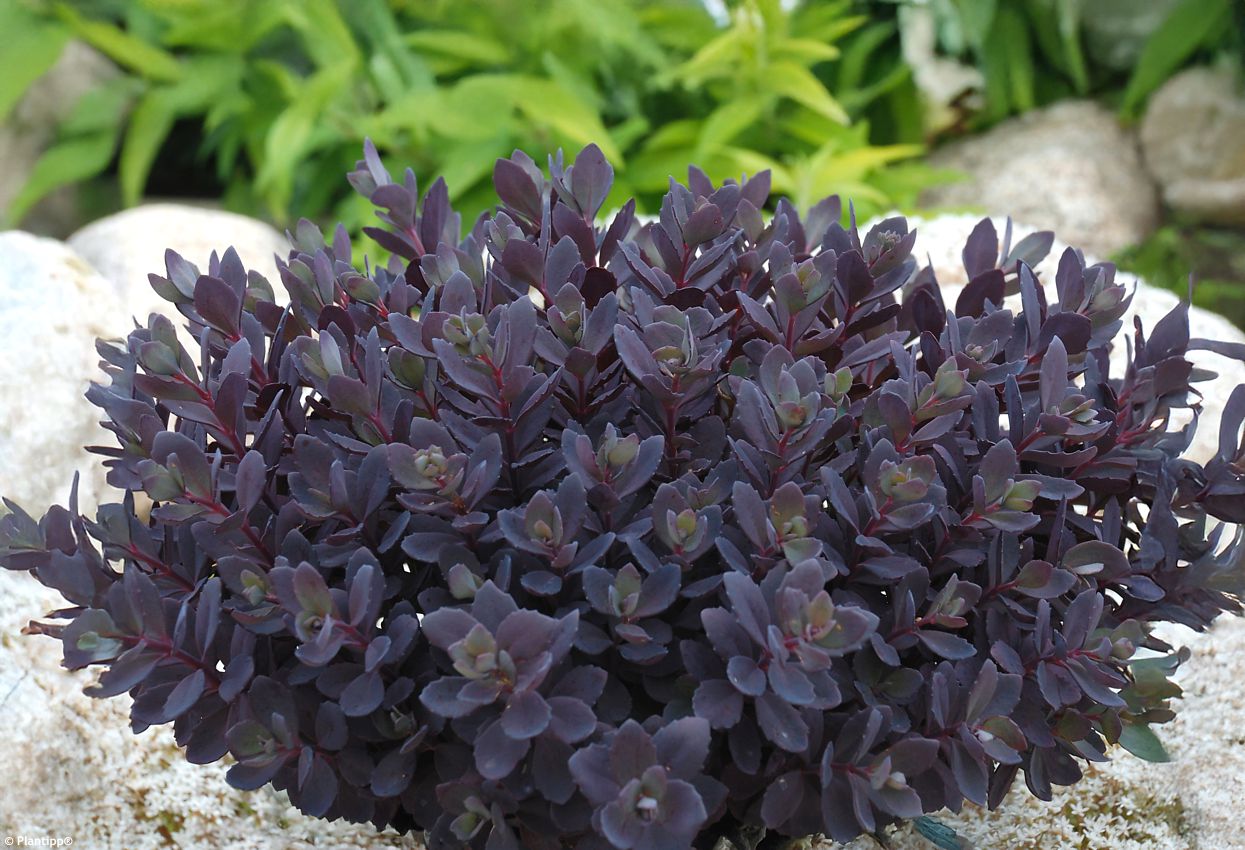
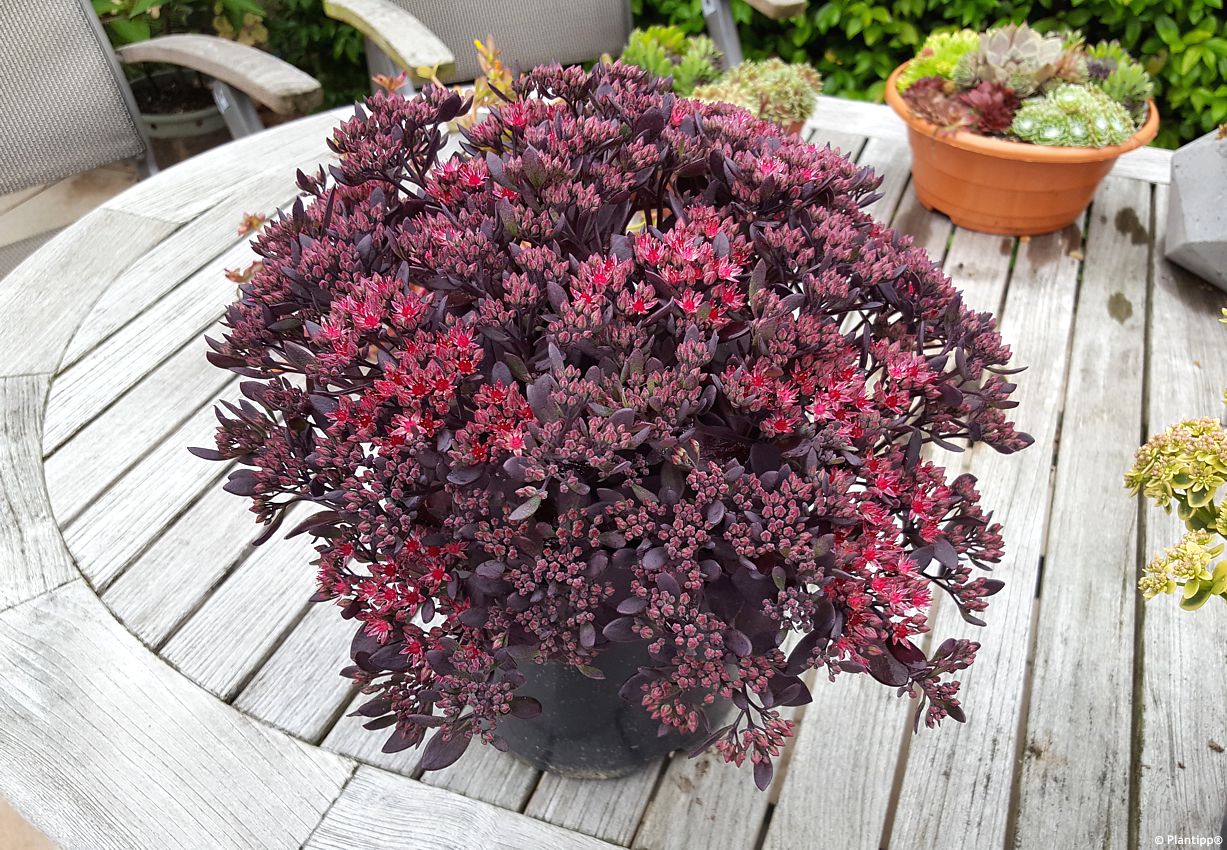
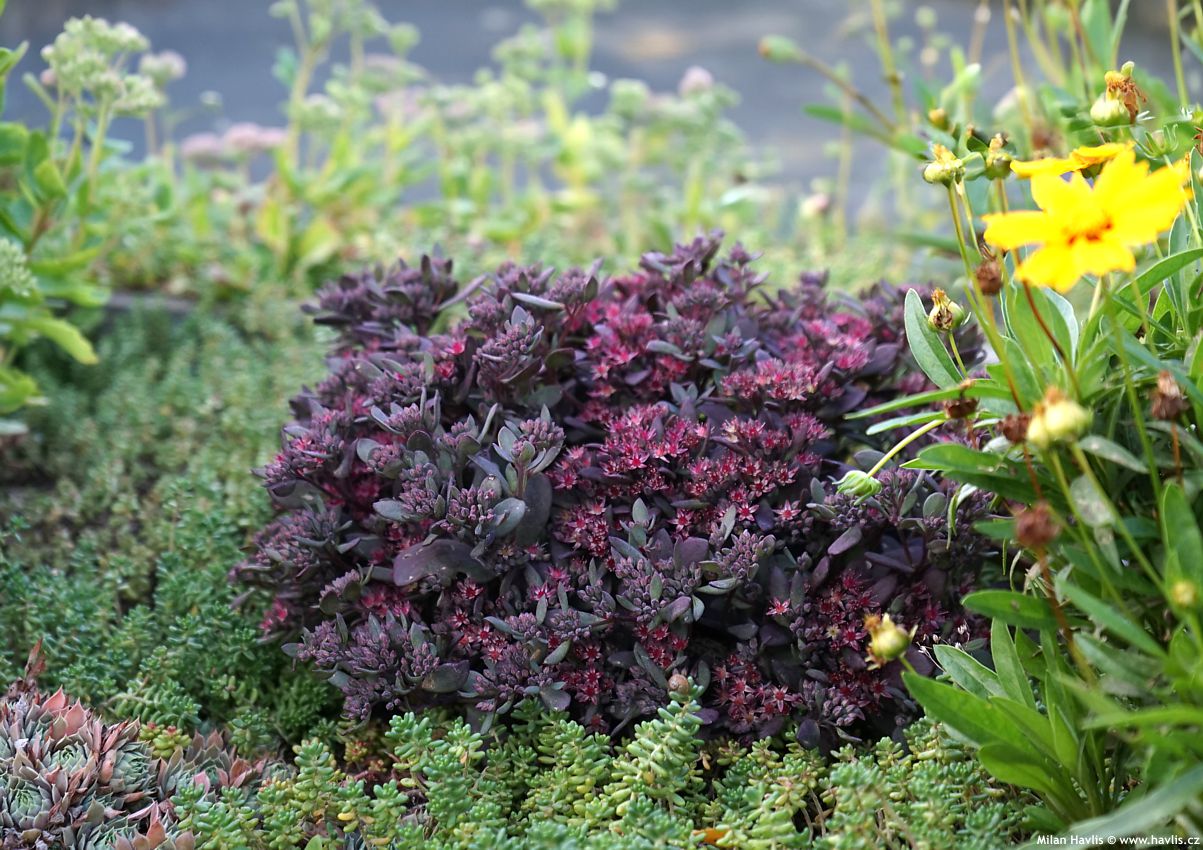
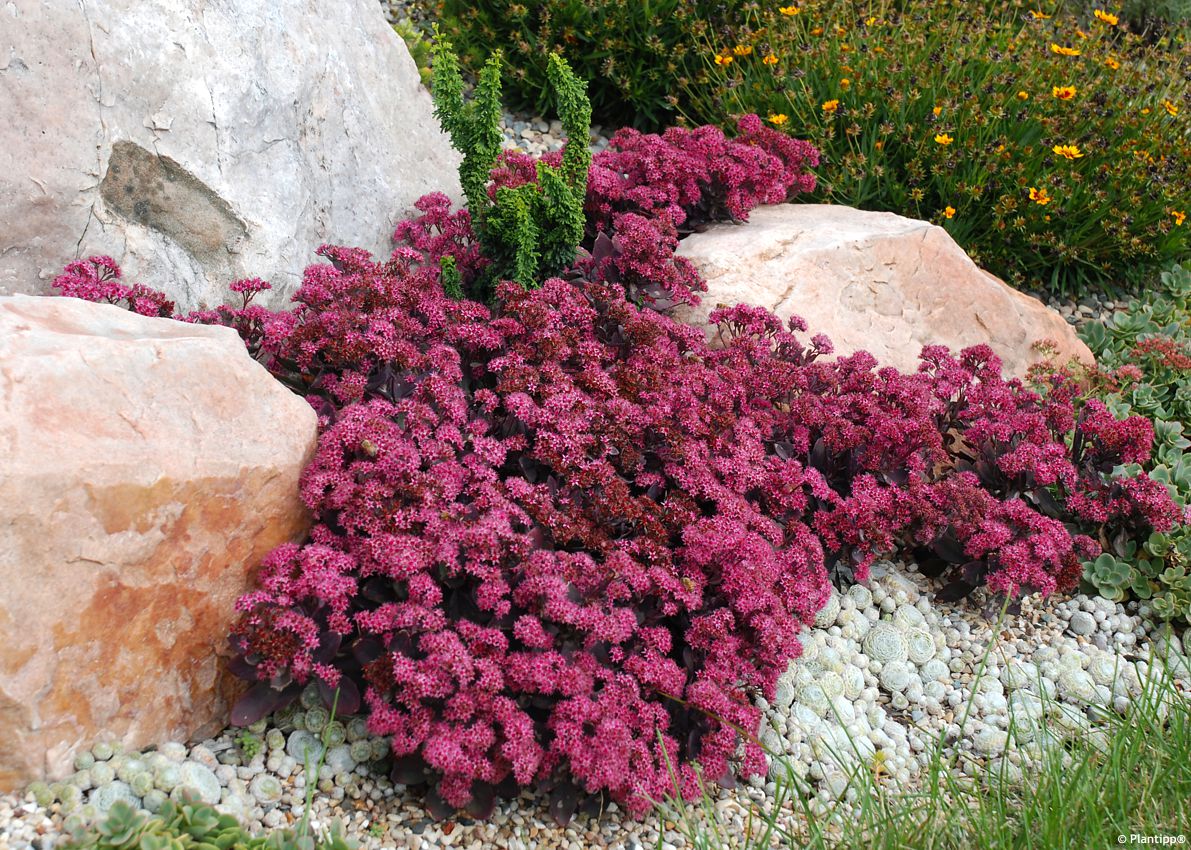
Sedum 'Pldaz2018' SUNSPARKLER® PLUM DAZZLED stonecrop, orpine

 Symbivit Tric (arbuscular)
 Symbivit (arbuscular)
Sedum
Stonecrops, botanically known as Sedum, form a vast genus of succulent plants in the family Crassulaceae, comprising hundreds of species spread across the Northern Hemisphere – from alpine crevices to Mediterranean slopes. They are masters of survival, not only for themselves but for their surroundings: their fleshy leaves store water, their flowers offer nectar to pollinators even in drought, and their growth strategy adapts to extreme conditions. The genus was systematically and comprehensively described by Swedish botanist Carl Linnaeus in 1753 in his landmark work Species Plantarum, where he included 15 species, notably the iconic Sedum acre. The Latin name Sedum derives from sedere (“to sit”) referring to their low, ground-hugging habit.
Stonecrops are among the most ancient evolutionary lineages of flowering plants. Fossil evidence from the Eocene epoch (about 40 million years ago), found in the Green River Formation of present-day Wyoming, reveals plants with morphology strikingly similar to modern Sedum — fleshy leaves, star-shaped flowers, and a low-growing habit. Although not classified directly as Sedum, their features match early representatives of the Crassulaceae family. This suggests that the succulent survival strategy of these plants began evolving at a time when the climate was shifting toward greater seasonality and aridity.
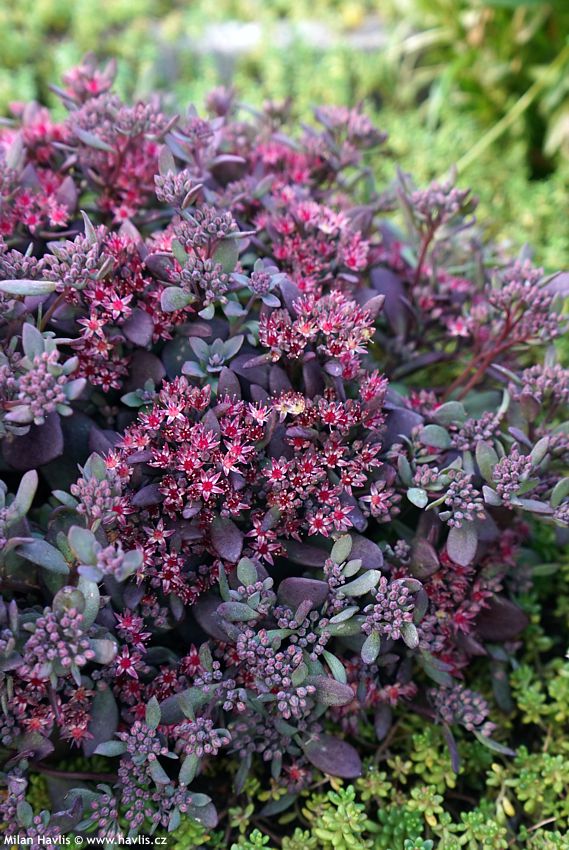
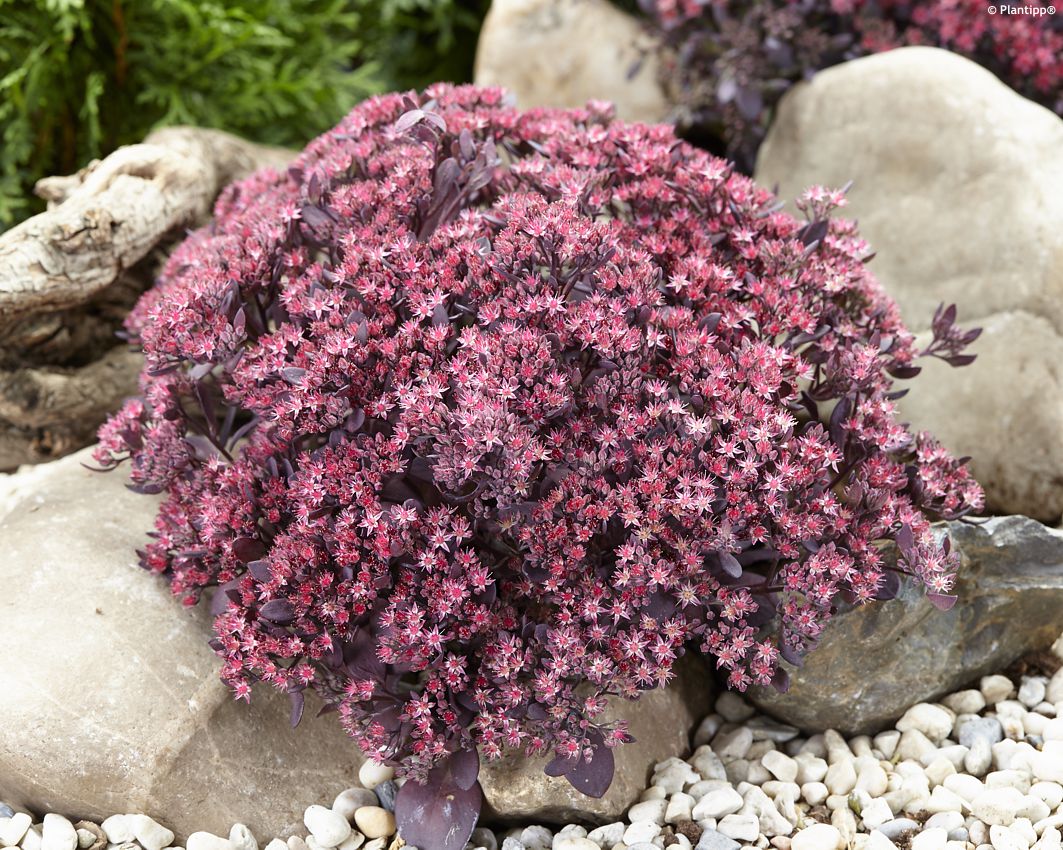
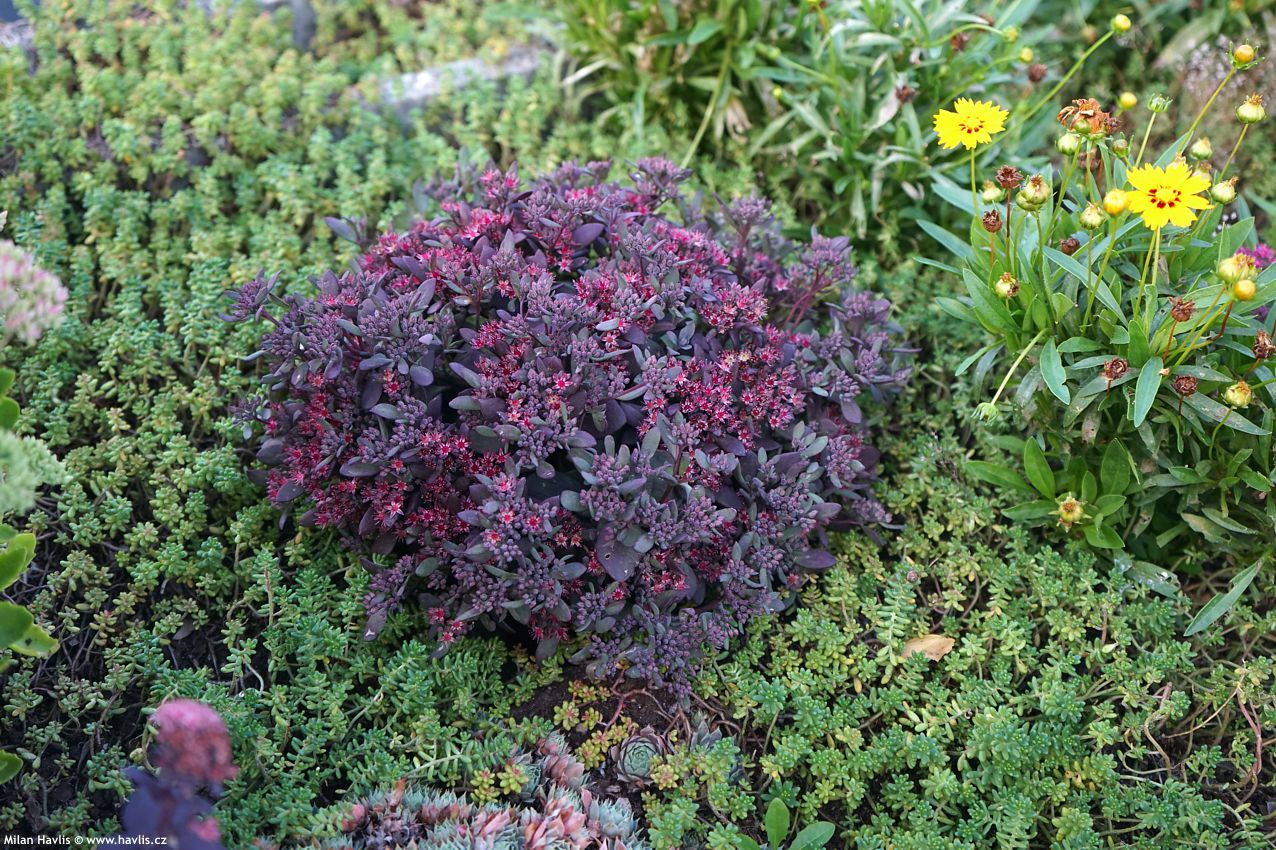
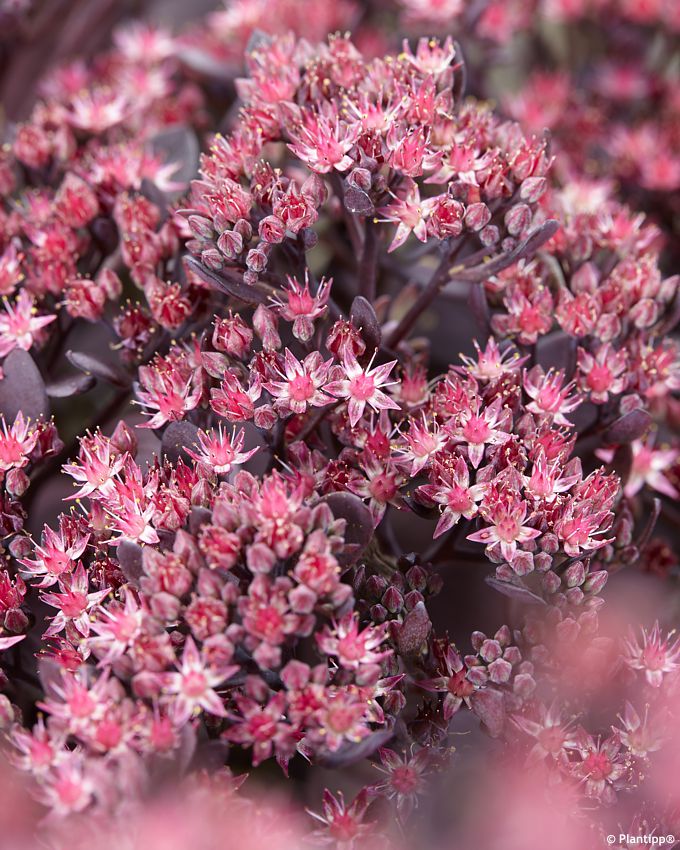
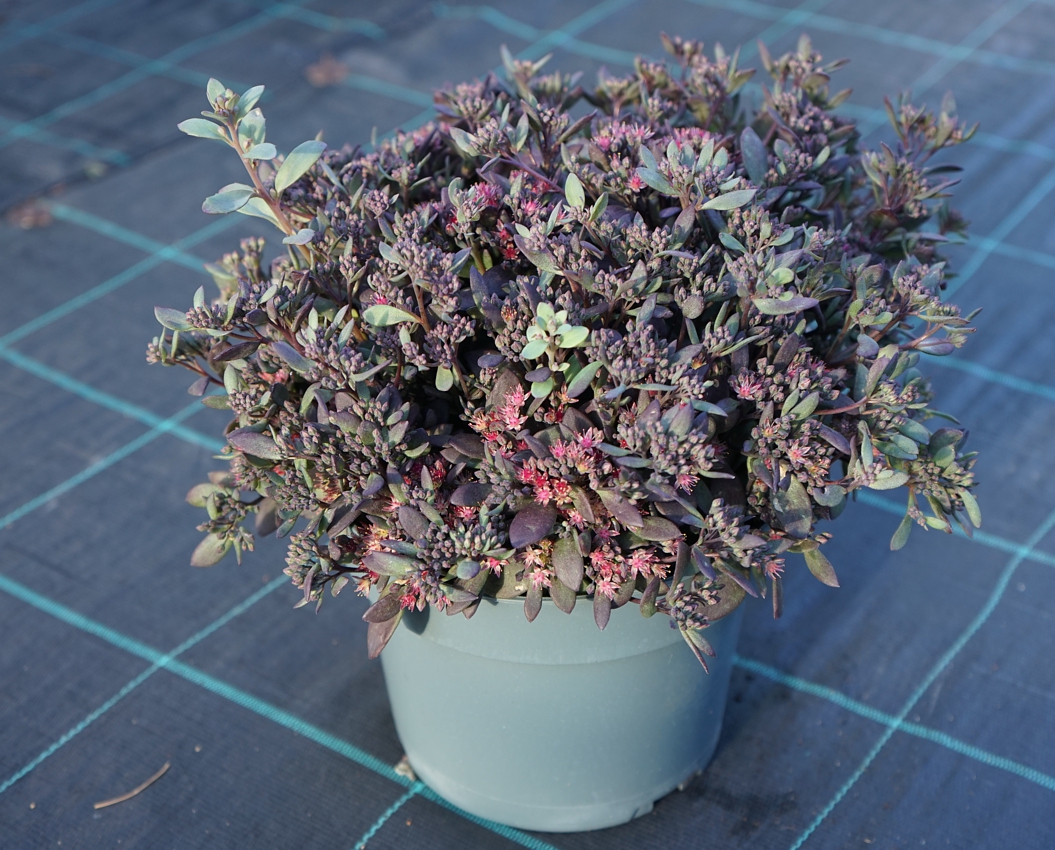
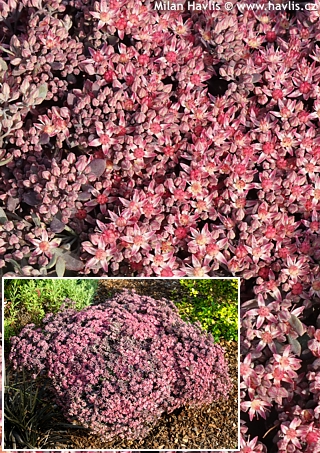
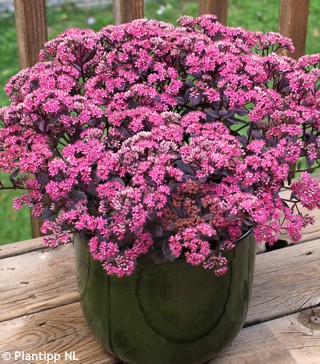
PLUM DAZZLED stonecrop from the SUNSPARKLER® series, bred by Chris Hansen in Michigan, belongs among the most colour‑attractive varieties. Its young spring foliage emerges in a deep plum shade with a matte finish, as each leaf is covered with a fine waxy layer that gives it a lightly frosted appearance. In late summer it produces dense clusters of small pink flowers, creating a gentle yet unmistakable contrast with the dark foliage. The flower colour is striking, but unlike some other cultivars – such as the neon‑bright FIRECRACKER from the same series – it remains calm and refined, like pink pearls set against dark velvet. The inflorescences are firm, abundant and highly attractive to bees and bumblebees. The leaves are small and fleshy, and during flowering they show a blend of deep maroon tones and dark olive‑green. The habit of the plant reflect one of its parents, Sedum cauticola, a low, slightly mat-forming species with small leaves, while the second parent, Hylotelephium telephium, contributes generous flowering and stronger stems.
In the garden, the SUNSPARKLER® PLUM DAZZLED stonecrop works well as a low groundcover for sunny, dry sites, where it forms a dense carpet of colour with late summer flowering. It performs reliably in gravel borders and prairie plantings, where its dark foliage highlights lighter perennials such as catmint, yarrow, sage or ornamental grasses. It also combines well with other succulents, including sempervivums, delospermas or low thymes, which appreciate the same soil conditions. Next to plants with silvery foliage, such as wormwood, helichrysum or senecio, it acts as a strong contrasting element. In containers it keeps its shape and colour throughout summer and forms an attractive spill, making it suitable for terraces and balconies. Thanks to its late flowering it provides bees and bumblebees with a valuable source of nectar at the end of the season. The cultivar is protected by European PBR No. 55351 from 2016.
American plant breeder Christopher M. Hansen is the kind of person who can ignite not just a spark but a whole firework of enthusiasm for plants even in people who previously thought that “succulents are just pebbles with leaves”. That’s why his friends and colleagues call him Sparky. His passion began at the age of five, when he collected his first houseleeks, and he hasn’t stopped since: he went through the Missouri Botanical Garden, Longwood Gardens, and Wayside Gardens, where he learned the craft in depth. Today he leads his own company and team at Garden Solutions and introduces series that carry exactly his kind of energy – SunSparkler® sedums, Chick Charms® sempervivums, Gnome Domes® orostachys, and even the Winter Thriller® hellebores, which were in fact his first major success. Sparky is a breeder who tests plants under extreme conditions, loves colour, contrast, and playfulness, and aims to bring joy back into gardens. His projects are not just about genetics – they are about helping people fall in love with plants as spontaneously as he once did, and that resonates with me deeply.
Last update 16-09-2026
Ground-covering stonecrop needs very well-drained soil and doesn’t tolerate excess moisture – heavy soil or constantly wet spots may cause root and stem rot. Beyond that, care is minimal: no fertilizing, pruning, or winter protection required. In spring, remove old stems by cutting them close to the ground and allow fresh growth to emerge from below. Don't snap the stems off – use pruning shears to avoid damaging new buds forming at the base, often already present from the previous autumn. Watch out for slugs and act promptly if they appear. It is hardy down to min. –34 °C (USDA zone 4) and suitable for well-drained planters.
.jpg)
Goods are shipped all over Europe. For Russia and U.K. and for further details please read about SHIPPING OPTIONS HERE.
Are you interested in a serious discount for orders NOV-FEB? Check your options here.
THE PRICES INCLUDE VAT of 15%. For quick conversion you can use 1 CZK = approx. 0.04 EUR
- STANDARD QUALITY - Plants of this group are 1st class quality with number of branches and overall density adequate to their size and age, considering they were container grown.
- DE LUXE QUALITY - This label guarantees a luxurious quality of manually selected plants that, compared to their height and age, are exceptionally dense and beautiful.
- EXTRA - These plants are usually mature and bigger specimens with exceptional overall appearance.
- STANDARD (as described in the plant form) means a tree with a trunk of 190-210 cm and a crown at the top, unless specified differently. The commercial size for trees is their girth measured in the height of 1m from ground.
- HOBBY - These plants are of the same quality as our standard-quality plants but younger and therefore cheaper.
- SHRUB - a woody plant with branches growing bushy from the ground level.
- HALF-STANDARD or MINI-STANDARD - a small tree with shorter trunk, its size is usually specified.
- FEATHERED - These are trees with branches growing already from the base of the trunk and up along the stem.
- GRASSES and PERENNIALS - Sizes given usually read the diameter of the pot or the clump, as specified.
