

































.jpg)
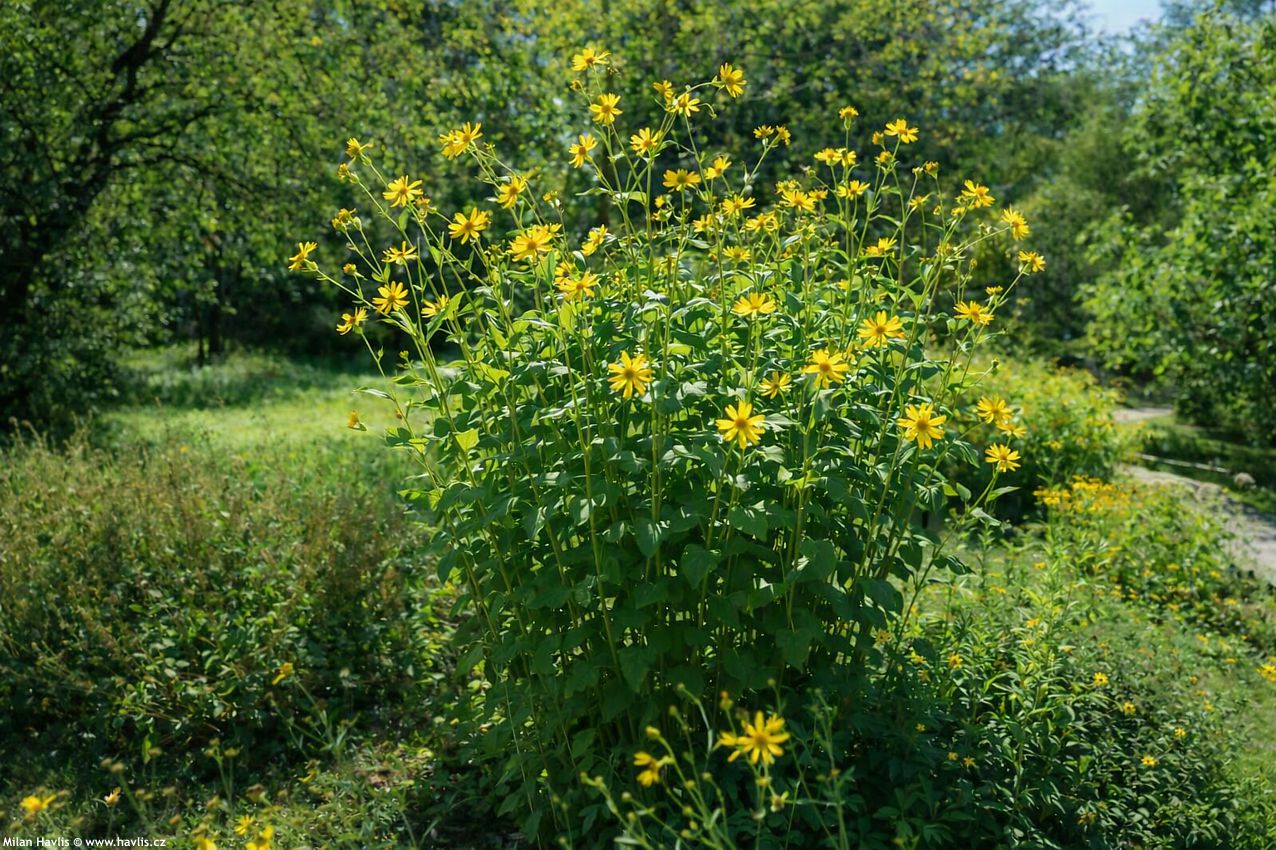
Silphium perfoliatum cup plant

Silphium
The genus Silphium, known as rosinweed, belongs to the Asteraceae family and includes around twenty species native mainly to the eastern and central parts of North America, where they inhabit prairies, open woodland edges and dry rocky slopes. Fossil evidence is scarce, yet it suggests that the genus is old and stable, with a long evolutionary link to continental prairie ecosystems. It was formally described by Carl Linnaeus in Species Plantarum in 1753, and minor nomenclatural debates have followed ever since, especially regarding the delimitation of certain species that overlap in morphology and distribution. Silphium is characterised by its robust stems, coarse leaves and striking yellow flower heads held high above the surrounding vegetation, acting as prairie beacons. Individual species have different survival strategies: some develop deep taproots, others form massive rhizomes, which explains their exceptional resilience to drought and fire. The combination of robustness, longevity and the ability to thrive in poor soils makes Silphium one of the most intriguing genera of North American prairie plants.
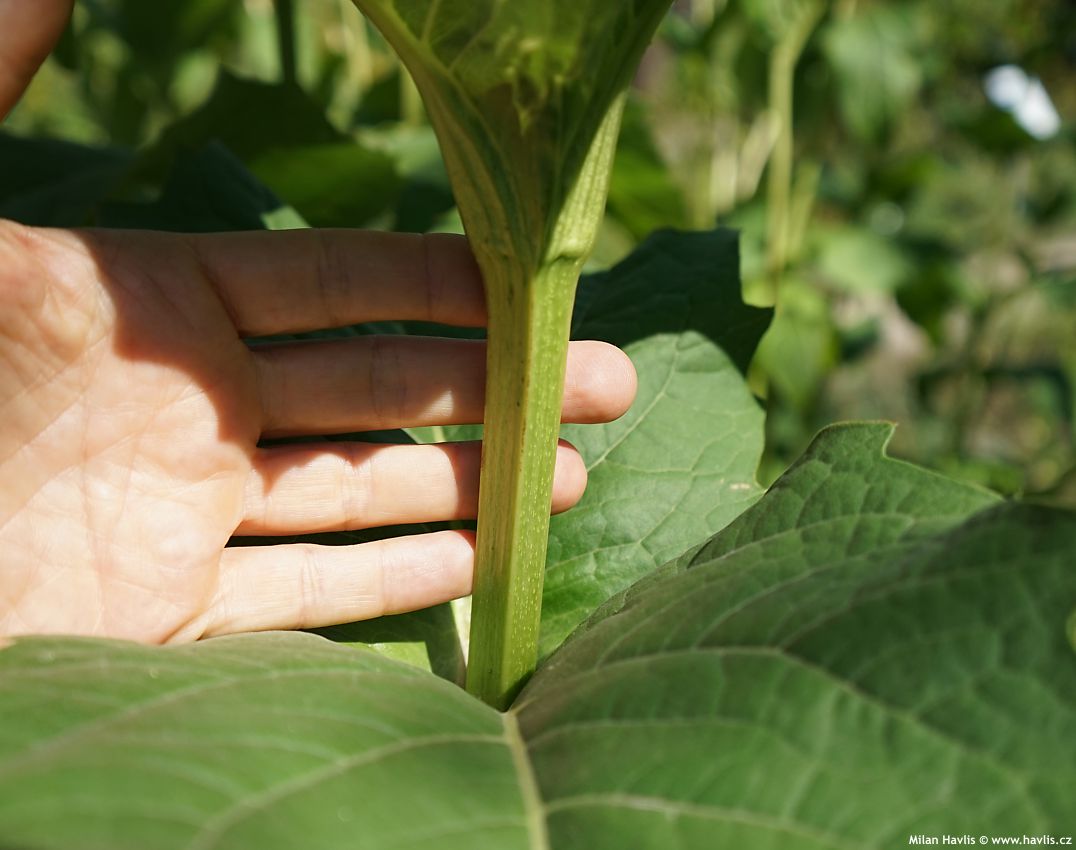
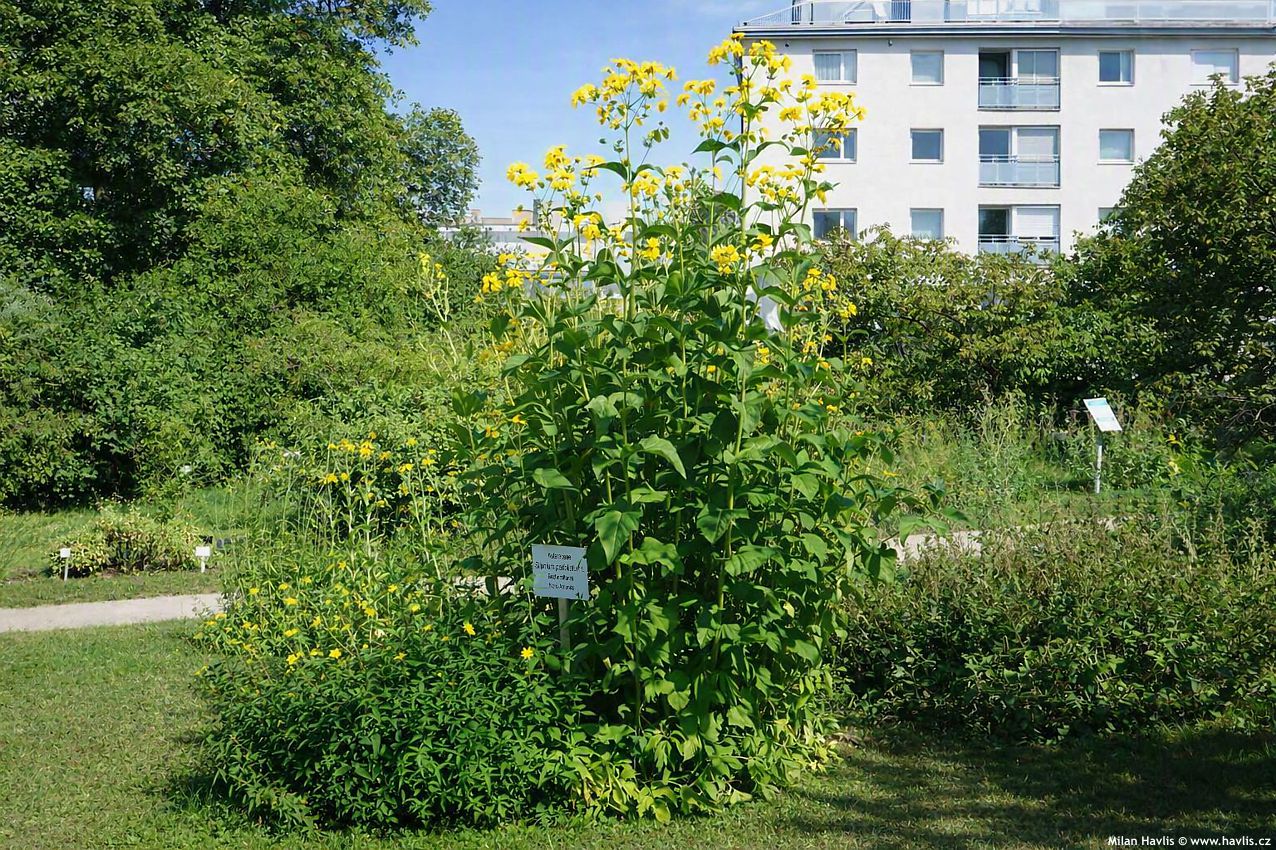
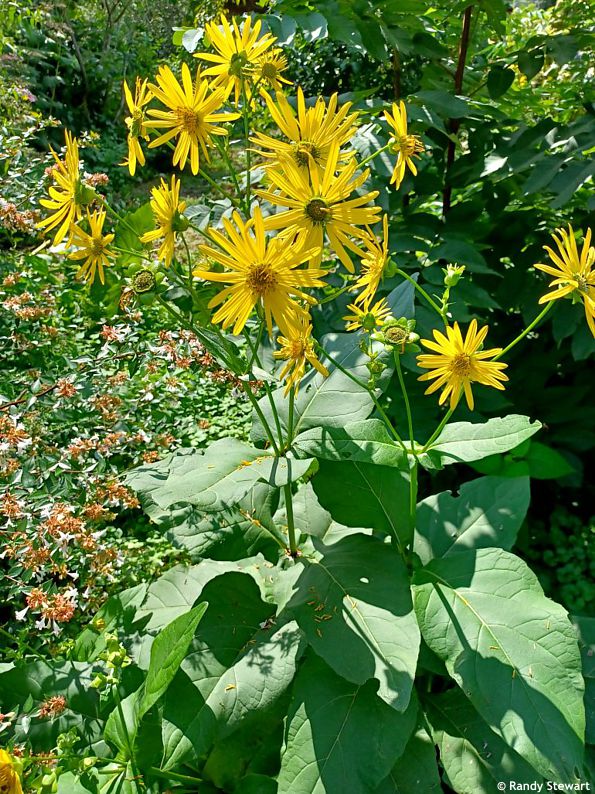
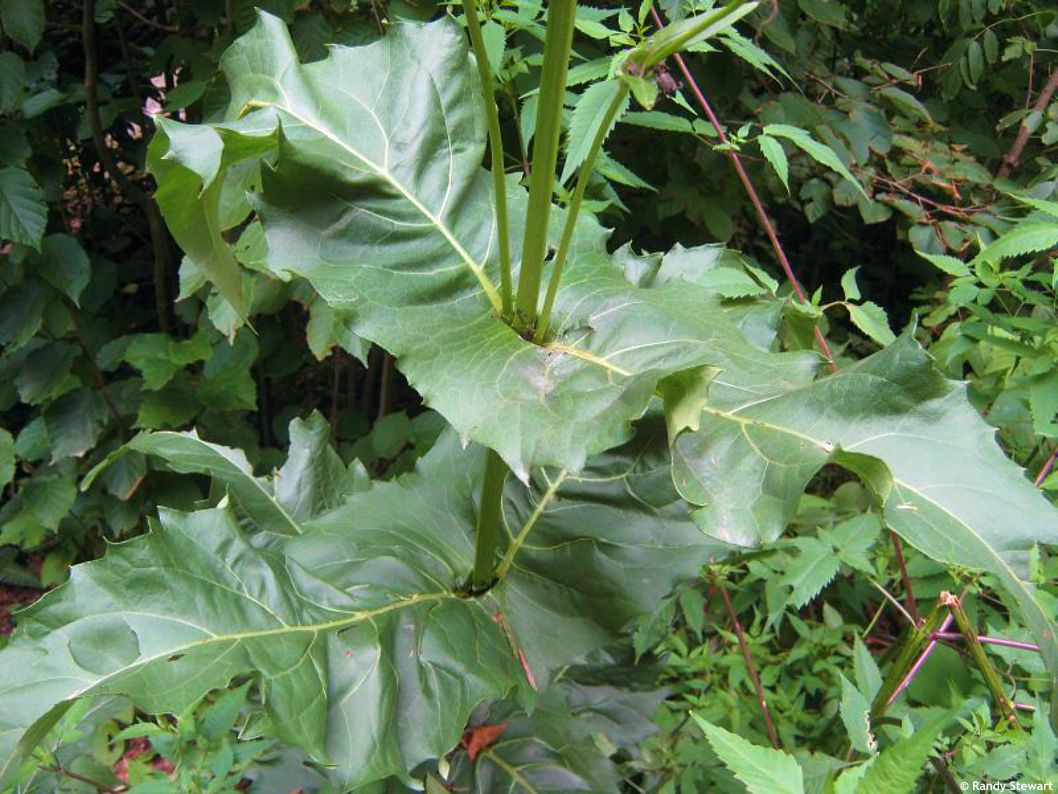
Silphium perfoliatum, known as cup plant, is one of the most distinctive species of the North American prairies. Its home lies in the wetter prairie meadows and woodland edges of the eastern part of North America, where it forms striking landmarks in the landscape. The species received its English common name when settlers noticed an unusual feature: the opposite leaves clasping the stem create small cups that collect rainwater. These natural “cups” served as drinking spots for birds and small animals. Cup plant also acted as a landmark for people, as its tall and robust stems were visible from afar. In the nineteenth century it entered agricultural trials thanks to its size and productivity, and in the former Soviet Union it was even grown as a forage crop with two harvests per year. Today modern agronomy has returned to the species. It is being studied as a perennial energy crop that could replace annual maize in biomass production.
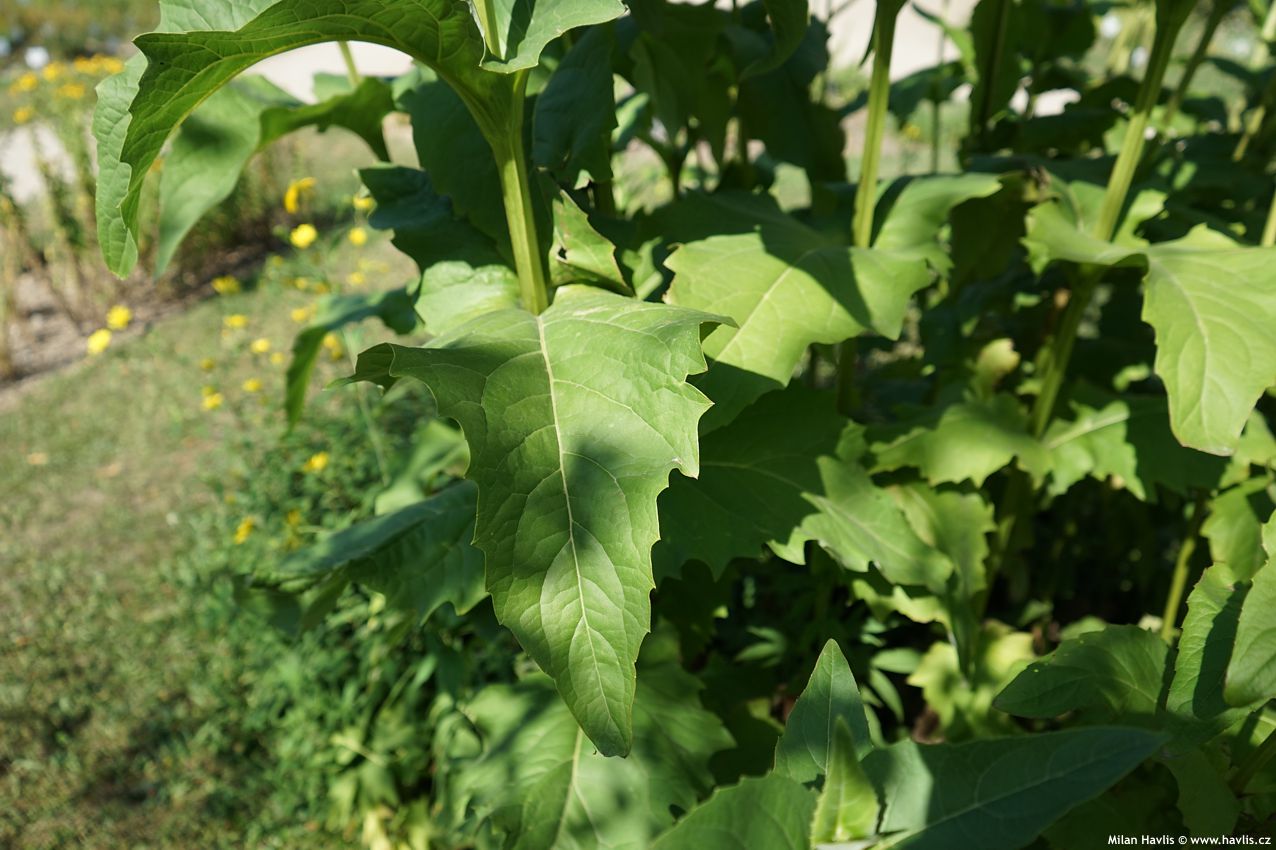
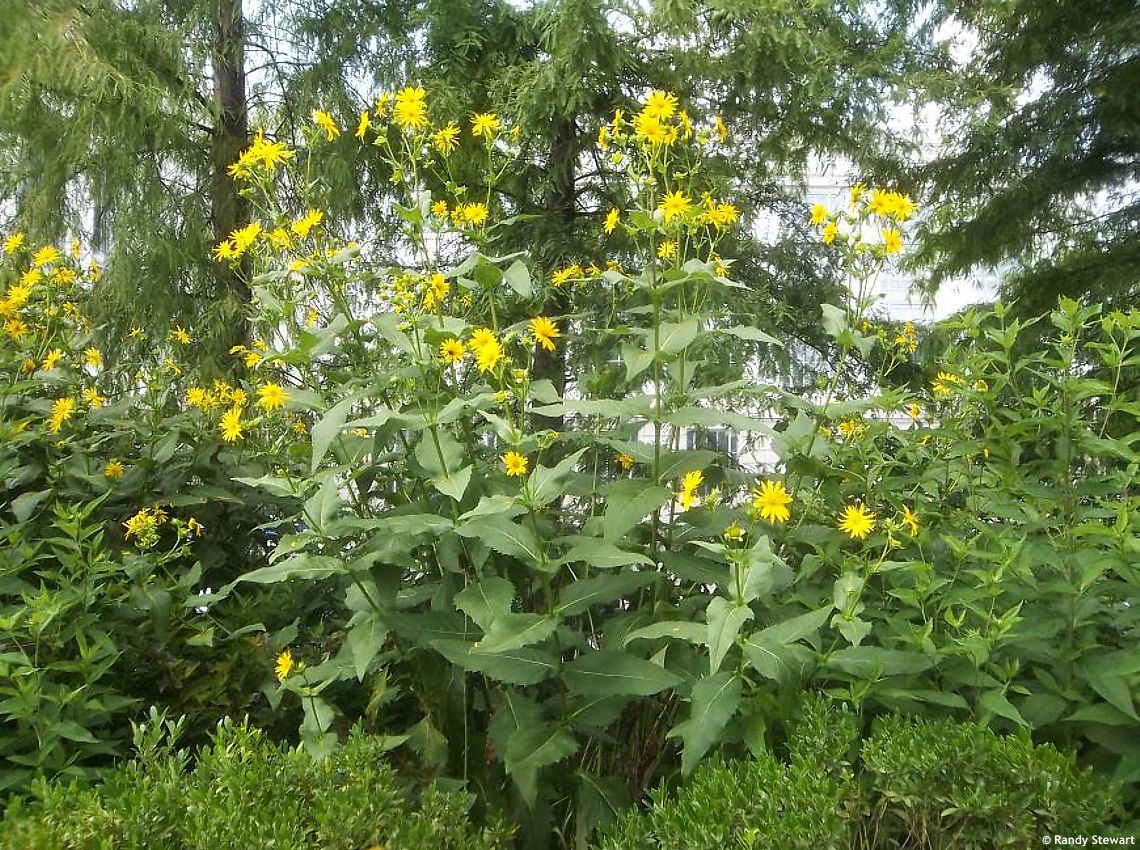
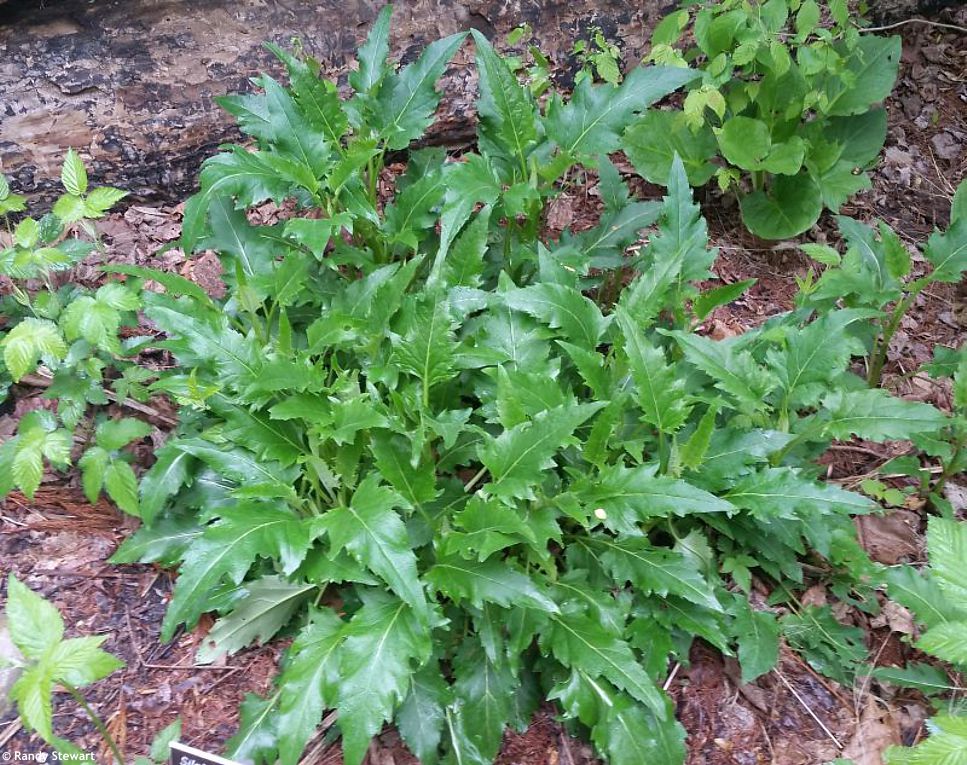
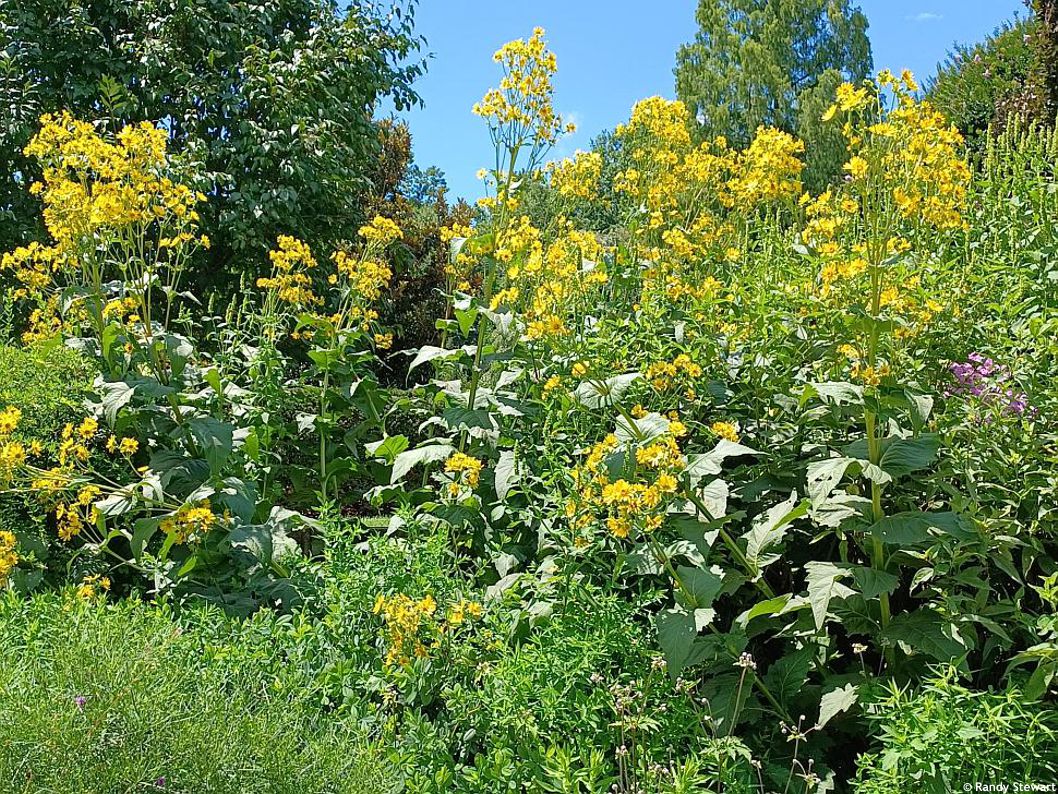
Cup plant is one of those prairie species you notice immediately. It is a very tall perennial that reaches between 2 and 2 metres in height, flowers included, depending on conditions, and it never disappears in the background. You recognise it by its massive, four‑angled stems wrapped in large, coarse leaves 30 to 40 cm long, clasping the stem so tightly that they form the characteristic little cups. These leaf “cups” are not just a curiosity. They catch water running down the stem and provide moisture for the plant and for birds and small animals in locations where water is scarce.
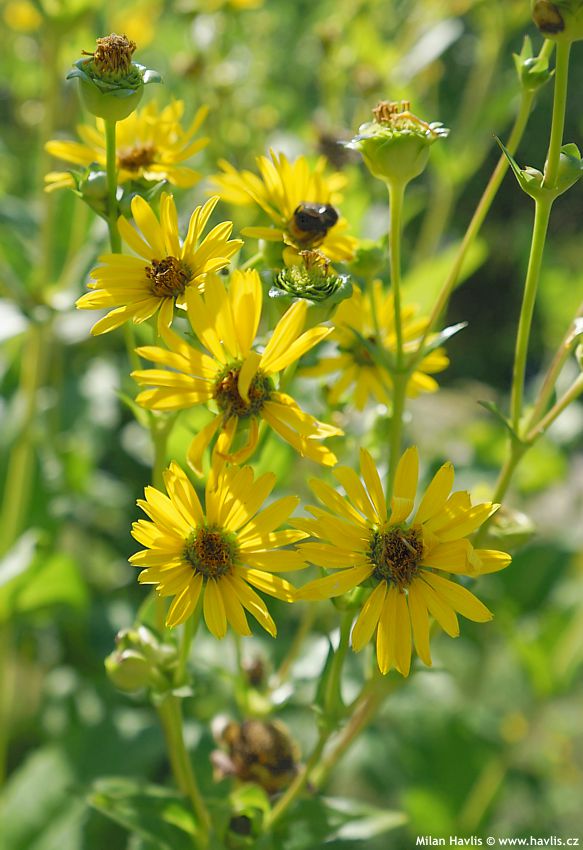
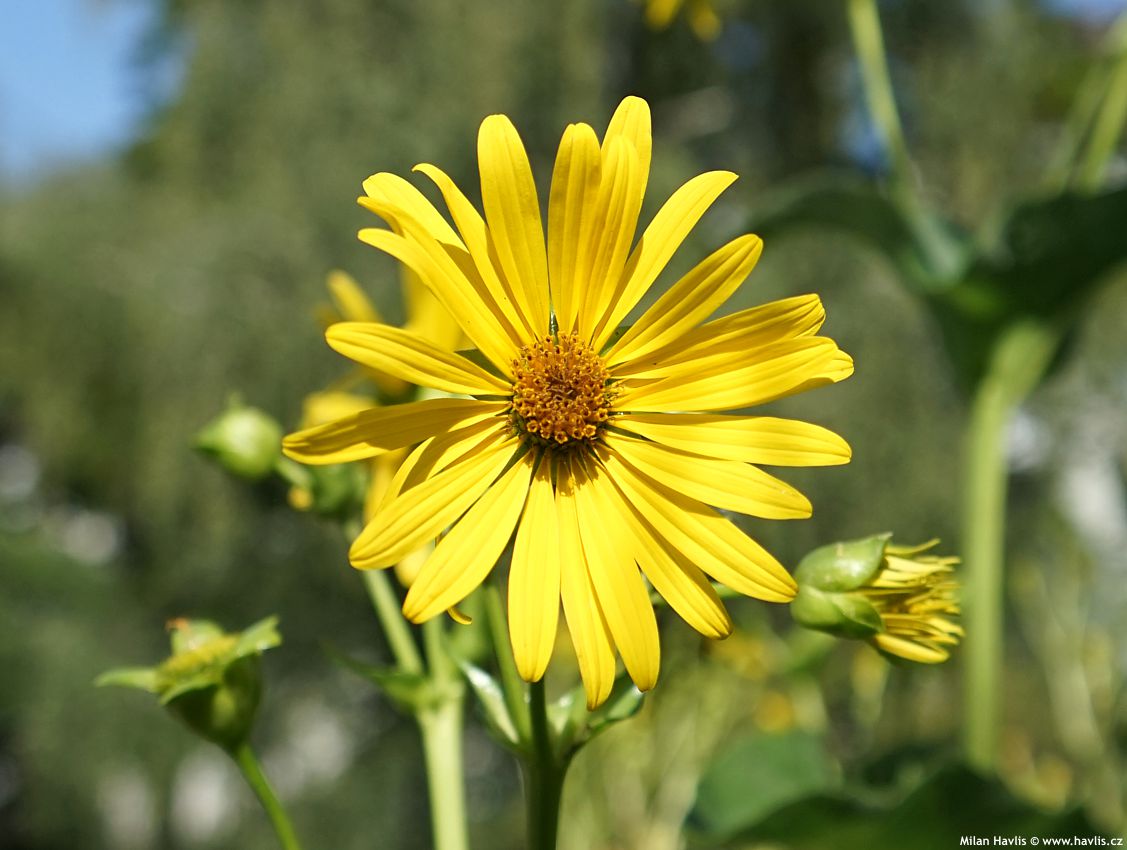
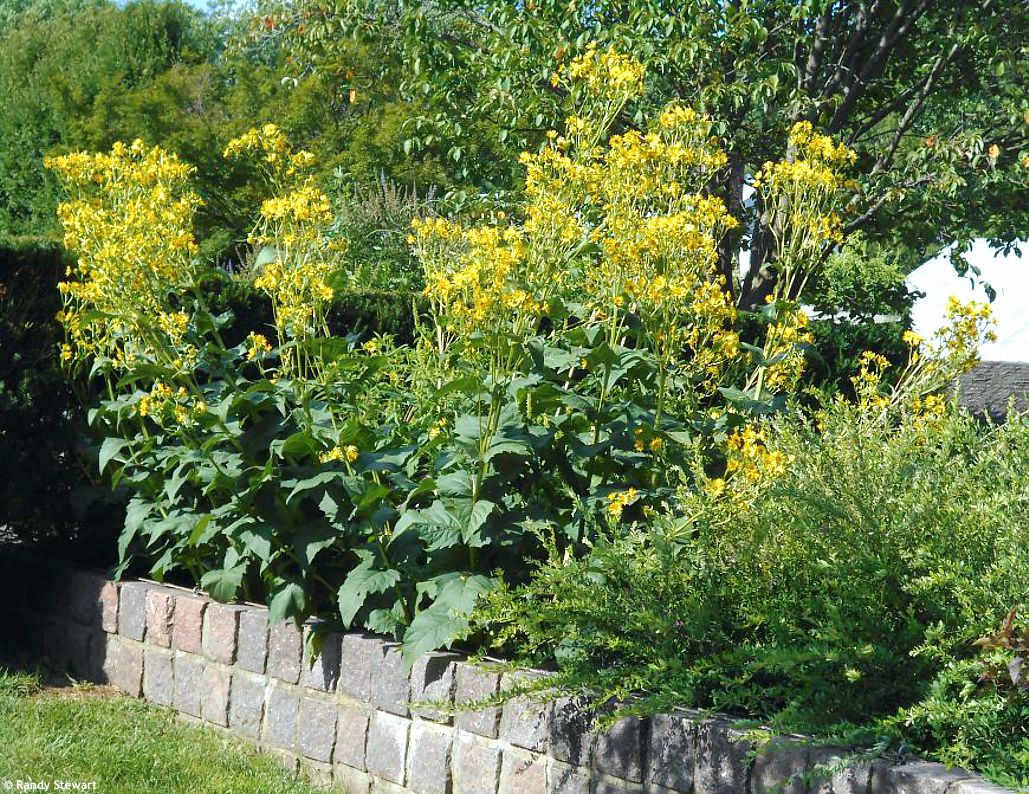
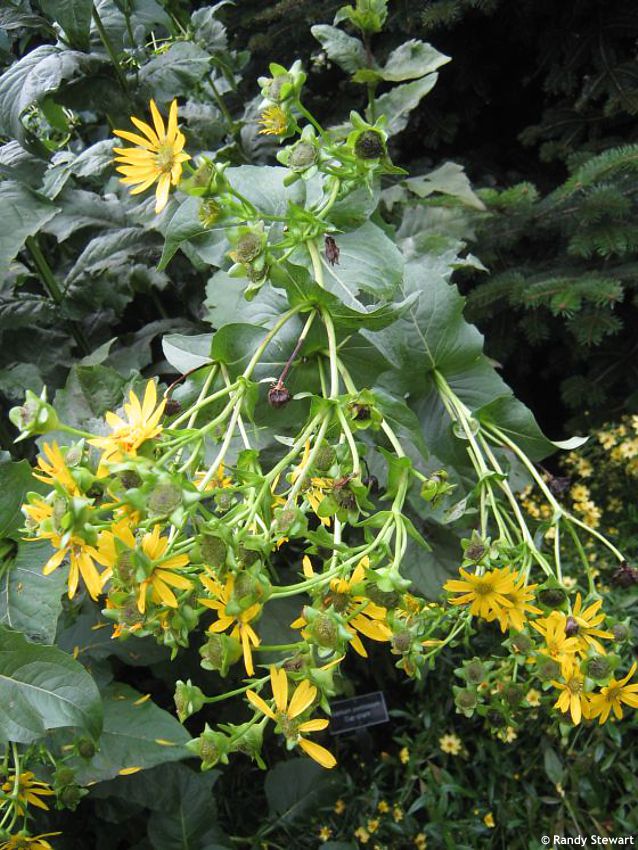
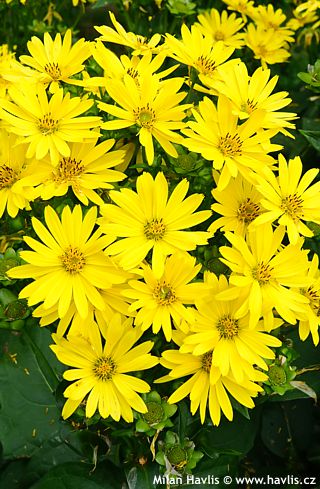
The flowers are typical for the Asteraceae family, like oversized bright yellow daisies 5 to 6 cm across, occasionally up to 8 cm, arranged in terminal panicles. A single panicle usually carries around 15 flower heads, but in fertile soil and a long summer it can produce up to 50, so the whole structure bends slightly under their weight like a heavy raceme. Flowering begins in early or mid-August and continues until the end of September.
Cup plant is a substantial perennial, whether in tall or shorter cultivars and species. It performs best when planted in groups, where it creates a visible mass of foliage and later a long season of bright flowers. As a moisture‑loving perennial it pairs well with heleniums, joe‑pye weeds and swamp mallows. Dark‑leaved bugbanes provide contrast in colour and texture, ligularias offer a different flower form and leaf shape, trollius brings earlier flowering and the front of the border can be filled with astilbes, marsh marigolds or heucheras.
Last update: 14-08-2026
Rosinweed prefers sunny positions and deeper, fertile soil that is not permanently waterlogged, although occasional flooding does not harm it. It copes well with heavier clay soil because of its nutrient content, which supports stronger growth and larger leaves. Its prairie origin means an extremely deep root system. Once established it tolerates long summer droughts because the taproot penetrates deep into the soil, while the upper layers may be dry. It forms short rhizomes that expand slowly into larger clumps without becoming invasive. This is used in effective single‑species plantings with a spacing of 30 to 40 cm, which fill within three years. It does not require fertilising, mulching or winter protection. All above‑ground parts are cut back to ground level at the end of winter. It cannot be grown in containers, as it needs space and depth. It is hardy to around –40 °C (USDA zone 3).

Goods are shipped all over Europe. For Russia and U.K. and for further details please read about SHIPPING OPTIONS HERE.
Are you interested in a serious discount for orders NOV-FEB? Check your options here.
THE PRICES INCLUDE VAT of 15%. For quick conversion you can use 1 CZK = approx. 0.04 EUR
- STANDARD QUALITY - Plants of this group are 1st class quality with number of branches and overall density adequate to their size and age, considering they were container grown.
- DE LUXE QUALITY - This label guarantees a luxurious quality of manually selected plants that, compared to their height and age, are exceptionally dense and beautiful.
- EXTRA - These plants are usually mature and bigger specimens with exceptional overall appearance.
- STANDARD (as described in the plant form) means a tree with a trunk of 190-210 cm and a crown at the top, unless specified differently. The commercial size for trees is their girth measured in the height of 1m from ground.
- HOBBY - These plants are of the same quality as our standard-quality plants but younger and therefore cheaper.
- SHRUB - a woody plant with branches growing bushy from the ground level.
- HALF-STANDARD or MINI-STANDARD - a small tree with shorter trunk, its size is usually specified.
- FEATHERED - These are trees with branches growing already from the base of the trunk and up along the stem.
- GRASSES and PERENNIALS - Sizes given usually read the diameter of the pot or the clump, as specified.
