

































.jpg)
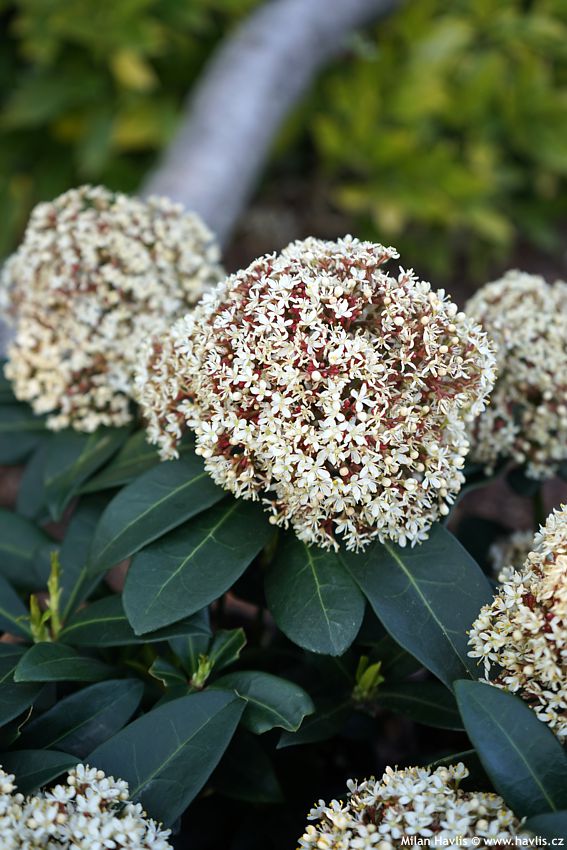
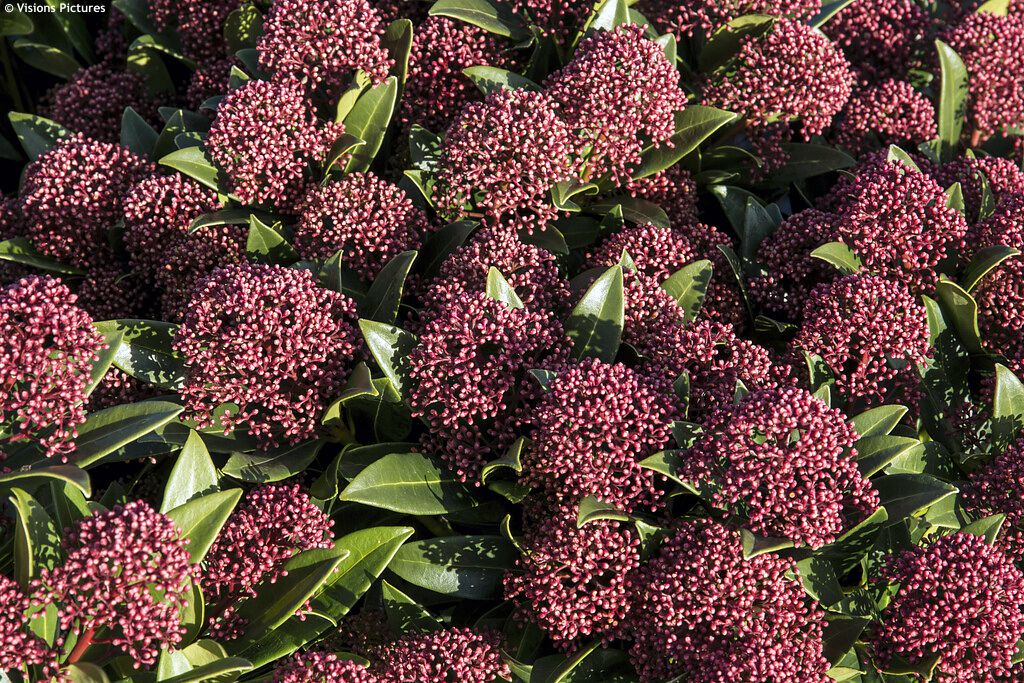
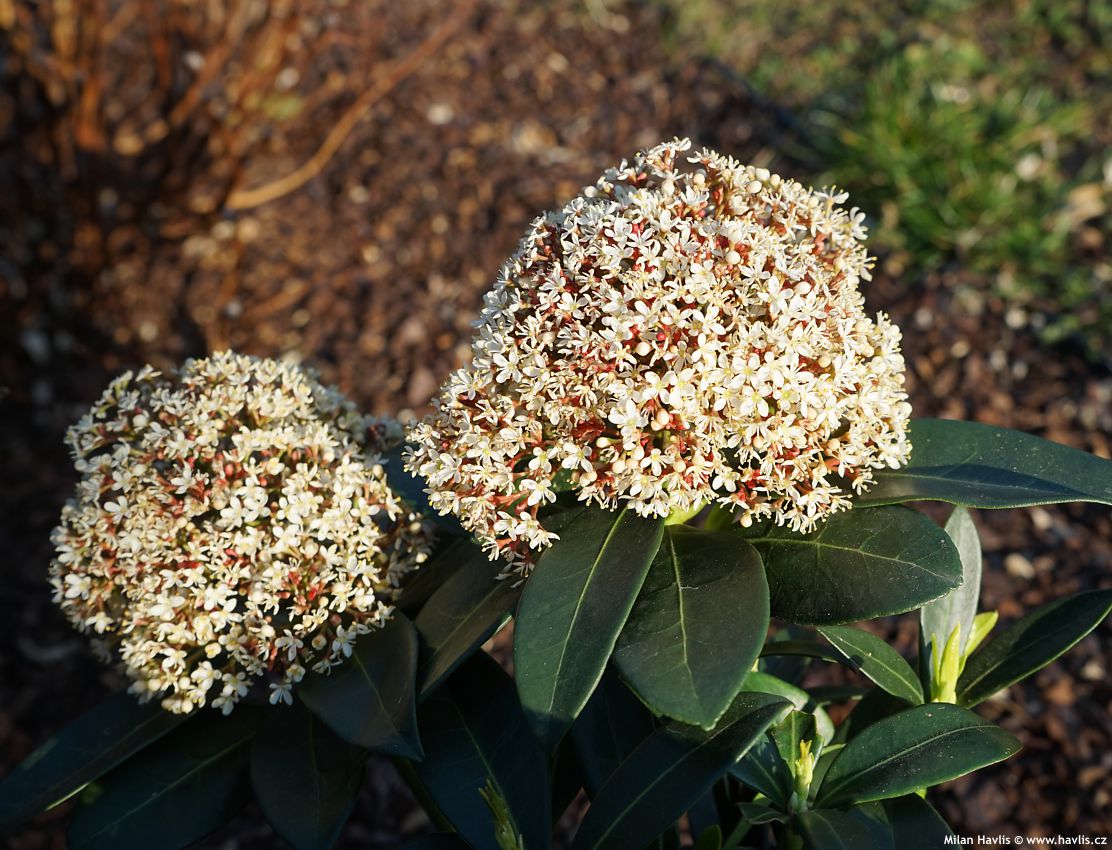
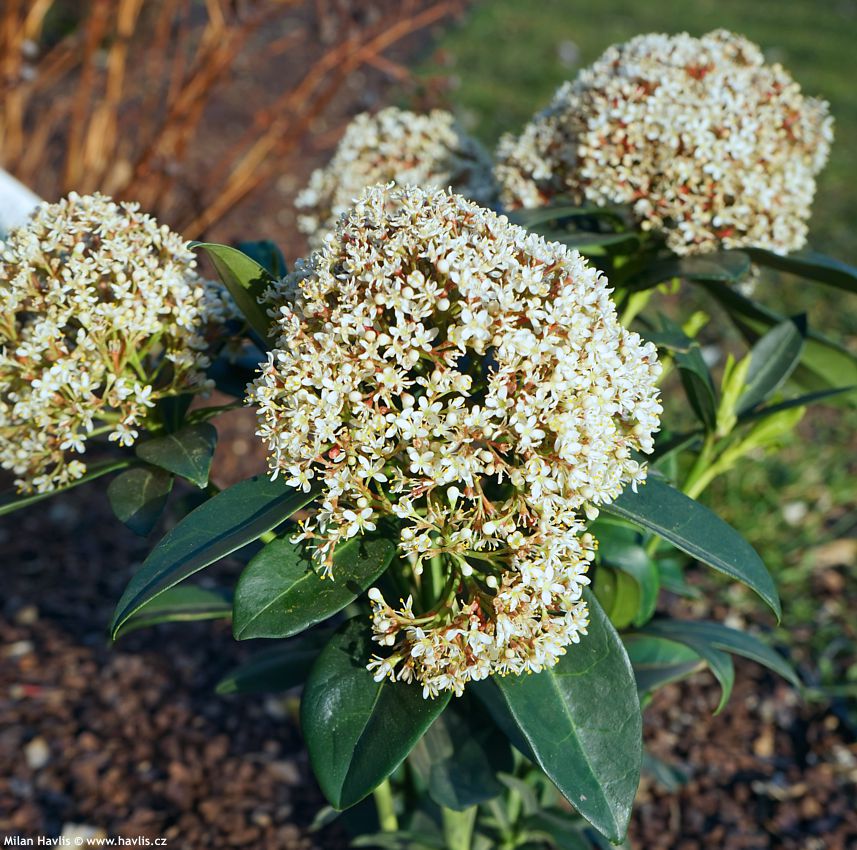
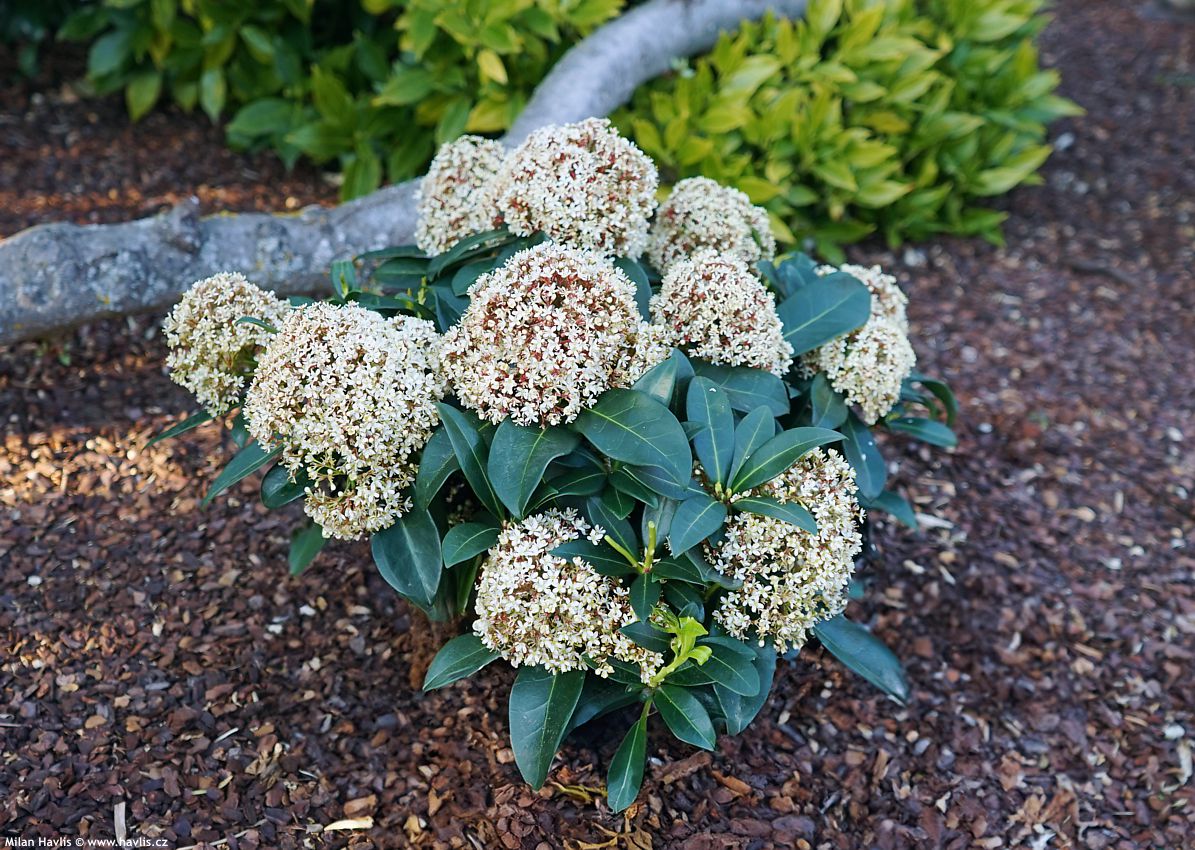
Skimmia japonica 'Moerings 4' RUBESTA® GIANT PINK Japanese skimmia (male)


Skimmia
The genus Skimmia comprises a small number of evergreen shrubs native to East Asia, particularly Japan, Korea, China and the Himalayan region. It belongs to the rue family (Rutaceae), which also includes, perhaps unexpectedly, citrus fruits, a relationship reflected in the structure of the flowers and the gently aromatic foliage. In Europe, skimmias have been known since the late eighteenth century thanks to the Swedish naturalist Carl Peter Thunberg (1743–1828), a pupil of Carl Linnaeus and one of the key figures in the early study of Japanese flora. Thunberg stayed in Japan in 1775–1776 as a physician to the Dutch East India Company and, based on the material he collected there, published his seminal work Flora Japonica in 1784, in which the genus Skimmia and the species Skimmia japonica were scientifically described for the first time. In their natural habitat, skimmias form part of the understorey of mountain forests, growing in partial shade in humus-rich, acidic soils with evenly balanced moisture. These ecological requirements later shaped their use in gardens as evergreen shrubs suited to shaded situations.
The generic name Skimmia is derived from the Japanese vernacular name miyama-shikimi (深山樒), meaning “mountain” or “wild shikimi”. In Japanese usage, the word shikimi on its own refers primarily to Illicium religiosum, an aromatic shrub traditionally associated with Buddhist rituals. The name reflects not only the similarity in leaf shape and scent between the two plants, but also cultural associations with purification, protection and calm that are linked to these aromatic shrubs in Japanese tradition. By adopting this name into scientific nomenclature, Thunberg preserved a direct connection between local usage and botanical description.
Japanese skimmia (Skimmia japonica) represents the key species that first found its way into European gardens. Its natural range includes Japan, the Ryukyu Islands and the Philippines, with forms extending as far north as Sakhalin and the southern Kuriles, and probably also parts of China and Taiwan. In Europe it was already being cultivated in the first half of the nineteenth century, as evidenced by records from the Royal Botanic Gardens, Kew, dating from 1838. Wider horticultural interest, however, followed only after a further introduction from Japan in 1861 by Robert Fortune for the nursery of Standish & Co. An initial wave of enthusiasm culminated in an award for fruiting plants exhibited in 1864, but disappointment soon followed when many distributed plants failed to produce the expected decorative berries. The reason lay not in cultivation errors, but in the biology of the species itself, its dioecious nature, which at the time was understood by very few gardeners. This fact became generally accepted only after Maxwell T. Masters published his study of skimmias in 1889. As a result, skimmia found its place in European gardens less as a showy specimen and more as a bearer of calm. It acts as a quiet, permanent backdrop beneath the canopies of trees and large shrubs, evoking an atmosphere close to the zen concept of the garden, where harmony, balance and endurance matter more than immediate effect.
RUBESTA® GIANT PINK represents a further step in the targeted breeding of Japanese skimmias, a programme long pursued in the Netherlands by Adrianus Jozeph Moerings. It builds on the success of the original RUBESTA® and its predecessor Rubella, placing emphasis on a stronger floral effect and a more robust overall impression while retaining a compact habit. The cultivar is protected by European Plant Breeders’ Rights (PBR), registration EU 34653, granted in 2013.
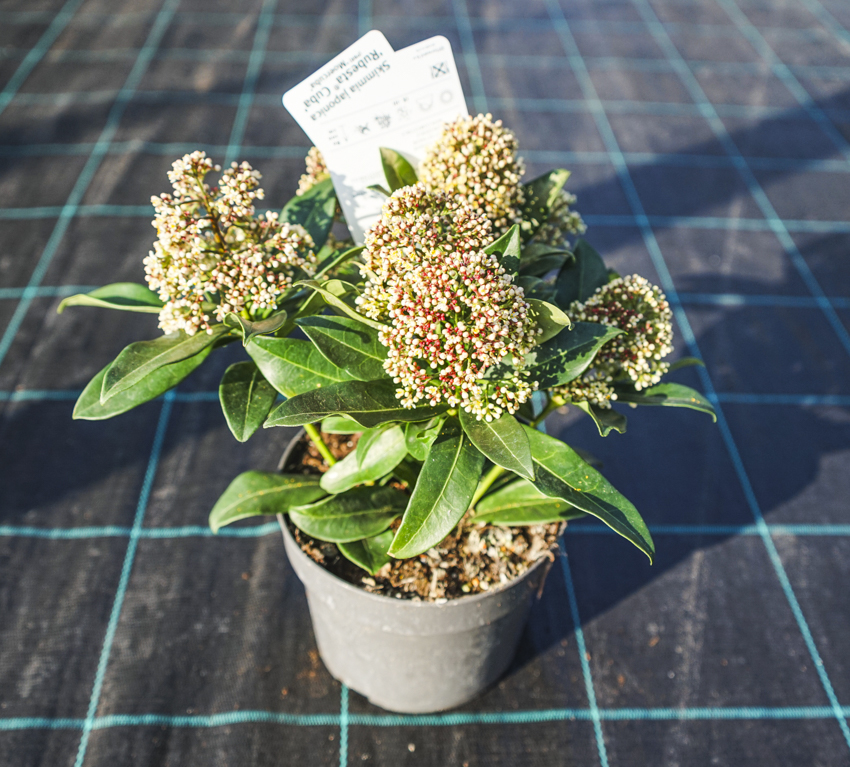
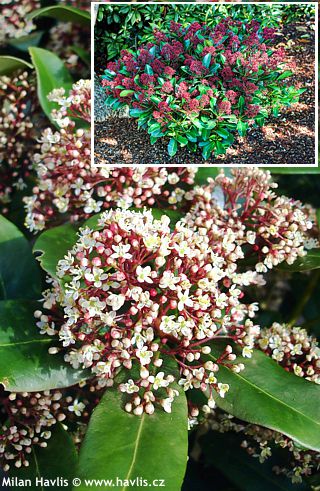
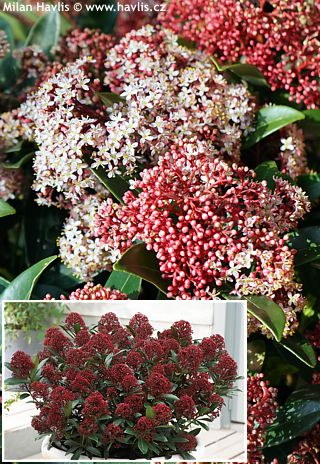
Whereas the basic RUBESTA® attracted attention mainly through the density and regularity of its growth, GIANT PINK raises the visual impact to a higher level, above all through its conspicuously larger flower buds and their richer colouring. The designation GIANT does not refer to the overall size of the shrub, but to the exceptionally large terminal clusters of buds, among the biggest found in male Japanese skimmias. These clusters give the plant its clear distinction from earlier cultivars. The epithet PINK relates not to the flowers themselves, which open to a creamy shade, but to the buds, which from autumn through to spring glow in vivid pink to fuchsia tones. In cold weather this colouring is at its most intense, and the shrub appears almost in flower despite being in deep winter dormancy. Flowering takes place in late March and early April and is accompanied by a strong, sweet fragrance.
The leaves are evergreen, leathery and highly glossy, deep green in colour, forming a calm, dark background for the striking bud clusters. Combined with slow, dense growth, this creates a shrub that appears neither sprawling nor untidy, but rather as a carefully composed whole in which each element has its place. RUBESTA® GIANT PINK is a male cultivar and therefore does not produce berries, but it serves as a reliable pollinator for female cultivars. Thanks to its naturally compact habit, it retains its shape over many years without the need for pruning. In garden design it is best used in shaded or partially shaded areas, where it provides a tranquil backdrop for spring bulbs at the front of borders or blends naturally with ferns and shade-loving perennials. It also fits beautifully into heath-style plantings with Japanese azaleas and pieris, bringing a strong seasonal effect at a time when most of the garden is still waiting.
Skimmia is an undemanding shrub that requires little routine maintenance, provided it is correctly sited and well planted. It needs consistently moist but very well-drained soil rich in nutrients, particularly iron and magnesium. The substrate should be light, humus-rich and acidic, ideally improved with leaf mould and peat to maintain suitable structure and pH. It thrives best in partial shade to deep shade, for example on the north side of a building or beneath broad-canopied trees that provide summer shade and diffuse strong winter sunlight. Pale or yellowing leaves usually indicate unsuitable conditions, too much direct sun, waterlogging, or poor, insufficiently acidic soil lacking iron. Skimmia tolerates urban conditions and air pollution well. It is fully hardy to at least −27 °C (USDA zone 5) and, in sheltered, non-sunny positions, also performs well in wider, relatively shallow outdoor containers with good drainage. If small pale speckles appear on the leaves, check the undersides, as they may indicate infestation by rhododendron lace bug, particularly on weakened plants. Thanks to its calm appearance and year-round effect, skimmia is also well suited to modern containers outside cafés and restaurants. The entire plant is poisonous.
Last update 15-03-2026
Goods are shipped all over Europe. For Russia and U.K. and for further details please read about SHIPPING OPTIONS HERE.
Are you interested in a serious discount for orders NOV-FEB? Check your options here.
THE PRICES INCLUDE VAT of 15%. For quick conversion you can use 1 CZK = approx. 0.04 EUR
- STANDARD QUALITY - Plants of this group are 1st class quality with number of branches and overall density adequate to their size and age, considering they were container grown.
- DE LUXE QUALITY - This label guarantees a luxurious quality of manually selected plants that, compared to their height and age, are exceptionally dense and beautiful.
- EXTRA - These plants are usually mature and bigger specimens with exceptional overall appearance.
- STANDARD (as described in the plant form) means a tree with a trunk of 190-210 cm and a crown at the top, unless specified differently. The commercial size for trees is their girth measured in the height of 1m from ground.
- HOBBY - These plants are of the same quality as our standard-quality plants but younger and therefore cheaper.
- SHRUB - a woody plant with branches growing bushy from the ground level.
- HALF-STANDARD or MINI-STANDARD - a small tree with shorter trunk, its size is usually specified.
- FEATHERED - These are trees with branches growing already from the base of the trunk and up along the stem.
- GRASSES and PERENNIALS - Sizes given usually read the diameter of the pot or the clump, as specified.
