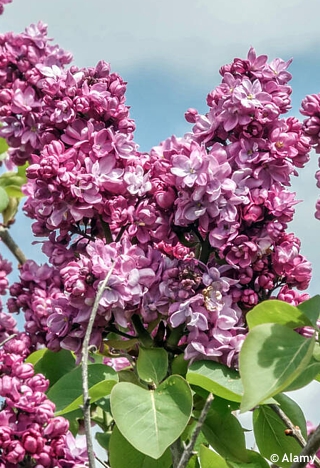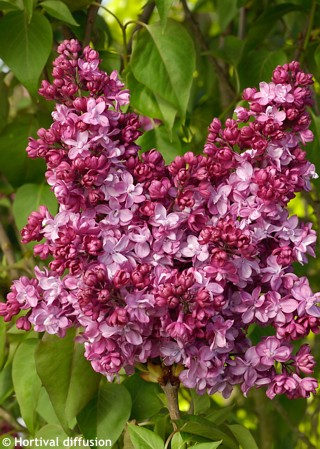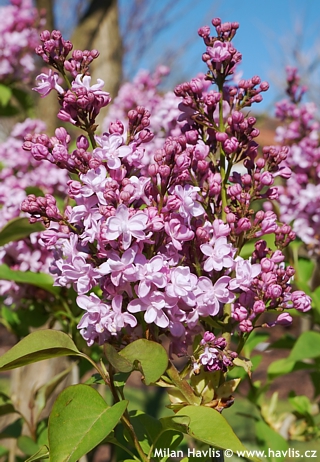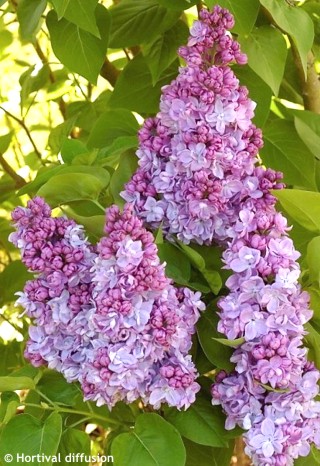
Syringa vulgaris 'KATHERINE HAVEMEYER' common lilac

 Symbivit Tric (arbuscular)
 Symbivit (arbuscular)
Syringa
Lilacs, although not native to Czechia, belong among our most common shrubs. In literature and art, they are associated with May as a month of love, e.g., in The Barrel-Organ poem by Alfred Noyes (1903). They are profusely flowering deciduous shrubs or small trees whose undemanding cultivation helped them become a household name in many temperate gardens around the world. And sometimes they escape those to live happily in the wild, out of maintained areas. Lilac is from the olive family which consists of about 615, often vastly heterogeneous species. Apart from its ornamental purpose, it was used in natural healing and is used in modern pharmacy still today. Its sturdy but flexible wood is used in furniture making for small elements, and above all it was believed that lilac drives away evil spirits, which is why it was so often planted very close to homes and main doors.
Common lilac comes from S.E. Europe and Asia Minor and the very first plant that appeared in Europe has an interesting history. In 1566, it was brought from Constantinople in the Ottoman Empire (today's Istanbul in Turkey) to the royal court in Wien (Vienna, Austria) by the Ottoman imperial ambassador Ogier Ghislain de Busbecq to the king and emperor Maximilian II Habsburg as a gift during diplomatic negotiations, while the Ottoman Sultan Suleiman I tried to capture the fortress of Szigetvár, which was in the way of his troops advancing on Vienna. Lilac survived, Sultan did not.
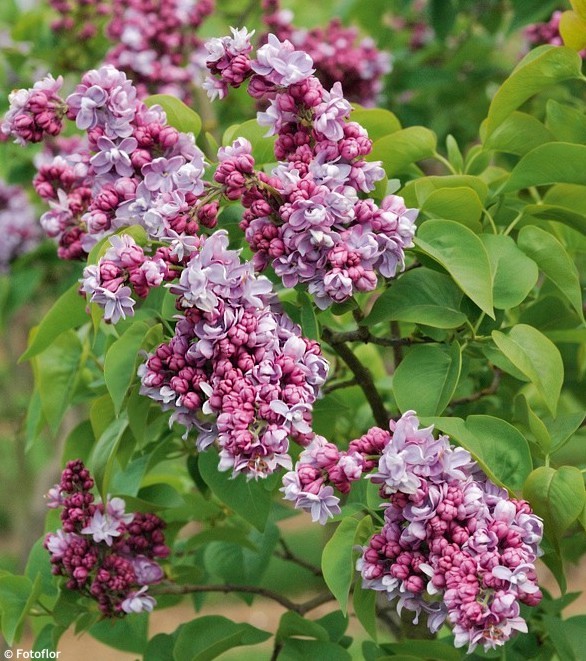
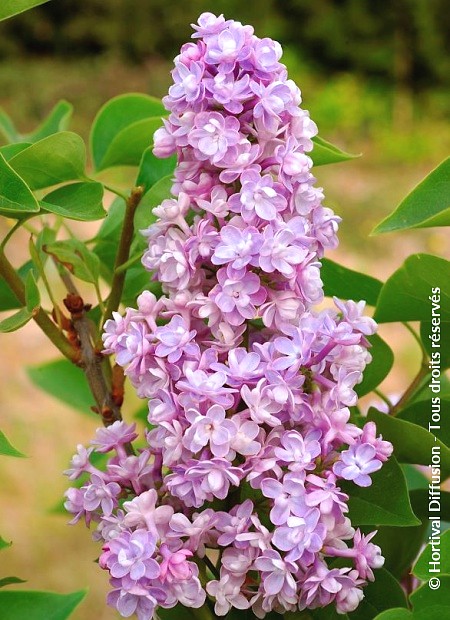
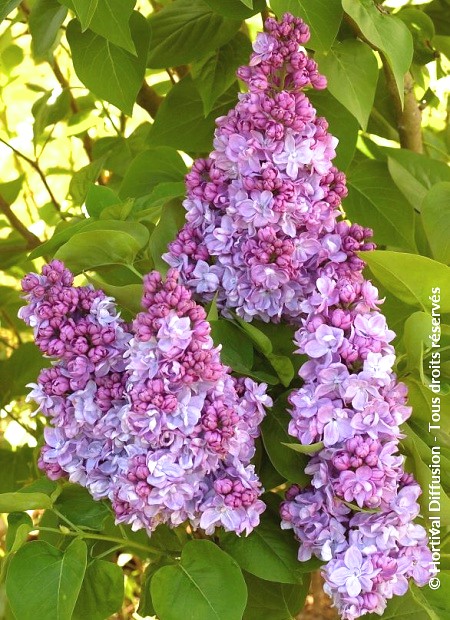
Katherine Havemeyer lilac is another unique double-flowering variety producing much darker coloured buds than opened flowers. Its panicles can be erect or slightly pendent, they are shorter than those on other common lilacs, composed of dark lilac-violet buds which open into soft lilac pink, sweetly fragrant flowers from late April until mid May. Pruning is not needed but can be made immediately after flowering. Deadheading is recommended for young plants. Bred by famous French botanist Emile Lemoine from Nancy in 1922.
Last update 15-05-2019
Lilacs are easy to grow. They will take almost any soil but will thrive in deep, fertile, well-drained soil that is neutral or slightly alkaline. They respond well to hard pruning. Adult plants often make suckers forming an even denser, multistemmed shrub. Any unwanted overgrowth can be controlled by using a breathable plastic mulching fabric above its roots. Though considered heat-loving plants they are very hardy to about -37 °C (USDA zone 3).