











.jpg)
.jpg)
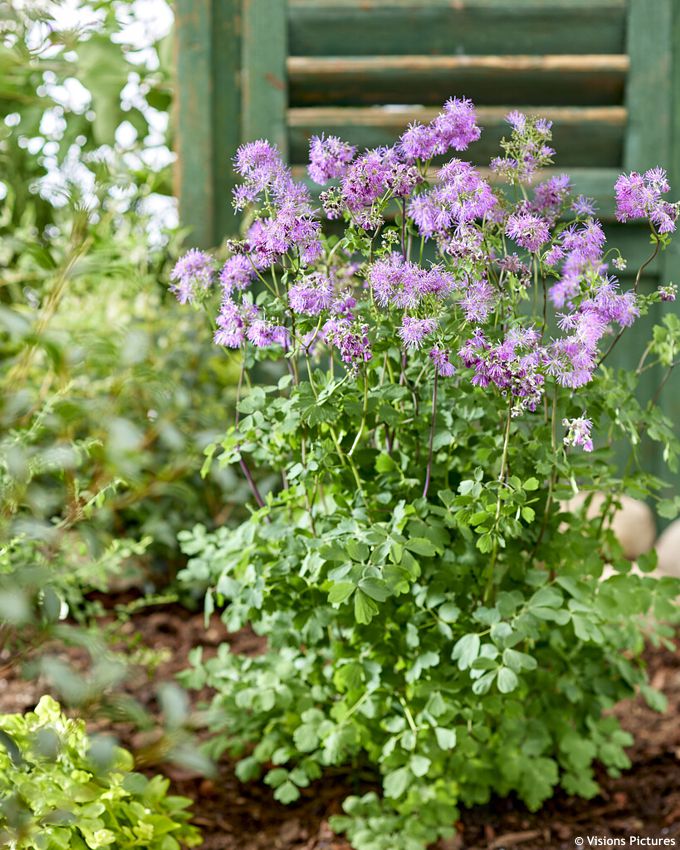
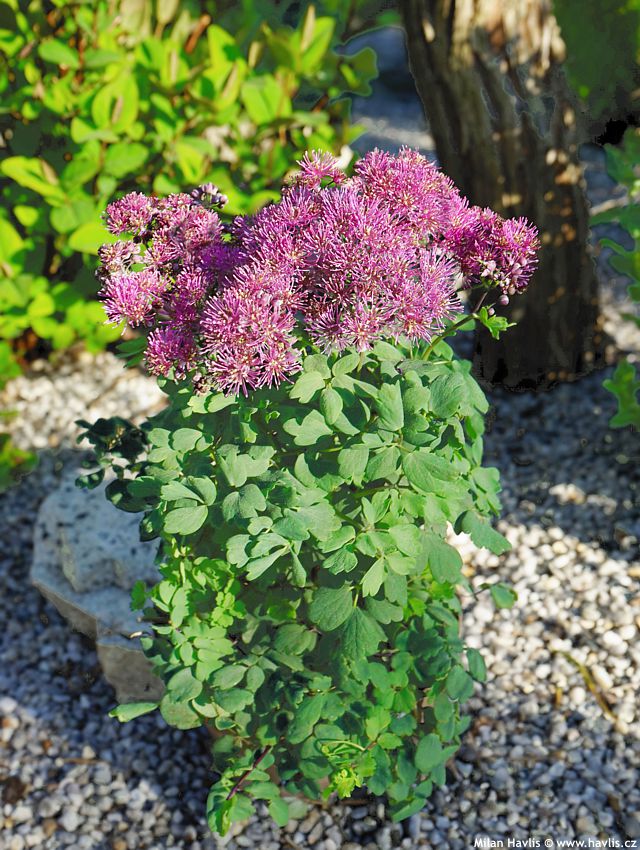
Thalictrum 'Little Pinkie' CENSATION LITTLE PINKIE meadow rue

Thalictrum
Meadow rue may sound like a modest country plant, yet behind this unassuming name lies one of the largest genera in the buttercup family. The genus Thalictrum was formally described by Carl Linnaeus in 1753, although the name itself reaches much further back to the ancient Greek thaliktron, used by Pedanius Dioscorides (c. 40–90 AD) for medicinal herbs of the classical world. Today the genus comprises roughly 120 to 200 species, depending on how broadly individual taxonomists choose to define it. Meadow rues occupy much of the Northern Hemisphere, from damp European meadows and woodland clearings to the forested slopes of the Himalayas and the prairies of North America. Botanists regard them as a fascinating branch of the buttercup family whose evolutionary history includes repeated shifts between insect and wind pollination, an unusually uncommon strategy among flowering plants.
The story behind the name is almost as interesting as the plants themselves. The Czech name žluťucha, derived from the Czech word žlutý meaning "yellow", is most likely linked to yellow meadow rue (Thalictrum flavum), traditionally associated with the yellow pigmentation found in its roots and other tissues. Pigments extracted from the roots were once used for dyeing textiles. English gardeners followed a different line of thought entirely. The common name meadow rue arose from the striking resemblance between the finely divided foliage of Thalictrum and the leaves of common rue (Ruta graveolens), despite the fact that the two belong to only distantly related branches of the plant kingdom. The comparison proved remarkably durable and has survived for centuries. Many meadow rues genuinely appear as though they borrowed their leaves from rue and their flowers from an altogether different plant.
Modern breeding of meadow rues focuses on species that combine attractive flowers with stronger structure and greater garden reliability. Among the most important parents are T. rochebrunianum from Japan, valued for its elegant lavender-pink flowers, and T. flavum ssp. glaucum, renowned for its robust stature, blue-grey foliage and exceptional vigour. Their combination produced legendary hybrids such as 'Elin', capable of marrying the airy elegance of eastern species with the strength of European populations. Breeders also frequently draw on the genetics of T. aquilegiifolium and T. delavayi, both of which contribute richer colour, more compact growth and heavier flowering. The objective is not to create dramatically larger flowers, as is often the case with for instance roses or daylilies. In meadow rues, the most prized quality is their ability to create a light, translucent structure that seems to float through the border like a cloud of coloured mist. Modern hybrids therefore aim for stronger stems resistant to flopping, a longer flowering period, sterile or only sparsely fertile plants that devote more energy to bloom production, and increasingly compact habits suitable for smaller gardens. While older species meadow rues were once largely the preserve of collectors and enthusiasts of naturalistic planting, particularly in traditional English perennial borders, today's hybrids have become an important component of contemporary naturalistic design inspired by Piet Oudolf, where they serve as delicate vertical accents linking grasses and perennials into a single airy composition.
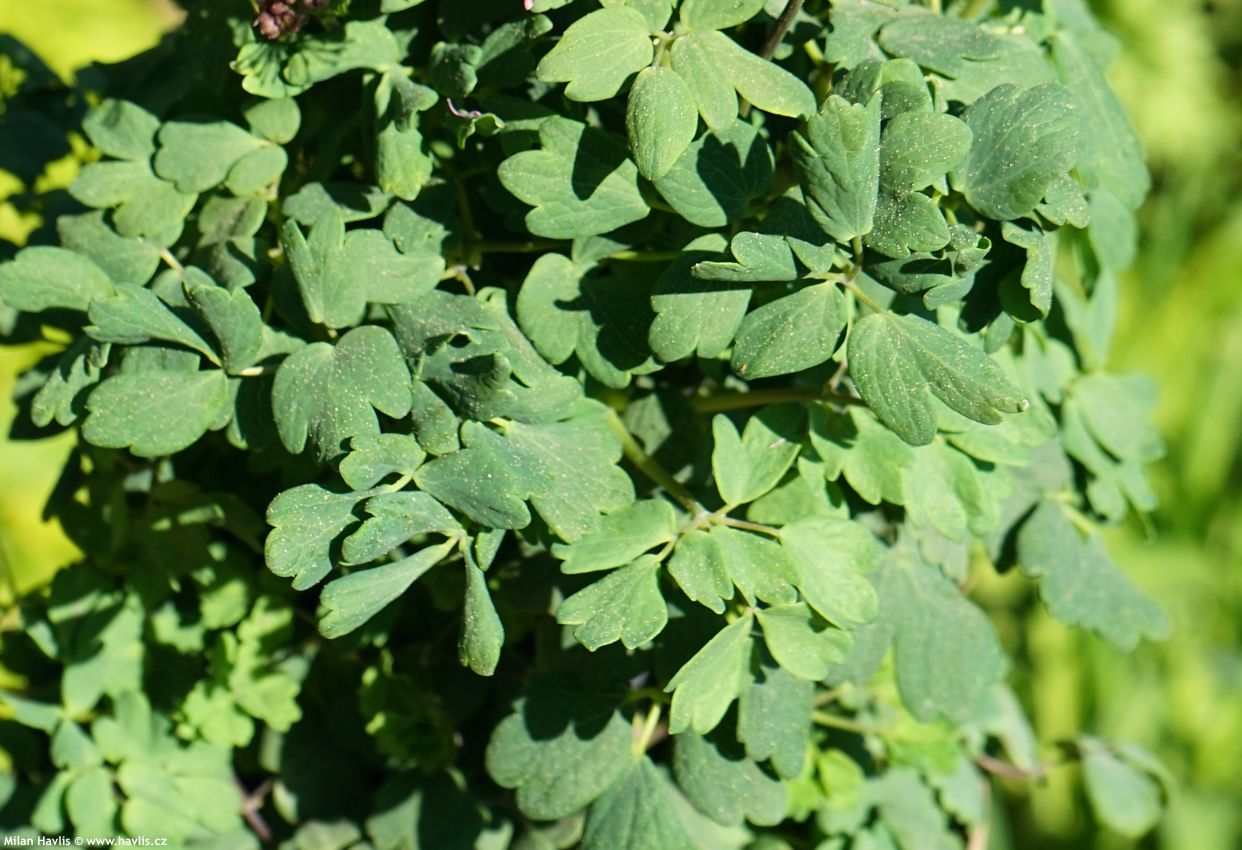
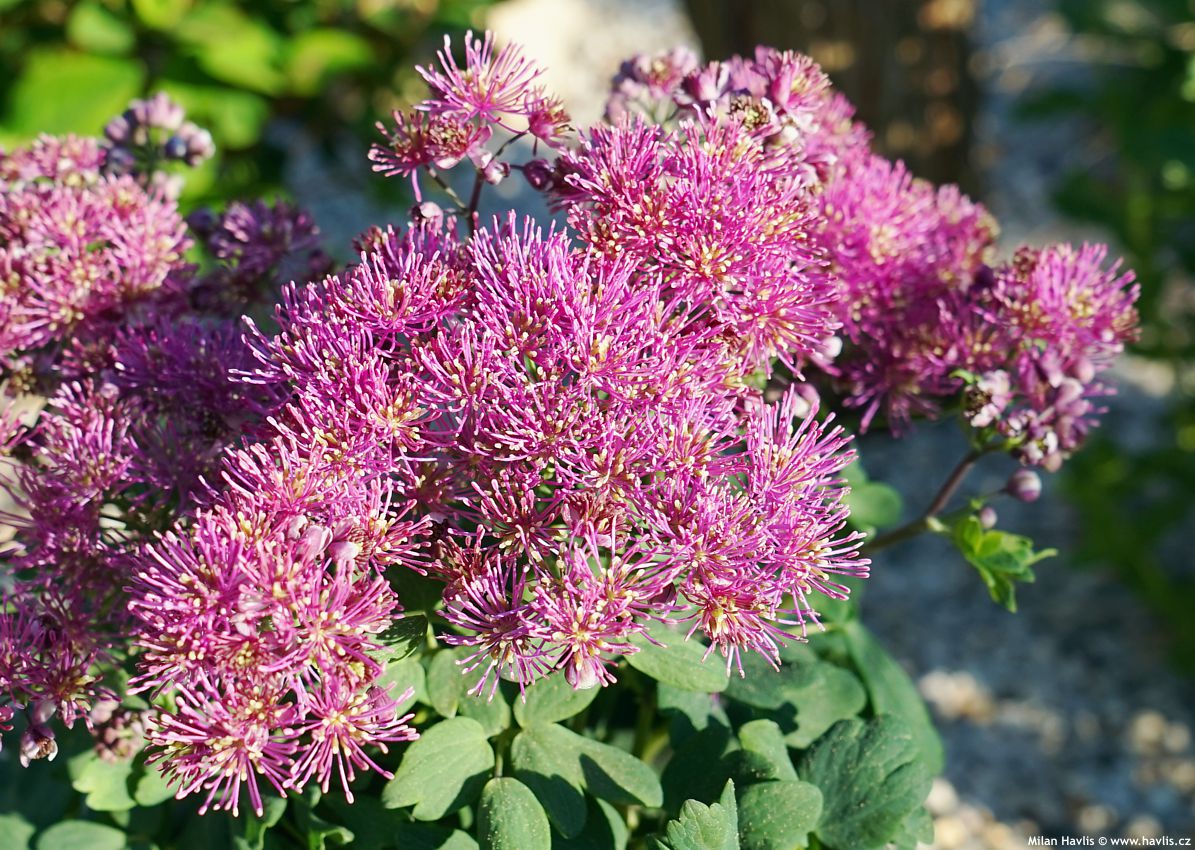
CENSATION LITTLE PINKIE breaks the long-held notion that meadow rues belong exclusively in partial shade. This one certainly does not, and its modest stature is likely part of the reason. Given adequate moisture, it performs remarkably well in full sun, where its compact habit is displayed to best effect and it rewards the gardener with an even greater abundance of brilliantly coloured flowers. The plant forms a genuinely small clump, rarely exceeding 40 cm in height. Dense and tidy, it produces attractively divided foliage that creates an elegant base for the clouds of small, richly lilac-pink to purplish flowers appearing in early summer. These shaggy little flowerheads hover just above the foliage on short stems, allowing them to remain in close visual contact with the softly matt leaves that carry a subtle blue-green tint. The flowers attract bees, hoverflies and other pollinating insects, making the plant not only charming to look at but also a meaningful contributor to the garden ecosystem. Thanks to its compact habit, it is equally at home in herbaceous borders, larger containers, smaller gardens and naturalistic plantings where soil moisture is consistently available.
The designation CENSATION™ is a trademark of CNB New Plants, a Dutch company specialising in the discovery, introduction and licensing of new perennial cultivars. Under this label, selected introductions from a wide range of genera are brought together based on their outstanding health, floriferousness, garden performance and commercial potential. Alongside meadow-rues, the portfolio currently includes cultivars of Astilbe, Astrantia, Geranium and Trollium, although the largest representation can be found among Geum and Sedum.
Meadow rues from the T. aquilegiifolium group and their hybrids thrive in humus-rich, fertile soils that do not dry out completely during the growing season. They perform best in light shade, where the flowers retain their freshness for longer, although they are equally successful in full sun when provided with consistent moisture. Unlike many other tall perennials, they tolerate positions beneath the light canopy of trees, provided they are not subjected to intense root competition. Despite the delicate appearance of their flower heads, the stems are generally strong, and staking is rarely required except in very rich soils, where the tallest cultivars may exceed their natural proportions. Spent flower heads may be removed for a tidier appearance, though this is not essential for either plant health or continued flowering. Simply cut all dead stems back to ground level in spring. An annual mulch of compost or balanced organic fertiliser is usually far more beneficial than heavy applications of fast-acting synthetic fertilisers. Most cultivars can also be grown successfully in large containers, although they require more attentive watering than plants established in open ground. Like many members of the buttercup family, meadow rues contain biologically active compounds and are therefore considered mildly poisonous, although they produce no particularly attractive fruits or other structures likely to encourage consumption. Most cultivars in this group reliably tolerate winter temperatures between -34°C and -40°C (USDA zones 3-4).