

































.jpg)
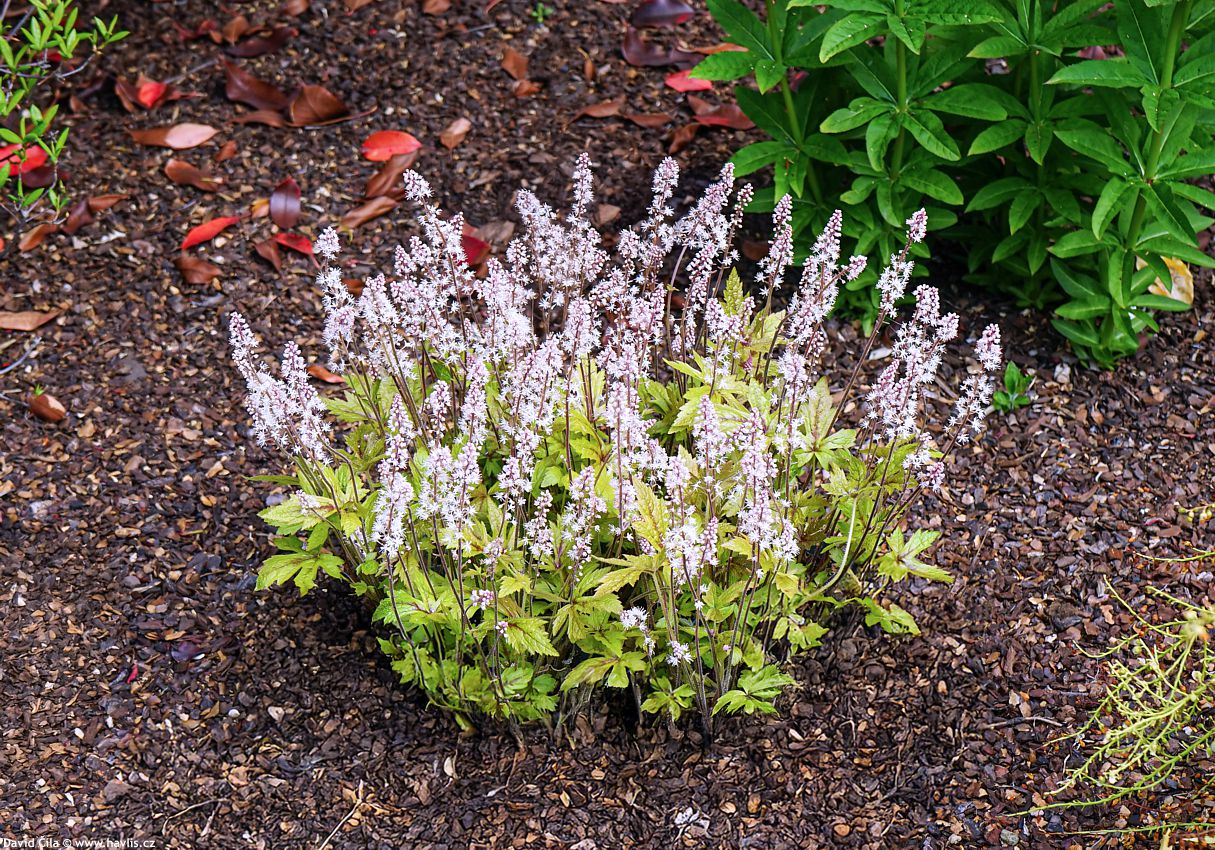
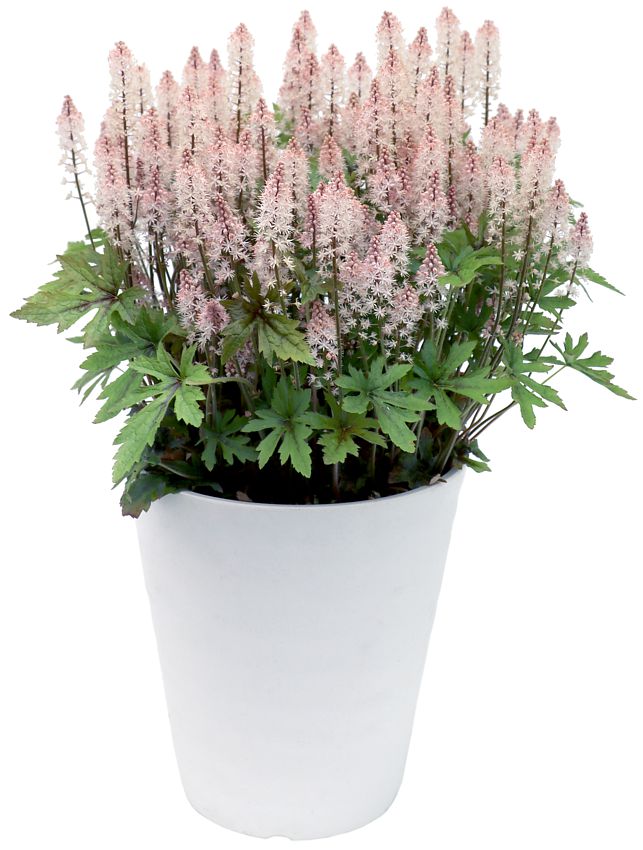
Tiarella 'PINK SKYROCKET' foamflower

Tiarella
The genus Tiarella, known as foamflower, belongs to the Saxifragaceae family and comprises seven recognised species distributed from the Himalayas and East Asia to Alaska and the eastern United States, where its greatest diversity occurs. It was first described by Carl Linnaeus (1707–1778) in 1753, who designated Tiarella cordifolia as the type species. The genus is botanically valuable for its marked morphological variability – species differ in the presence or absence of aerial stems, in their ability to produce stolons, that is, horizontal creeping shoots used for vegetative spread, as well as in the shape of basal leaves and the structure of the inflorescence. Modern taxonomy, especially the 2021 revision by G. L. Nesom, shows that the eastern North American group is far more complex than previously assumed, and the broadly defined T. cordifolia has been split into several distinct species. Tiarella thus represents a textbook example of a genus in which detailed fieldwork and herbarium revision fundamentally reshape our understanding of species boundaries. What all tiarellas share, however, is their woodland origin, short rhizomes and delicate inflorescences that gave rise to the English name foamflower.
Modern garden foamflowers arise from the natural diversity of North American species described by botanists since the 18th century – beginning with Carl Linnaeus (1707–1778), followed by Asa Gray (1810–1888), and continuing with the contemporary taxonomic revisions of Guy L. Nesom (born 1945). Breeders deliberately combine lines and forms of species with distinctive traits, creating new hybrid groups that bring together the best features of each branch of the genus – compact growth, attractive foliage, long flowering and the ability to form a dense groundcover even in shade. The species most frequently involved include T. cordifolia, T. trifoliata and T. wherryi, which provide a wide range of leaf shapes, venation patterns and growth strategies. The resulting cultivars are not only beautiful but also easy to grow and consistently true to their woodland ancestry, giving them a natural and calming presence in the garden.
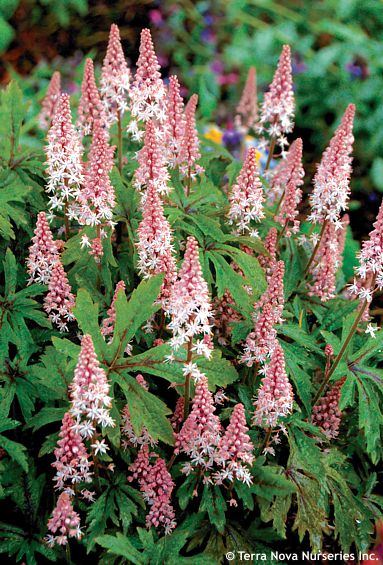
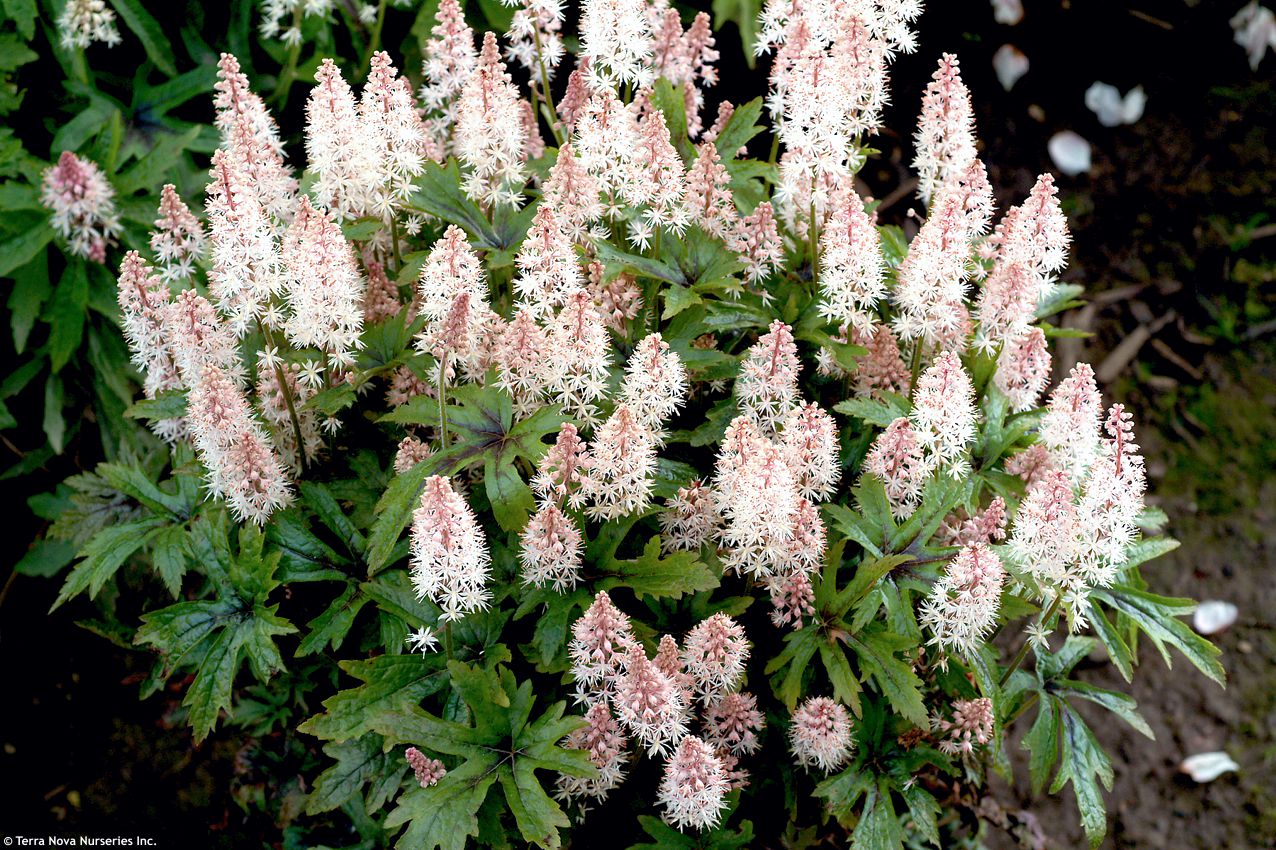
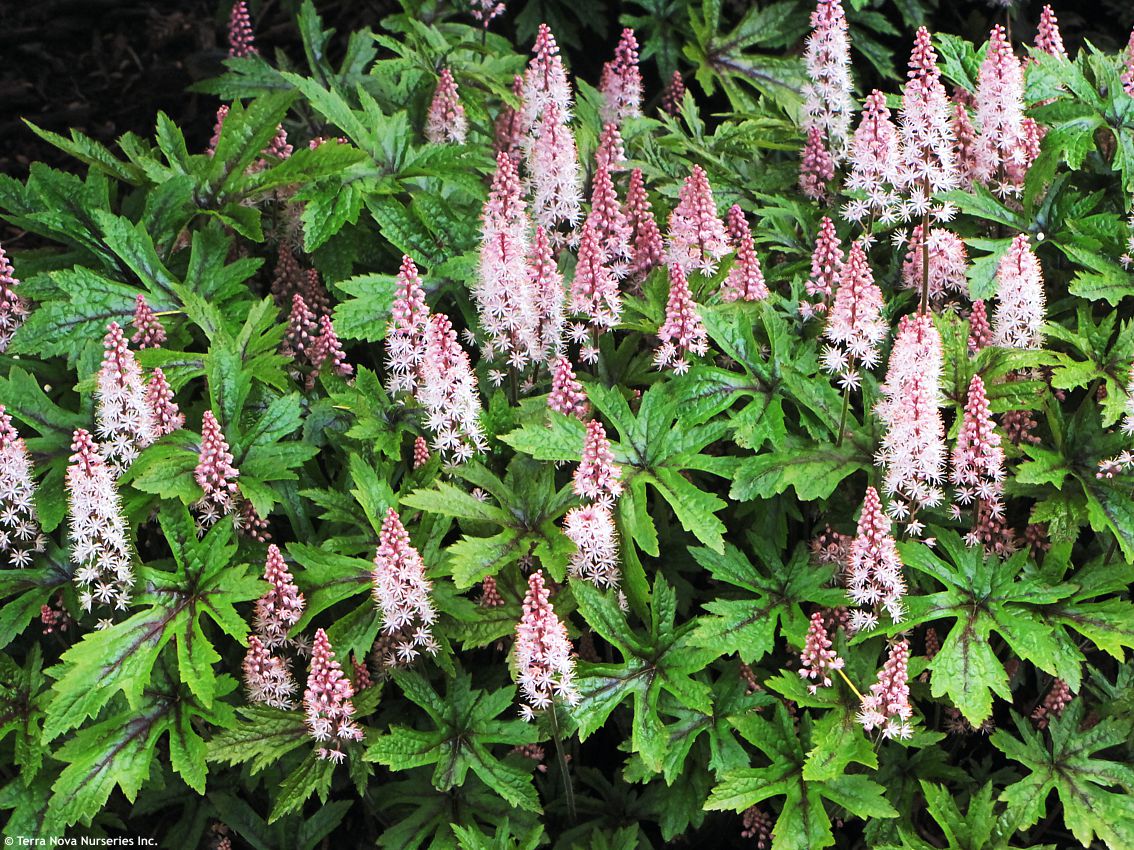
Dan Heims, the breeder of Pink Skyrocket foamflower from the American nursery Terra Nova, describes the colour of its buds as shrimp‑pink – and he is right. And perhaps to give the cultivar a touch of drama, he named it Pink Skyrocket, because its flower spikes rise like a firework shot into the spring sky, bursting into bright colour against the backdrop of its striking foliage. The individual flowers are tiny and star‑shaped, turning almost white when fully open, which adds movement and lightness to the whole inflorescence, shaped like a narrow, pointed spike.
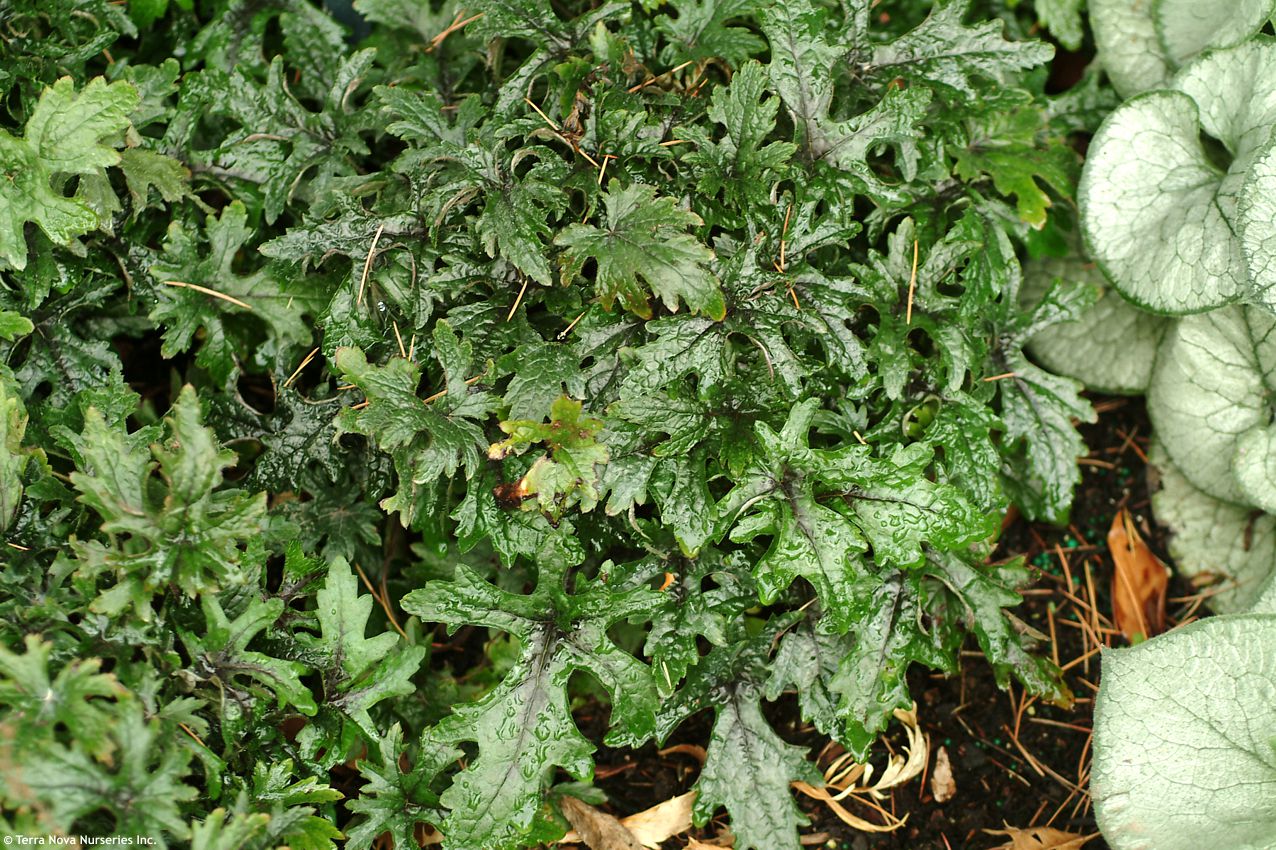
The leaves are deeply lobed, light green in spring with prominent dark maroon veins. As the season progresses, the leaves darken and often develop purplish to bronze tones that intensify in autumn. The plant forms a compact, regular, gently mounded clump with foliage held close to the ground. In leaf it reaches around 15–20 cm, while the flowering stems rise to about 25–30 cm, giving the flowers a light, airy presence above the mound. The habit is stable and compact, with no tendency to spread aggressively. The cultivar is protected by patents PP13,382 (USA – 2002) and 13697 (EU – 2004).
Last update 27-04-2026
Hybrid tiarellas rank among the most reliable perennials for partial shade and shade, as they derive from woodland species that naturally grow beneath tree canopies and along moist forest streams. They thrive in sites with dappled or morning sun and afternoon shade, or in all‑day natural shade. They will survive in deep shade, but flowering is reduced and leaf markings may be less pronounced. The soil should be loose, humus‑rich and consistently slightly moist, but never waterlogged. They do not tolerate prolonged drought, yet they do not require heavy watering – it is enough to prevent the soil from drying out completely. Although their foliage is often evergreen to semi‑evergreen, it tends to look tired after winter, and we recommend cutting all leaves back as early as possible before the flower stems begin to emerge. Tiarellas are excellent as underplanting beneath shrubs and trees, in shaded borders, natural woodland plantings, along paths or in mixed shady borders. Feeding with compost or leaf mould enhances both flowering and leaf size. They are resistant to pests and diseases, suffering only in heavy, waterlogged soils where root rot may occur. They perform well in containers provided they have shade and regular watering. Their hardiness ranges from –34 (USDA zone 4) to –40 °C (USDA zone 3) depending on the hybrid lineage

Goods are shipped all over Europe. For Russia and U.K. and for further details please read about SHIPPING OPTIONS HERE.
Are you interested in a serious discount for orders NOV-FEB? Check your options here.
THE PRICES INCLUDE VAT of 15%. For quick conversion you can use 1 CZK = approx. 0.04 EUR
- STANDARD QUALITY - Plants of this group are 1st class quality with number of branches and overall density adequate to their size and age, considering they were container grown.
- DE LUXE QUALITY - This label guarantees a luxurious quality of manually selected plants that, compared to their height and age, are exceptionally dense and beautiful.
- EXTRA - These plants are usually mature and bigger specimens with exceptional overall appearance.
- STANDARD (as described in the plant form) means a tree with a trunk of 190-210 cm and a crown at the top, unless specified differently. The commercial size for trees is their girth measured in the height of 1m from ground.
- HOBBY - These plants are of the same quality as our standard-quality plants but younger and therefore cheaper.
- SHRUB - a woody plant with branches growing bushy from the ground level.
- HALF-STANDARD or MINI-STANDARD - a small tree with shorter trunk, its size is usually specified.
- FEATHERED - These are trees with branches growing already from the base of the trunk and up along the stem.
- GRASSES and PERENNIALS - Sizes given usually read the diameter of the pot or the clump, as specified.
