











.jpg)
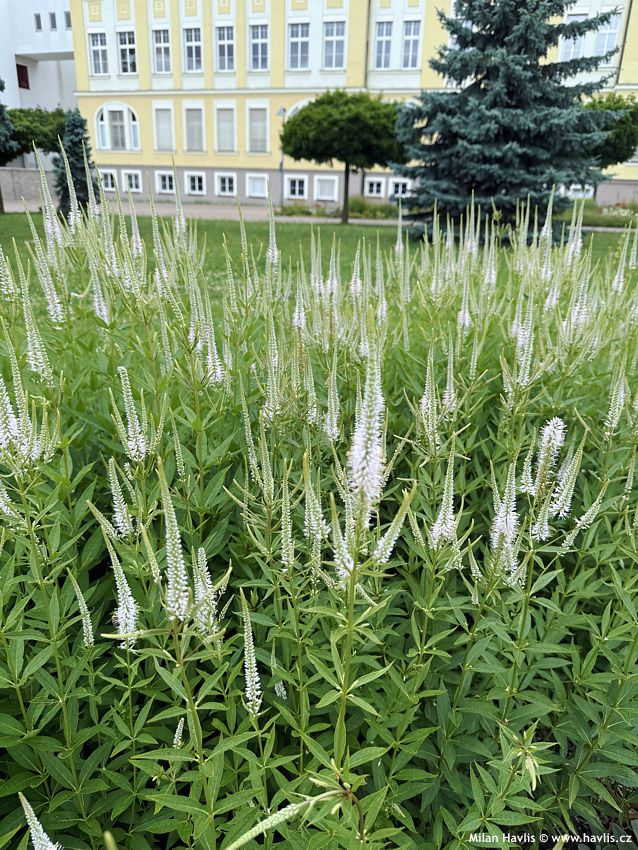
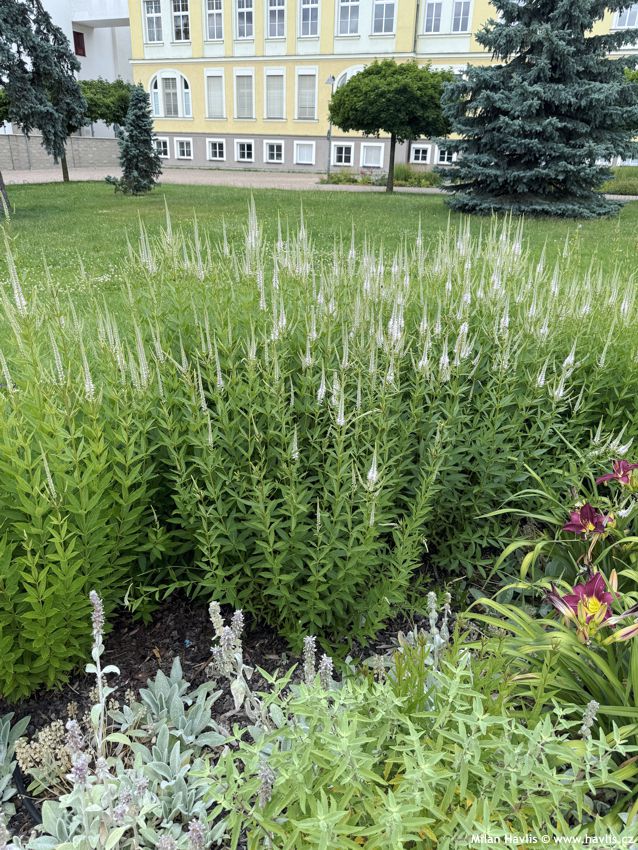
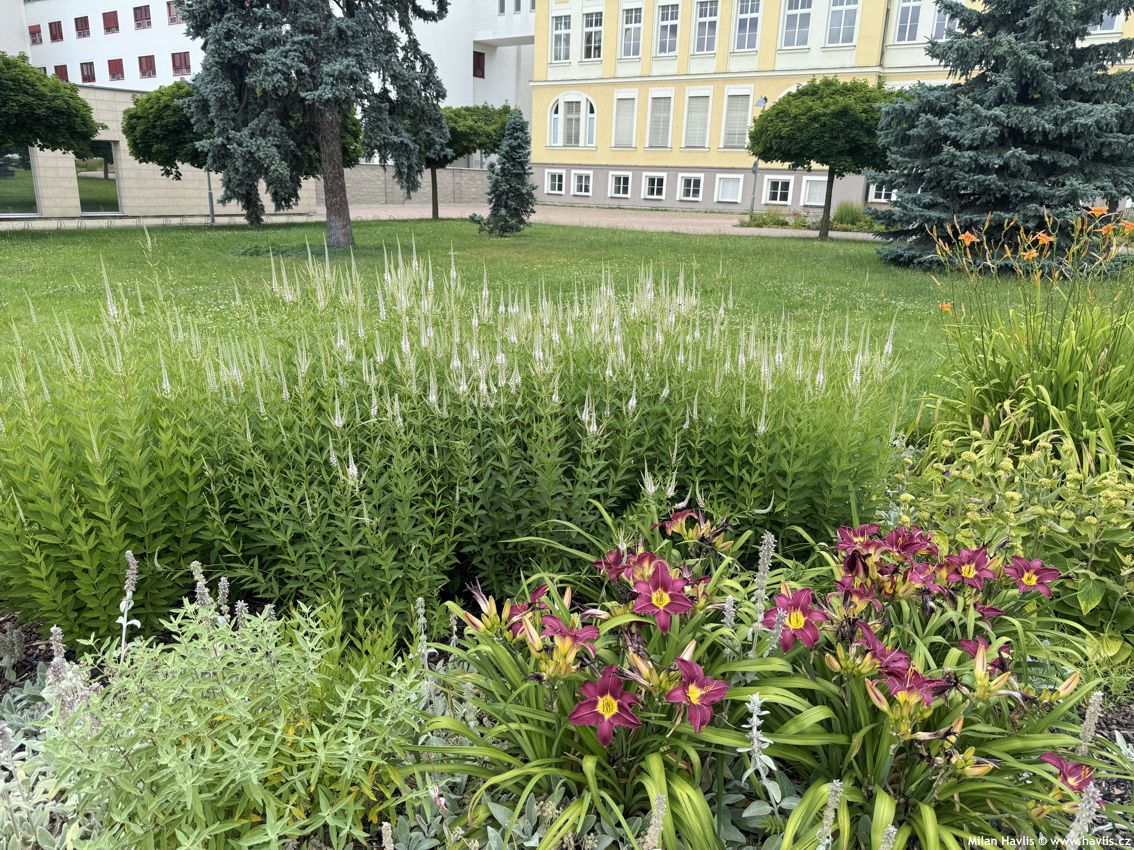
Veronicastrum virginicum 'DIANE' Culver's root

 Symbivit Tric (arbuscular)
 Symbivit (arbuscular)
Veronicastrum
The genus Veronicastrum is a small group of perennial and fairly robust herbaceous plants comprising 5-6 species. They are known for their upright habit and whorled leaves that create a tiered silhouette reminiscent of certain shrubby species, often compared to chaste tree or hemp. The Czech Perennial Growers’ Association selected the genus Veronicastrum as Perennial of the Season in 2016. These plants grow in North America and eastern Asia, most commonly at woodland edges, in prairies and in moist meadows. In American tradition some species are known as Culver’s root, because early herbals mention a physician named Dr Culver who prepared a bitter tonic from their roots. The inflorescences consist of one terminal spike accompanied by several lateral ones, giving the plants a distinctive architecture and making them highly attractive to pollinating insects. The best-known and most widely grown species in gardens are the Siberian and the Virginian Veronicastrum, both named after their native regions.
Veronicastrum virginicum is native to North America, where it grows from Ontario to Texas, most often in lightly moist meadows, at woodland margins and in naturally nutrient-rich prairies. The species was described by Carl Linnaeus in 1753 and became one of the first North American plants to enter European botany. In early American herbals it appears as a medicinal plant, for example in the work of physician and botanist William P. C. Barton (1786–1856), who described it under the former name Leptandra virginica and noted its tonic effects. In gardens it is the most commonly grown species of the genus, valued for its slender, naturally elegant habit and long flowering period, which gives plantings structure, presence and lightness. Thanks to its height and tiered leaf arrangement it acts as a natural vertical element that combines well with taller perennials, ornamental grasses and other plants suited to similar prairie-like conditions.
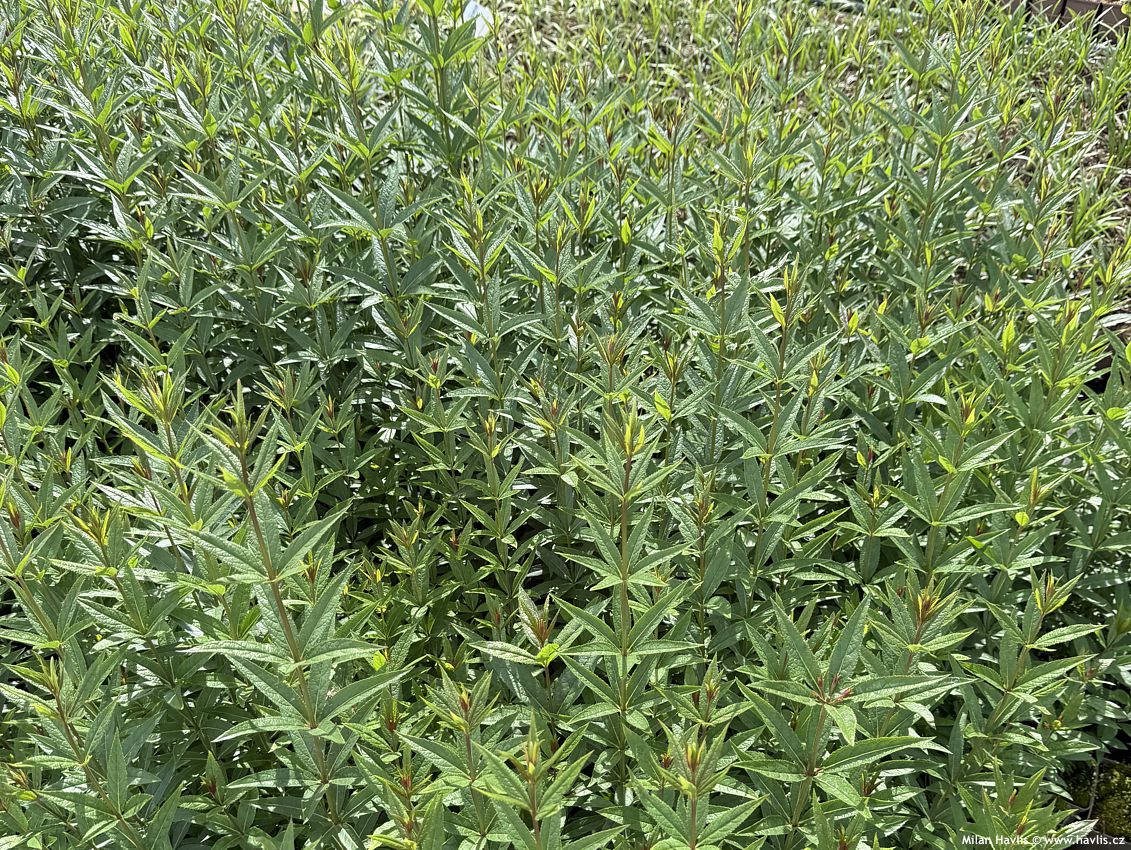
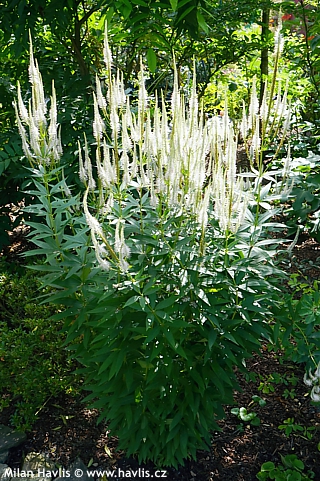
Diane is a Culver’s root cultivar with white flowers that look exceptionally fresh and elegant. It reaches about 120–150 cm, making it smaller and more delicate than the older sister cultivar ‘Album’. Its structure is typical of the genus: upright, firm stems carry several tiers of narrowly lanceolate leaves in opposite whorls, forming regular, attractive layers appreciated by lovers of orderly forms. The upper leaves show a light mahogany to coppery-red tint just before the inflorescence develops; this colour is in fact that of the young petioles rather than the leaf blades themselves, but it gives the top tier a subtle and charming accent.
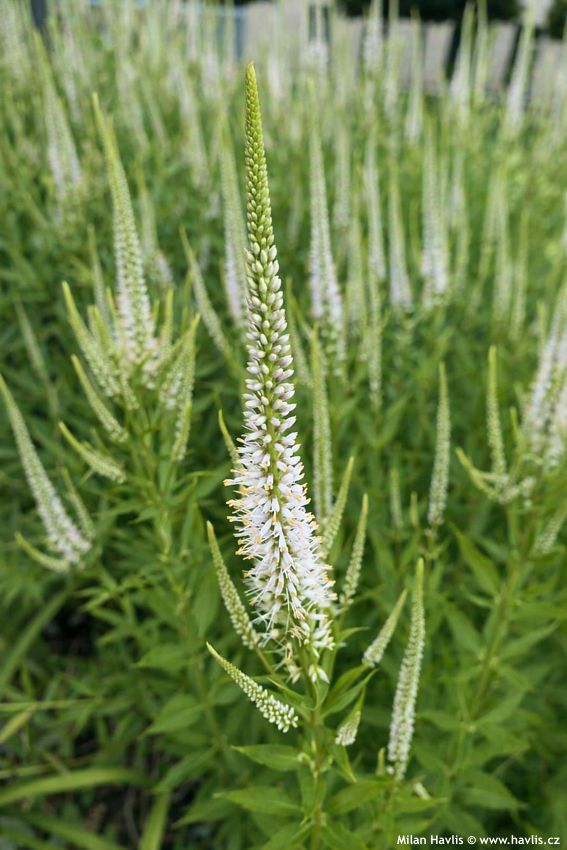
The inflorescence consists of one long terminal spike accompanied by several shorter lateral ones that appear gradually and extend the flowering period. Very young flowers may show a faint, barely noticeable smoky lavender tint that disappears quickly as they open, but before it fades it gives the buds an interesting hue. Fully open flowers are pure white without any pink or blue tones. They are unscented but contain plenty of nectar for pollinating insects, which visit them until the very last flower on the spike has finished. ‘Diane’ flowers from early July and is a reliable, long-flowering cultivar that maintains a firm structure throughout the season.
Last update 30-06-2026
Veronicastrum are undemanding perennials that grow well in any ordinary garden soil with sufficient light and moisture. They thrive in full sun but tolerate light partial shade, although they may lean towards the light in part-shade. The ideal soil is moderately fertile, humus-rich and slightly moist; prolonged waterlogging does not suit them, but on the other hand they tolerate short dry spells and do not require frequent watering. In drier gardens it is helpful to add compost, mulch or water-retaining minerals to the soil to maintain moisture. After planting they root quickly and from the second year form full clumps. Feeding is not necessary, but poor soils benefit from a spring dose of compost or a light application of organic fertiliser. The tallest cultivars sometimes need support to maintain a neat shape, even though their stems are firm, because the inflorescences can be heavy. After flowering the spikes can be removed to keep the border tidy, but it is not essential. All Veronicastrum are long-lived and after several years form broad clumps that can be divided easily in spring or autumn. They are not prone to diseases or pests and tolerate cold winters well, down to minus forty degrees Celsius. In autumn they can be cut back, but the dry stems can just as well be left over winter and removed in spring. All species and cultivars are attractive to insects, making them suitable for naturalistic and biodiversity-focused plantings.

.jpg)
Goods are shipped all over Europe. For Russia and U.K. and for further details please read about SHIPPING OPTIONS HERE.
Are you interested in a serious discount for orders NOV-FEB? Check your options here.
THE PRICES INCLUDE VAT of 15%. For quick conversion you can use 1 CZK = approx. 0.04 EUR
- STANDARD QUALITY - Plants of this group are 1st class quality with number of branches and overall density adequate to their size and age, considering they were container grown.
- DE LUXE QUALITY - This label guarantees a luxurious quality of manually selected plants that, compared to their height and age, are exceptionally dense and beautiful.
- EXTRA - These plants are usually mature and bigger specimens with exceptional overall appearance.
- STANDARD (as described in the plant form) means a tree with a trunk of 190-210 cm and a crown at the top, unless specified differently. The commercial size for trees is their girth measured in the height of 1m from ground.
- HOBBY - These plants are of the same quality as our standard-quality plants but younger and therefore cheaper.
- SHRUB - a woody plant with branches growing bushy from the ground level.
- HALF-STANDARD or MINI-STANDARD - a small tree with shorter trunk, its size is usually specified.
- FEATHERED - These are trees with branches growing already from the base of the trunk and up along the stem.
- GRASSES and PERENNIALS - Sizes given usually read the diameter of the pot or the clump, as specified.
