










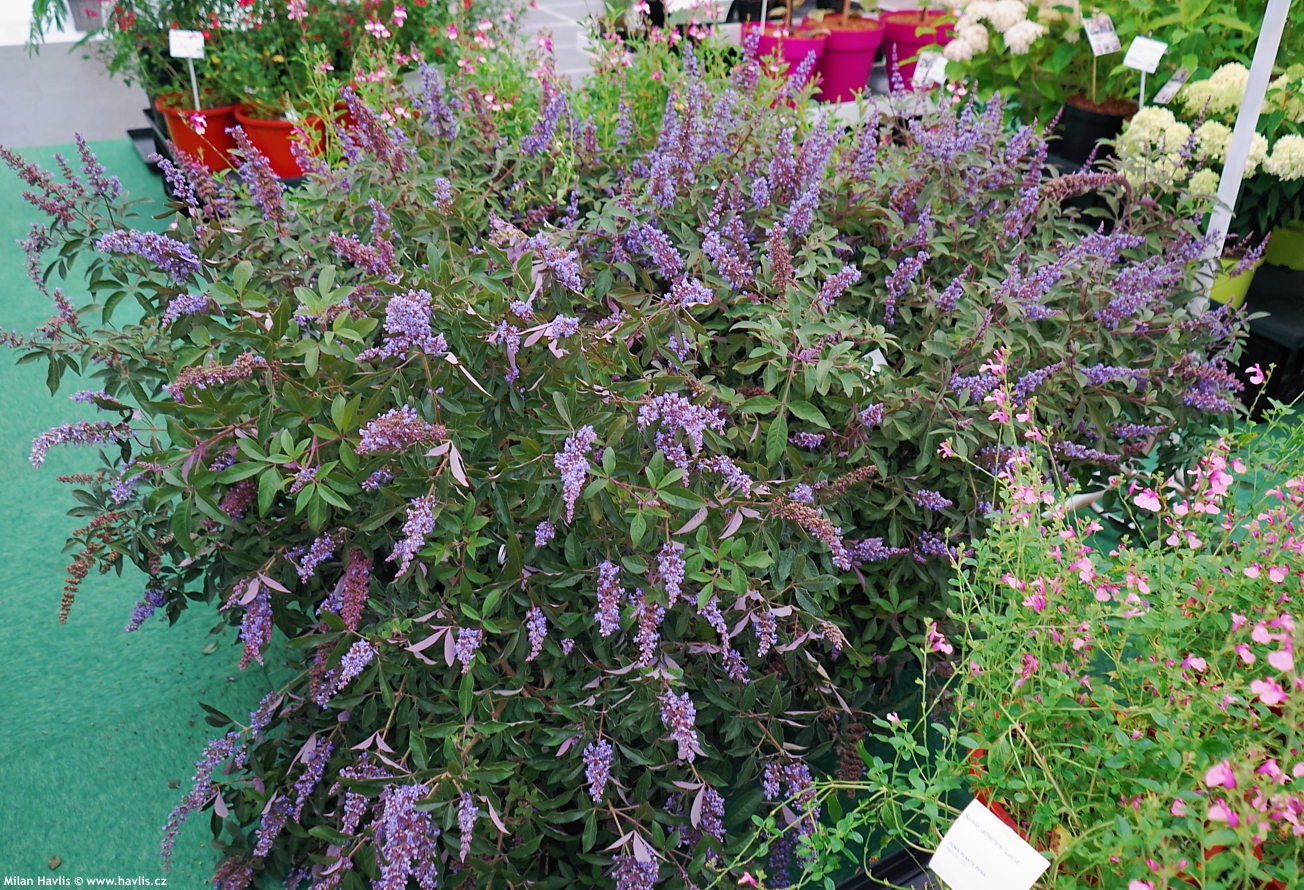
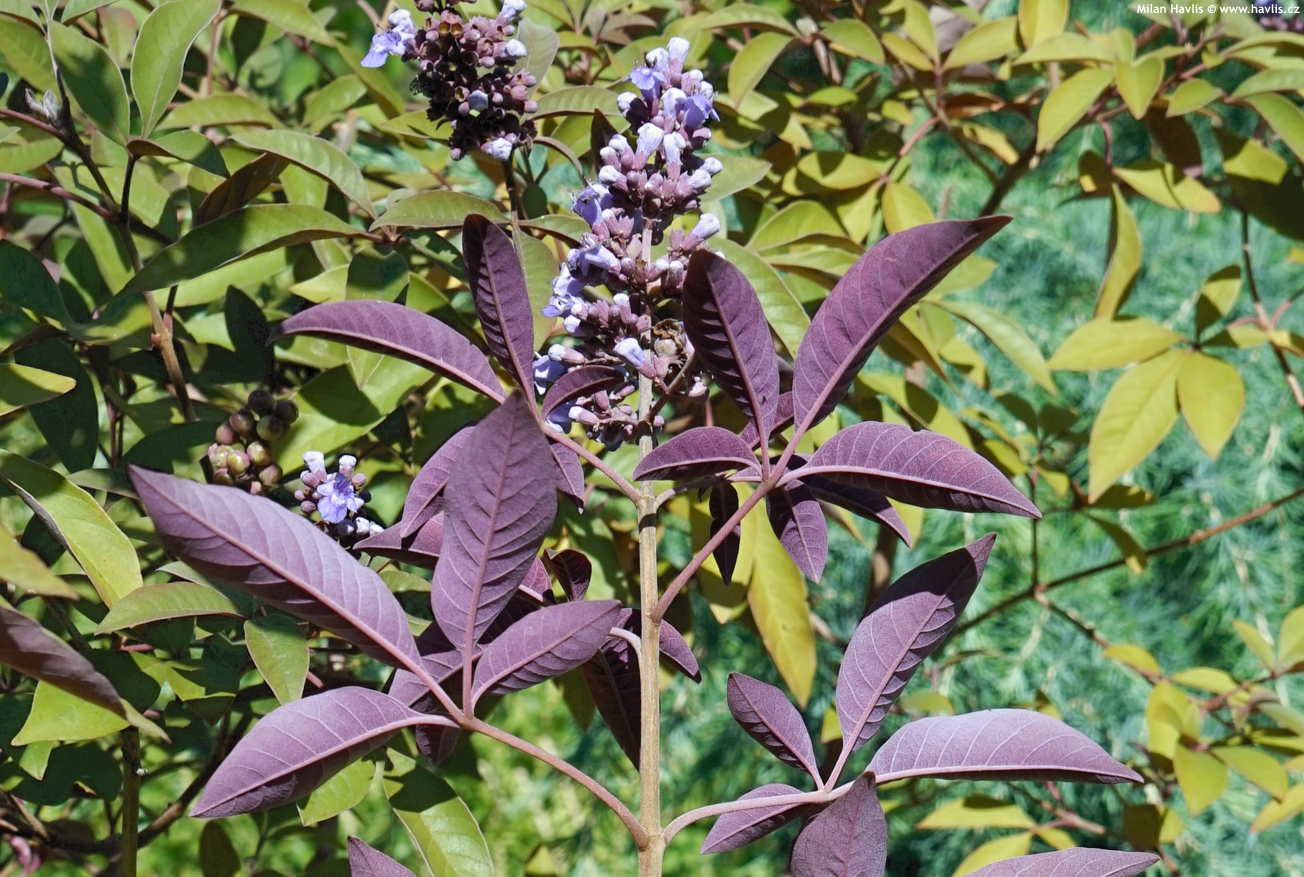
Vitex 'Bailtexone' FLIP SIDE™ chaste tree

 Symbivit Tric (arbuscular)
 Symbivit (arbuscular)
Vitex
Vitex is surprisingly a large genus of about 250 species spread almost all around the globe. In our climate we know very little about it because most of its species are subtropical plants. However, there are a few that can cope with our zone 6 winters easily and make beautiful flowering shrubs or exceptionally small trees. Chaste tree is a one of them and comes from areas ranging from the Mediterranean to Central Asia. And it is not just beautiful, it has long been used as a strong medicinal plant, especially in homeopathy.
FLIP SIDE™ is a showy variety of hybrid chaste tree that was developed in 2012 by American botanist Michael Dirr in collaboration with two other breeders, Rhonda Helvick and Oren McBee of Bailey Nurseries in Watkinsville, Georgia. It is a cross between non-hardy, purple-leaved vitex trifolia ‘Purpurea’ and very hardy botanical species vitex agnus-castus. The result is an attractively coloured shrub with improved hardiness and flowering in the second half of summer. It is protected by patents PP30283 (USA - 2019) and 61733 (Europe - 2022).
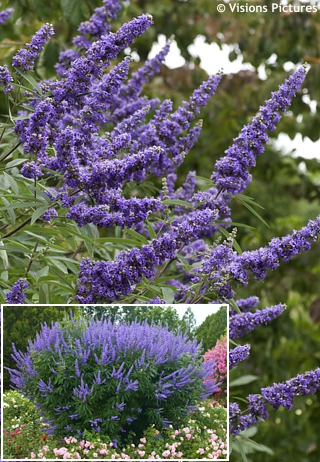
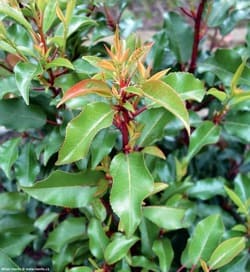
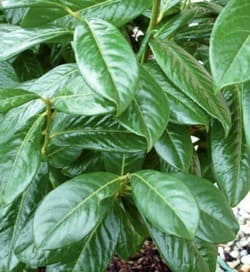
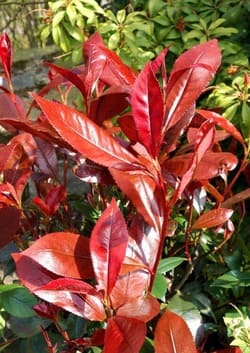
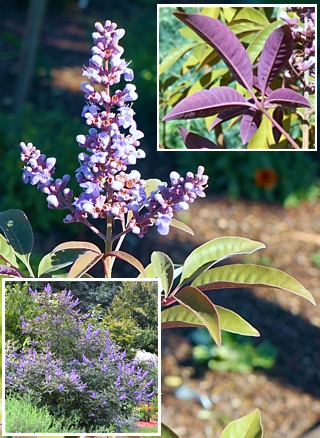
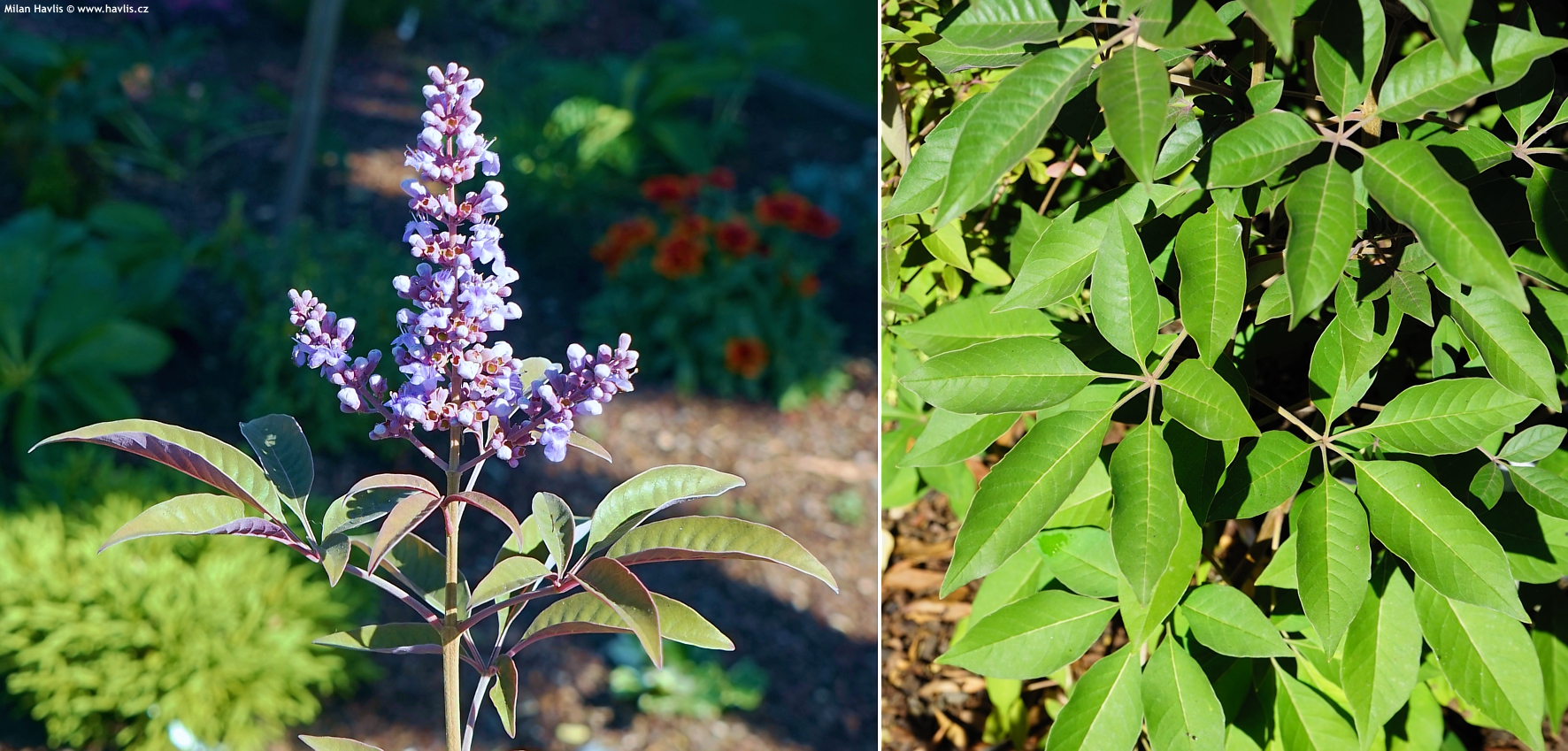
FLIP SIDE™ chaste tree has deciduous, matte leaves that are olive green above and distinctly violet-purple on reverse, hence its name. The leaves are palmate, composed of three to five leaflets, and have a pleasant and relatively strong spicy-tobacco scent that is released only when you touch, no need to crush them. In mid-summer appear upright racemes composed of tiny, lavender-purple flowers with white throats. They are mildly fragrant by honey. Inflorescences are shorter than those of common chaste tree, about 12-15 cm long, but still showy enough as soon as the bush is established (within about 3 years) and shows its assets. FLIP SIDE™ forms a medium-tall, slightly spreading shrub about two meters in height and just a bit more in width.
I must admit I am fascinated by everything about this plant. Apart from its showy flowers I love its texture. Its dramatically pointed leaves look rather exotic and though there is plenty of them the plant remains airy and fluffy, and if you place it next to a hard-leaved, evergreen shrub, typical for the Mediterranean, it significantly lightens up the landscape as it moves in the slightest breeze.
Chaste tree grows fast and is often pruned hard same as other summer-flowering shrubs e.g., panicle hydrangeas, bluebeards, or the above-mentioned butterfly bushes. In early spring after all frosts cut off some 80% of previous year’s growth which will result in a bushy, many-branched shrub. Another option is training it into a multi-stemmed shrub with clear lower stems that will thicken with age, and a dome-shaped canopy. You will need a slightly older specimen to do that. Choose a framework of 3-5 strong branches from the ground and remove all lateral branches alongside up to at least one meter or even higher. Do this also in spring and when needed trim the canopy lightly just to make it look good.
Last update 19-09-2023
Grow chaste tree solely in full sun in virtually any free-draining soil. It can cope with summer drought but will most likely die in boggy ground. In respect of its origin, in frost-prone areas we suggest growing it in sheltered locations. Fertilizing is not needed, perhaps a selective fertilizer high in phosphorus will enhance blooming . The hardiness of Flip Side has so far been tested to -18 °C (USDA zone 7) and further trials are ongoing. However, it can also be grown in zone as a semi-woody perennial if the top is killed by frost as it readily regenerates from the lower framework or even from the roots.