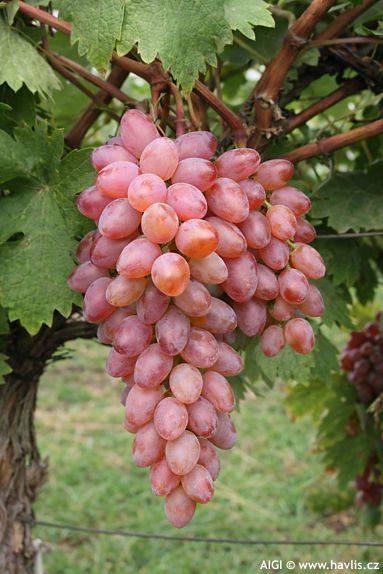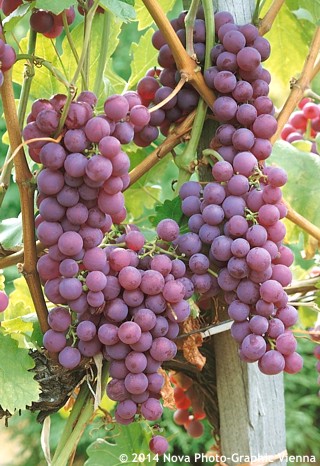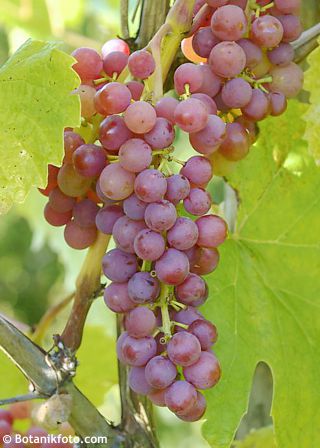
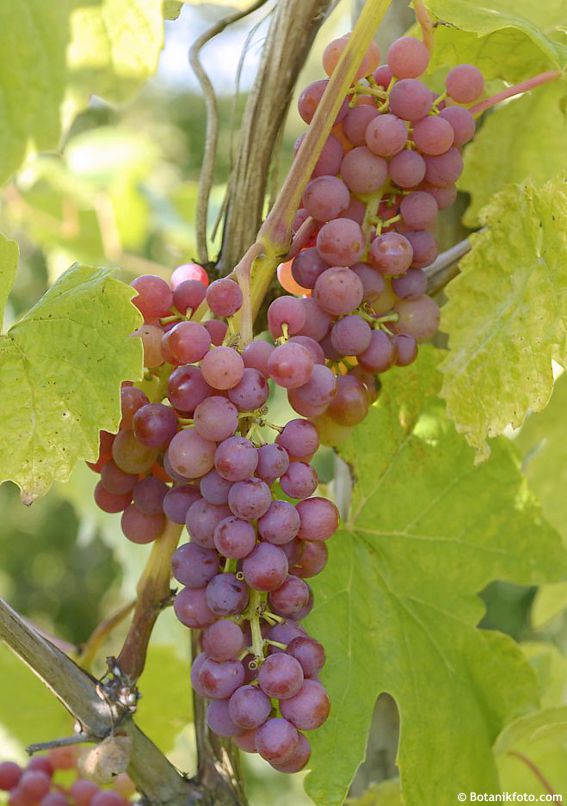
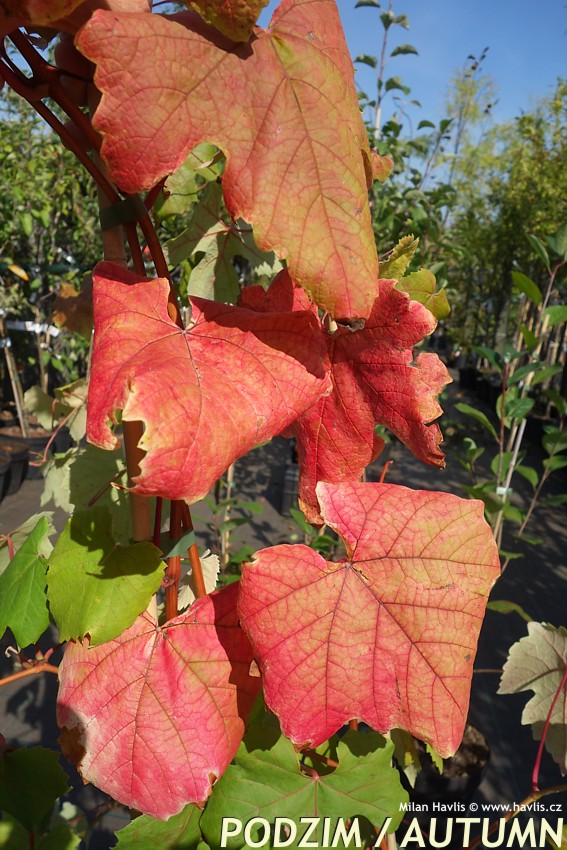
Vitis 'VANESSA' seedless grape wine

 Symbivit Tric (arbuscular)
 Symbivit (arbuscular)
Vitis
The genus Vitis is among the oldest and culturally most significant woody plants known to humankind. It comprises roughly sixty species distributed across the temperate regions of the Northern Hemisphere, from East Asia through the Caucasus to North America. Its evolutionary history is surprisingly deep: fossilised leaves and seeds resembling modern grapevines date back to the Tertiary period, when similar lianas climbed along the edges of ancient forests. Botanically, these are climbing woody plants equipped with tendrils that allow them to ascend naturally into the canopy, a strategy that enabled them to thrive in dense vegetation and capture light high above the ground. The genus was formally described by Carl Linnaeus (1707–1778), but its internal classification evolved for a long time, largely due to the enormous variability of its species and their ability to hybridise. In the nineteenth century, botanists debated whether European and Asian grapes formed a single species or several distinct lineages; modern genetics has confirmed that Vitis vinifera encompasses a wide spectrum of forms, from the wild sylvestris to thousands of cultivated varieties.
The European grapevine, has accompanied humankind longer than most cultivated plants, and its story is closely interwoven with the history of civilisation. Its origin lies in the Transcaucasus, where wild populations of v. sylvestris, the ancestral form of the cultivated vine, still occur today. It was here that people discovered the fermentation of grapes six thousand years ago and laid the foundations of winemaking. The vine spread with trade and culture: the Phoenicians brought it to the Mediterranean, the Greeks elevated it to a symbol of civilisation, and the Romans carried it across Europe. In medieval monastic gardens it survived periods of war and decline, becoming part of ritual, agriculture and art. Across different traditions it acquired deep symbolic meaning: in Greek mythology it is linked to Dionysus, in Jewish culture it represents blessing, and in Christianity it became a symbol of sacrifice and communion.
Although Vitis vinifera remains the principal species for wine production, its modern importance rests on cooperation with other members of the genus. The phylloxera crisis of the nineteenth century exposed the vulnerability of the European vine and led growers to American species such as V. riparia, V. rupestris and V. berlandieri, which became the foundation of modern rootstocks thanks to their resistance to pests, drought and varied soil reactions. V. labrusca, the fox grape, also played a significant role: its natural tolerance to diseases and its ability to grow in cooler, wetter northern climates provided breeders with valuable traits. It contributed to the first generation of American–European hybrids and remains present in many modern lines. Over time, interspecific hybrids emerged that combined the flavour potential of vinifera with the resilience of American species – from early crosses such as Vitis × labruscana, where labrusca is strongly expressed, to modern PIWI varieties resistant to fungal diseases and suitable for more ecological cultivation.
Vanessa is one of the most reliable seedless table grapes for temperate climates, valued for its attractive colour, fine flavour and very good overall hardiness. It forms medium‑sized, compact clusters with medium berries that develop a rich pink to light red colour as they ripen. The berries have a thin skin, a firm and crisp texture and a clean, sweet flavour with a gentle, subtle aroma and no foxy notes. Vanessa ripens relatively early, making it suitable even for regions with shorter summers, and thanks to its firm flesh it tolerates handling and short‑term storage well. It is seedless, self‑fertile and performs reliably in cooler areas provided it has a warm, sunny site. Vanessa was bred in Canada by crossing Seneca × New York 46000‑2 at the Vineland Research Station in Ontario, and it remains one of the most successful North American seedless cultivars for home gardens and small vineyards.
The vine requires a warm, sunny and well-ventilated site where the foliage dries quickly after rain. It thrives on slopes or against walls that accumulate heat. The soil should be well-drained, moderately fertile and neutral to slightly alkaline; the vine dislikes acidic soils and suffers from root diseases in heavy, waterlogged ground. Mulching is useful only where the soil is very light and dries out quickly - otherwise it is better to leave the surface open so it can warm during the day and dry rapidly after rain. Watering is important mainly until early summer; later it is needed only during prolonged drought and always at the base of the plant, never over the foliage.
Last update 31-08-2017; 06-05-2026
The vine requires a warm, sunny and well-ventilated site where the foliage dries quickly after rain. It thrives on slopes or against walls that accumulate heat. The soil should be well-drained, moderately fertile and neutral to slightly alkaline; the vine dislikes acidic soils and suffers from root diseases in heavy, waterlogged ground. Mulching is useful only where the soil is very light and dries out quickly — otherwise it is better to leave the surface open so it can warm during the day and dry rapidly after rain. Watering is important mainly until early summer; later it is needed only during prolonged drought and always at the base of the plant, never over the foliage.
Winter pruning is carried out after the worst frosts have passed. Two to three buds are left on last year’s lateral shoots, as the vine fruits on two-year-old wood. From mid-July, new shoots are pinched a few centimetres above the cluster to direct the plant’s energy into ripening. In summer, leaves shading the fruit can be gradually removed to improve aeration and colouring. Fallen leaves should be cleared regularly, as they may harbour fungal spores and overwintering pests. Fertilisation should be moderate — excess nitrogen leads to vigorous growth at the expense of fruit quality. A pre-budbreak spray can be used against mites; in the event of powdery mildew, an appropriate fungicide is necessary. Wasps should be trapped to prevent damage to ripening berries. Bianca belongs among interspecific hybrids tolerating colder regions and wetter conditions. It is hardy to about –25 °C, still a sheltered position is recommended for better ripening.