










Weigela middendorffiana Middendorff weigela

 Symbivit Tric (arbuscular)
 Symbivit (arbuscular)
Weigela
Weigelas are highly praised and frequently used landscape plants because they are problem-free, profusely flowering shrubs which require little or no maintenance. They are deciduous and commonly grow 1.5-2.5m tall and wide, while new and modern varieties are bred for more compact growth and there are even dwarf cultivars available today. Weigelas come from East Asia (North China, Korea, Japan) and were named after German professor Christian Ehrenfried Weigel (1748-1831) from University of Geifswalg.
Dutch breeder Gijsbertus Verhoef is a renowned weigela breeder who selected many varieties since 2001 when he first spotted a mutation on weigela Tango. It showed a beautiful and unusual variegation which he watched grow and a few years later he launched it under a trade name MONET. More than 20 years later it is still one of the top popular variegated weigelas. All his varieties which he found as naturally occurring mutations can be recognized by the patent names Verweig with a number. However, after 2020, he also embarked on his own crossbreeding work with the aim of obtaining more compact and profusely and reliably repeat flowering weigelas. Their patent names begin with JS.
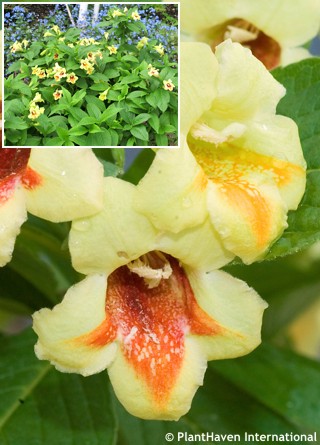
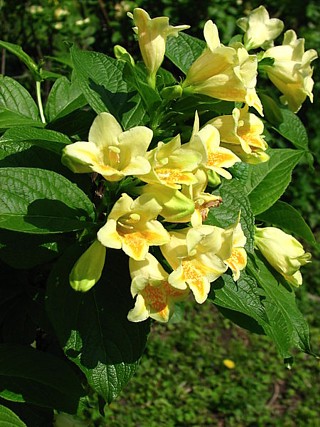
Middendorff weigela is a small shrub, native to lower parts of Russia, northern China, and various areas of Korea and Japan. It does not usually flower as profusely as common weigela but has larger blooms of a colour that is unique for this species. The first mention about its sale in England dates back to 1850’s.
Middendorff weigela makes pale yellow, broadly funnel-shaped flowers with a distinct orange throat. They are up to 4cm long, lightly scented, and bloom from late spring until midsummer. After that pruning is recommended – cut off flowering branches by at least two thirds to encourage growth of new twigs that will flower in the following season. Leaves are light to mid green, broadly oval, pointed, and deciduous.
Last update: 17-01-2013
Weigelas thrive in semi-fertile, slightly moist soil, preferably in full sun. They can take heavy and compacted soil, too, but will need more time to grow nice. Hardy to some -29°C (USDA zone 5) but not suitable for outdoor pots (risk of drying out in winter).