

































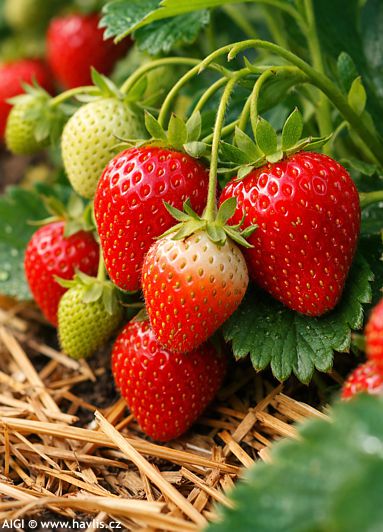
Fragaria + ODRŮDY strawberries

 Symbivit Tric (arbuscular)
 Symbivit (arbuscular)
Fragaria
The strawberry plant is a perennial herb, but varieties grown for high‑quality fruit are usually kept in the same spot for only 3–5 years, so in practice they behave more like short‑lived perennials. The leaves are evergreen, broadly heart‑shaped and distinctly toothed along the edges, and the flowers are simple, usually white, with some ornamental varieties producing pink blooms. Strawberries are divided into large‑fruited garden types and small‑fruited woodland or alpine types. Among cultivated varieties, we distinguish between June‑bearing (single‑cropping) and everbearing (continuous‑cropping) types, the latter producing fruit from early summer right into autumn. Depending on the variety and weather, strawberries ripen from June to September or October. Once the berries begin to colour, it’s best to protect them from birds and slugs to ensure a clean and healthy harvest.
|
Variety |
Fruiting type |
Ripening period |
Fruit size |
Growth type |
Colour |
Flavour / quality |
|---|---|---|---|---|---|---|
|
Karmen |
June‑bearing |
June |
very large |
garden type |
dark red |
excellent, very sweet |
|
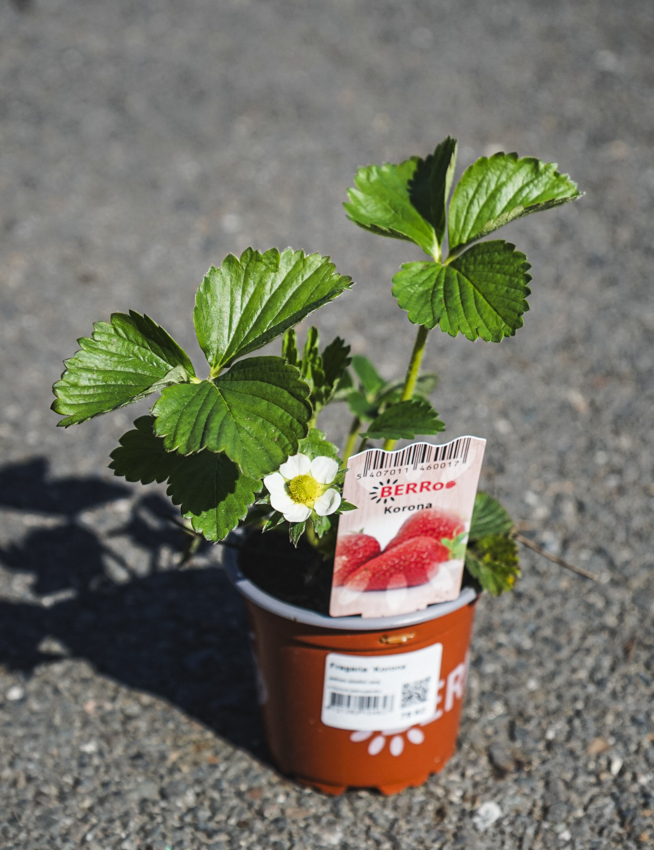
Korona |
June‑bearing |
June–July |
large |
garden type |
dark red |
very sweet, soft |
|
Rumba |
June‑bearing |
June |
large |
garden type |
red |
sweet, aromatic |
|
Vivaldi |
June‑bearing |
June |
large |
garden type |
red |
sweet, dessert‑quality |
|
Polka |
June‑bearing |
June |
medium |
garden type |
dark red |
refreshing, aromatic |
|
Salsa |
June‑bearing |
June |
large |
garden type |
red |
sweet, firm |
|
Induka |
June‑bearing |
June |
large |
garden type |
dark red |
sweet, aromatic |
|
Honeoye |
June‑bearing |
June |
large |
garden type |
red |
sweet, juicy |
|
Senga Sengana |
June‑bearing |
June |
medium–large |
garden type |
dark red |
classic, aromatic |
|
Sonata |
June‑bearing |
July–August |
large |
garden type |
red |
excellent flavour |
|
Elsanta |
June‑bearing |
June |
large |
garden type |
orange‑red |
firm, less aromatic |
|
Elvira |
June‑bearing |
June |
large |
garden type |
red |
mildly tangy, light aroma |
|
Sweet Am |
June‑bearing |
June–July |
large |
garden type |
red |
sweet, firm |
|
Mara de Bois |
everbearing |
June–October |
small–medium |
trailing |
red |
fragrant, wild‑strawberry aroma |
|
Sweet Ann |
everbearing |
June–October |
large |
garden type |
bright red |
very sweet, juicy |
|
Beltram |
everbearing |
June–October |
large |
semi‑trailing |
red |
very sweet, aromatic |
|
Aromas |
everbearing |
June–October |
large |
garden type |
red |
strongly aromatic, sweet |
|
Elan |
everbearing |
June–October |
medium–large |
garden type |
red |
sweet, excellent |
|
Rosana F1 |
everbearing |
June–October |
medium |
trailing |
red |
sweet, wild‑strawberry tone |
|
Selva |
everbearing |
June–October |
large |
garden type |
red |
sweet when fully ripe |
|
Gasana F1 |
everbearing |
June–October |
medium |
trailing |
red |
sweet, mild |
|
Toscana F1 |
everbearing |
June–October |
medium |
trailing |
red |
sweet, ornamental |
|
Tubby Red |
everbearing |
June–October |
medium |
trailing |
red |
sweet, gentle |
|
Tubby White |
everbearing |
June–October |
medium |
trailing |
white |
mildly sweet |
|
Karan |
everbearing |
June–October |
medium |
garden type |
red |
mild, sweet |
|
Ostara |
everbearing |
June–October |
medium |
garden type |
red |
sweet, pronounced |
|
Pink Extara |
everbearing |
June–October |
medium |
trailing |
pink |
gently sweet |
|
Mt Everest |
everbearing |
June–October |
medium |
trailing |
red |
sweet, aromatic |
|
vesca Rujana |
everbearing |
June–October |
small |
woodland/alpine |
red |
very aromatic, sweet |
|
vesca Alexandria |
everbearing |
July–August |
small |
woodland/alpine |
red |
sweet, aromatic |
|
vesca vesca |
everbearing |
June–October |
small |
woodland/alpine |
red |
sweet, moderately aromatic |
|
vesca Rosea |
everbearing |
June–October |
small |
woodland/alpine |
red |
gently sweet |
|
vesca Yellow Wonder |
everbearing |
June–October |
small |
woodland/alpine |
yellow |
mild, sweet |
|
White Dream Pineberry |
everbearing |
June–October |
medium |
garden type |
white |
sweet, pineapple aroma |
|
Framberry |
everbearing |
June–October |
medium |
garden type |
red |
sweet, raspberry‑like flavour Latest update: 18-09-2014; 10-05-2026 Growing conditions and care
|
Strawberries thrive in nutrient rich soil, steady moisture during flowering and fruit development, and plenty of sun and warmth. Once the berries begin to colour, it’s best to reduce watering to limit the spread of fungal diseases. Harvest time varies with climate, but in our conditions it usually begins in June. In warmer countries, where plants receive more natural sunlight and heat outdoors, strawberries can ripen as early as March.
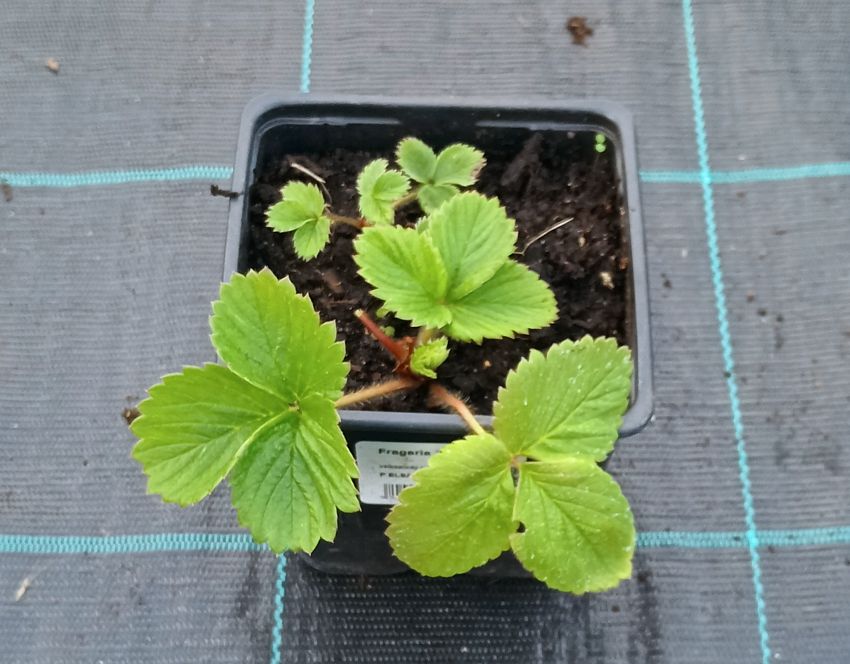
Before planting, prepare the soil thoroughly so the plants can root quickly and deeply. Mix the existing garden soil with compost or well rotted humus, and if needed, add a fertiliser for strawberries or soft fruit. Strawberries prefer slightly acidic soil (pH 5.5–6.5). Container-grown plants can be planted from spring until mid October; bare root plants are best planted in spring or again from August to September. Bare root plants benefit from a short soaking in water before planting.
It’s a good idea to plant strawberries in slightly raised rows, which helps prevent water from sitting in the crown of the plant. Recommended spacing is 30–40 cm between plants and 50–70 cm between rows. To keep ripening fruit clean and dry, you can place straw under the plants or use black non woven fabric. Straw works very well, but it can attract slugs — the most effective solution tends to be beer traps, which reliably lure and reduce them. Non woven fabric is practical, but it should be lifted each year so you can replenish nutrients. Plastic sheeting is no longer used.
Strawberries also grow well in deep containers on a terrace or balcony. They will need more frequent watering and feeding, but the fruiting runners will hang over the edge, so the berries are less likely to rot.
In early spring, remove old and damaged leaves, taking care not to injure the crown. Do not compost these leaves — it’s safer to burn them to prevent diseases from spreading. Strawberries produce their best harvest in the second and third year after planting. When the plants start forming runners, you can use the young plantlets for immediate replanting into new rows, where they will fruit strongly the following year. This rotation keeps your beds young, vigorous and productive.
After three years, it’s best to clear the oldest bed and avoid replanting strawberries there for at least three more years, to break the cycle of soil borne diseases and pests such as nematodes. Strawberries can suffer from several diseases, most commonly grey mould, leaf spot diseases, powdery mildew and root rots. If you keep proper spacing, renew the beds regularly and remove infected plant parts in time, these problems will not be fatal.

Goods are shipped all over Europe. For Russia and U.K. and for further details please read about SHIPPING OPTIONS HERE.
Are you interested in a serious discount for orders NOV-FEB? Check your options here.
THE PRICES INCLUDE VAT of 15%. For quick conversion you can use 1 CZK = approx. 0.04 EUR
- STANDARD QUALITY - Plants of this group are 1st class quality with number of branches and overall density adequate to their size and age, considering they were container grown.
- DE LUXE QUALITY - This label guarantees a luxurious quality of manually selected plants that, compared to their height and age, are exceptionally dense and beautiful.
- EXTRA - These plants are usually mature and bigger specimens with exceptional overall appearance.
- STANDARD (as described in the plant form) means a tree with a trunk of 190-210 cm and a crown at the top, unless specified differently. The commercial size for trees is their girth measured in the height of 1m from ground.
- HOBBY - These plants are of the same quality as our standard-quality plants but younger and therefore cheaper.
- SHRUB - a woody plant with branches growing bushy from the ground level.
- HALF-STANDARD or MINI-STANDARD - a small tree with shorter trunk, its size is usually specified.
- FEATHERED - These are trees with branches growing already from the base of the trunk and up along the stem.
- GRASSES and PERENNIALS - Sizes given usually read the diameter of the pot or the clump, as specified.
